The Community Coalition on Race, the local integration organization that I've been a part of for fifteen years, had a Board Retreat yesterday that I really enjoyed. This is unusual for me, as I am usually put off in a big way by these events. I can just barely deal with abstractions at the very widest macro/philosophic level, but putting practical things like how to run an organization into general terms and – worse– slogans and catch phrases-- and connecting what I think of as a Cause to Corporate Business practice-- well, let me put it gently and say it grates my ear and oppresses my spirit.
But this was different! We had a terrific Memphis-born presenter named Vicki Clark who had her own memories of segregation, was a good story-teller, extremely sensitive to the audience's reactions– she was able to make the six hours entertaining and concrete. I really came away with specific things I'd like to do for the Coalition as well as feeling closer to the people who were there. All good.
Sunday, February 26, 2012


Wednesday, February 22, 2012
Mirabile dictu

Tonight we had an all-garden salad. I picked some rouge d'hiver lettuce from the little bread loaf shaped plastic cloches plus corn salad and mustard greens, added some sprouts from indoors. We also had tomato sauce on the pasta from September's tomato harvest, frozen. Very satisfying to go out in the February light on an admittedly warm day and pick salad from the garden, know there are sprouts growing inside too. The great truth: certain green things want to stay alive and even grow in the winter, with some light, with some protection. Mirabile dictu.
Sunday, February 19, 2012


I was at the Third Saturday Arts Salon in Maplewood last night. This is a lovely event organized by Gus Lindquist, and featuring my new book of short stories Re-Visions: Stories from Stories. I read one of the stories (the one about Sheherezade) and then we all talked and snacked. It is such a good atmosphere-- writer and poet friends, artists, friends from Ethical Culture. It was a lovely evening. Pictures include Gus and Anja and me looking pleased as punch.
Saturday, February 11, 2012
I had a lovely time last night visiting a Book Group-- folks from various towns in New Jersey-- Maplewood, Westfield, etc. They have a highly organized system of 11 monthly meetings, and each member hosts once and (on a different occasion) chooses the book and leads the discussion. Several of these women were people that I have known in the past; some are writers as well as readers; I have a common friend with others. It's a wonderful combination of social and literary.
They read my Out of the Mountains, and I had the enormous pleasure, so rare for writers, of getting various comments made to my face about my work. I am always fascinated by who likes which story-- some preferred the stories with the most Appalachian characters, others liked the stories with people who could have lived in New Jersey. They had questions, and a lot of good insights.
It was a really stimulating evening for me.
They read my Out of the Mountains, and I had the enormous pleasure, so rare for writers, of getting various comments made to my face about my work. I am always fascinated by who likes which story-- some preferred the stories with the most Appalachian characters, others liked the stories with people who could have lived in New Jersey. They had questions, and a lot of good insights.
It was a really stimulating evening for me.
Saturday, February 04, 2012
A Dose of Opera: At least once a decade

Andy's best friend took us to see Anna Netrebko in Donzietti's Anna Bolena. I see opera about once every ten years, but this was wrth waiting for: a new Metropolitan Opera production, spare sets, beautiful singers who were also actors. No deii ex machina-- all human wickedness and passion. Also, I knew the general story, although Donizietti's romantic version of the Anne Boleyn downfall, premiered in 1830, didn't have much to do with history. It did have a revolutionary subtext with Henry VIII seen as a tyrant, so part of what is going on is a struggle against tyrants.
We were in the center of the balcony, and oh those columns of sound rising up to us like comets or geysers or some kind of natural phenomena. I kept using the binoculars wanting to see the faces, but had the insight that the faces aren't where the emotional meaning is in the opera-- even though the acting was fine-- it's in--duh!-- the voices.
Being there is so intrinsic to the experience: everything from the chandeliers slowly rising and the forty person chorus and the ranks and rows of all of us applauding in the red and gold seats-- you are part of an event, not just an entertainment.
Friday, February 03, 2012
Too Big to Know
I have a new issue of Books for Readers up online, a shortish one in which I mainly talk about my brother-in-law's new book about issues of knowledge and information in the digital age: David Weinberger's Too Big to Know, which I highly recommend and hope will lead lots of people to think through the changes we are all facing...
Books for Readers # 149
February 1, 2012
It looks better online! Read it here.


In this Issue:
Free e-mail subscription to this newsletter.
To create a link to this newsletter, use this permanent link .
For Back Issues, click here.
I don't generally send out a new issue quite so quickly, but I'm excited about the new book by my brother-in-law, David Weinberger, Too Big to Know. Weinberger is a Senior Researcher at Harvard University's Berkman Center for the Internet & Society and author of (among many other things) Everything Is Miscellaneous, and The Cluetrain Manifesto (with others). He is a big picture thinker about issues of the Internet, digitalization of knowledge, and much more. He holds a Ph.D. in philosophy (he specialized in Heidegger) and has written comic strip scripts for Woody Allen. He and I once tried to write a novel together, a rousing failure, but I did get a name from it for a minor character in my Marco books for kids.
As you can see, I'm talking about this book personally. There are plenty of reviews and blogs about it from experts in the field, so google it if you're interested.
I have pretty much taken my entire understanding of the Internet/digital age from David's books and conversation. He has give me hints or instruction in everything from choosing a program for making my own website to the idea of the Internet as non-hierarchical and better for conversational than fine writing. I've now advanced far enough on my own to disagree with him occasionally– some of the finest new poetry, for example, is being published in online journals. It is true, though, that the Web world is ideal for getting ideas up and out, and for sharing and discussion and elaborating. It is this communal or at least collective wisdom that is one of Weinberger's primary themes in Too Big to Know. A small example: I have a page of resources for writers on my website, anda few days ago I received a testy but accurate e-mail from a total stranger informing me that one of my links was not just broken, but that the person I had linked to was dead. I deleted that link and fixed a few others while I was at it. The help, if not the kindness, of strangers.
Too Big to Know is full of much richer (a favorite Weinberger compliment) examples of people working together with strangers in group creativity, which he sees as the opposite of "roup think." Wikipedia is the obvious example that we probably all recognize, but in his chapter on networked leadership styles, Weinberger writes about how, after the 2010 earthquake in Haiti, the street names of Port-au-Prince were named on maps for the first time. An organization called OpenStreetMap.org had satellite maps, but lacked street names in Port-au-Prince, which were sorely needed during the crisis. People from all over the world, mostly Haitians abroad, contributed the names so that the map filled up and aided in the work of everyone from the US Marines to the World Bank and the UN.
Weinberger also has a long and excellent chapter on the changes in science due to the digital era and the Internet. He compares Charles Darwin's years of painstakingly taking barnacles apart to the new way of doing science that has scientists posting on the web vast amounts of raw data as well as unfinished theses for critique and suggestions. One interesting change is that scientific results in the past rarely considered publishable in print-- negative results -- are now not only available but proving to be highly useful. Books and paper journals were simply too expensive to publish what appeared to be dead ends. Yet, negative results of experiments, tentative results, gigabytes of raw data-- all are now increasingly available to the scientific community, enabling discoveries and insights that would never have happened the old way.
Weinberger acknowledges the doomsayers who think we are getting lazy from the Internet ("Let Me Google That For You" ), and worse. He says,"The Internet has broadened science and increased its reach. There are few scientists who would undo the Internet....At the same time, it seems incontestable that this is simultaneously a great time to be stupid. If you want to ignore the inconvenient truth of science, you can surround yourself with a web of ignoramuses who...make falsehoods seem as profound as truths." (Too Big to Know, New York: Basic Books, 2011, p. 156.) If you are unfamiliar with the phrase "echo chamber," this book explains it– how it is easy to find vast amounts of real estate on the web where we only learn from, listen to, and converse with those with whom we agree.
Another especially interesting theme running through Too Big to Know is how the physical limits of a hard copy book and the economics of publishing have shaped Western thinking for centuries. And now we have before us the open and fluid possibilities of digital publishing, e-books, and the Internet. One final goody in the book: Weinberger offers an easy guide to Postmodernism starting on page 88. For me, being able to have an outline of Postmodernism is worth at least $26 dollars.
Even if this is not the kind of book you usually read,you should at least flip through the pages: it is well-written and witty. Don't miss the final chapter on "Building the New Infrastructure of Knowledge."
A Storm in Literary Waters
If you've missed it-- and I did until recently-- there has been a literary donnybrook over Harvard critic and scholar Helen Vendler's review in the New York Review of Books of The Penguin Anthology of Twentieth-Century American Poetry edited by former US Poet Laureate and Pulitzer prize winner Rita Dove. Vendler denigrates Dove's choices and writing style; Dove responds accusing Vendler of closed minded adherence to the white male canon, and the blogs and magazines are off to the races. For a summary of the positions, take a look at the article in the Chronicle of Higher Education.
I tend to be of the inclusive party rather than the exclusive one, but I was particularly struck by Dove's comment that some of the missing poems and poets (Allen Ginzberg, Sylvia Plath, the later work of Wallace Stevens and more) were simply too expensive to get the rights for. Was Penguin too cheap? Probably, but the underlying problem is how our copyright laws are being used for big profit for big business (See my review of James Boyle's the Public Domain: Closing the Creative Commons of the Mind)..
The good news is perhaps some expanded interest in poetry beause of the controversy?
Two More Books...
I ready my first Stephen King novel, The Shining, thanks to Kindle and the South Orange Public Library. I was not surprised that the story had lots of momentum, and I really liked how skillfully King slips the Evil Force into his characters' minds, and how the characters move in and out of sanity, possession, dreams, visions– impressively well modulated. It was plenty scary, but my narrative intuition told me the kid was going to live and probably the mother. My sense of this was based mostly on where chapters ended– a lot of close calls that
seemed to indicate the endangered one was going to be back. The big narrative question for me was, which father figure was going to die?
I admired the telling of this a lot, but for me, there is still a basic problem with horror, which is: yeah, but why? I don't feel this about good science fiction or carefully built fantasy– I think it's because those worlds, however alien, have stable rules. In them, there is terror for a reason– because there's a war, or because some person wants revenge, etc.– it's part of the whole. And I suppose you could make a case that this novel is a massive exaggeration of how an alcoholic damages his family, except, I don't think psychological insight is the point. In fact, a lot of it seems to be simply about what they
used to call in nineteenth century fiction effects-- the creation of certain sensations. And this makes me feel manipulated in spite of admiring the narrative technique.
I also read the highly popular literary novel The Tiger's Wife by Téa Obreht. A lovely book in so many ways, and I especially liked the Balkan background, but the Grandfather's tales run away with the show, as perhaps they're supposed to.
ANNOUNCEMENTS, NEWS, CONTESTS, WORKSHOPS, READINGS ETC.
Miles Klee's debut novel IVYLAND is just out from OR Press. Take a look at http://www.orbooks.com/catalog/ivyland/ . To read what the NEW YORK OBSERVER says of the book, see http://www.observer.com/2011/08/awl-pal-miles-klee-sells-novel/ .
Julia Kaminsky has a new story up at .decompmagazine.com .
Check out the Vermont Poetry Newsletter for events and more in Vermont.
Cheryl Denise has a new poetry CD. Preview it at www.cdbaby.com/cd/cheryldenise . She reads 13 of her own poems, and a musician friend plays some mandolin and guitar music in between. The poems are from her two collection, I SAW GOD DANCING and her upcoming February 2012 WHAT'S IN THE BLOOD, by Cascadia Publishing House.
Lots of good reviews for Leora Skolkin-Smith's new novel Hystera such as this one: "Leora Skolkin-Smith's new novel... provides a very vivid sense of being in the head of someone having a psychotic breakdown, and is a powerfully useful reference book for dealing with the mental-health system. It also pungently evokes the gritty New York of the '70s."
—Robert Whitcomb, reviewer "The Providence Journal;" excerpts featured recently at http://readysteadybook.com; and an interview at WBAI: http://www.catradiocafe.

Wednesday, February 01, 2012
The Author’s Guild on State of Publishing and My comment
The Authors Guild has a good summary of their position on Amazon.com and the state of publishing at their blog:
http://blog.authorsguild.org/2012/01/31/publishings-ecosystem-on-the-brink-the-backstory/
There are a lot of good comments I agree with, about how the AG does not exactly have clean hands in all this. I said, "Monopolies [like what Amazon.com aspires to be] are generally evil, and I hold no brief for Amazon.com– although why Amazon’s evil makes Barnes & Noble and Big Publishing into good guys is beyond me. B&N with their end-of-the-aisle bribe stacks and books with a shorter shelf life than yoghurt. Puh-leeze.
"I personally have published with big publishers, small ones, university presses, and an independent co-operative press. While I am, at least for the moment, still a member of the Authors Guild, I do not find them representing my interests. AG works for Scott Turow and others who make a lot of money selling books. I’m glad Mr. Turow and his ilk have a guild to represent them, but don’t let the Authors Guild fool you into thinking it does anything for people who don’t sell a lot of books.
"So we’re living in interesting times. Lean back and enjoy the ride."
Wednesday, January 25, 2012
State of the Union
I started late, but watched most of the State of the Union speech last night. I tried to keep up my cynical front, but in the end I was bowled over by President Obama’s confidence, his insistence on economic fairness, and also by the enthusiasm on the floor.
You forget, reading the papers, watching professional actors and models, how ordinary most of us are in appearance: chubby women (like me!) in red skirt suits, Gabby Giffords looking fragile, the people in Michelle Obama’s box: Giffords’ bald husband what’s-his-name the astronaut, Warren Buffet’s secretary, someone who represented people who got job help and was all happy and cheerful. Much of the audience, Democrats but some others too, seemed to enjoy getting caught up and carried away, feeling patriotic and virtuous. At some level, I guess that’s what they’re about, patriotism, sentimentality, along with the deal making and schmoozing and eating corn dogs and barbecue. I thought of my one-time NYU SCPS student who seems very decent, Steve Israel of Long Island who is moving up fast in the Democratic ranks in the House.
So there is some goodness out there, not all a hateful circus like the Republican debates– anyhow, I gave over for the moment, moved by the President's eloquence, by Congressman John Lewis’s good old battered face, by the three women Justice, by Olympia Snowe clapping more than a Republican was supposed to.
I felt included last night, in spite of Obama sounding a big supporter of fracking and boasting about what it was like being in the Situation Room when we finally got Osama bin Laden.
I felt like an American for a moment.
You forget, reading the papers, watching professional actors and models, how ordinary most of us are in appearance: chubby women (like me!) in red skirt suits, Gabby Giffords looking fragile, the people in Michelle Obama’s box: Giffords’ bald husband what’s-his-name the astronaut, Warren Buffet’s secretary, someone who represented people who got job help and was all happy and cheerful. Much of the audience, Democrats but some others too, seemed to enjoy getting caught up and carried away, feeling patriotic and virtuous. At some level, I guess that’s what they’re about, patriotism, sentimentality, along with the deal making and schmoozing and eating corn dogs and barbecue. I thought of my one-time NYU SCPS student who seems very decent, Steve Israel of Long Island who is moving up fast in the Democratic ranks in the House.
So there is some goodness out there, not all a hateful circus like the Republican debates– anyhow, I gave over for the moment, moved by the President's eloquence, by Congressman John Lewis’s good old battered face, by the three women Justice, by Olympia Snowe clapping more than a Republican was supposed to.
I felt included last night, in spite of Obama sounding a big supporter of fracking and boasting about what it was like being in the Situation Room when we finally got Osama bin Laden.
I felt like an American for a moment.
Thursday, January 19, 2012
PIPA SOPA Blackouts and more
I didn't black out my website yesterday, but I'm opposing SOPA and PIPA. If you haven't been following these proposed congressional bills that threaten to limit free speech on the Internet in the name of property rights, you might take a look at this NYTimes piece by Rebecca McKinnon or go to Wikipedia's explanation of their Black Out,
According to today's papers, a lot of congresspeople pulled way back on this-- not, of course, because of me, but because of Web terror. Probably because they saw the Googles and Wikipedias as Even Bigger Business than the Chamber of Commerce and Walt ("75 more years") Disney.
The question is, are they right? Or is this actually something bigger? Was it the New Corporations versus the Old Ones, or the millions of us who want the Web open?
Tuesday, January 17, 2012
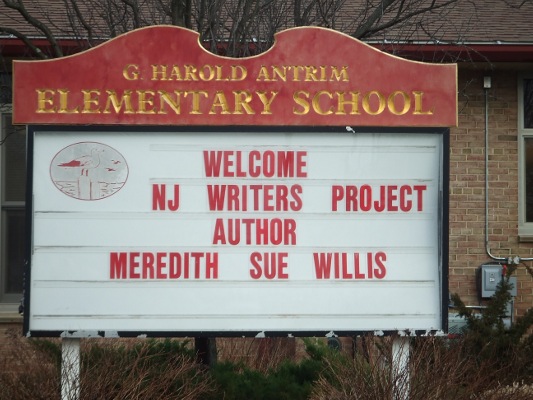
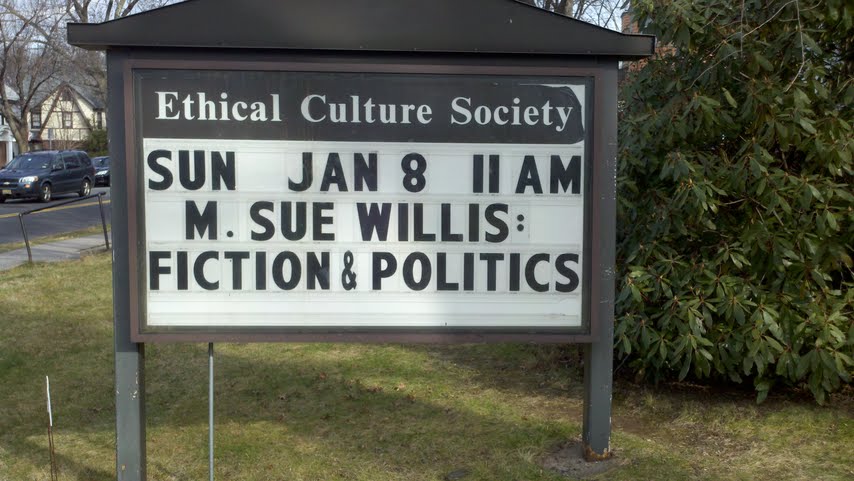
At Last! My Name is Up In Lights!
January, 2012, and my name is... in plastic letters, anyhow!
Workshops with eighth graders in Point Pleasant Beach, New Jersey...
and a talk at the Ethical Culture Society in Maplewood....
Monday, January 16, 2012
Books for Readers # 148
Meredith Sue Willis's
Books for Readers # 148
January 16, 2012
It looks better online! Read it here.
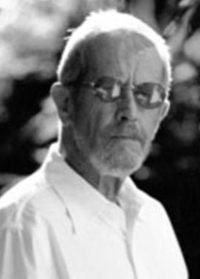

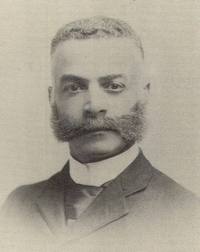
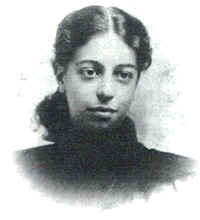
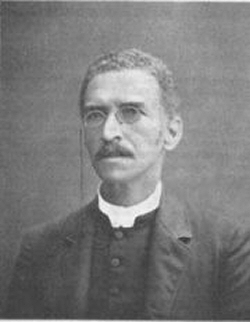
Elmore Leonard Wilkie Collins Archibald Grimké Angelina Weld Grimké Francis Grimké,
In this Issue:
Phyllis Wilson Moore on Belle, the Last Mule at Gee's Bend
Free e-mail subscription to this newsletter.
To create a link to this newsletter, use this permanent link .
For Back Issues, click here.
I'm just coming out of a month of family visits and cooking and digesting big meals. Our weather here in the garden state has been dry and cold with no snow, so while there are still greens and lettuce under plastic in the garden, it's hard to get them out of the frozen ground.
Anyhow, it's my favorite time for Victorian novels and other story-centric books. I read a newish Elmore Leonard called DJIBOUTI that I borrowed from the library for Kindle, and I read THE MOONSTONE by Wilkie Collins, free for the Kindle. THE MOONSTONE is often called the first modern mystery, and it has a detective and a lot of hokey scientific deducing and evidence collecting, but the mystery and detecting are the least of the fun.. Collins tells the story by having characters give their own versions of events then handing off to someone else in a series of reports plus and journal entries. The book has several interesting and quirky characters: Mr. Betteredge, an old family retainer, uses Robinson Crusoe as others use the Bible– he opens the book and lets his hand fall on an answer or prediction. Miss Clack, a spinster committee woman whose religion is not a bore because she is so absurdly self-righteous. Wherever she goes, she leaves a scattering of leaflets and religious tracts.
Miss Clack is a stereotype, but she also has a typical vigor that Collins gives to his women characters. All his women are active: The heroine Rachel kisses her beloved before he kisses her, and has to be warned to behave properly. Also, although the gentle folk have the lead roles, Collins seems admirably comfortable with intelligent working class people. Betteredge, for example, has the first point of view, so we get the "downstairs" perspective before the upstairs. His bright and lively daughter Penelope, who is not a point-of-view character, gives lots of opinions and hypotheses about the missing jewel, and even the ill-fated Rosanna Spearman, who was previously incarcerated for thievery, turns out to be capable of writing long, expressive letters. Collins manages to present her fate as moving and tragic without being sentimental, as Dickens certainly would have. The person who makes the final discoveries solving the mystery is a clever street kid. If you haven't read it, don't miss it.
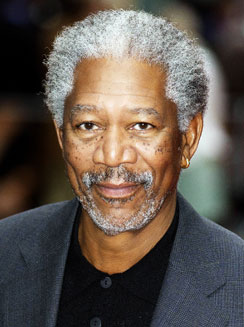
I have a theory that Elmore Leonard came up with the idea for DJIBOUTI from a combination of headlines (piracy off the coast of east Africa) and a interview in which movie actor Morgan Freeman (image right) complained that he gets lots of work, but never gets to have sex in his movies. He has played Nelson Mandela, the corner man in MILLION DOLLAR BABY, not to mention God a couple of times- -all pretty much asexual. So my little scenario is that Leonard, who always has his eye on the movies, wrote the character of seventy-ish Xavier in DJIBOUTI for Freeman. Just a thought.
Leonard himself is now in his mid eighties, an inspiration to all of us for his continuing fecundity. This book has a pretty slow start (when you're in your eighties and totally bankable in publishing and the movies, you can fool around if you want to). There are a few too many long scenes where Xavier and his boss filmmaker Dara look at video rushes and comment on (a) action that was not dramatized in the main line of the novel and (b) how to make a movie of what's happening in the novel, which is what they're filming. The reviewer in THE GUARDIAN, Giles Fodens says, "Leonard's participle-rich prose style builds action round dialogue in an intriguing way, coming off like the bastard child of Hemingway and Virginia Woolf."
Well put, although Fodens seems to take the book's stylistic pretensions a little too seriously. In the second half, Leonard gets over his meta stuff, seems to catch a wave, and things move along briskly, especially the material following an American ex-con and ex-jihadist who is one of Leonard's entertaining stone cold killers. This character, Jama, doesn't seem to differentiate between his living and murdered relationships-- he misses a particular woman, hardly seems to remember why she isn't available to him anymore. A couple of other colorful characters are let drop a little too soon, but I figure Leonard will bring them back in his next book. Basically, once he goes back to following his own famous Ten Rules of Writing and puts his focus on killers, grifters, and a few goodish guys in an exotic setting, it was pretty good.
The final book I want to speak about-- and recommend highly-- is a nonfiction family history of the Grimkés, LIFT UP THY VOICE: THE GRIMKÉ FAMILY'S JOURNEY FROM SLAVEHOLDERS TO CIVIL RIGHTS LEADERS by Mark Perry. The book starts by covering a lot of the same material as the biography of Sarah and Angelina by Catherine Birney that I wrote about in Issue $ 147 (http://www.meredithsuewillis.com/bfrarchive146-150.html#issue147). He adds some interesting conflicts: how Angelina Grimké's withdrawal from public view was probably a result of "female problems," that there was a likely unconsummated– of course!– love affair for the elder abolitionist sister Sarah Grimké.
Then Perry moves on to the story of the abolitionist sisters' nephews, Archibald and Francis, who were the enslaved sons of their brother– and the sisters never knew of their nephews' existence till after the Civil War, and which point they helped educated them. The book summarizes the Civil War as Archibald and Francis Grimké experienced it, then Reconstruction, and finally the long struggle after Reconstruction was undermined to create a civil rights movement. This part of the book is about a whole professional black class including the Grimké brothers and their contemporaries Booker T. Washington and W.E. B. Dubois. The book gives special attention to the Great Debate between those two latter, in which the Grimké brothers were deeply involved: should the Negro concentrate on industrial arts and agriculture or demand higher education and full civil rights?
Archibald Grimké at one point was the U.S. consul to the Dominican Republic; Francis Grimké was the minister of a major African-American church n Washington D.C. The final generation in the story is the daughter of Archibald Grimké and his estranged white wife. The daughter, Angelina Weld Grimké, was a poet known as a pre-cursor of the Harlem Renaissance. All of this is fascinating stuff: the old abolitionist movement through the war through reconstruction and the horrors of anti-black rioting and lynching that followed, plus the struggle over the direction of the Negro political movement and the founding of institutions like the NAACP. And the Grimkés were part if it all.
My heart especially went out to the less famous people: Angelina Weld Grimké the poet had several moments of fame, but ended in silence as a reported recluse in a little house in Brooklyn, no longer writing. The third Grimké brother, John, who did not get an education, rejected the help of the white aunts and others and went to Florida and essentially disappeared. A derelict? A drunk? Just a guy who didn't want any part of public life? Apparently unknown. The other silent ones were the mothers: Nancy Weston Grimké, the enslaved woman who was mother to the three Grimké men with her legal master, Henry Grimké, brother of Sarah and the first Angelina.
And finally, Sarah Stanley, a white woman, who married Archibald Grimké, gave birth to Angelina Weld Grimké, and eventually left her husband and eventually sent her daughter back to him. What was going on here– what racism? What pain?
I love history and biography. But it never satisfies the way imaginative writing can.
LAURA BENTLEY ON THE HUNGER GAMES AND DISTRICT 12
The following note came from Laura Bentley after I mentioned reading THE HUNGER GAMES in Issue 147. In my brief mention of the popular novel, I forgot to comment on how the Dystopian world of the novel is organized is by "districts." The heroine is from a poor mining region – District 12– which is essentially coextensive with Appalachia.
Laura wrote, "I, too, read THE HUNGER GAMES and was very pleasantly surprised. Because it was a YA book and had received so much hype, I was prepared to dislike it, but it was a fascinating read and made me proud to be from District 12."
From PHYLLIS WILSON MOORE
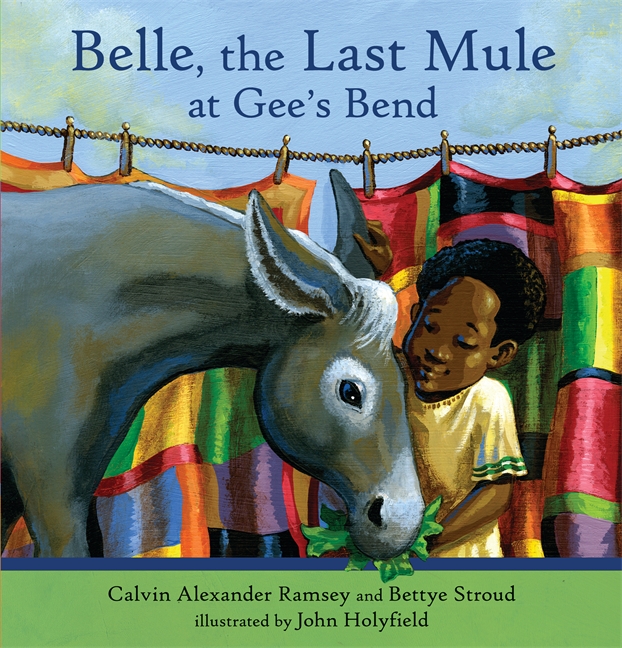
A well done picture book, BELLE, THE LAST MULE AT GEE'S BEND, illustrated by Clarksburg, WV native John Holyfield and written by Calvin Alexander Ramsey and Bettye Sroud, is based on the true story of two mules from a little Alabama town named Gee's Ben and their role in history.
Martin Luther King had visited Gee's Bend to encouraged the residents to vote. Of course, trouble followed. They managed to vote anyway.
When the Benders (as they call themselves) took the ferry to vote, the county stopped the ferry from running. The guy in charge said, "We didn't stop the ferry because they are black. We stopped it because they forgot they are black." I think I have the quote right. Gee's Bend had about 300 residents and is on a portion of a piece of land jutting out into a river. At that time there was one dirt road in and off the jut. The only other route was to go up river and back down and many of them had no transportation. They did it anyway.
When King was murdered, the town was asked to supply two mules to pull a farm wagon carrying King's casket in the funeral procession. This met opposition from local law enforcement but the town prevailed and the mules became part of history. The state police tried to prevent the mules from crossing the Alabama state line and it took high level calls to the governors of Georgia and Alabama to achieve their trip's destination.
Somehow, I missed this fact when watching the funeral.
This book tells the story without being morbid, and the illustrations are warm and loving.
MORE RECOMMENDATIONS
NancyKay Shapiro says: "Have you seen Lynda Barry's book about writing/creativity/letting it out? It's called WHAT IT IS. It's gorgeous, and magical and full of great stuff about her struggles to become an artist, and very hands-on encouragement to do art RIGHT NOW. Here's a link to it on amazon: http://amzn.to/yw6R6L "
ONLINE AND ON THE AIR
Here is a wonderful story about the beginning of a war and some of its unbloody but still painful repercussions: "We Are At War" by John Birch: http://www.johnbirchlive.blogspot.com/2011/12/we-are-at-war.html
Suzanne McConnell has a wonderful article on Kurt Vonnegut at http://www.brooklynrail.org/2011/12/fiction/kurt-vonnegut-at-the-writers-workshop
ANNOUNCEMENTS, NEWS, CONTESTS, WORKSHOPS, READINGS ETC.
Miles Klee's debut novel IVYLAND is just out from OR Press. Take a look at http://www.orbooks.com/catalog/ivyland/ . The NEW YORK OBSERVER says of the book, http://www.observer.com/2011/08/awl-pal-miles-klee-sells-novel/
—Robert Whitcomb, reviewer "The Providence Journal;" excerpts featured recently at http://readysteadybook.com; and an interview at WBAI: http://www.catradiocafe.
Julia Kaminsky has a new story up at .decompmagazine.com .
Cheryl Denise has a new poetry CD. Preview it at www.cdbaby.com/cd/cheryldenise . She reads 13 of her own poems, and a musician friend plays some mandolin and guitar music in between. The poems are from her two collection, I SAW GOD DANCING and her upcoming February 2012 WHAT'S IN THE BLOOD, by Cascadia Publishing House.
Barbara Crooker did a two-part interview with Erika Funke at WVIA (public radio, Scranton), available at their website: http://www.wvia.org/radio/wvia-fm-programs/artscene . The broadcast dates were January 5 & 6, 2012.
DON'T FORGET...
... Poem-a-day – it's nice to get them in the email everyday, whether you read them or not. Sign up at http://www.poets.org/poemADay.php
Paperback Book Swap: get rid of your good quality paperback books and get new ones for the price of postage by swapping at The Paperback Book Swap: http://www.paperbackswap.com/home.php
Saturday, January 07, 2012
Cool and Dry and Beautiful
More cool, dry, sunny weather-- I love this weather-- no bugs, no sweating. You can see much farther than in summer, too, because the leaves are gone, trees are down to their beautiful bare stretches of branch. I don't really get going South for the winter. Okay, it's been an easy one so far, and yes, I get tired of shoveling snow, and yes I hate anxiety about travel.
But days like this, so pink and blue and multiple grays and blacks-- what a gift.
But days like this, so pink and blue and multiple grays and blacks-- what a gift.
Monday, December 26, 2011
Scott's Pizza Tours!
Back from the day in New York– Scott’s Pizza tour: this was super fun, holiday gift from Joel and Sarah. A cold sunny day with guide Scott Wiener who took us first to Lombardi’s, oldest Neopolitan/New York style pizza– (a margherita from the coal fired anthracite) ovens, then across town to a slice place, Joe’s on Bleecker and Sixth Avenue– a classic walk-in place with wonderful stretchy orange droopy tipped slices-- just what I remember from the street shops my first years in NYC, and finally John’s, also on Bleecker almost to Seventh with a long line to get in, and they brought it out to us, again coal fired, this time with whole milk mozzarella, great plain tomatoes and crust-- Sarah’s favorite, and I agree it was wonderful, but I’ll get a slice again at Joe’s when I'm in town to teach at NYU.
As to the tour and tour guide: this young guy Scott is a wild man: totally entertaining and personable and funny but also totally serious about pizza and beyond knowledgeable.
He provided little favor bags with notebooks and spices and candy to cleanse the palate between slices. He talked about history and the temperature of anthracite coal fires versus gas ovens, about the chemistry of wet and dry, part-skim and whole milk mozzarella. We got to look at Lombardi’s oven, and we visited a restaurant supply place on the Bowery that sells the gas ovens. We learned a lot. Joel and Sarah and Andy were all big winners on Scott’s questions. What a great tour.
That was Scott’s Pizza tour: but just be sure you get the genuine Scott. It's all built around his personality and his obsession.
As to the tour and tour guide: this young guy Scott is a wild man: totally entertaining and personable and funny but also totally serious about pizza and beyond knowledgeable.
He provided little favor bags with notebooks and spices and candy to cleanse the palate between slices. He talked about history and the temperature of anthracite coal fires versus gas ovens, about the chemistry of wet and dry, part-skim and whole milk mozzarella. We got to look at Lombardi’s oven, and we visited a restaurant supply place on the Bowery that sells the gas ovens. We learned a lot. Joel and Sarah and Andy were all big winners on Scott’s questions. What a great tour.
That was Scott’s Pizza tour: but just be sure you get the genuine Scott. It's all built around his personality and his obsession.
Sunday, December 18, 2011
Photos of Aunt Ninnie
I scanned in some old pictures my mother gave me of my Aunt Virginia. The first one is a school picture, in 1929.
Next is when she was married to my much older Uncle Fred. They wanted to be country gentry, judging from the photo.

The next one is of her after Uncle Fred died, in 1953 taking the Queen Elizabeth to Europe.


Next is when she was married to my much older Uncle Fred. They wanted to be country gentry, judging from the photo.

The next one is of her after Uncle Fred died, in 1953 taking the Queen Elizabeth to Europe.

Saturday, December 10, 2011
Books for Readers # 147
Meredith Sue Willis's
Books for Readers # 147
December 10, 2011
It looks better online!
Read at http://www.meredithsuewillis.com/booksforreaders.html
This Issue:
Johnny Sundstrom's new novel
An Anthology recommended by Ed Davis
Phyllis Wilson Moore on Walter Dean Myers and Yankee at the Seder
Free e-mail subscription to this newsletter.
To create a link to this newsletter, use this permanent link .
It looks better online! Read it here.
Dear Friends: It's holiday giving season– please consider for your last-minute gifts some of the small press books on my gift books page and/or some of the books mentioned below.
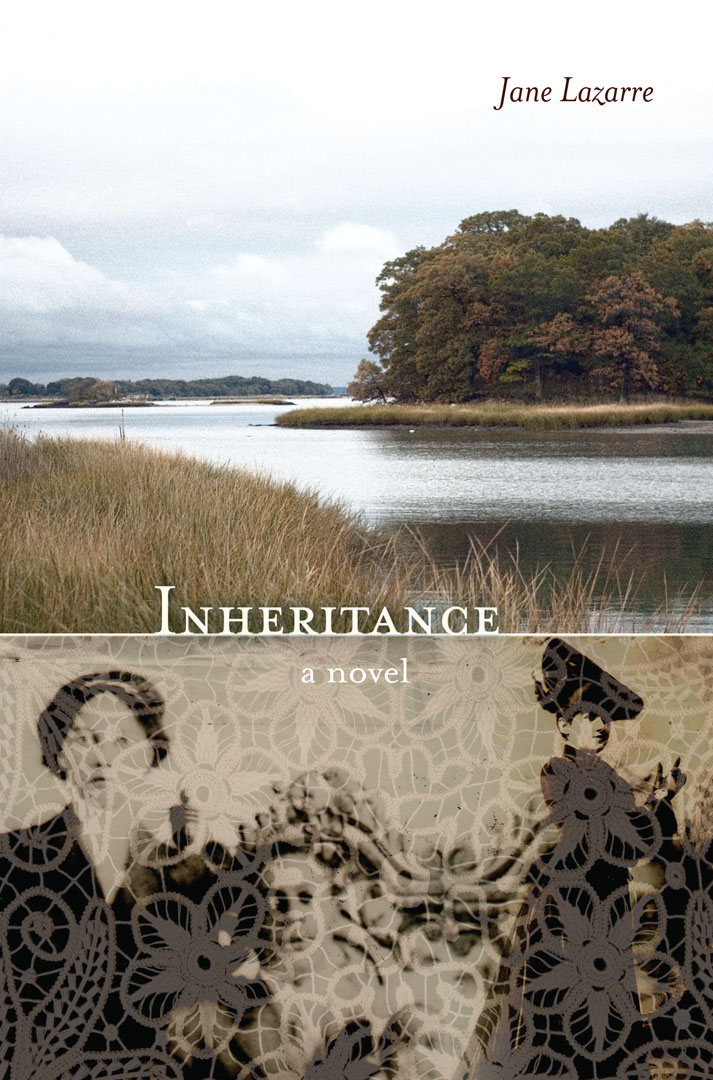
First up today, a stunning and powerful book from the small press Hamilton Stone Editions by Jane Lazarre (THE WHITENESS OF WHITE, SOME PLACE QUITE UNKNOWN). Lazarre's new novel, INHERITANCE, is a meditation on race and the racial and ethnic history of the United States. Its central, germinal story is what happened to a young white woman named Louise and her beloved Samuel in the years leading up to the Civil War. Samuel and his mother are enslaved, and Louisa discovers she is the sister of a slave and becomes the mother of a slave. What happens when her pregnancy is discovered, and then the color of the baby, is harrowing and horrible. The rest of the novel circles around and expands out of these events into many generations.
The mutilation-murder of Samuel is careful and respectfully narrated without any of the pornographic violence that a lot of American writers seem to delight in. Lazarre's focus is on transformation as people deepen their understanding of race and history. One of the most interesting parts is how Louisa survives mentally by changing her consciousness.
Characters in the framing stories have similarly complex deepening of their consciousnesses, especially women struggling with their whiteness and their relationships with people of color. All of the main point of view characters are articulate and exhibit many layered thinking. Among them are the teenaged daughter of a white Jewish mother and Black father (whose own mother is an Italian-American novelist). There is also an adult writer descended from Louisa and Samuel; there is early twentieth century Jewish Hannah (great grandmother of the teenager above) who falls into a passionate non-physical relationship with the third Samuel. All the characters have the sensibilities and intellectual seriousness of a writer or other artist.
The genealogies are complex and the issues of whiteness and Blackness are dealt with in detail. The story of the nineteenth century white girl's lonely effort to understand and survive is especially wonderful, as are the scenes on Long Island Sound, such as the one where the housewife Hannah Sokolow, unhappy in her marriage and life, eats an oyster pulled directly from the Sound and offered to her in friendship by the third Samuel--a transgression of the rabbinical laws as well as the formal and informal race laws of her day.
It is an ambitious and powerful book that teases out where we cannot reach across the abysses of race and history– and also where we can.
A book of poetry with a serious message from a small press is AZRAEL ON THE MOUNTAIN by Victor Depta. Betty Huff, managing editor of Blair Mountain Press, writes to say: "Ten years ago, in 2002, we at Blair Mountain Press published Dr. Victor Depta's AZRAEL ON THE MOUNTAIN, a book of poems protesting mountaintop removal coal mining. That method of coal extraction continues to this day, regardless of what the American public knows about global warming and what Appalachians suffer as a consequence of that mining practice. Azrael on the Mountain is the only Appalachian book in which every poem is a protest against Mountaintop Removal Coal Mining. It has sold slowly but steadily in the past ten years, so much so that we have reprinted the book for the individual buyer and for the classroom...[order directly from] Blair Mountain Press ($10.00) or from Amazon." Blair Mountain Press is at 114 E Campbell St, Frankfort, KY 40601, phone 502-330-3707, or http://www.blairmtp.net .
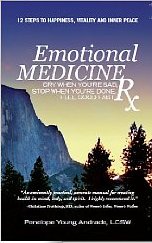
A third small press book I want to mention is psychotherapist Penelope Young Andrade's brand-new, lively, and personable self-help book, EMOTIONAL MEDICINE RX. Her idea is that if we can learn to distinguish the stories we tell ourselves about our sufferings and unhappiness from our real emotions– if we can learn to experience fully and directly the big four– Mad, Sad, Scared, and Glad– we will begin to heal ourselves physically and mentally. The book is full of stories of how people have used her techniques to enrich their lives and heal their complaints. Learn more about Penelope, her strategies, and her book at http://www.emotionalmedicine.com.
Notes on recent Kindle reading:
I also have some notes on various other things I've been reading– the Kindle selections, in particular, have a lot of serendipity, as I've been borrowing what was available through the library's Kindle collection and from the vast pool of available free books, many of which I was unlikely to have read in the past.. For example, after finishing INHERITANCE, I "bought" two free books related to the Grimké Sisters, footnoted in Jane Lazarre's INHERITANCE. First, I read an old 1885 biography (that would almost certainly not have been available to me without an elaborate university library search) of the Grimké Sisters. I also read Angelina Grimké's first pamphlet publication, a powerful call to Southern women to turn against slavery. The dual biography by Caherine H. Birney is called THE GRIMKÉ SISTERS SARAH AND ANGELINA THE FIRST AMERICAN WOMEN ADVOCATES OF ABOLITION AND WOMAN"S RIGHTS. It is one of those old-fashioned hagiographic biographies that somehow manages (like Mrs. Gaskell's biography of Charlotte Brontë) to tell a really good story in spite of skipping a lot of the juicy parts.
This one also assumes that all the readers share a Protestant Christian world view, but it's still a good short book. I especially enjoyed the selections of diary entries and excerpts from letters. Angelina, the much-younger of the sisters, was apparently a wonderful public speaker, the first American woman to address "promiscuous" crowds– that is, mixed with men and women. In her thirties, she married Theodore Weld and set up housekeeping with him and Sarah, the older Grimké sister. Something happened, not specified in this book, that kept her out of the public eye, possibly a a breakdown or maybe just a lot of childbirth and babies. The sisters and Weld, however, continued to teach and write, and had that admirable Protestant sense that serving is equally important in public or in private, large or small.
Their final great drama was the discovery late in their lives that one of their beloved brothers, Henry, had taken an enslaved lover with whom he had three boys. He never freed his family, and his legitimate heir continued to enslave them. When they discovered this, after the war, Angelina and Sarah helped the young men in their careers: one became a well known Presbyterian minister and the other a Harvard educated lawyer whose daughter was a poet in the Harlem Renaissance.
A Kindle library borrowing was COMPOSED by Roseanne Cash– this just attracted me at the moment and was lots of fun with its scenes backstage in a musical celebrity family. Roseanne Cash's persona is likeable, and she is a highly accomplished song writer, musician and performer, but it cannot pass notice, either, that Roseanne got a LOT of help along the way– her father supporter her financially through a decade of experimentation, and gave her introductions and chances in the music business that no one else would ever have had. This is not said to denigrate Cash, but to remind us all that talent is precious but far from uncommon-- ask anyone who has ever worked with the arts with children. The next step, success, especially commercial success, requires a whole other set of skills and nurturing and luck. Imagine thus a potentially brilliant pianist who grows up undernourished and ends up a teenage addict and eventually in jail. This is the thesis of Virginia Woolf's famous essay about Shakespeare's imaginary sister Judith who had all the talent and none of the other requirements to succeed.
But I liked the book– and I liked Roseanne Cash too for her honesty and directness.
IN THE GARDEN OF BEASTS: LOVE, TERROR, AND AN AMERICAN FAMILY IN HITLER'S BERLIN was recommended to me by a writer friend as an excellent example of an accurate and highly entertaining nonfiction book built out of letters and diaries. It is about the American ambassador to German and his adult daughter and their attempts to be upbeat about the brand new Chancellor Hitler and his regime and their gradual disillusionment and horror with the Nazis. Hitler et alia in he early years is interesting-- especially how the Nazi's squabbled with and killed each other-- but more interesting the cultural anti-Semitism and general ignorance of the Americans.
Finally, moving away from under-reported and under-read, I took a look at the wildly popular young adult novel HUNGER GAMES by Suzanne Collins. For this one I paid $4.69, which I absolutely think was worth it. I liked it a lot– a real trip. I admired how she managed to make the heroine at once believably tough and really disinclined to kill people,which is what she will have to do to triumph-- and survive-- the Games. In the end, she succeeds most by teaming up. Least interesting to me was the love stuff, not sure why. It felt whipped up to me. I would like to have seen it end cleaner. But this was partly done to lead into two more books of the Trilogy. I was not as totally into it as I was into Fire and Ice, but Fire and Ice is a much larger world.
And finally finally one non-Kindle actual hardcover novel, WHEREVER YOU GO, by Joan Leegant. This is highly recommended, full of interesting Israelis and Americans in Israel: a man who discovers Judaism, goes orthodox, then pulls out of it; strong-jawed, laconic Shin Bet operatives, a crazy American kid who decides to kill some Arabs and is given support by the crazy right-wing This Land Is Mine guys. It functions neatly as a primer on a whole set of attitudes and issues towards and in Israel. And I couldn't' stop reading.
More small press books below in the announcements section.
ANTHOLOGY RECOMMENDATION FROM ED DAVIS
A book that men as well as women will enjoy is THE MOMENT I KNEW: REFLECTIONS FROM WOMEN ON LIFE'S DEFINING MOMENTS ($14.95 from www.sugatipublications.com), a collection of brief essays and poems by women from six countries. I found it so compelling I read most of it in a weekend.
My friend Cyndi Pauwels' essay, "Powerful Eyes of Love," appears along with twenty-nine others in the second "Reflections from Women" series, founded by editor and psychotherapist Terri Spahr Nelson, who hopes to provide writers as well as readers the chance for self-examination, expression and healing. Writers from Granville, Ohio to Reading, England tackle topics ranging from relationships to pregnancy, family and children.
In Cyndi's essay, present meets past on a recent icy day following an eight-inch snowfall. She re-lives, in the span of a few minutes, the years between ages seven and seventeen when her step-father abused her for everything that went wrong in the household—just the way everything seems to be going wrong on this day. But in a shattering climax, Cyndi discovers she is not that abused, fearful child anymore.
Editor Nelson designed the Reflections of Women series to be a collaborative process. Cyndi said she never felt forced to accept Nelson's proffered editing, and contributors were allowed to vote on the book's cover photo as well as which women's charities the book would benefit. (Purchasing online from Sugati guarantees a greater percentage to these worthy organizations.) Such a democratic process is rare in the small press publishing world. Interested writers should visit the website to see topic areas for upcoming books in the series, along with deadlines. An interview with Cyndi Pauwels appears on my website: http://authoreddavis.blogspot.com.
TWO REVIEWS BY PHYLLIS WILSON MOORE
THE YANKEE AT THE SEDER
Have you ever wondered about the role Jewish Americans played in the Civil War? Do you know what a seder is and how it is celebrated, or how Passover traditions relate, sort of, to the 4th of July? THE YANKEE AT THE SEDER, a unique children's picture book by Elka Weber with illustrations by Adam Gustavson from Tricycle Press in Berkeley, CA, is an enjoyable and educational way for both children and adults to learn about Passover and freedom.
A Virginia Confederate Jewish family, reeling from the Yankee occupation of their town and word of Lee's surrender, prepares for Passover. Ten year old Jacob is especially unhappy; he will not get to be a solider. When his mother invites a stranger, a Yankee Jewish solider, to their seder and to spend the night, he is angry. This fictional version of an actual event includes end notes revealing the facts of the two families involved, the Yankee soldier, of Philadelphia, and the "enemy" family who befriended him. It is a heartwarming story, sensitively illustrated, of freedom and acceptance.
Found: A BAD BOY in the Library
What attracted me to this memoir was the title, BAD BOY [by Walter Dean Myers], written in large red
letters on the dust cover. As a former high school teacher, I detest labels slapped on children. "Bad boy" and "no good" cause me to bristle.
Myers, once a young extremely bright "bad boy," tells the story of his painful growth to manhood. So fond of reading and writing he hid his library books in a brown paper bag, he became a high school drop-out eager for a fight.
How he survived adoption, a speech impediment, being overly tall, having a passion for poetry and reading, racism, poverty, fighting neighborhood gangs, teen-hood, the army, and menial jobs, makes a story most teens will tap into. How he became one of the nation's most "awarded" and respected authors of children's and youth books is a gripping story.
Myers appreciates the important roles reading and writing play in his life as did finding a community respectful of his talents. This book by a former "bad boy," has substance, sadness, and humor. It is suitable for teens and adults and as good as a memoir can get.
Myers [photo at right], born in Martinsburg, West Virginia, grew up in Harlem, New York.
MORE RECOMMENDATIONS
Joel Weinberger recommends THE BLIND SIDE, the book. "As is probably the case for many people, he writes, "I came to read THE BLIND SIDE after seeing the surprisingly good movie that was based on the book. When I mentioned to a friend that I enjoyed the movie, he pointed out that it was only half the story. While certainly the central story of the book is around the offensive lineman Michael Oher's journey, the other half is around the evolution of the game of football, strategically and economically, around the offensive line. Much like the movie MONEYBALL ,as compared to the book, the movie only tells one half of Michael Lewis's story, leaving the more quantitative half for readers. (For the record, I very much enjoyed MONEYBALL the movie as well as the book.)
"All of this is to say that THE BLIND SIDE has two distinct, but tightly wound, focuses. One is the now well known, but still incredible, story of Michael Oher's journey from a homeless teenager to one of the most incredible forces to ever play college football (and now in the NFL). In several incredible strokes of luck, Michael Oher is brought from the street to an almost entirely white high school, eventually meeting the Tuohy family, who guide him through the wealthy, white world he has found himself in. The family helps him take advantage of his natural, physical gifts, and become the most recruited football player in high school, as well as increase his grades as necessary to play NCAA football, despite the assumptions surrounding him that he isn't intelligent enough.
"The other half of the story, which, as a quantitative man myself, I find even more fascinating, is the story of the evolution of football itself. The book explains *why* Michael Oher is so prized by college football programs and the NFL. Michael Lewis gives a brilliant account of the state of football in 1981, when Lawrence Taylor (L.T.), arguably the best linebacker of all time, makes his appearance in the league. L.T. completely alters the game of football, and especially the economics of how important it is to protect the quarterback. Michael Lewis discusses the implications of this defensive approach and how, in particular, it affected the offensive design of Bill Walsh, the coach of 49ers, who eventually led his teams to several Superbowl titles. In this context, Michael Lewis shows the transformation of the NFL from a place where many of the players are "interchangeable" and seen as equally important, to the rise of the importance of the left offensive tackle, who protects quarterbacks from linebackers. The economics that Michael Lewis brings to light are fascinating in a very similar way to MONEYBALL.
The book is not quite as deep as MONEY BALL, in many ways, and at times it seems Lewis has found himself drawn into his subject in such a way that it is not subjective (it terns out in the afterward that Sean Tuohy, one of the main subjects, is a childhood friend of Michael Lewis). For these reasons, I can't quite bring myself to give it a 5-star rating, but call it a sold 4.5. Without hesitation, I recommend this book to anyone with an interest in the economics of sports, or just in for a touching story of a life saved.
ONLINE AND ON THE AIR
Laura Bentley and Marie Manilla interviewed on the radio: http://woub.org/2011/11/23/poetry-and-prose-talk-marie-manilla-and-laura-treacy-bentley
A successful self-publishing author: http://online.wsj.com/article/SB10001424052970204770404577082303350815824.html
Barbara Crooker on Your Daily Poem. See Barbara, right.
ANNOUNCEMENTS, NEWS, CONTESTS, WORKSHOPS, READINGS ETC.Johnny Sundstrom's novel DAWN'S EARLY LIGHT is now available: In 1849 a wagon train was moving slowly along the parched Oregon Trail in the empty desolation that was to become known as southern Wyoming. Martha Bradford was told she must discard either her cast-iron cook stove or her
pianola to lighten the burden for the oxen. She has them both unloaded and then refuses to go on any further: "She declared that if the only things that made her life worth living were being left behind, they'd just as well leave both the stove and the pianola, and her with them."
This novel is based on the next six generations of her family and the first ranch settled in that part of the country. Here are real cowboys and cowgirls, Indians of the past and present, a faith-challenged evangelist, a militant suffragette, newspaper owner, and many others, linked together by their hard work, rowdy pleasures, their spiritual beliefs or non-beliefs, and stitched into a panoramic story-quilt representing the dream of the Morning Star and its hopeful annunciation of a new day rising in the Old West.
JOHNNY SUNDSTROM has lived most of his life in the American West. His book is a tribute to this great region, its people and places, its history and its future. He is part-owner and manager of a livestock and forestland operation in western Oregon, a natural resources consultant, and high school track coach. For nearly 40 years, he has spent part of every summer visiting his relations in Wyoming. He graduated from Williams College with a degree in English Literature and has written extensively over the years, as well as having been involved in professional and amateur theater.
Virginia Center for the Creative Arts anthology is now available-- click here. Poets include Kelly Cherry, Halvard Johnson, Barbara Crooker, J.C. Todd, Thaddeus Rutkowski, Neil Shepherd, B.J. Ward, Colette Inez, and many, many more.
Larissa Shmailo has new e-book from Jeffrey Side's press, Argotist Ebook. It is a free download, so check it out:
Ardian Gill has three images in the PAI show at the Office of Borough President Scott Stringer, 1 Centre Street 19th Floor. Please bring ID. Exhibit open 9-5 PM Monday thru Friday.
PM Press has some excellent new books out including a reprint of a Marge Piercy novel and On the Ground: An Illustrated Anecdotal History of the Sixties Underground Press in the U.S.edited by Sean Stewart.
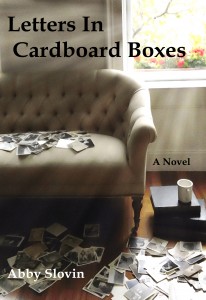
Abby Slovin's new book Letters in Cardboard Boxes has been called "a novel that you will want to keep with you for the rest of your life. A book that will remind people why they love to read.”
Deb C. Gaisford has a new story online at THE FEAR OF MONKEYS: "Love Letters from Vietnam,"Burt Kimmelman's The Way We Live is now available from Dos Madres Press (click here) and Amazon (click here)."Burt Kimmelman is a poet who trusts what is: the continuous autonomy of two people in a close marriage, the unalterable passage of time, the lies the mirror tells us, the comfort of "simply living / among the objects of the day." Yet, like the inimitable domestic scenes painted by Pierre Bonnard, Kimmelman's quiet poems contain the luminescence of perception, its lure, its beauty, its Zen of breath, tracing beauty in the pulse of the extant." - Star Black
Leora Skolkin-Smith's new novel Hystera is about to launch. Early Praise includes: "Hystera is a haunting, mesmerizing story of madness, longing and identity, set against one of the most fascinating times in NYC history. Skolkin-Smith's alchemy is to inhabit her characters even as she crafts a riveting story that is nothing short of brilliant."-- Caroline Leavitt, New York Times bestselling author of "Pictures of You", Reviewer.
Barry Wildorf's FLIGHT OF THE SORCERESS won the Global E-Book award for best historical fiction!
A personal essay on witnessing the final space launch by Melanie Vickers appeared on July 28, 2011 at http://www.dailymail.com/Opinion/Commentary/201107271141
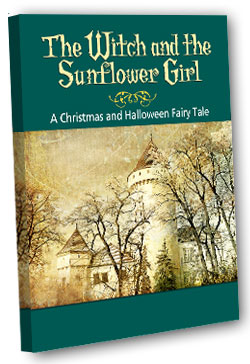
Erik Corr's e-book THE WITCH AND THE SUNFLOWER GIRL is now available:
The subtitle is "A Halloween and Christmas Fairy Tale about Karma and Free Will," and the story only costs .99 cents! Also see Erik's Youtube about an open source novel he's writing: http://www.youtube.com/user/erikTT1
Mark De Foe's tenth chapbook of poems In the Tourist Cave is coming out this fall. Pre-publication orders are now being taken by Finishing Line Press of Georgetown, KY. Order online at finishinglinepress.com and click on "new releases:"http://www.finishinglinepress.com/NewReleasesandForthcomingTitles.htm Click on the "New Releases and Forthcoming titles" link.
Cat Pleska has a piece about the terrors of planes at Airplane Reading: essays about airplanes. Check out her "Rock and Roll" at http://airplanereading.org/ .
New book from Halvard Johnson: Sonnets from the Basque & Other Poems.
PAPERBACK BOOK SWAP
Don't forget – get rid of your good quality paperback books and get new ones for the price of postage by swapping at The Paperback Book Swap: http://www.paperbackswap.com/home.php
Friday, December 09, 2011
Saturday, December 03, 2011
My Brother-in-Law: Jedi Master of the World Wide Web
My brother-in-law's talk at Berkeley earlier this week got a nice write-up in the New York Times-- the writer calls it "How the Internet is Destroying Everything," which is just about exactly the opposite of David (Weinberger)'s outlook: he thinks the web is the future and it's a good thing.
He (David) also has the cover article for the current issue of Scientific American and a new book coming out called Too Big to Know:. We call him a computer guru, which is sort of what he does-- he thinks about the world wide web and presently has a job at Harvard working on Digitalizing All the Books or something like that.
He got a PhD in philosophy (Heidegger specialist) at a time when there were-- literally-- no jobs. He began doing some writing for a computer company, and ended up-- Jedi Master of the World Wide Web!
He (David) also has the cover article for the current issue of Scientific American and a new book coming out called Too Big to Know:. We call him a computer guru, which is sort of what he does-- he thinks about the world wide web and presently has a job at Harvard working on Digitalizing All the Books or something like that.
He got a PhD in philosophy (Heidegger specialist) at a time when there were-- literally-- no jobs. He began doing some writing for a computer company, and ended up-- Jedi Master of the World Wide Web!
Wednesday, November 30, 2011
Genre and Literary
Second go-through of a much-beloved genre novel is interestingly disappointing to me. My first reading, I could not slow down, I yearned to get back to it, woke in the morning thinking of it. This time, since I know how so much of the story comes out, the devices are more obvious, and sometimes creaky. Is it just that I know which characters will die? I notice interesting threads that seem to have been dropped.
This may be what it means to be a really tremendous writer of story and narrative: everything in the end is in service of momentum, so there is less available for the second reading. This, then, a tentative definition for literary: that there is still plenty there when you read it a second time.
Tuesday, November 29, 2011
Asbestos Bye-bye
The asbestos is really gone! We found out shortly after the six days' power outage that we needed a new boiler-- and before the boiler, the asbestos had to go, and before the asbestos-- the basement had to be cleared of rubbish. All of which is one of those famous blessings in disguise. As of today, the rubbish is largely gone-- and now the asbestos too! Three or four guys (trucks say "Renovation") working all day, and I don't know how they do it because I saw nothing, having no intention of going down there-- warning signs on the basement door-- but they cleaned that place up beyond belief: and painted the pipes white-- apparently part of the abatement.
I am again amazed by how someone somewhere can do anything: all those enormous tasks like rolling boulders uphill in my mind-- can be done by trained workers. Hail, Labor! Why don't Americans respect it?
I am again amazed by how someone somewhere can do anything: all those enormous tasks like rolling boulders uphill in my mind-- can be done by trained workers. Hail, Labor! Why don't Americans respect it?
Saturday, November 26, 2011
Beaautiful weather
Thanksgiving has come and gone, and we're in a spate of really gorgeous weather-- up into the sixties Fahrenheit, and the sun absolutely glaring with most of the leaves gone. Had the trees been like this three weeks ago, there would have been no six days without power.
We had Thanksgiving at Andy's sister Ellen's in Clinton, Connecticut, also his brother David, wife Ann, and Leah, plus Ellen's boys Greg and Jonathan plus Bethany. Joel and Sara are still at her brother's wedding in Mexico; my mom in Ohio with her nephew's family.
I'm happy to be finishing off some projects-- a promised book review, a holiday letter. Everything low key, sunny, at least for another hour-- sunset will be coming at us very early
We had Thanksgiving at Andy's sister Ellen's in Clinton, Connecticut, also his brother David, wife Ann, and Leah, plus Ellen's boys Greg and Jonathan plus Bethany. Joel and Sara are still at her brother's wedding in Mexico; my mom in Ohio with her nephew's family.
I'm happy to be finishing off some projects-- a promised book review, a holiday letter. Everything low key, sunny, at least for another hour-- sunset will be coming at us very early
Tuesday, November 22, 2011


Celebrations and Change
We're coming up fast on Thanksgiving, with various appointments aimed at getting the boiler fixed in the next two days. Meanwhile, Joel and Sarah made it safely to Mexico for her brother's "destination" wedding.
I had my Novel I class at NYU last night, and now I'm on the short vacation for five days.
I’m working on my holiday letter, short this year, having decided I’d rather use the space for some pictures– snowy branches the day before Halloween– the day the electricity went off! I’m still waking in the morning thrilled that we have heat (albeit, heat with the steam escaping through rust-vents in the aged boiler that we’re about to get replaced.
The good news about that particular debacle is that it has forced us to clear the basement and abate the asbestos.
And meanwhile, around the world: occupations, expressions of dissatisfaction and worse for the powers that rule us. Tahir Square again in Cairo, Berkeley and Davis. Change coming will he, nill he.
I had my Novel I class at NYU last night, and now I'm on the short vacation for five days.
I’m working on my holiday letter, short this year, having decided I’d rather use the space for some pictures– snowy branches the day before Halloween– the day the electricity went off! I’m still waking in the morning thrilled that we have heat (albeit, heat with the steam escaping through rust-vents in the aged boiler that we’re about to get replaced.
The good news about that particular debacle is that it has forced us to clear the basement and abate the asbestos.
And meanwhile, around the world: occupations, expressions of dissatisfaction and worse for the powers that rule us. Tahir Square again in Cairo, Berkeley and Davis. Change coming will he, nill he.
Wednesday, November 16, 2011
The Week That Is
We have had quite a several days-- all the usual professional work, plus making preparations for a new boiler-- that is, before the boiler, getting rid of the asbestos on the pipes and before that, cleaning out the basement-- and then the world intrudes: our daughter-in-law was on the premises of her graduate school when a gun-wielding crazy appeared.
Everyone fine, except the gunman, who was shot, not killed. And then we heard that a young friend had just joined Occupy Wall Street in time to get arrested in the wee hours Tuesday.
Everyone fine, except the gunman, who was shot, not killed. And then we heard that a young friend had just joined Occupy Wall Street in time to get arrested in the wee hours Tuesday.
Monday, November 14, 2011
Barbara Kingsolver Festival
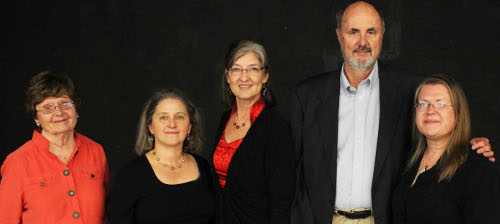
Emory & Henry College, left to right: Linda Wagner-Martin; MSW;
Barbara Kingsolver; Steve Fisher; Sandy Ballard
September 29 - 30, 2011 was the festival celebrating Barbara Kingsolver at the Emory & Henry College's 30th Literary Festival. I was honored to be invited to give a paper on Kingsolver's The Lacuna as a political novel.
Friday, November 11, 2011
Two First World War Poems For Veterans' Day,
In Flanders Fields
By John McCrae
In Flanders Fields the poppies blow
Between the crosses, row on row,
That mark our place; and in the sky
The larks, still bravely singing, fly
Scarce heard amid the guns below.
We are the Dead. Short days ago
We lived, felt dawn, saw sunset glow,
Loved and were loved, and now we lie
In Flanders Fields.
Take up our quarrel with the foe:
To you from failing hands we throw
The torch; be yours to hold it high.
If ye break faith with us who die
We shall not sleep, though poppies grow
In Flanders fields.
Dulce Et Decorum Est
Wilfred Owen
Bent double, like old beggars under sacks,
Knock-kneed, coughing like hags, we cursed through sludge,
Till on the haunting flares we turned our backs
And towards our distant rest began to trudge.
Men marched asleep. Many had lost their boots
But limped on, blood-shod. All went lame; all blind;
Drunk with fatigue; deaf even to the hoots
Of disappointed shells that dropped behind.
GAS! Gas! Quick, boys!- An ecstasy of fumbling,
Fitting the clumsy helmets just in time;
But someone still was yelling out and stumbling
And floundering like a man in fire or lime.
Dim, through the misty panes and thick green light
As under a green sea, I saw him drowning.
In all my dreams, before my helpless sight,
He plunges at me, guttering, choking, drowning.
If in some smothering dreams you too could pace
Behind the wagon that we flung him in,
And watch the white eyes writhing in his face,
His hanging face, like a devil's sick of sin;
If you could hear, at every jolt, the blood
Come gargling from the froth-corrupted lungs,
Obscene as cancer, bitter as the cud
Of vile, incurable sores on innocent tongues, -
My friend, you would not tell with such high zest
To children ardent for some desperate glory,
The old Lie: Dulce et decorum est
Pro patria mori.
By John McCrae
In Flanders Fields the poppies blow
Between the crosses, row on row,
That mark our place; and in the sky
The larks, still bravely singing, fly
Scarce heard amid the guns below.
We are the Dead. Short days ago
We lived, felt dawn, saw sunset glow,
Loved and were loved, and now we lie
In Flanders Fields.
Take up our quarrel with the foe:
To you from failing hands we throw
The torch; be yours to hold it high.
If ye break faith with us who die
We shall not sleep, though poppies grow
In Flanders fields.
Dulce Et Decorum Est
Wilfred Owen
Bent double, like old beggars under sacks,
Knock-kneed, coughing like hags, we cursed through sludge,
Till on the haunting flares we turned our backs
And towards our distant rest began to trudge.
Men marched asleep. Many had lost their boots
But limped on, blood-shod. All went lame; all blind;
Drunk with fatigue; deaf even to the hoots
Of disappointed shells that dropped behind.
GAS! Gas! Quick, boys!- An ecstasy of fumbling,
Fitting the clumsy helmets just in time;
But someone still was yelling out and stumbling
And floundering like a man in fire or lime.
Dim, through the misty panes and thick green light
As under a green sea, I saw him drowning.
In all my dreams, before my helpless sight,
He plunges at me, guttering, choking, drowning.
If in some smothering dreams you too could pace
Behind the wagon that we flung him in,
And watch the white eyes writhing in his face,
His hanging face, like a devil's sick of sin;
If you could hear, at every jolt, the blood
Come gargling from the froth-corrupted lungs,
Obscene as cancer, bitter as the cud
Of vile, incurable sores on innocent tongues, -
My friend, you would not tell with such high zest
To children ardent for some desperate glory,
The old Lie: Dulce et decorum est
Pro patria mori.
Monday, November 07, 2011
Joel's Marathon!
November 7, 2011
The heat has been on for a couple of days, and Joel and Sarah are on their way home to Berkeley. He ran the New York Marathon yesterday, and I have pictures!
 There's Joel on Fourth Avenue in Brooklyn having a great time with all the smiling runners. Mile seven, he felt great, and was about to dodge off course to kiss Sarah!
 This is after the race, and he feels terrible, and I'm hugging him.

Later than same evening, he feels pretty darn good, all things considered. Sarah on his right, holding the Finisher's medal.
The heat has been on for a couple of days, and Joel and Sarah are on their way home to Berkeley. He ran the New York Marathon yesterday, and I have pictures!
 There's Joel on Fourth Avenue in Brooklyn having a great time with all the smiling runners. Mile seven, he felt great, and was about to dodge off course to kiss Sarah!
 This is after the race, and he feels terrible, and I'm hugging him.
Later than same evening, he feels pretty darn good, all things considered. Sarah on his right, holding the Finisher's medal.
Sunday, November 06, 2011
Marathon Day!
We're off to try and spot my son among the 47,000 running in the New York Marathon! We've got elaborate plans for where to watch, sent electronic messages to be flashed as he runs by-- Andy drove him to Giants Stadium at 5:30 a.m. to pick up a bus to Ft. Wadsworth in Staten Island (foot of the Verrazano Narrows Bridge. Big Day!
Saturday, November 05, 2011
Back in the 21st Century-- Electricity!

After 5 and 3/4 days-- we once again have electricity. A week ago today, the October snowstorm hit and trees and tree branches came down everywhere, including on the line that feeds houses on our street. No heat, huddling in the kitchen with gas flames and candles, listening to a crank radio, going to Andy's office or the library for Internet. Amazing.
But-- notice along with candles and unseen gas burners warming us up, I'm reading my Kindle, so we stayed in touch with our century at least a little bit.
Saturday, October 22, 2011
My First Electronic Library Book
I've been telling people that the big problem with Kindle--aside from how hard it is to take notes compared to an old dead tree book-- is that you can't share or borrow the overpriced newer (read in -copyright) books. It seems to me that e-books absolutely ought to be the cheapest form of books-- minimal materials, you can't lend it to a friend or resell it, etc. Amazon runs an in-house sharing site where I early on got one good book, the novel about Thomas Cromwell, but it has essentially turned into advertisements for new books for Kindle.
BUT NOW- it has finally happened. It is finally possible to borrow from the library. I had to go in person first to get my card renewed (and I ended up promising to present a program for the library in the spring!) and they were very helpful showing me the website for the regional pool of library e-books, many with waiting lists, but I made the experiment by using "advanced search" and skimming over available books, and found Sarah Waters' newest. I now have it on my Kindle, for two weeks, anyhow, and I'm thrilled. I don't know how this works region to region, but here you get up to 5 books, and there is no extension-- you go back on the waiting list if you didn't finish. Fine, who cares. To borrow a Kindle book, you get sent to Amazon, and I had a little to-do about which email was my sign in, and actually ended up calling and speaking to a human being, but the next phase is beginning to happen....Monday, October 17, 2011
Big Pub Panics
Today's New York Times has an article about the panic among conventional publishers over Amazon.com beginning to publish:
Saturday, October 15, 2011
How I Spent Satuday...

I didn't make it to Wall Street with the support march that my adjuncts' union made today, but I did dress up for my Saturday errands: I made a sort of poncho out of an ancient linen tablecloth with my message! I got thumbs ups and smiles, one person asked to take my picture, and a guy in the supermarket wanted to talk about the unfairness of the system. Making change? Probably not. Feeling chipper? Yes.
Friday, September 23, 2011
I Was There First!
Today's New York Times has an article about the new Africa exhibit at the Metropolitan Museum: "Heroic Africans," statues and busts based on historic figures but abstracted into ideal moral and leadership qualities. And I saw it first-- on Wednesday. It has wonderful big idealized portraits in wood and other materials of chiefs and other leaders, everything with great presence and dignity.
I love when this happens, when I wander into and exhibit and have my own reactions. I knew it was opening from the website, and I knew that was the first day, but I knew nothing about it, was surprised by how large it was, and very, very impressive. I apparently started at the wrong end, the direction the guard told me to go when I asked, and I definitely want to go back.
It was my ideal way to begin to get to know an exhibit (except that I was tired from visiting other things already): to wander in and around an exhibit, pretty innocent of critical apparatus, just let it capture me, whatever piece (for me Wednesday it was the magnificent and naturalistic terra cotta Yoruba heads. Then to go back with systematic reading of labels and/or audioguide, etc.
Cool to have been there before the Times gave its imprimatur!
I love when this happens, when I wander into and exhibit and have my own reactions. I knew it was opening from the website, and I knew that was the first day, but I knew nothing about it, was surprised by how large it was, and very, very impressive. I apparently started at the wrong end, the direction the guard told me to go when I asked, and I definitely want to go back.
It was my ideal way to begin to get to know an exhibit (except that I was tired from visiting other things already): to wander in and around an exhibit, pretty innocent of critical apparatus, just let it capture me, whatever piece (for me Wednesday it was the magnificent and naturalistic terra cotta Yoruba heads. Then to go back with systematic reading of labels and/or audioguide, etc.
Cool to have been there before the Times gave its imprimatur!
Subscribe to:
Comments (Atom)