Saturday, January 29, 2011

Blog Changes

I'm making some changes in my blogs. This is becoming my regular spot for notes and newsletters. I am also continuing to keep Literature and the Web in its usual place-- latest post on "The Joy of George Eliot!"

I now have a page on my website here with links to very old blogs and family photos. I had a lot of fun with that blog, back when things were more computer based--earthbound rather than The Cloud! But the time has come to consolidate and update!

For the record, here are the links to old things:
Blog 2010
Blog 2009
Blog 2008

July-December 2007
Jan-June2007
Jan-June 2006
July-Dec 2006
Blog 2005
Blog 2004
Personal Photos

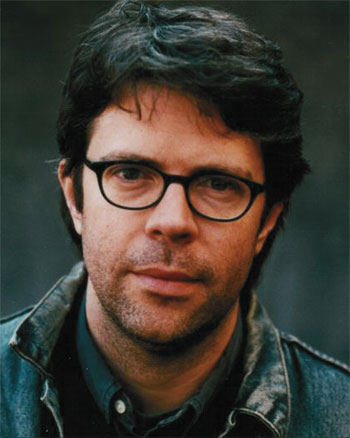
Photos of MSW for Publicity Purposes
College Graduation
Christmas 2006
Andy's Honoring

Thursday, January 27, 2011

Snowed in again! Andy is snowblowing after a scare when the machine didn't work for a while, I've been out shovelling steps for two porches, will go out later for the car. The sun just came out so it is extraordinarily beautiful, a little blue sky peeping, and this means we'll get a lot of melting and evaporating, but this wa at lot of snow.

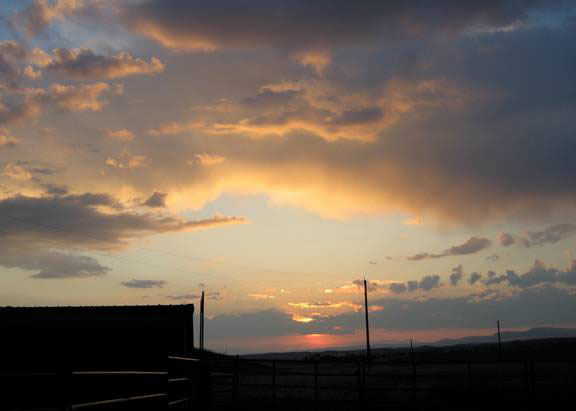
The picture above, from my office window was from before it snowed again.


I've now got all (I think) of George Eliot's fiction on the Kindle. This probably says a lot about my prehistoric taste in literature. I just read "Brother Jacob" and "The Lifted Veil," probably the only fiction of hers I’d never read before. Often grouped together because of length (short) althought the lifted veil was written between Adam Bede and The Mill on the Floss .

"The Lifted Veil" is a kind of Henry James-in-his-supernatural mode story with a touch of Poe, very overwrought and with a totally bizarre medical experiment in the end that causes a corpse to Tell All– still, there were parts that completely gripped me, the strnage passive narrator who sees too much and is involved in a truly rotten marriage-- which I'm beginning to think is the great Victorian subject-- being caught in a relationship with the wrong person and being unable to get out of it.

I’m reading a little in Haight’s bio of her, too, the parts I didn’t pay much attention to like her first time alone, in Geneva, in pensiones, a thirty year old mademoiselle, not beautiful (even the drawings of her barely manage to flatter– the big hooter, the half-blind eyes, the pendulous lower lip). Thank God for George Lewes making her happy and thus Middlemarch and The Mill and Adam and Daniel and Gwendolyn and all the rest.

"Brother Jacob" is a parable, unpleasant family thief found out by his enormous pitchfork toting retarded brother.

I LOVE getting these free and reading them in the calm gray linear environment of the Kindle.

Sunday, January 02, 2011

Reading on the Kindle Notes

I’ve finished my first book on my Christmas Kindle: Anthony Trollope’s The Prime Minister. I did not start the book on the Kindle, having read maybe a fifth of it in a Penguin paperback, but read most of the book on the e-reader, including early pages that I didn’t read well becaues of self-awareness and awareness of the device.

Once I got used to it, I liked it a lot. Here are some initial observations:

The lightness of the device (when it isn’t wearing its new protective cover), is amazing and much better for reading in bed than any book I’ve read since comix.

Something about the format, the relatively small screen, which is highly readable, changes my reading style with the intense focus on the present paragraphs. I find it hard to skim and modulate my speed, which I apparently never realized I did so much of. Since I will also be reading hard copy books, as well as the Kindle, I hope this simply turns into another way of reading, an addition to my reading repertoire.

What does look likely, and as I planned, is that I will gradually get all the free Victorian novels onto the Kindle and always travel with Geo. Eliot, Jane Austen, Uncle Tony, Charles Dickens, and all the rest of them. I’m not so sure about the Great Russians because of the issue of translations– the best translations are probably not going to be free. Do I really want Constance Garnett’s Tolstoy? Maybe I do. Anyhow, what I’m likely to carry with me is going to be out-of-copyright English language novels.

I haven’t tried poetry yet.

I haven’t bought a book for money yet. I was going to try the last of the Fire and Ice George R.R. Martin sword and sorcery books, but had already ordered a cheap used copy– a giant hard back. Too bad. I might still shell out six dollars to try it on the Kindle.

I’m not satisfied with how some of the books for Kindle look that are from sources other than the Amazon store (including the Smashwords books ): they have a double space between paragraphs, a combination of business letter and conventional narrative paragraphing that irritates me because it denies us novelists another means of expression– the double space.

More anon.

Saturday, January 01, 2011

Yes, Yes, It's January 1, 2011

January 1, 2011

A slow logy start to the new year. Banana waffles a la Andy, journal entries, bright and snowy uotside. It's a house bound few days for me followed by 4 days with Wayne 4th graders.

We saw a DVD of It's Complicated last night with Meryl Street and Alec Baldwin and a somewhat wasted Steve Martin (although knowing his comic genius makes his attractiveness to her believable– external to the movie, of course, except for one scene when high on pot and dancing, his zaniness busts out, his physical comedy) Streep is beautiful with her sixtyish face that occasionally collapses into crepey wrinkles, but comes back to beauty-- very realistic. Alec Baldwin is brilliant– fatuous, sleekly fat with his dense pelt of hair, smooth talking– steals the show, as does the actor who plays the older daughter's fiancĂ©.

And then there is Southern California. When do we get a working class story in which the people look spectacularly attractive and have complex feelings and act generally ethically, or at least correc their errors? Hollywood, of course, doesn't believe this is possible.

There is something really obnoxious, too, about how these people live, that part of the plot hangs on Streep finally getting the kitchen she has always wanted– an extenstion for a house that is perfect as it is. Give me a break. As I have always said in these situations, sure it's fine to hear about the sufferings etc.– of the rich and beautiful, and the intrense interior struggles of straight white men– but only if we get the other side too! And the other side is not just symbolic suffering of the pathetic poor! Being working class isn't tragic.

But you won't get it from Hollywood, nor, apparently, from conventional novels.

Does this mean I ought to be adding a POV for Merlee to Safe Houses?

Wednesday, December 29, 2010

My New Kindle!

I don’t know why I didn’t notice this on the first two days with my Kindle, but suddenly, last night, reading in bed, I started noticing a black “negative” of the page as it advanced to the next page. I thought at first it was some kind of lowered power level as the battery got used up, or maybe my tired eyes. But the battery was fine, and it was the same in the morning.

Well, I googled “kindle page turns negative,” and there was a site with a lot of commentary about this from people with identities like “Shangrilachica,” “Desertmama,” “Mccook666,” and a whole host of others who all agreed that there is something inherent in the e-ink technology (Nook, Sony, Kindle, all of them) that causes a black flash (what I called a negative) when you turn the page.

So it looks like get used to it or don’t use it. Which is fine, I’m willing.

What’s odd is why it took me so long to notice it. Was it that I was only beginning to get comfortable enough to sink into the story and be irritated by something pulling me out? Up to this point, I may have been less reading and more enjoying the awareness of Me Reading My Kindle.

But now I know: I have to suck it up until it becomes as invisible as my hand picking up the corner of a piece of paper and turning it.

Tags: , , ,

Sunday, December 26, 2010

The lightness and relative transparency of it delight me. I downloaded Trollope's The Prime Minister, which is what I've been reading in a paper back, and is something I like but am not totally caught up in or totally admiring of. The black words on gray are a complete pleasure, the lightness on my fingertips the size and shape please me. I lay in bed and held it up in the qir over my face. Easy. I like the two sided controls forward and back, although the left hand one, useful as it is,takes some getting used to -- intuitively, left should be back in my old brain. But that I see immediately is useful. Being a ble to make b igger letters to read temporarily sans glasses is good (I'll try that at night to read in bed).
The only thing that is disturbing me at the moment is the narrow focus on the present of the screen. I think (and I didn't know this) that I must , when I'm reading a conventional book, flip back and forth, unconsciously checking how much of the book is read, yet to read, taking a break from the simple focused reading. I check things, in other words, move back and forth a lot.
This electronic device is, for the moment, more linear than a book! Wow!

Friday, December 24, 2010

Whatever Your Holiday,
Celebrate the Light
The Love the Warmth


Ellen and Greg on their way, Joel and Sarah flying from Puerto Vallarta in a few hours.

Wednesday, December 22, 2010

December 22

Big news: I'm now legit with Dreamweaver (CS5, but really just Dreamweaver 11). I had no idea how stuck I was on that program till the flashing gremlins and grokking neutrons and other space trash zapped it and I couldn't cut and paste anymor. I use it A LOT, and that's without coming anywhere near using its full capabilities or even understanding much of it.

Tuesday, December 21, 2010

Today is the Winter Solstice.

From here on-- the Days get Longer!

The January online class, Strategies to Write Your Novel, is now closed. For information on future classes, click HERE

Friday, December 17, 2010

Well, this day I woke all cozy with things I wanted to journal about, and then had to move the Christmas tree so the man from the oil burner company could get in and diagnose the problem with the heating system, and now we’ve got the Petro guy in the basement. Sigh.

Meanwhile, yesterday saw the Jan Gossart (Gossaret, Mabuse, etc.) exhibit at the Metropolitan Museum yesterday. Until I started to get tired, I had such a lovely sense of being right where all the power lines come together, which is to say I was having a really good time. The painter a new one for me, old Dutch master, moving from Medieval to Renaissance, contemporary (and mutual influence with) Durer. He went to Rome as a young man and then gradually participated in the invention of the more fully molded Renaissance humanist painting style in which the three-dimensional forms come into the viewer’s space, as the curators say.

There was a nice video at the end about cleaning the pictures, and I almost missed the portraits at the end that were most thoroughly Renaissance in their particularity and penetration into my space. Also lots of mildly scholarly observations in the documentation about the specific statues and images and possibly pieces of statues used for models for images. Especially something called the Spinario, or "Boy With Thorn," a kid a thorn out of his foot. Funny drawing of the back of a statue at a strange angle. I loved Gossart/Mabuse's monkey-blunt-faced Jesuses (two versions of "Christ on the Cold Stone"), one twisted in pain, one looking up at spiritual ease in spite of torture. Anyhow, a wonderful exhibition, leaving me with the ususal awareness of gaps in my knowledge but great delight that I can be in the same space with all that human history and accomplishment.


December 5, 2010


Two December Haiku


Sillver lining clouds,

Early December ev'ning.

Suddenly-- huge sky!


Saturate my hues--

Sharpen each newly bare twig

Breathe in deeply-- Me!

Saturday, December 11, 2010

Meredith Sue Willis's Books for Readers # 137

Meredith Sue Willis's

Books for Readers # 137

MSW Home
For a free e-mail subscription to this newsletter, click here .
Note: To create a link to this newsletter, use the permanent link .

Featured This Issue:

Short Takes from High, Lazarre, & Sokolow
Joel Weinberger on EATING ANIMALS

New Books and Other News

Let me begin this issue with an excellent new novel, THE CHIEU HOI SALOON by Michael Harris. This is part of PM Press’s Switchblade series ( “a different slice of hard-boiled fiction where the dreamers and the schemers, the dispossessed and the damned, and the hobos and the rebels tango at the edge of society”). The setting is the seamy side of Long Beach, California, during year of the Rodney King beating and subsequent trials and riots. The protagonist is Harry Hudson, a chronic stutterer who works at a fictional newspaper called the CLARION as a copy editor. He is barely keeping his job, living in what he calls a “blur,” trying not to remember the death of an old villager when he was a soldier in Vietnam and the death of his small daughter much more recently. He does try to remember to send child support to his ex-wife and surviving child. When he is feeling particularly self-destructive, he goes to dives where people watch low quality pornographic movies and variously have sex with strangers and themselves. The good part of Harry’s life is Mama Thuy’s Chieu Hoi Saloon where he feels a modicum of belonging, and in his free time he tries to help a local prostitute with an extended dysfunctional and violent family.

Now here’s the thing: what I’ve described so far is how the book gets labeled noir, but Harry is at rock bottom, a lover and care-taker. It is Harry’s story, but Michael Harris gives the women in Harry’s life occasional point of view passages, notably the tough but tender Mama Thuy and Kelly the Kansas born African-American prostitute who always needs money. Even Harry’s religious zealot of a wife gets a passage that dips into her consciousness. All of these women, even his ex in her section, value, admire, and forgive Harry. If only Harry could forgive himself, which is the monumental task before him.

Harry’s adventures take place mostly on dark streets and in crummy rooms in rough neighborhoods and include being shot in a hold-up and taking a bizarre but bizarrely believable drive with an armed enemy in the back seat of his car. These elements– the scene, the slimy sex, the casual violence– are what makes the novel part of the Switchblade series, but while the story has hard edges, it isn’t really hard-boiled, not even heart-of-gold hard-boiled. Most of the evil (except for the plans of very distant, very rich newspaper owners) is as much situational and mistaken as it is intentional. Most of the people are in one degree or another understandable if not lovable, from the motley crew at the bar to Kelly and her incarcerated husband, her quarrelsome sister-in-law and niece, her ex-con brother, and her dangerous step-son.

Everyone uses Harry, but also appreciates him as a friend– this is true of Kelly, and also of Mama Thuy, who accepts his money to bring her family out of Vietnam to California. Harry wants to be loved and maybe married, but instead is a friend, maybe a more valuable relationship to most women than husband or lover. Above all, Harry is worth reading about and feeling for. It’s a good book, engrossing and– even if the end is not exactly upbeat– all the doors are open.

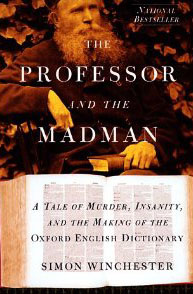
Next, I want to recommend a nonfiction book that wasn’t as good as I’d hoped, but was still pretty darn fascinating: THE PROFESSOR AND THE MADMAN: A TALE OF MURDER, INSANITY, AND THE MAKING OF THE OXFORD ENGLISH DICTIONARY by Simon Winchester. There are a few too many instances of Winchester eating his narrative cake and having it too. For example, he tells an apocryphal tale of how Professor James Murray met Dr. W.C. Minor without knowing that he was in an institution for the criminally insane. In fact, Murray learned this in a much less dramatic way. Wincester tells the real, less thrilling version much later in the book. Unfortunately, if you only read the first part of the book, you’d go away with the wrong information.

Less egregious is his lurid narration of the murder that got W.C. Minor in the insane asylum in the first place. The London fog and darkness is well-described and evocative, but, again, it’s written for maximum dramatic effect. What I liked best was the lively description of how the OED was developed; what a monumental task it was– and how it was in some ways a proto-Wikipedia; for the story of poor Dr. Minor and his work on the OED and his insanity. It’s such a sad story: his crazy crime, his time as a Civil War surgeon (he was an American), his pathetic self-mutilation late in life. To see more of Winchester’s broad reach of nonfiction books, go to his website book page.

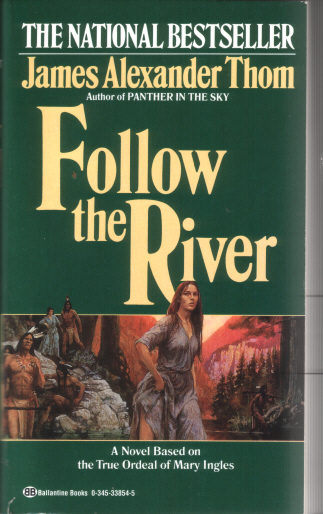
I also read with great pleasure (thank you Connie Brosi for the recommendation!) FOLLOW THE RIVER by James Alexander Thom. This is an historical novel of the amazing true adventure of Mary Draper Ingles, who was captured by Shawnees, escaped, and walked hundreds of miles home through the Appalachian mountains in early winter through incredible difficulties. She has a companion, too, a crazy, hungry Dutch woman, who adds a kind of twisted humor and interesting human relationship to the amazing physical challenges. Thom does the physical challenges extremely well. He treats Ingles as an ordinary human being bent on survival, and his respect for her has just the right tone. He writes of the horror from the white settlers’ point of view at the scalping and murder by the raiding Shawnees, but also presents the Shawnee villages as complex communities, and even allows Mary a moment of considering accepting her captor, known as Captain Wildcat, as a husband.

When Mary chooses to run away and go home, she has to leave three children behind. The afterword of the novel tells about how one of her sons is eventually returned to the white world, but has an ambivalent relationship with it, and often returns to the Shawnee world.

I hope to read more of Thom’s books (see his website ), and the work of his wife Dark Rain Thom, a voting member of the council of the East of the River Shawnee of Ohio.

Finally, to stick with the old fashioned delight of tales well told, I have a new guilty addiction: the George R.R. Martin swords and sorcery series, FIRE AND ICE, starting with GAME OF THRONES. Boy, was this fun, and now about to become a series on HBO. It isn’t the kind of serious fiction I aspire to write myself (although when I enjoy it so much, I sometimes ask myself why it isn’t), and I could never read only this kind of book with its portentous hints of dark deeds past and darker deeds to come, with its beheadings and sword play, but it is fun fun fun. Part of what makes it work for me is that Martin, like James Alexander Thom, is willing to grant his women agency and power. There’s one charming girl character who is even a fighter, and a couple of armored warriors who are women as well as leaders. Another really good character is a dwarf known as the Imp who is a member of the bad royal family, but clever and humorous, and probably the most consistently reasonable voice in the book. I like some of the point-of-view characters more than others– the Imp and the fighter girl are my favorites– and I admit to speeding up over the whack thwack and sickening crunch of the battle scenes. One thing Martin does so well is the sorcery element– the dragons and secret magic– which are dealt with sparingly, which is fine with me, as my complaint in novels with magic is always that the writers tend to use magic or the arrival of the good dragons from the sky to solve plot problems they couldn’t resolve otherwise. So far, Martin is doing it all right.

Meredith Sue Willis


JOEL WEINBERGER ON JONATHAN SAFRAN FOER’S EATING ANIMALS.

Foer explicitly is "not trying to make you a vegetarian." He's lying; this is exactly what he's trying to do. In fairness, it is really about "better options" when eating animals, but by the end, it's quite clear what he thinks (and wants you to think) about "the best options" for eating meat. (Here's a hint: he's not in favor of them). Just to be clear, I don't think there's anything wrong with this approach, you just should be aware of what you're getting yourself into.

The book itself is solid, albeit heavy handed at points and missing critical arguments at times. For example, Foer makes a great deal of not-so-subtle argument by adjective, referring to the "Frankenstein genetic makeup" of factory-farmed chickens. He also fails to fully address several important questions, like why we have factory farming in the first place. Waving it off as merely a result of a drive for profit, he fails to point out that it is part of a greater movement towards factory farming that has greatly increased the worlds' food stores and in large part staved off food shortages.

That having been said, Foer paints a powerful portrait of exactly what goes into your meat. He is most successful when he sticks to simply describing the facts of factory farming: for the animals involved, for the environment, and for us, the humans (Spoiler alert: it isn't good for any of them). If you have a strong sense of supporting moral and ethical behavior, this is an important read in understanding exactly what goes into that chicken wing you're about to eat.

The inevitable comparison is to Michael Pollan's magnificent "The Omnivore's Dilemma." Let's cut to the chase: "Eating Animals" is not as good. Pollan does a much better job of not trying to appeal to emotion, and he at least *tries* to give a half-hearted defense of why factory farming is here. That having been said, Foer takes many of Pollan's arguments and applies them more fully to animal farming. At the very least, Foer makes you wonder about your meat consumption.

If you have an interest in where your meat comes from, this is a must read. Just know what it is before you start reading it.

SHORT TAKES

Jane Lazarre says: “Not only was the Oz memoir (A TALE OF LOVE AND DARKNESS see Issue # 136 ) one of the most wonderful books I have read, and I use it often for many reasons - writing and teaching, but the new novel by David Grossman TO THE END OF THE LAND is the best novel I have read in years - moving, beautiful, layered, complex. I also recommend FRIENDLY FIRE, and THE LIBERATED BRIDE, both by A.B. Yeshoshua, along with Oz and Grossman-- all three Israelis - very highly.”
Monique Raphel High writes, “Hallie Ephron has a new mystery novel: COME AND GET ME. Her first one, NEVER TELL A LIE, was so compelling and such a page-turner that we should all rush off to buy it! There was also a delightful piece by her sister Nora in the New Yorker a few weeks ago that mentioned Hallie and her sisters.”
Jeffrey Sokolow recommends A CURABLE ROMANTIC by Joseph Skibell (Algonquin Books, 2010). “In this sprawling and magical novel, which begins in Vienna in 1895 and ends in the Warsaw Ghetto in 1940, the protagonist has strange encounters with three well-known historic personages – Sigmund Freud, the founder of psychoanalysis; Ludwig Lazarus Zamenhof (aka Doktor Esperanto), inventor of the ‘universal language’ Esperanto; and the Hasidic rebbe of Warsaw, Rabbi Kalonymus Kalman Shapira – along with a love-sick but vindictive dybbuk (in Jewish folklore, the spirit of a dead person who possesses the body of the living) who has pursued the protagonist through an unending series of lifetimes and several not-quite-so-angelic angels. I couldn’t put it down, but was sorry to finish it because I wanted the story to keep going. It’s a great read.”

ONLINE AND ON THE AIR

Poetry online and on the air: Lawrence Joseph, D. Nurkse, Hugh Seidman, and Susan Wheeler on WBAI’s "The Next Hour" Sunday, 12/14, 11 AM, WBAI 99.5 FM in New York City.
WBAI 7-Day Archive: http://archive.wbai.org/ "Next Hour" Permanent Archive:
Read a sample of Barry S. Willdorf’s FLIGHT OF THE SORCERESS . The book is available from Wild Child Publishing, the result of eight years of research, writing and editing. It represents an accurate portrayal of the Roman Empire in the Fifth Century A.D. with appearances by several notable personages of that period including Hypatia of Alexandria, Pelagius the heretic, Pope Innocent, Saint Augustine and the Roman Prefect, Orestes. Further information about this unique historical novel, set in the fifth century A.D., can be found at: www.agauchepress.com and at the publisher’s website, www.wildchildpublishing.com.

Announcements and News

Louise T. Gantress’ new book BITTER TEA is praised by James Fallows of THE ATLANTIC:
“With Bitter Tea, Louise T. Gantress has produced a vivid, memorable and realistic portrait of Japan during the boom years of the 1980s. The oddities and delusions of those days made an indelible impression on those who witnessed them, and this book brings all the details back to life.”
THE CENTER FOR FICTION (formerly the Mercantile Library) in NYC: http://centerforfiction.org/ Events has rental space for writers.
Mike Topp has a new book called SASQUATCH STORIES from Publishing Genius Press, with a cover drawing by Tao Lin and a frontispiece drawing by former Silver Jew David Berman. Information here: http://www.publishinggenius.com/2010/11/sasquatch-stories-by-mike-topp.html or email Mike at toppmiketopp@gmail.com
EPIPHANY is proud to announce the arrival of its Fall/Winter 2010-2011 issue, PERSISTENT LABYRINTHS: ANALOGUE ANTIDOTES TO THE DIGITAL MORASS, vital new writings that, disparate as they are, all bring readers to engrossing and unexpected places in the mazes life perennially holds in store. The new EPIPHANY includes a richly comic story by Dale Peck ("Not Even Camping Is Like Camping Anymore"); an excerpt from Lisa Dierbeck's hip new novel, THE AUTOBIOGRAPHY OF JENNY X, that strips the façade off the private life of a powerful senator's son; two further chapters from KEEP THIS FORTUNE, silver-spoon adoptee A.B. Meyer's witty and moving memoir of reuniting with her birth mother; and much more, including débuts by promising and original new writers you won't find anywhere else.
THE WRITING LIFE WORKSHOP with Ellen Bass January 28-30, 2011, Esalen, Big Sur .
This workshop will offer an inspiring environment in which to write, share our work, and receive supportive feedback. We'll help each other become clearer, go deeper, express our feelings and ideas more powerfully. From beginners to experienced, all writers are welcome. Whether you are interested in poetry, fiction, nonfiction, or journal writing, this workshop will provide an opportunity to explore and expand your writing world. Esalen fees cover tuition, food and lodging and vary according to accommodations--ranging from $360 to $695 (and more for premium rooms). The sleeping bag space is an incredible bargain and usually goes fast, as do some of the less expensive rooms, so it's good to register early. All arrangements and registration must be made directly with Esalen (Esalen at 831-667-3005 or at www.esalen.org), but if you have questions about the content of the workshop, please call Ellen Bass at 831-426-8006. Ellen Bass’s most recent book of poems is THE HUMAN LINE, was published by Copper Canyon Press
THE BODHISATTVA’S EMBRACE: Dispatches from Engaged Buddhism's Front Lines by Alan Senauke. See website at http://www.clearviewproject.org/.
Johnny Sundstrom’s new novel DAWN’S EARLY LIGHT is set in the desolation that became known as southern Wyoming. Martha Bradford, traveling on the Oregon Trail, is told she must discard either her cast-iron cook stove or her pianola. She has them both taken off the wagon and then refuses to go on any further For information, email the author at siwash@pioneer.net .

And Now,For Something Completely Different...


Take a look at Theresa Basile's fictional blog "Confessions of a Superhero's Girlfriend" at http://lucywestfield.wordpress.com/2010/10/22/hello-world/.

ABOUT AMAZON.COM

The largest unionized bookstore in America has a webstore at Powells Books. An alternative way to reach their site and support the union is via http://www.powellsunion.com. Prices are the same but 10% of your purchase will go to support the union benefit fund. For a discussion about Amazon and organized labor and small presses, see the comments of Jonathan Greene and others in Issues #97 and #98 .

WHERE TO FIND BOOKS MENTIONED IN THIS NEWSLETTER

If a book discussed in this newsletter has no source mentioned, don’t forget your public library and your local independent bookstore.
To buy books online, I often go first to Bookfinder or Alibris. A lot of people whose political instincts I respect prefer the unionized bricks-and-mortar bookstore Powells (see "About Amazon.com" above) that sells online at http://powellsbooks.com. More good sources for used and out-of-print books are Advanced Book Exchange at http://www.abebooks.com and All Book Stores at http://www.allbookstores.com/ . Both Bookfinder and All Book Stores both have a special feature that tells you the book price WITH shipping and handling, so you can compare what you’re really going to have to pay.
My latest favorite way to get used books is through Paperback Book Swap , a low cost (postage only) way to get rid of your old books and get new ones by trading with other readers.

RESPONSES TO THIS NEWSLETTER

Please send responses and suggestions directly to Meredith Sue Willis at MeredithSueWillis@gmail.com. Unless you instruct otherwise, your responses may be edited for length and published in this newsletter.

LICENSE

Creative Commons License Books for Readers Newsletter by Meredith Sue Willis is licensed under a Creative Commons Attribution-NoDerivs 3.0 Unported License. Permissions beyond the scope of this license may be available at http://www.meredithsuewillis.com. To subscribe and unsubscribe, use the form below.


For a free e-mail subscription, please fill in your e-mail address here:
E-mail address:
Subscribe Unsubscribe

Sunday, December 05, 2010

Two December Haiku

Silver lining clouds
Early December evening
Suddenly-- huge sky!


Saturate my hues,
Sharpen all my new bare twigs!
Vividly, I breathe.

Wednesday, November 24, 2010

To a Young Woman Wearing Flip Flops on the PATH train in Late Fall

I grant you this train is too warm
That we all have seats
But soon you’ll be on the street.
Okay, feet are tough--
The parakeet’s scaly
Gray and pink claws
Hardly feel the cold
As far as I can tell,
But what about spike heeled boots
Dr. Martens and wooden soled clogs?
What about huge basketball sneakers?
How do your blue-nailed toes
Dance safely among them?
Do you trust those other feet?
Are you so confident that
You simply stride
Or glide or slip and slide
On congealed spit
and concrete?
Oh mysterious Young Woman
Who can wear flip flops
On the PATH train.

Monday, November 15, 2010

Back from Kentucky Book Fair 2010

I'm just back from the 2010 Kentucky Book Fair in Frankfort, Kentucky. A tremendous amount of driving-- four days straight, stopping in Shinnston and picking up my mother to come back for the winter. So it was strenuous, but lots of fun.

Kentucky, beyond the eastern mountains, where I've been before, was more beautiful than I realized-- in my general and extensive ignorance, I hadn't known that Frankfort is in the center of the blue grass, with horse paddocks and horses, deep cuts through crumbly gray limestone in low hills covered mostly with bare trees but lovely blasts of deep red probably some kind of maples.

The book fair itself had a couple hundred authors at tables, and it had that quality I like of all the people together, self-publishers (juried, so nothing really amateurish) but also pros like Bobbie Ann Mason sitting at a table with Frank X. Walker, the poet inventor of Affrilachian writing. They were busier than I was, but everyone was accessible. Nice equality among the writers-- lots of civil war and other history, art books at my table. Headliners included Kitty Kelly (who canceled at the last minute) and David Baldacci. I saw Connie and George Brosi, Marianne Worthington and George Ella Lyon, Alice Hale Adams. Others. One man came up to me and bought a copy of Out of the Mountains, but also had a stack of my old books he wanted signed! That was so nice.

Previous night, a reception for the authors with Kentucky bourbon, and I met some new people, collected a lot of calling cards-- I didn't have high expectations, but it was very nice, always good and stimulating to be in new places with new people.

Books for Readers # 136

Latest MSW Books:

Meredith Sue Willis's

Books for Readers #136

November 7, 2010

MSW Home
For a free e-mail subscription to this newsletter, click here .
Note: To create a link to this newsletter, use the permanent link .

The Hamilton Stone Review # 22 Is Available Online

Featured This Issue:

Shelley Ettinger on Books for LGBT Young People

Anna Smucker on Agents and Keeping Books in Print
Joanne Greenberg's latest

New Books and Other News

I’ve read several excellent books lately– a powerful memoir, a family epic, and a family epic in stories– plus a nonfiction book that finally helps me begin to understand some of the issues involved in copyright and so-called intellectual property rights.

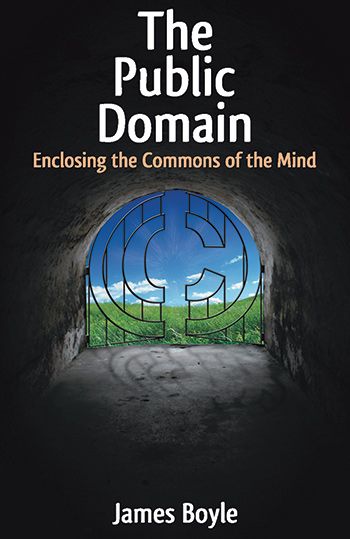
James Boyle’s THE PUBLIC DOMAIN: ENCLOSING THE COMMONS OF THE MIND was recommended to me by David Weinberger (EVERYTHING IS MISCELLANEOUS; THE CLUETRAIN MANIFESTO), and once again David serves as an excellent digital age guru. Boyle asserts that copyright was never meant to be– at least in US constitutional law– about rewarding the hardworking artist. Rather, he quotes Thomas Jefferson telling us that there should be as few copyright and patent protections as possible, just enough to encourage innovation for the good of the whole. Thus, copyright law is supposed to be about about community, not about property.

One of the essential points Boyle makes is how different physical property is from intellectual property: if I take your bracelet, you don’t have it anymore, whereas if I use some pages of your writing, you still have them. You are not deprived of your ideas the way you would be deprived of your beloved charm bracelet. The case is made, of course, that someone is being deprived of the income from selling their writing, but there has always been the concept of fair use, which immediately puts creative work in a different category from bracelets as I don’t have fair use of even one shiny charm from your bracelet just because I happen to want it.

There is also of course the possibility that if someone likes the two pages of the and then goes adn buys it. This actually happened with me and the Boyle book under discussion: I downloaded some of the free version (see below) and then decided I wanted a regular dead trees papber book. Again, very, very different from the bracelet.

There is also the argument that when we write or otherwise create, we are increasing the cultural wealth of everyone, and thus your book becomes mine even as I read it. In any case, copyright was never meant to be extended retrospectively (the famous repeated extensions of the length of copyright when Mickey Mouse comes up for public doman), not even for our entertainment and pharmaceutical corporations.

Boyle is emphatically not against copyright, however, but rather wants us to begin thinking of these issues in terms of what actually helps innovation and creativity. Apparently, in many cases, a certain amount of legal protection for creators and innovators is a good thing, but too many rules can stifle the very same innovation and creativity. Software code, for example, needs to be available to everyone to build on, and he makes the case that music has always been about mash-ups-- building on other music. He has lots of detailed legal case histories, lots to think about, learn from, and chew over– highly recommended.

And, by the way, if you want to read some of it for free-- or even all of it-- it is available by Creative Commons License here.

The memoir I read was A TALE OF LOVE AND DARKNESS by Amos Oz , recommended on this newsletter last issue. The book is extremely moving with its powerful story of the beautiful mother who killed herself, the scholarly father, the son who becomes the famous writer. The personal story would be strong enough alone, but it is embedded in an intimate look at the lives of Jews living in Jerusalem just before and during the 1948 war. But that’s far too simple– it is also about the lives of people forced from their homes in central Europe, including many who didn’t particularly want to come to Israel. The book excavated a new place in my understanding of specific suffering.

Technically, Oz does something wonderful with his mother’s death, which he mentions often, circling around it, then at a certain point, skipping over it to write of his teen years on a kibbutz, so that the death is suddenly seen in retrospective. There was a moment when I thought, Is it possible he won’t tell the actual suicide? But then, at the very end of the book, he finally narrates his mother’s last months, weeks, finally days and hours. Part of the satisfaction of the book is that while this suicide clearly shaped everything in the writer’s life, it is also by no means the only thing or perhaps even the main thing.

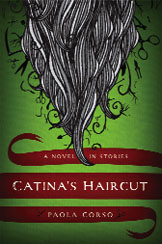
Speaking of family stories: Paola Corso's CATINA’S HAIRCUT is a collection of short stories that manages in just over a hundred pages to create a family epic, two countries, and several eras. It moves from Calabria, Italy at the very turn of the twentieth century to Pittsburgh in the industrial steel mill mid- twentieth century, and into the twenty first century as well. Destructive drought and deadly flood waters alternate as Corso’s characters try to live in their old world and their new one. She’s especially good at the play between tales and fables and a brilliantly solid, earthbound realism: a literary rendering of a family’s story and its soul.

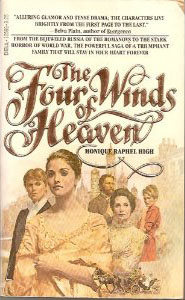
CATINA’S HAIRCUT is short, but Monique Raphel High’s THE FOUR WINDS OF HEAVEN is very long and highly dramatic. This novel was the first book by my former literary agent and college classmate, and it is a highly professional and richly entertaining historical novel– lots of family, lots of love, lots of violence, lots of historical context, and a happy ending for at least some of the people we care about-- especially the woman who was Monique’s own grandmother. There is drama and danger, but all based on real events in the lives of a group of rich Russian Jews who were newly minted barons and baronesses. Some of them, like the main character’s father David, are admirable. He works tirelessly to save the poor Jews of Russia and to make change from within the tsarist government. Others are not admirable at all. But whatever their ethics and ideas, they become affianced to the wrong people, they suffer in marriage, they lose all their material goods in the aftermath of the First World War and the Russian revolution. This is a fast moving 682 mass market pages, alive and gripping all the way through.

It also makes you thankful to live in not-so-interesting times!

Meredith Sue Willis


FROM SHELLEY ETTINGER’S BLOG: BOOKS FOR LGBT YOUTH

See Shelley's blog for more: http://readwritered.blogspot.com/2010/10/some-pro-lgbt-ya-books-to-start-with.html

Writes Shelley: “First there's this list of Young Adult books that feature gay and lesbian characters of color courtesy of the blog THE HAPPY NAPPY BOOKSELLER Turns out I've read a couple of them--THE NECESSARY HUNGER by Nina Revoyr, all of whose books I've loved, and A MAP OF HOME by Randa Jarrar. One or two others I've heard of, the rest are new titles to add to my to-read list.

“Then there's the blog I'M HERE, I'M QUEER, WHAT THE HELL DO I READ? , whose whole purpose is to provide book information ‘for teens (queer or not), for librarians, for teachers, for booksellers, for people with teens in their lives and for anyone interested in YA books with GLBTQ characters and themes.

“I also remembered a children's book that Teresa and I gave as a gift to a 2-year-old a few years ago. THE SISSY DUCKLING by actor and playwright Harvey Fierstein. This is a sweet, lovely book with a delicious story and wonderful message. I don't remember if the 2-year-old liked it much, but we sure did.”

SHORT TAKE

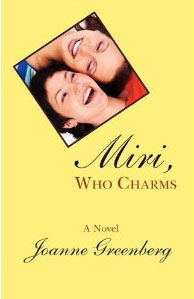
Joanne Greenberg’s MIRI WHO CHARMS is a novel that feels as real as a memoir. The heart of this story is a relationship between two girls who become women in the story. One of them is the type of person who draws the rest of us toward them, who “charm, “ as Greenberg would have it. In my life, I have tended to keep a distance from them; but the narrator here, Rachel, is so deep in Miri’s life that she seems to live for her and her daughter rather than for herself.

Miri is totally believable as a charmer, but she is also a monster of selflishness, and her precocious, hot house flower of a daughter has some of the same qualities. The story is largely about the narrator's struggle in this relationship, but also about the relationships of both women to the community they have rejected: the Orthodox Jews of Colorado. It’s a lovely, worthwhile story– and you have to wonder: why isn’t Greenberg’s work being reviewed and read more widely?

A WORD ABOUT AGENTS AND STAYING IN PRINT FROM AUTHOR ANNA SMUCKER

Anna Smucker writes: “When you asked if I'd sold my books thru an agent and I said that I had sold them on my own, I probably should have added that I could paper several rooms of my house with rejection letters. If nothing else, I'm stubbornly persistent. Also, in thinking of how my books are still in print, I really had to fight to keep three of the six in print, going as far as writing a personal plea to the publishing director at Knopf for NO STAR NIGHTS, and rounding up several key people to speak to the WV Humanities Council in support of keeping my WV history book in print.

“No doubt about it, keeping our books in print isn't easy, and that's after all the hard work of writing them, finding a publisher, and doing school visits, appearances, and writing workshops to try to pay the bills. The appearances, etc. are also necessary to keep our books in the public eye and thus also help to keep them in print!! Being a writer is definitely not a career for those who are easily discouraged. But with all that said, holding a newly published book (and our beloved old ones) in our hands, somehow makes it all more than worthwhile. “

And Now,For Something Completely Different...


Take a look at Theresa Basile's fictional blog "Confessions of a Superhero's Girlfriend" at http://lucywestfield.wordpress.com/2010/10/22/hello-world/.

West Virginia Encyclopedia is Now Online!

The WV Encyclopedia website shows the state's history, culture and people with pictures, videos and maps and other features about the history of West Virginia. Visit http://www.wvencyclopedia.org/

Announcements and News

Iris Schwartz’s poem “My Dead Father Takes Your Dead Mother on a Blind Date” is available at OCTOBER BABIES online.

PENCIL MEMORY, a chapbook of poems by Llewellyn McKernan, will be published December 3, 2010. This is a limited edition collection, and the number of pre- publication sales will determine the size of the press run, so please reserve your copy now. Learn more at www.finishinglinepress.com . And here's a sample!
CAT PENCIL
You swallow a syllable,
hiss and howl, claws of meaning
pile up on the page, phrase
after phrase unravels its yarn,
a catwalk of sorts: on it
thought stalks, twitching
its long-haired tail, emotion creeps
knee-deep in catnip and cream,
and nouns with big paws
sit and dream of nine lives, glad
each dark end abides
in words, kneading
the paper.
Marina Budhos has a nice utube video introducing her young adult novel TELL US WE’RE HOME about three girls whose mothers are nannies. Her web site is http://www.marinabudhos.com/ .
FLIGHT OF THE SORCERESS by Barry S. Willdorf is now available from Wild Child Publishing. This book is the result of eight years of research, writing and editing. It represents an accurate portrayal of the Roman Empire in the Fifth Century A.D. with appearances by several notable personages of that period including Hypatia of Alexandria, Pelagius the heretic, Pope Innocent, Saint Augustine and the Roman Prefect, Orestes. Further information about this unique historical novel, set in the fifth century A.D., can be found at: www.agauchepress.com and at the publisher’s website, www.wildchildpublishing.com.

Halvard Johnson’s latest book of poetry is MAINLY BLACK from Vida Loca Books.
Just Out: THE BODHISATTVA’S EMBRACE: Dispatches from Engaged Buddhism's Front Lines by Alan Senauke. See website at http://www.clearviewproject.org/
Johnny Sundstrom’s new novel DAWN’S EARLY LIGHT is set in the desolation that became known as southern Wyoming, when Martha Bradford, traveling on the Oregon Trail. is told she must discard either her cast-iron cook stove or her pianola. She has them both taken off the wagon and then refuses to go on any further. Her brother-in-law continues west with the wagon train. Her husband rides off in anger, leaving her stranded in this big emptiness with the freed slave who came with them from Missouri. Late in the day, when Carlton Bradford returns to his wife, he has found a place to try to settle. Thus begins this six-generation saga of the Bradford family, the first “Americans” to try to make a home in that part of the West. The novel addresses the cultural evolution of the “Old West” through these pioneering characters and their descendants as they struggle to survive bad weather, death, isolation, emergencies, and sometimes near-insanity, even as they enjoy the deep satisfaction of an honorable and remote way of life with all of its rewards and usual celebrations. For information, email the author at siwash@pioneer.net .
Jim Minick’s THE BLUEBERRY YEARS is available from online vendors such as Better World Books, Amazon, Barnes & Noble, or Borders, or support your local bookseller. For a list of independent bookstores, visit www.indiebound.org. Upcoming Readings include
11/13/10 Malaprop's, Asheville, 2:00; 11/13/10 City Lights, Sylva, NC, 7:00 with Dana Wildsmith; 11/14/10 French Broad Institute, Marshall, NC, 4:00; 11/16/10 “Over the Top Blueberry Shindig” Roanoke Public Library, Roanoke, VA, 6:30 reading w/ Thorpe Moeckel; 12/13/10 Ram’s Head Bookstore, Roanoke, 1-3, signing w/ Ralph Berrier.
Free between now and December 7th, Kal Wagenheim’s serio-comic novel, THE SECRET LIFE OF WALTER MOTT in PDF format. Send an email to kalwagenheim@cs.com.

About Amazon.com

The largest unionized bookstore in America is Powells Books. An alternative way to reach their site and support the union is via http://www.powellsunion.com. Prices are the same but 10% of your purchase will go to support the union benefit fund. For a discussion about Amazon and organized labor and small presses, see the comments of Jonathan Greene and others in Issues #97 and #98 .

Where To Find Books Mentioned in This Newsletter

If a book discussed in this newsletter has no source mentioned, don’t forget your public library and your local independent bookstore. To buy books online, I often go first to Bookfinder or Alibris. A lot of people whose political instincts I respect prefer the unionized bricks-and-mortar bookstore Powells (see "About Amazon.com" above) that sells online at http://powellsbooks.com. More good sources for used and out-of-print books are Advanced Book Exchange at http://www.abebooks.com and All Book Stores at http://www.allbookstores.com/ . Both Bookfinder and All Book Stores both have a special feature that tells you the book price WITH shipping and handling, so you can compare what you’re really going to have to pay.
For more comparison shopping, you might want to take a look at CampusBooks.com , another free comparison shopping website for textbooks that says they search over two dozen bookstores to find the lowest prices in textbooks and more.
Other ways to get books: I have used and liked the paid lending library Booksfree.com and Paperback Book Swap at http://www.paperbackswap.com/index.php , a low cost (postage only) way to get rid of books and get new ones by trading with other readers.

Monday, October 18, 2010

The Tenth Annual West Virginia Book Festival

(photo by Dory Adams)


I was in Charleston this week-end at the tenth annual West Virginia Book Festival. They do a beautiful job-- Pam May from the main library runs it, and runs its splendidly. Half the vast hall is a used book sale, the other half has tables for publishers and many other vendors including a barbecue seller, the ACLU, the Kanawha County Book mobile, games for kids (and trick or treat candy) and even a woman giving information about Islam. To see the headliners (the big one was Nicholas Sparks) click here. I signed books at the Ohio University Press table and gave a workshop on "Ten Strategies to Write Your Novel," and saw a ton of people, of whom I won't remember all: Cat Pleska, Belinda Anderson, George and Connie Brosi, Marc Harshman, Anna Smucker, Carter Seaton, Dory Adams and Kevin Scanlon, Phyllis Moore, Kathy Manley, the staff at WVU Press, and of course my new friends at OUP. It's a really good event-- people seem to enjoy themselves (a LOT of people), and as Belinda Anderson says, "There's nothing to perk you up like the smell of books!"

Saturday, October 09, 2010

Parakeet and Pepper

Here's what I do when things get slow at home: I photograph Taxicab the parakeet making friends with a Carmen pepper just plucked from the fall garden. He's especially talented at grabbing objects with his left foot and moving them to what he considers a better location.

Wednesday, October 06, 2010

Books for Readers # 135

Note: Books for Readers # 134 is here.

Meredith Sue Willis's

Books for Readers #135

October 3, 2010
MSW Home
For a free e-mail subscription to this newsletter, click here .
Note: If you want to link to something in
this newsletter, use the permanent link here .

The Hamilton Stone Review # 22
Is Open for Poetry and Nonfiction Submissions.

Featured This Issue:

Carole Rosenthal on Franzen's New FREEDOM

A Memoir About the Hutterites Reviewed by Wanchee Wang

Jeffrey Sokolow on History and Post Soviet Documents
News

Tooting My Own Horn:
Two New Books:


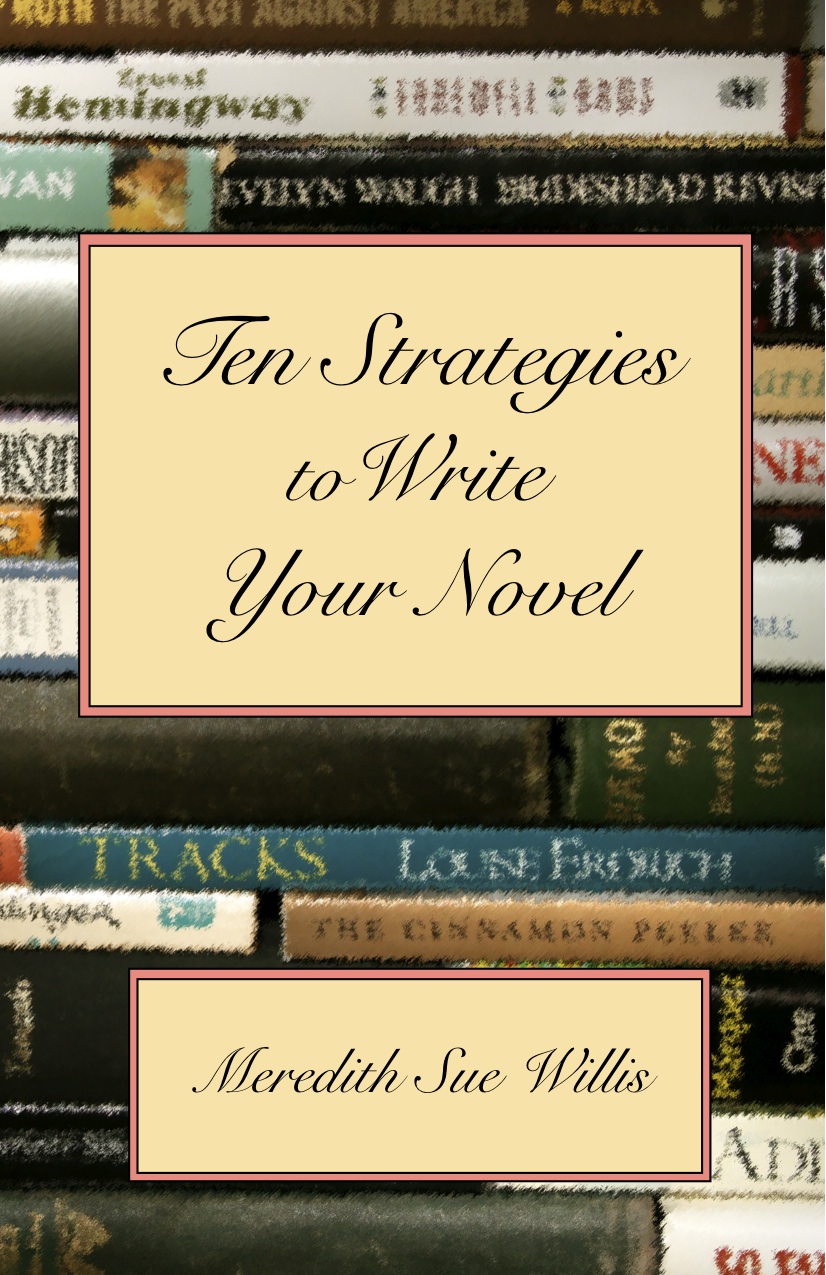
Ten Strategies to Write Your Novel--Sample here--
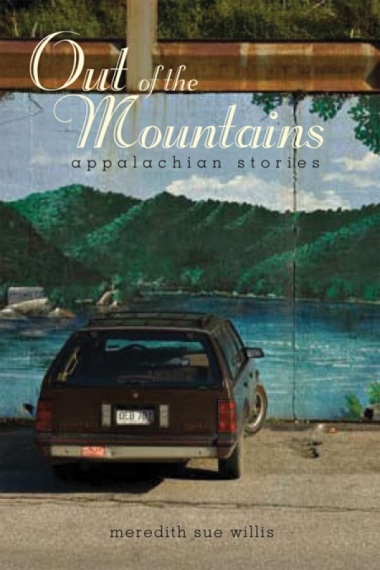
and Out of the Mountains--
short stories-- Sample here)

This issue has a nice variety of reviews: Carole Rosenthal talks about that brand new hot literary property, Jonathan Franzen's FREEDOM, which she generally likes, but wonders if our Appalachian (and other) readers think it condescends to West Virginians. Jeffrey Sokolow writes about more espionage literature, with a focus on the American Communist Party, and Wanchee Wang reviews a memoir of a woman who grew up as a Hutterite.

I'm going to be brief and say a word about STRUCTURE AND SURPRISE: ENGAGING POETRY TURNS edited by Michael Theune, about reading poetry. STRUCTURE AND SURPRISE introduced me to a number of poets I had never heard of, and also suggested a raft of new ideas for writing exercises. The idea of the book is that an important approach to poetry is to focus on structures that produce the turns that are (these writers believe) essential to poetry: everything from “concessional” poems of the type of Shakespeare’s sonnet “My lady’s eyes are nothing like the sun” (but I love her anyhow!) to “emblem” poems that describe at length then meditate on the object of description, like Elizabeth Bishop’s superb “The Fish.” The most fun for me, aside from meeting new poems and poets, was being guided. I’m not a very patient reader of poetry, so this was a pleasure. The only part of the book that didn’t delight me totally was the long final chapter where various poets analyze their own work: it seemed to me too much the result of MFA classes, as if these poets had all been waiting for this moment– to explain their own genius to the world.
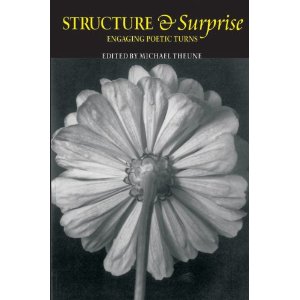
STRUCTURE AND SURPRISE now takes a place in a group of books that have helped me throughout my life in my relationship with poetry. My first one was the inestimable John Ciardi’s HOW DOES A POEM MEAN? published in 1959, and read by me in my final year in high school, at a time when I was terrified and thrilled with college coming. Ciardi’s emphasis on “how,” which was not how I had approached any literature before, was a mind blower. Also important to me (and aa much shorter book, I notice, as befits a twentieth-century work) was Camille Paglia’s BREAD, BLOW, BURN: CAMILLE PAGLIA READS FORTY-THREE OF THE WORLD’S BEST POEMS. This came out in 2005, and it gives a full chapter to each poem. Most are short (lots of sonnets) including Shakespeare, Donne, Wordsworth, then Jean Toomer, Roethke, and some people I’d never heard of.

I recommend all three of these books highly for an informal approach to poetry.

Meredith Sue Willis

Carole Rosenthal on Jonathan Franzen's FREEDOM

I just finished Jonanthan Franzen’s FREEDOM last month and really enjoyed it despite the ubiquitous hype for this novel--which both whetted my interest and made me wary. Now a critical backlash has set in, and I seem to be one of the few readers among my friends who admire the novel.

Franzen IS a terrific writer, an easy stylist whose voice is supple and engrossing. Beginning with comic book-like brightness and intensity, FREEDOM gradually unfolds as an epic tale of the all-American Berglund family--Walter, the father, a liberal do-gooder of the pull-yourself-up-by-your-bootstraps variety; Patty, the needy mother, a glib ironist who pushes away family intimacy; Jessica, the sensible daughter; and Joey, the rebellious son who becomes a right-wing entrepreneur. Chronologically FREEDOM begins and ends in Minnesota, spanning the Nixon years to the present. The novel travels the American landscape and explores our shifty and shifting politics, economic changes, and national aspirations over time. The Berglunds endure many personal travails and Franzen's vision is darkly comic, almost satiric, yet he is also tender towards the Berglund famly. In fact, the book struck me as arguably sentimental in its wry, redemptive wrap-up, reminiscent of certain 19th century epic novels.

The ethics and psychology of the Beglund family members is counterpointed by Walter's long-time friend and former college roommate, Richard Katz, a punk rock star of the Lou Reed ilk, whose creative passion, integrity, and personal indifference eventually wreaks havoc on the family--a healing havoc. The fragmentation and eventual individuation of the Berglund family is the central story here.

The Berglunds' experiences are intended to represent American experience, and this ambitious vision of Franzen's poses its own problems. For instance, no people of color are represented in the novel, with the single exception of Walter's love interest, a beautiful South-Asian American organizer whose interiority is insuffciently probed; also, she conveniently disappears. The Berglunds themselves, Minnesotans, are white and upper middle-class.

Yet a pivotal section of FREEDOM is set in West Virginia, and involves heinous mountain-top removal for mining coal. Walter, an idealist, hooks up with a Halliburton-like company whose overt intention is to create transglobal bird refuges and new jobs for the unemployed and working class who must be relocated, although this is obviously a cover story. Walter's secret plan--never entirely clear--is to begin to save the world from overpopulation with this leveling of the mountain. Walter is naive and also condescending to the West Virginians he encounters--indeed, to the working class in general. When his personal agenda is thwarted, Walter's rage overflows.

Yet I couldn't help wondering how West Virginians respond to this quick-study portrait of their state. Although the condescension is expressed from Walter's point of view, the author himself--certainly not naive--seems to be complicit in this view. (Walter, like Franzen, is an avid birdwatcher, and Walter's love of birds and nature is central to his later actions Franzen, on the other hand, seems to be employing the technique of limited direct third person to cover his tracks.)

I won’t bother to further recount the characters or plot, since Franzen and FREEDOM have been so widely discussed and publicized, but I would be interested in what others think.

WANCHEE WANG REVIEWS I AM HUTTERITE BY MARY-ANN KIRKBY

“Mommy, are you a Hutterite?”

For years Mary-Ann Kirkby hid her Hutterite background, even from her young son. His innocent question prompted her to write this gentle memoir about her Hutterite childhood. In so doing, we get a peek into a little known community of faith.

Like their Amish and Mennonite brethren, Hutterites trace their beginnings to the religious turbulence of 16th century Europe. Founded by Jacob Hutter in 1528, Hutterites organize their communities based on the principles of communal property and life as found in Acts 2: 44-45: “And all that believed were together, and had all things in common; and sold their possessions and goods, and parted them to all men, as every man had need.” You could say that the Hutterites practiced an early form of socialism, even while pre-dating Marx by three centuries. Fleeing persecution, they came here in the 19th century. Today there are 45,000 Hutterites living in North America, mostly in the prairies of western Canada and northwestern United States.

The first part of the book describes her parents, their courtship and marriage, and sets up the background for their family’s eventual departure from the colony. It also introduces us to the rhythms of Hutterite life where “women did the cooking, baking, and gardening while the men carried out the farming, mechanical, and carpentry chores.” At age two, she entered Kleineschul or kindergarten, learning German songs, stories, prayers, and games. By her account, it was a happy childhood. “As children, we found contentment in the bosom of colony life and in the routines that directed every new season.”

With limited contact with the outside world, colony life was simple, filled with hard work and dedication to community. “Regardless of age or capacity, each member had a station to fill and meaningful work to do. No one received a salary, but everyone’s needs were met. Sharing a common faith, most colony members were satisfied with a sustainable lifestyle that nurtured them physically and spiritually from cradle to the grave.”
But even communities of faith are not free from internal conflicts. Years of disagreements between her father and the colony leader caused her father to make the draconian decision to leave when she was ten. Her family was thrust headlong into a modern society that sneered at their ways. The upheaval was predictably painful and wrenching. “In school, we collided head-on with popular culture…We didn’t know how to swim or skate or ride a bicycle. We had never tasted pizza, macaroni and cheese, or a banana split - rites of passage in mainstream society.”

Despite all this, Ms. Kirkby never veers into self-pity or bitterness in describing their difficulties. Parts of the book could have used some judicious editing to pick up the slow pace (but then again, I’m from a fast-paced society). In writing this book, she finally comes to terms with her past and imparts the richness of the Hutterite culture to her son. We are also richer for these glimpses into the Hutterite world.

Jeffrey Sokolow:

Some time ago, I wrote about my interest in espionage literature, especially biographies of and memoirs by participants in such work (link to: http://www.meredithsuewillis.com/bfrarchive111-115.html). The vast trove of documents spirited out of post-Soviet Russia by the most unlikely of dissidents, the long-time KGB archivist Vassily Mitrokhin, also is well worth reading. Two volumes of files have appeared: The Sword and the Shield: The Mitrokhin Archive and the Secret History of the KGB and The World Was Going Our Way: The KGB and the Battle for the the Third World: Newly Revealed Secrets from the Mitrokhin Archive (both with the British historian Christopher Andrew. In these documents, workers at the Soviet Center speak directly and in as unfiltered a voice as we are likely to get now that the "ex"-KGB apparatchik Putin keeps a tight lid on the archives.

One fruitful topic for study on which a large and growing literature exists concerns the espionage activities of American Communist Party members. Although it would be false to say that most American Communists were spies, in the Stalinist era, before disillusion with the romance of Communism set in, the great majority of Americans who assisted the Soviet secret services were members of the Communist Party. Of course, most American Communists were blissfully unaware of the party's secret apparatus and were involved in trade union, civil rights, or other purely legal activities. But the party, like all Comintern member parties, had a clandestine capability that provided a natural segue from affording an ability to function underground during times of repression to conducting clandestine activities in normal times, including carrying out espionage work for the worker's true motherland. To the Soviet Center, CPUSA members were known as "fellowcountrymen." Many of them came from families that had fled Tsarist Russia, especially Jews, so the term was apt. To the American services, these folks were traitors, but to their colleagues at the Center in Moscow, they were Soviet patriots whatever citizenship they held. One agency's traitor is another's hero.

Two of the most prolific authors in this field are the historians Harvey Klehr and John Earl Haynes, whose works include Spies: The Rise and Fall of the KGB in America (with Alexander Vassiliev), Early Cold War Spies: The Espionage Trials that Shaped American Politics, Venona: Decoding Soviet Espionage in America, In Denial: Historians, Communism, and Espionage, The Secret World of American Communism (with Fridrikh Igorevich Firsov), and The Soviet World of American Communism (with Kyrill M. Anderson).

The improbable story of Elizabeth Bentley, who took over the espionage rings run by her lover, the Soviet agent Jacob Golub, after his untimely death and then betrayed them all to the FBI out of pique when the Center tried to take over her responsibilities in a bid to be more professional and eliminate use of amateurs, is told in two recent biographies: Clever Girl: Elizabeth Bentley, the Spy Who Ushered in the McCarthy Era by Lauren Kessler and Red Spy Queen: A Biography of Elizabeth Bentley by Kathryn S. Olmsted. Another improbable story is that of Judith Coplon, told in The Spy Who Seduced America: Lies and Betrayal in the Heat of the Cold War: The Judith Coplon Story by Marcia Mitchell and Thomas Mitchell.

The Rosenberg case has long been a lodestar for the left, though recently, with the end-of-life confession of Morton Sobel, the left's line has shifted from "they was framed" to "what's so bad about spying anyway?" The autobiographical memoir by Aliexander Feklisov, Julius Rosenberg's Soviet control who later was to play a key role in the resolution of the Cuban missile crisis, The Man Behind the Rosenbergs, paints a very moving portrait of his colleague in clandestine work.

Of course this topic is a hot potato politically: many on the left can't bring themselves to admit the facts (which as Stalin said, are "stubborn things"), while partisans of the right use this long-past history to smear all domestic radicals past, present, and future as traitors and knaves. I recommend that people who just like to read history ignore the political misuse of history on either side and become better acquainted with this fascinating topic and its amazing cast of characters.


THREE SHORT TAKES

Three books I enjoyed last month:

THE FIFTH CHILD by Doris Lessing, recommended by Alice Robinson-Gilman, a small book, 133 pages, very chilling and realistic. Excellent example of speculative fiction, as Alice said. Only one thing is changed in this world, the one thing being a monstrous child, whose origin is accepted as a given. The novel is about what happens after. It's about the impossibility of creating something perfect, especially a family, especially in real life.

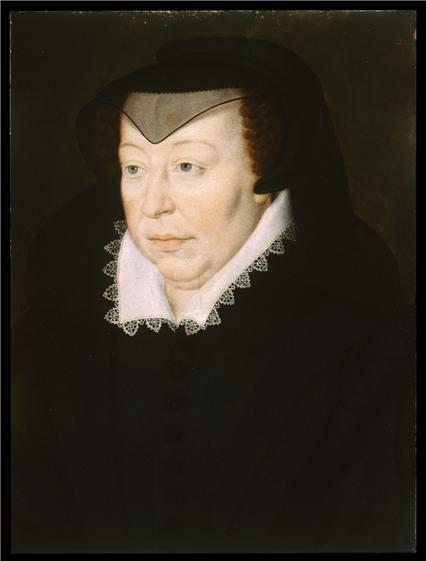
Another very imperfect family appears in a life-and-tmes biography, CATHERINE DE MEDICI: RENAISSANCE QUEEN OF FRANCE by Leonie Frieda This was a solid narrative that pulled together a lot for me about the sixteenth century. And what a time that was. It was the period of the wars of religion in France-- death present and cruel by the hand of enemy religionists. But equally cruel was what happened when people got sick. Catherine’s three king sons and her king husband die grimly, although she lived to be 69. I was struck by so many things: the public quality of life; the lice and fleas even in royal cloth-of-gold; Catherine's heroic if limited efforts to hold the kingdom together for her sons, to keep her sons alive, and her daughters. The author suggests that she might have been as great as Elizabeth II in England, her contemporary, but that Catherine (who was a native of Italy) lived and schemed for her family whereas Elizabeth's schemes were in the end for England. I liked the book a look.

Third, I read and was delighted by William Golding’s The INHERITORS, especially the way he created a way of thinking for his imagined Neanderthal people who live in the moment and think with “pictures.” There is a wonderful emblematic moment when the main character doesn’t get it that the "gift" with a red feather that is suddenly stuck in the tree beside him is dangerous. The "gift" of course is from our ancestors, homo sapiens sapiens, the inheritors. The last part of the book is all about these “new people,” a drunken violent cruel lot, worthy progenitors of the perpetrators of religious wars. This is William Golding most famous for Lord of the Flies.

MORE SUGGESTIONS:

Nancy Haber suggests these from around the world. A TALE OF LOVE AND DARKNESS by Amos Oz; THE INHERITANCE OF LOSS by Kiran Desai; GOD OF SMALL THINGS BY ARUNDHATI ROY; THE BRIEF WONDROUS LIFE OF OSCAR WAO by Junot Diaz. I’m in the middle of the Amos Oz memoir, and really amazed and moved by it:

THE TEACHING COMPANY

I’ve been using the Teaching Company’s tapes and CD’s for trave for many years. They prepare lectures on everything from the philosophy of science to histories of language and of course lots of politics and psychology and literature. Jeff Sokolow recommends Isaiah Gafni's and Lawrence Schiffman's lectures on Judaism and a three part history of the English language by Seth Leher. See the Teaching Company website at http://www.teach12.com/greatcourses.aspx?ai=16281.

New Press

Laura Roble is the CEO of a new publishing company called Heroic Teacher Press. They are a small, independent press with a mission to raise the status of teachers in America . They released their first book earlier this year, LEAVE NO CHILD BEHIND, by first time author R, Overbeck. The book is a thriller about a terrorist takeover of a small high school and one teacher's struggle against the intruders. See www.heroicteacherpress.com

Do You Have Someone Looking at Colleges?

Wanchee Wang has an informative blog about taking her eleventh grader to colleges– what they experiences, what they learned: http://bound4college.wordpress.com/about/ .

West Virginia Encyclopedia is Now Online!
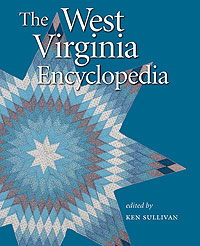
The WV Encyclopedia website shows the state's history, culture and people with pictures, videos and maps and other features about the history of West Virginia. Visit http://www.wvencyclopedia.org/

Announcements and News

Ed Davis has a story “Convergence” appearing in the second volume of the MotesBooks Motif Anthology Series, Come What May, containing short fiction, nonfiction, poetry and song lyrics. Although the 136 contributors are from all over the world, many are southern and Appalachian, reflecting editor (and award-winning writer) Marianne Worthington’s Tennessee roots. In length 323 pages, the handsome book is arranged into intriguing sections such as “Parallel Realities,” “Happenstance” and “Strangers and Kin.” Writers include Larry Smith, director of Ohio’s Bottom Dog Press’, along with recent Antioch Writers Workshop faculty Cathy Smith Bowers and Joyce Dyer, as well as Ed Davis. The book can be ordered for $15 plus postage at www.motesbooks.com.
Writers, note that the editor is collecting material for the next anthology on “Work” with a deadline of November 1, 2010. For details, see: http://motesbooks.com/MOTIF-Call-For-Submissions.html.
Just Out: THE BODHISATTVA’S EMBRACE: Dispatches from Engaged Buddhism's Front Lines by Alan Senauke. See website at http://www.clearviewproject.org/
Barbara Crooker has two new poems up at Verse Wisconsin: http://versewisconsin.org/Issue104/poems104/crooker.html and and at:
http://iambicadmonit.blogspot.com/2010/09/interview-with-barbara-crooker-poet_28.html

Digitalize Your Books!

A good company I've used for turning my hard copy books that were written on typewriters (yes, yes, I know...) into .pdf or .doc files, is Golden Images, LLC at pdfdocument.com. Write to Stan Drew stan@pdfdocument.com, who is very responsive to email, and does the work for what seems like a reasonable price to me.