Thursday, August 04, 2011

Books for Readers # 144

Meredith Sue Willis's

Books for Readers # 144

August 3, 2011

MSW is doing a Two Day Q & A at Laura Bentley's "Open Mic" blog
the-- the Subject is Jump Start Your Novel.
News and Announcements
For a free e-mail subscription to this newsletter, click here.
To create a link to this newsletter, use the permanent link .

I feel in some unsettled way that reading is not as central to my life as it once was. I know that for many years I have found some of the satisfaction that used only to come from reading in other parts of my life– friends, family, my low key social activism. I suppose this is a good thing, and it isn't that I want to return to being a child whose real life is in books

But another part of it has to do with being discriminating. When I was young, I read everything with equal attention and hunger. It could be well-written, poorly written, adventure, nonfiction, fantasy– I didn't care. I have more specific things I want now. I recoil from the badly written and the inauthentic. I spend so much time on student work that when I am reading strictly for myself, I am extremely choosy. Almost daily now I read poetry because of the attention to the language. When I read novels or narrative nonfiction, I want to take a trip. I have less and less patience for prose that shows off or tricks me or can't figure out how to end– and then has an explosion or a rape, like bored kids writing "And then they all died."

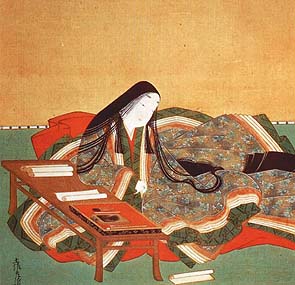
Here are a couple of books that, for various reasons, satisfied my needs, sometime with a trip to another world, sometimes with honest self-exposure. First, I read an abridged TALE OF GENJI by Murasaki Shikibu, translated by Royall Tyler. I don't know what it is with me and Genji, but I own two full length translations (see a very early one of these newsletters ). I was sitting on my screened back porch one rainy summer Sunday and something about the mistiness just made me want Genji on my Kindle, so I could go into that strange foreign world whenever I chose. I meant to dip in, but got caught by the undercurrent, and away I went.

The Royall Tyler translation is very clear, and he does an especially good job with the frequent poems. On my first reading of Genji, I totally didn't get the poems, which were apparently an essential part of eleventh century Japanese court life and especially of court-ship in the court. Characters express their strongest emotions in their poems, and simultaneously show off and even compete with their artistry. There are a lot of sadly wet sleeves, usually in the form of dew covered flowers. When Genji is in exile by the sea, there are poems about the lonely salt water ocean waves.

I think my fascination with this ancient classic (written by a court lady circa 1000 Common Era) is that I feel with these people, and at the same time am amazed that I am feeling– every moment of their lives is governed by such different rules from mine. For example, fathers and mothers are constantly trying to give away their well-brought up and accomplished daughters to the emperor or other high status men as concubines. There is a political goal, of course– with a daughter in high places, perhaps even as Empress Mother, then the family's power is greatly enhanced.. That isn't so different from, say, Medieval Western king and queenship, although the Heian court is more upfront with training the girls to attract the emperor.

But then there is the subplot of how lovely sweet smelling high minded Genji essentially kidnaps a beautiful little girl and raises her to his own specifications and falls in love with her, and she with him. Meanwhile he has many other affairs, although in Genji's defense, he seems capable of loving and attending to all of them. He rarely abandons women. And there's the atmosphere: the secret fragrance in the night that tells you who is visiting your bedchamber, the curtains and blinds, handwriting that causes people to fall in love. This is a real trip into alternative reality (see below for an alternate reality book I didn't like).

The other two books I want to mention are of this present decade, also by women, and also with sexuality front and center. And both writers focus their books on homosexual men. Carter Seaton's AMO, AMAS, AMAT: AN UNCONVENTIONAL LOVE STORY is also about Mary Cate, a thirty-something Southern Baptist country club woman with all kinds of casual, unchallenged prejudices– especially against homosexuals. She enjoys her life, but feels cheated by the lack of romantic love that she believes is essential to true happiness. She meets tennis pro Nick Hamilton, falls for him hard and fast, especially because he is so different from men in her past. They marry, and immediately, things begin to fall apart– most disastrously when she discovers Nick's sexual orientation in the most humiliating way possible.

Mary Cate starts a new life by moving from her narrow if affluent home town to Atlanta where she rehabs a house in a neighborhood that proves to be a favorite place for gays and Lesbians. Slowly, as Mary Cate realizes that more and more of her good friends are gay, she becomes a deeper, more interesting human being. She gives up the fantasy that she can't live without a man, and she makes a family of the friends around her. She helps a man with AIDS through some of the rough times at the end of his life, and even reconnects with Nick. This is a story with a happy ending– but the happiness is not at all what the Mary Cate of the beginning would have imagined.

The other two books I want to mention are of this present decade, also by women, and also with sexuality front and center. And both writers focus their books on homosexual men. Carter Seaton's AMO, AMAS, AMAT: AN UNCONVENTIONAL LOVE STORY is also about Mary Cate, a thirty-something Southern Baptist country club woman with all kinds of casual, unchallenged prejudices– especially against homosexuals. She enjoys her life, but feels cheated by the lack of romantic love that she believes is essential to true happiness. She meets tennis pro Nick Hamilton, falls for him hard and fast, especially because he is so different from men in her past. They marry, and immediately, things begin to fall apart– most disastrously when she discovers Nick's sexual orientation in the most humiliating way possible.
Mary Cate starts a new life by moving from her narrow if affluent home town to Atlanta where she rehabs a house in a neighborhood that proves to be a favorite place for gays and Lesbians. Slowly, as Mary Cate realizes that more and more of her good friends are gay, she becomes a deeper, more interesting human being. She gives up the fantasy that she can't live without a man, and she makes a family of the friends around her. She helps a man with AIDS through some of the rough times at the end of his life, and even reconnects with Nick. This is a story with a happy ending– but the happiness is not at all what the Mary Cate of the beginning would have imagined.

Carter Seaton's book is full of gay and Lesbian characters, and some of the scenes are from their points of view, but the sex acts are not often dramatized. NancyKay Shapiro's novel WHAT LOVE MEANS TO YOU PEOPLE, on the other hand, begins with a tour de force of very physical, very graphic, and downright hot scenes of gay sex. She makes a music of sex in the first third of this novel, as two unlikely men fall in love. Jim is a rich New Yorker, older, and bereft after a great loss, and Sean is young, poor, edgy, a talented artist, just in from the Midwest. Their love story is almost equally a paean to New York City. Many scenes take place in cafés and restaurants, and in grungy and magnificent apartments and houses. There is an enthusiastic richness of physical detail– food, wine, buildings, streets, and bodies, of course. It is a wonderfully, enhanced, reality with all sensations heightened.

And part of what is really amazing about this book is that the happy ending doesn't last– and that, I suppose, is part of the reality of it. The second half of the novel brings in Sean's sister and Sean's background, and the story gets rougher as it moves from the riches of new love to the stark horrors of the siblings', but especially Sean's, past. Plot comes to the fore, and a kind of ugliness in the backwoods of the Midwest that makes New York City seem like heaven on earth.

And the very final part takes these two disparate sections and finds a way to bring them into– if not exactly harmony, then a believable balance.

Take a look at these novels– they deserve readers.

– Meredith Sue Willis

MORE SUGGESTIONS

Christine Willis suggests Montana, 1948: "Reminiscent of To Kill a Mockingbird, as it is told from a child's perspective with the benefit of the perspectives and guidance of an adult writer. The reader is exposed to the maltreatment of American Indians during the era but in a rather matter of fact way that does not elicit pity: it is simply the way things were. The story is in large part, however, built upon the different ways in which people do deal with prejudice against the American Indians, both the whites and the Indians. It is a short book that reads quickly because of high interest, straight forward language, and Watson's interesting turn of phrase."
Phyllis Moore liked this memoir: Beauty Before Comfort.

A COUPLE MORE FROM MSW


BUDDHISM: A VERY SHORT INTRODUCTION by Damien Keown is one of the handy little Oxford introductions to just about everything. I particularly like them for getting a few things straight about religions. Here, for example, I THINK I finally got the Mahayana tradition separated from Theraveda tradition. I like so much of what underlies Buddhism: that life is full of suffering– or at least dissatisfaction– so relax and deal with it via meditation, community, and compassion.
This next book is one I loved the idea of but managed to finish only by skimming. This was the science fiction writer Kim Stanley Robinson's 760 page alternative history of the world, THE YEARS OF RICE AND SALT. I kept saying to myself, if I'm going to read long historical narrations of wars in the Himalayas and elsewhere, why not read the real thing? It was just too much narration and explaining between the good parts. It reminded me of the endless small world play some children do– enriching and fascinating to them, but not to the rest of us. Or the Brontë siblings entertaining themselves for years with their interlocking romantic tales of Gondal and Angria.. A blogger said of Robinson that he alternately adores and hates his books, and that this one he has read several times because he can't decide if he adores it or hates it. A real glutton for punishment.
Finally, one more hammock-at-the-lake Elmore Leonard: THE HOT KID. This one has for its hero a brash but effective young federal marshall of a racially mixed background. It's set in Oklahoma in the days of Pretty Boy Floyd and Bonnie and Clyde and John Dillinger. It has the usual long strings of colorful dialog and doesn't get nasty until the spoiled bad boy son of a local rich guy starts plugging people just because they're in his way. This is the closest I've come to Leonard's western stories.

READ ONLINE

Recommended by Amy Wright: Michael Martone's short short nonfiction piece on the recent weather disasters in Alabama: http://www.creativenonfiction.org/brevity/brev36/martone36.html
Barbara Crooker's older poem on strawberries was featured at:
http://www.yourdailypoem.com/listpoem.jsp?poem_id=774 , and a new one "1950" appears in in Qarrtsiluni's issue on "imprisonment": http://qarrtsiluni.com/2011/07/22/1950/
A personal essay on witnessing the final space launch by Melanie Vickers appeared on July 28, 2011 at http://www.dailymail.com/Opinion/Commentary/201107271141

ANNOUNCEMENTS, CONTESTS, READINGS, ETC.

JUANITA TORRENCE-THOMPSON, Editor-in-Chief/Publisher/Owner of Internationally acclaimed MOBIUS, THE POETRY MAGAZINE seeks a GROUP of poets and/or editors or COLLEGE, organization or business individual/s to purchase and publish her 29-year old non-profit print magazine starting 2011. www.mobiuspoetry.com Serious buyers ONLY email: mobiusmag@earthlink.net or poetrytown@earthlink.net. Contributors included: RITA DOVE, NIKKI GIOVANNI, SONIA SANCHEZ, MARGE PIERCY, ROBERT BLY, DIANE WAKOSKI, YUSEF KOMUNYAKAA. CORNELIUS EADY, NAOMI SHIHAB NYE, DANIELA GIOSEFFI, COLETTE INEZ, HAL SIROWITZ, STEPHEN STEPANCHEV, LOUIS REYES RIVERA, A.D. WINANS, SAMUEL MENASHE, DUANE NIATUM, MAURICE KENNY, JOSEPH BRUCHAC, LYN LIFSHIN, SIMON PERCHIK, LAURA BOSS, TAMMY NUZZO MORGAN, GEORGE WALLACE, MAXWELL WHEAT, JR., DANIEL THOMAS MORAN, THADDEUS RUTKOWSKI, EDWARD BUTSCHER, SUSAN TERRIS, ROCHELLE RATNER, THADDEUS RUTKOWSKI, ED GALING, SANDY McINTOSH, TAMMY NUZZO MORGAN, JULIO MARZAN, ESTHER LEIPER, ROXANNE HOFFMAN, ELLARAINE LOCKIE, GEORGIA BANKS MARTIN, SUSAN TERRIS, LINDA LERNER, etc. Her other website is: www.poetrytown.com
Dolly Withrow has a column from the DAILY MAIL ( http://www.dailymail.com) "A Soap-Opera Approach to Grammar" that is being picked up by Routledge Publishers to be excerpted in an upcoming book!

George Brosi recommends Patricia Harman's ARMS WIDE OPEN: A MIDWIFE'S JOURNEY. He says: "What a perfect title for an author who is so open to life and to people of all backgrounds....This book is a fascinating and heart-warming read that demonstrates people can grow and still be true to their basic values."
Mark DeFoe's tenth chapbook of poems coming out this fall. Pre-publication orders are now being taken by Finishing Line Press of Georgetown, KY. Order online at finishinglinepress.com and click on "new releases." The collection is titled In the Tourist Cave.
Barry Wildorf's historical novel, THE FLIGHT OF THE SORCERESS is now in print. This is a novel set in the 5th Century A.D. as it follows the desperate struggle of Hypatia, the last librarian of Alexandria and renowned mathematician, and Glenys, a Celtic healer, as they resist the misogyny of the newly-empowered Roman Catholic Church during the declining days of the Roman Empire. To purchase an autographed copy, go to http://flightofthesorceress.blogspot.com/ or get it directly from the publisher at Wild Child Publishing http://www.wildchildpublishing.com
Paul Maguire's novel PROFESSOR ATLAS AND THE SUMMONING DRAGON for 3rd - 8th graders is now available at:
http://www.amazon.com/Professor-Atlas-Summoning-Dagger-Maguire/dp/1457505096/ref=sr_1_1?ie=UTF8&qid=1312217858&sr=8-1
Pamela Duncan recommends a new book by Erica Abrams Locklear, who teaches at UNC-Asheville. It's called Negotiating a Perilous Empowerment: Appalachian Women's Literacies. Learn more at http://www.ohioswallow.com/book/Negotiating+a+Perilous+Empowerment
PROJECTOR, THE JOURNAL OF CREATIVE RESPONSE TO FILM, IS COMPILING ITS THIRD ISSUE. Deadline: August 31, 2011 Please submit stories, poems, and analytical inventions about movies to projectormagazine@yahoo.com . To see samples, go to http://www.projectormagazine.com
CALL FOR SUBMISSIONS: NYC: TALL TALES FROM THE CITY-- Deadline: September 21 They say, "We are publishing a Book of New York City Fiction. Looking for 1000-2500 word stories. You may submit by September 21. Check out the facebook event page for guidelines:
https://www.facebook.com/event.php?eid=138408566235129"

Sunday, July 31, 2011

Here's a depressing little summer sonnet from poem-a-day at Poets.org


Midsummer
by William Cullen Bryant


A power is on the earth and in the air,
From which the vital spirit shrinks afraid,
And shelters him in nooks of deepest shade,
From the hot steam and from the fiery glare.
Look forth upon the earth—her thousand plants
Are smitten; even the dark sun-loving maize
Faints in the field beneath the torrid blaze;
The herd beside the shaded fountain pants;
For life is driven from all the landscape brown;
The bird hath sought his tree, the snake his den,
The trout floats dead in the hot stream, and men
Drop by the sunstroke in the populous town:
As if the Day of Fire had dawned, and sent
Its deadly breath into the firmament.

Tuesday, July 12, 2011

One More Tale of Genji…


… by Murasaki Shikibu, translated by Royall Tyler, this time. I have the full Waley translation and the Seidensticker. I used to turn up my nose at abridged versions, but I got in the mood again– a damp gray summer early evening on the back screened porch, and I just wanted to dip, and to taste Genji on the Kindle. The translation is good, with the poems laid out in a very readable way. So many sleeves made sopping wet– I mean dew covered, and during Genji’s exile, soaked by waves of salt water. Such a different ethos, all the fathers and mothers trying to give their well-brought up accomplished daughters to the emperor or other high status men as concubines. Then with political machinations, raising the daughter’s status to possible Empress Mother and the power of the family as well. And then there’s how Genji essentially kidnaps the little girl and eventually has sex with her and continues to keep her and make her his ideal woman, even while continuing his other affairs, although never failing in attention to the many women he loves and does not abandon them. As always, a fascinating excursion into an alternative reality. Dim, all those curtains and blinds, sex enhanced by handwriting.

And yes, it works on the Kindle, the grayness of the screen matches the weather, the spray of mountain waterfalls, the night time creeping in bedrooms, the dawn when you send your love note. And as to the lower classes–the people who clean the latrines and actually dye the fabrics and cook the meals and empty the chamberpots– they apparently do not exist at all.

Wednesday, June 29, 2011

Perils of Amazon Reader Revews

I’ve just been through an interesting experience. I never paid a lot of attention to the reader reviews on Amazon.com till last week when an absolutely scathing review was posted about Marco’s Monster. Now this is a book that has been in print for more than fifteen years, with two publishers, and I often make school visits and talk to kids about it and use it as a way to start them writing. But this person said it was badly written, seemed unlike real children in the world, and she didn’t believe parents would let their children run the streets the way those kids do– anyhow, suddenly Marco has the lowest possible Amazon rating. I was about to send out an email blast to everyone I know asking for help, but had the sense to talk it over first with a writer friend who recommended sending the blast, but only to those who had some reason to know the books, which made a lot of sense. So I did, and I’ve been touched by the response– some family, like my sister and my niece and nephew, who were really good, plus a number of adult friends who wrote short complimentary statements, and above all raised the Amazon rating. What’s scary is that a book with good reviews from Library Journal, Hornbook, etc. etc. could suddenly be sitting there with a bad rating. The democratic possibilities of this digital world are considerable– but, as I guess we all know by now, so are the dangers. To see what people say about Marco,click here.

Tags: , , , ,

Thursday, June 23, 2011

MSW's Books for Readers # 143

Meredith Sue Willis's

Books for Readers # 143

June 23, 2011


News and Announcements

For a free e-mail subscription to this newsletter, click here.
To create a link to this newsletter, use the permanent link .
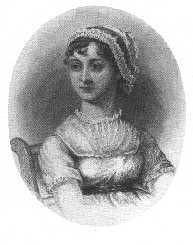
Jane Austen Fan Fiction

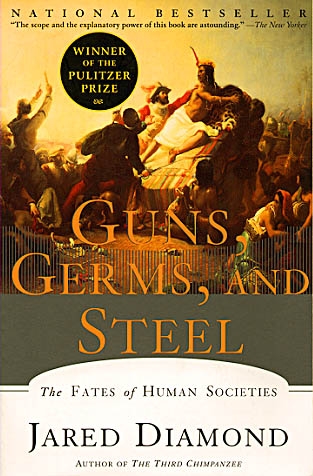
I have three books to recommend for your summer reading: a brand new collection of short stories; a twentieth century classic; and Jared Diamond's stunning 1996 study of why the West won– that would be the West as in the culture that developed in the great Euro-Asian landmass. The book is GUNS, GERMS, AND STEEL, which answers the question posed to Diamond by a New Guinean friend who didn't understand why Europeans had come out on top in his world rather than vice versa. And Diamond , who deeply believes that people like his New Guinean friend are at least and maybe more intelligent than the average European, made this magisterial survey. There is no single answer, of course, but rather a coming together of many elements in the cultures with the technological advances that gave them the ability to engulf other people's lands, resources, languages, and gene pools.

One essential element turns out to be the availability of plants and animals that can be domesticated for food and other uses. Diamond distinguishes between animals that can be tamed, like my parakeet, and animals that can be domesticated and used for food, transportation, etc. Animals turn out to be not only essential tools of war and agriculture, but also vectors for the great epidemics that spread over the Asia-Europe land mass, killing off millions, but also leading to some immunity in the survivors-- and eventually to unconscious (at least at first) germ warfare against more isolated people like those of the Americas.

Diamond also discusses what he calls the axis of communication. The axis of Eurasia is east west, which meant that many crops and animals would be in same general latitude for eventual expansion. He compares this to the Americas with a north-sound axis and barriers of climate, latitude, and topography that meant the Aztecs and the Incas barely knew of each other, and that maize was probably domesticated more than once. Africa had the great barrier of the Sahara between north and south plus certain terrible diseases of the subsaharan rain forests that stopped horses and cattle from moving south

Diamond's knowledge and his relentless enthusiasm for sharing it are a real delight. It's a book with big, expansive ideas that make you feel, at least for a moment, that you're got some perspective on history and geography.

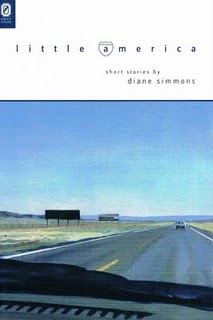
Next, I want to recommend LITTLE AMERICA by Diane Simmons. This is a 2011 short story collection of shapely, separate stories that are made stronger by being grouped together. First, truth in advertising: I blurbed this book, but in rereading it as a whole, I find it even better than my first look. It is a book of stories about Americans on the move, mostly on the road. These are people who run away or drift away, going on the road, leaving their lovers and families. It begins with a family of grifters and ends with some shrewdly dishonest drifters– who may or may not be going into more danger than they're escaping. The longest story, "Letters," is about the ideal of romantic love as a destructive force, especially for women in the 1950's.

There is plenty of humor and horror, lots of feisty characters and lost characters and American landscape. So the parts are excellent, but the collection really succeeds in its grand design. I am a deep admirer of shape– I feel that shaping our world is one of the major reasons we read and write fiction. Simmons creates the shape of her book with repetition and unexpected turns, especially with her excellent endings.

One story, "Suitcase," set mostly in Guatemala, has been called a modern "Heart of Darkness," which is nicely apt, except that Simmons' story is both more compact and more shocking– and more realistic– than Conrad's classic. You feel something bad coming, but you don't see the actual end. A story at the other extreme of weather has two young people going homesteading in the Yukon, and this one too has a satisfying surprise at the end. Simmons is wonderful at what you might call earned surprises. Endings tend to be a problem for contemporary writers, and maybe especially writers of short stories, but Simmons breaks new ground. The stories in LITTLE AMERICA don't end with gunshots or rape, but with genuine enlightenments: sometimes nasty, sometimes amusing, but almost always the thing you didn't expect, but which feels absolutely right. I'm not going to reveal any endings here, except to say that each story has a payoff, and the collection as a whole pulls you in and doesn't let you go.

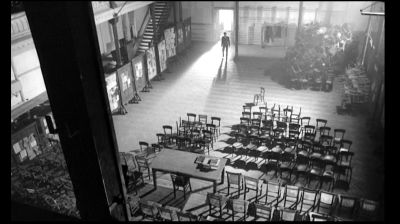
Finally, I reread Franz Kafka's THE TRIAL (free for Kindle!). This is one of those books that blew me away thirty-five years ago, and I sometimes think of it or maybe the feeling it gave me (would that be "kafkaesque"?). But re-reading brought an entirely different experience from what I remembered. It is an unfinished book, with scholarly and biographical debate about what belongs in, the order of chapters, and, of course, if Kafka really meant it when he asked to have his work destroyed after his death.

One of the things I didn't remember is that it is a novel that is crowded with characters and funny and absurd passages, and also sex, as well as being famously off-kilter and disturbing. How odd, though, that my memory of the book was of loneliness, especially the execution at the end. In fact, though. the places of Josef K.'s life are crowded with people: his office, the rooming house where he lives, the various squalid apartment blocks where he findscourtrooms and officials' offices in a warren of working class flats. The novel starts with police (or something like police) pushing into K.'s bedroom as he's getting up, and ends with two fat executioners and someone watching perhaps sympathetically from a window. And my memory of the end was of a final scene (possibly from the movie?) in which a door opens and light falls on man on pallet, and he says Is it time? But the novel is weirder, and sillier, and more moving.

I ran across an article by John Banville about his rereading of the novel, (from the UK's Guardian as http://www.guardian.co.uk/books/2011/jan/15/john-banville-kafka-trial-rereading) . Banville suggests that the book used for its structure an event in Kafka's on-again off-again engagement when his fiancee brought him to a meeting with a friend and herself where she put him through a kind of trial over their relationship. Marriage, Banville thinks, was to Kafka a kind of capital sentence. If this sounds overly psychological or even diminishing to his accomplishment in the novel, I would say that great artists demonstrate their greatness not by the loftiness of their subjects but by how they take whatevermaterials are at hand and make a great thing out of them. Art moves even quotidian things to another level, makes a leap that allows us all to participate in something that may have begun as local or individual.

This brings me to a question: when you re-read the works that you met as a young person, do you find them very different: In what way? Do they hold up? Are they entirely different?

– Meredith Sue Willis

READERS RESPOND

Ardian Gill said of THE GOOD SOLDIER (discussed in Issue # 142), "I was surprised at your take on Ford (Heuffer)'s THE GOOD SOLDIER with its famous 'Saddest Story' (original title) opening line. I'm an old fan of Ford's, not least because his main character in the quartet (PARADE'S END), Tietjens, is an actuary. I'm going to forward Jane Smiley's review in the Guardian. BTW, Ford alleges that he taught Conrad English." [The excellent review/appreciation by Jane Smiley is at:
http://www.guardian.co.uk/books/2006/may/27/featuresreviews.guardianreview27 ]
Debbie Carter writes, "THE GOOD SOLDIER is one of my favorite novels. I want to read it again soon for the way he captures longing for a beloved and how they will do anything, anything to be with that person, even if they suspect they're being lied to and don't want to know."
Debbie also recommends, just for fun, "an online questionnaire.... called "Which Vintage Classics Character Are You?" It's posted on Facebook by Random House Australia." Here's the link (you have to "like" them to get to take it)
http://www.facebook.com/randomhouseaustralia?sk=app_4949752878
Laura Bentley sends a link to this 1958 television interview of Pearl S. Buck by Mike Wallace: http://www.hrc.utexas.edu/multimedia/video/2008/wallace/buck_pearl.html . It really takes you back to another time and place– Wallace is determined to pigeonhole Buck, and she is very ladylike, but very determined to be who she is!

Jonathan Greene recommends the movie version of NORTH AND SOUND, available on Netflix.

RECOMMENDATION OF A WRITER'S CONFERENCE

Suzanne Rahn writes about a writer's conference she attended in San Francisco. She says, " I enjoyed this conference very much. I stayed at the Fort Mason Hostel which was a 5 minute walk to the conference and 20 min walk to Fisherman's Wharf. I would recommend the hostel as an extremely affordable place to stay. There is even a small café in the building where you can overlook Alcatraz Island sipping a cup of chai tea. Very nice area.
http://fwwriters.algonkianconferences.com/

She goes on to say, "Michael Neff's credentials are listed on the website and his style is that of a literary "Simon Cowell" but not so heartless. His workshop is designed to help a writer improve, but he also won't sugar coat his opinion. His goal is to further a good story or help rescue a terrible story. I met several agents and publishers during the week and established a cordial friendship with Michael and the owners of the Larsen/Paloma agency. I would highly recommend this conference to any writer who wants to take a serious step towards firming up and pitching his or her novel."

VALERIE NIEMAN ON TOUR WITH HER NOVEL BLOOD CLAY (see issue #140)

JULY 10 - Meet the Author at Rosemary House, Pittsboro, NC
JULY 16 - Literary Bookpost, Salisbury, NC
JULY 30 - North Carolina Writers Conference in Asheville, NC
JULY 31 - Reading at Malaprop's, Asheville
AUG. 27 - Fiction workshop in Yadkinville, NC
SEPT. 10 - BookMarks in Winston-Salem, NC
SEPT. 30-OCT. 3 - Virginia tour TBA
OCT. 6 - Ex Libris Book Club
OCT. 13 - Fairmont State University, Fairmont, WV
OCT. 14 - West Virginia University
OCT. 15 - Weirton, WV, Public Library
OCT. 17 - Alderson-Broaddus College, Philippi, WV

FAN FICTION– A NEW GENRE??

A whole new world of writing is taking place online with Fan Fiction, in which fans write stories associated loosely or tightly with their favorite author, classic, or genre. Mindy Kesterman, along with her freshly-minted Princeton graduate daughter, provided this overview of Jane Austen fan fiction sites:
dwiggie.com
meryton.com/aha
austenunderground.com

Mindy writes: "You can post a chapter for commentary by other fans, or there are parts of the sites where you can ask for editing or a beta reader. A work in progress can be posted at say the rate of a chapter or two a week and fans return to read the serialized novel." There is also an is an index of all Austen fan fiction is available at jaffindex.com – but for this one, you have to have a membership in one of the Austen fan fiction sites.


READ ONLINE

An interview with writer and BELLEVUE LITERARY REVIEW Fiction Editor Suzanne McConnell is posted at http://www.thereviewreview.net/interviews . The interview focuses on the magazine and her own writing.
Leora Skolkin-Smith has an interesting piece on Grace Paley. She tries to correct Paley's position in the literary-spiritual-political arena– very thoughtful and worth considering, especially how Skolkin-Smith presents Milan Kundera and Grace Paley as the East and West voices of the Cold War era, striving in different but complementary ways to preserve the souls of people in the second half of the twentieth century. The piece is at
http://quarterlyconversation.com/the-legacy-of-grace-paley
Juanita Torrence-Thompson's half-hour radio show, with music, produced by Poets West called "QUEENS MEETS ASIA," can be heard online now. Click on the home page of www.poetswest.com and scroll down to Radio Programs. The programs are large mono.mp3 files and you need hi speed internet to listen. Juanita's program is #194.
Phyllis Wilson Moore has a review of Harvey Pekak's work at
http://blogs.wvgazette.com/wvbookfestival/2011/05/19/the-pungent-humor-of-harvey-pekar/

SAVE YOUR UNCORRECTED PROOFS!

Save your uncorrected proofs! Abebooks.com is selling them for thousands of dollars! Or at least, SOME uncorrected proofs:
http://www.abebooks.com/books/RareBooks/galley-advance-early-publisher/uncorrected-proofs.shtml?cm_mmc=nl-_-nl-_-110618-h00-uncorreCA-_-01cta


ANNOUNCEMENTS, CONTESTS, READINGS, ETC.

Carter Seaton's second novel, amo, AMAS, AMAT…AN UNCONVENTIONAL LOVE STORY is now available for Kindle readers, with other e-reader formats and a trade paperback print version coming soon. The novel, set in 1983, centers on Mary Cate Randolph who falls for tennis pro Nick Hamilton. He's charming and intelligent, but not sexually aggressive. Mary Cate, a naïve homophobic, is shocked to learn after they marry that Nick is a closeted homosexual. What follows is not what you'd expect.
Gerald Swick, who writes about the history of West Virginia, has an article in the new edition of Wonderful West Virginia magazine (http://www.wonderfulwv.com/) on the battle of Philippi. He says that he also "wrote a sidebar on the two cannons used at the battle. For decades they have been believed to be in Wellington, Kansas. Last autumn I went there, photographed them, and began a search to see if these were, indeed, the guns used at 'the first land battle of the Civil War.' The sidebar summarizes what I found."
THE WRITER'S ALMANAC featured one of of Jonathan Greene's poems on May 19, 2011. This is the third poem they have selected from his latest collection DISTILLATIONS AND SIPHONINGS.

Barbara Crooker has new poems up at the following sites:
http://www.stringpoet.com/2011/05/barbara-crooker/ ("Today" and "A Woman Is Her Mother")(There's music to go with this, too.) and http://www.decompmagazine.com/roominnewyork1932.htm ("Room in New York")(There's an audio clip of me reading the poem.)

Mary Lucille Deberry's collection BERTHA BUTCHER'S COAT was one of the winners of Writers' Digest's competiion for self-published books of poetry. Other winners included first place Charles James for LIFE LINES , Drew Dellinger's LOVE LETTER TO THE MILKY WAY, and Jerry Brown Schwartz's SO INSPIRED: PRELUDES & POEMS,
ANDERBO SEEKS NOVELIST (by September 21st, 2011) for its 2nd Bi-annual No-Fee Novel Contest The Mercer Street Books Fiction Prize. Anderbo.com wishes to post up to the first 36 manuscript pages of an unpublished novel on its website by December 21st, 2011 for at least the following six months. We will look at the FIRST 36 PAGES (up to 9,000 words) of your e-manuscript submitted to editors@anderbo.com and decide within 60 days of its arrival if we want to see more. You must submit your manuscript entry within the body of the e-mail—no attachments. There is no reading fee, and and all literary rights will remain with the author. This contest is not open to anyone previously published on anderbo.com at any time. There will be an honorarium of $500 paid by the sponsor of this contest, Mercer Street Books & Records, to the winning author upon publication on Anderbo. For more, go to anderbo.com
NEW JERSEY SPECIAL! Michael C. Gabriele's THE GOLDEN AGE OF BICYCLE RACING IN NEW JERSEY has just been published. Check it out at The History Press https://www.historypress.net/ along with lots of other history books.

MSW NEWS:

  • A podcast of an interview of MSW by Eric Frizius at http://podcast.wvwriters.org/2011_06_01_archive.html
  • Short short story called "Rescue" in Sleet Magazine.com here
  • Short story called "Decorations" in the in hard copy Spring 2011 issue of Slab
  • A radio review of Out of the Mountains by Roberta Schultz aired on an NPR affiliate in Cincinnati (WVXU 91.7 FM) on May 15, 2011. The program is available here.

ABOUT AMAZON.COM

The largest unionized bookstore in America has a webstore at Powells Books. An alternative way to reach their site and support the union is via http://www.powellsunion.com. Prices are the same but 10% of your purchase will go to support the union benefit fund. For a discussion about Amazon and organized labor and small presses, see the comments of Jonathan Greene and others in Issues #97 and #98 .

WHERE TO FIND BOOKS MENTIONED IN THIS NEWSLETTER

If a book discussed in this newsletter has no source mentioned, don’t forget your public library and your local independent bookstore.
To buy books online, I often go first to Bookfinder or Alibris. Bookfinder has a feature that tells you the book price WITH shipping and handling, so you can compare what you’re really going to have to pay.
A lot of people whose political instincts I respect prefer the unionized bricks-and-mortar bookstore Powells (see "About Amazon.com" above) that sells online at http://powellsbooks.com. More good sources for used and out-of-print books are Bookfinder at http://www.bookfinder.com/ and All Book Stores at http://www.allbookstores.com/ .
Take a look also at Paperback Book Swap , a low cost (postage only) way to get rid of your old books and get new ones by trading with other readers.

If you are using an electronic reader like Kindle, Nook, or Kobo, get free books at the Gutenberg Project.

RESPONSES TO THIS NEWSLETTER

Please send responses and suggestions directly to Meredith Sue Willis at MeredithSueWillis@gmail.com. Unless you instruct otherwise, your responses may be edited for length and published in this newsletter.

Wednesday, June 22, 2011

My New Pet


Andy took a photo of the vulture on the dormer yesterday: it doesn't look as big as it really it. They are ENORMOUS. I run into them occasionally on the street.

Monday, May 23, 2011

Books for Readers #142

Meredith Sue Willis's

Books for Readers # 142

May 15, 2011


I want to begin this issue with praise for an old novel in a new edition from Montemayor Press: LEAH by Seymour Epstein. First published in 1964, Epstein uses his point of view woman character, Leah, as a point for creating a rich portrait of a particular time and place. I perhaps most loved the details about young-to-middle aged New Yorkers eating in Automats, going to Broadway and off-Broadway shows, New York bars, subways, elevateds. It is the New York I saw the first time I visited, as a young teenager. It was a place when you could rent a decent apartment on an office manager's salary and eat most of your meals out. A place where craftspeople like Leah's wonderfully portrayed father Max, a furrier, were also intellectuals. This is a particularly Jewish postwar New York City, and while many of its touches on the experiences of gay people and black people feel hesitant now, the book as a whole is not dated, but rather a window into a particular past.

In this context, Leah's desire for a life in love, and her dilemma over having had a series of lovers, is sad, but it is also precisely the trap set for gentlewomen at least since the beginning of the nineteenth century– that not only their typical role but their calling is to find true love, then be fulfilled in house keeping, husband supporting, and motherhood. That Leah herself knows she's in a trap is played out delicately. It is only after she gets a little respect for her stolid mother (who, miraculously, turns out to have some talents of her own!)– and gets a little perspective on her adored father – that she is able to take on a love commitment.

The book has the dark gold color of an incandescent lamp: women wear furs, men wear hats, artists are considered heroes, women see themselves as receivers of confidence and neediness. In the end, Epstein chooses the mode of classical comedy– both Leah and her father compromise their principles (or else perhaps finally mature) and take mates.

Leah was old fashioned in all the right satisfying ways, and by contrast, I also read a thoroughly modern young adult novel called THE END: FIVE QUEER KIDS SAVE THE WORLD by Nora Olsen. This is one I wish had been a series– it's got these five terrific heros with semi-super powers, mostly gay or bisexual girls, and the only boy is 5,000 years old. They are good characters, overseen by some slapstick gods and goddesses who are causing very serious problems for human beings– like a killing insanity that makes people rip each other apart for no reason. The magic/super powers part is set up very carefully and focuses less on the poof of magic and more on how the kids learn mastery of it. The final quarter speeds up and takes on the sharp, simplified outlines of cartoons, but this is, in spite of people being dismembered and possibly dying of rabies, a good humored and uplifting novel.

Meanwhile, back at the Kindle, I've been enjoying myself immensely as well. First, I discovered a clearing house for the free borrowing of Kindle books. The problem with Kindle (one problem) is that once you buy a book, it's yours, but you can only lend it to a friend by lending the Kindle itself and thus your entire collection of e-books. Amazon is now, like Barnes & Noble, allowing some very limited borrowing. The new bottleneck is that the conventional (DUMB) publishers are not allowing borrowing. There are some opportunities, however, to borrow some popular books– once. That is, you are borrowing from an individual, who is only allowed to lend once. To learn more, take a look at the clearing house side at http://www.booklending.com/.

I lucked out the first time I tried it, and was able to borrow WOLF HALL by Hilary Mantel. This was an extremely well-researched and thoughtful historical fiction– my only complaint is that I kept waiting for Thomas Cromwell's execution at the end, but as the distance to the end got smaller and smaller, I finally realized we were going to stop with Thomas More's execution instead– and the rest of Cromwell's life will be coming in a sequel.

Mantel's Thomas Cromwell is a working class man who rises very high and tries to move towards increased equality while being fully loyal to the king. The story is oddly plotless– it feels rather like a dark picaresque, which would be, I suppose because of its close hewing to the historical facts. For a long time I didn't think she really had Cromwell, that it would have been better to have created his character from the outside, maybe from his son's view or the point of view of one of his wards (I particularly liked his nephew Richard, his sister's child, who took the name Cromwell and was an ancestor of Oliver Cromwell). But in the end, Mantel won me over with her odd point of view, a close third person that rarely names Cromwell. It as if we had a view into his world, with blinders (or is that the dark tunnel effect I feel when I read on the Kindle?), seeing through his eyes but often not knowing what he is planning or thinking. People enter, there's a scene, there's not necessarily any particular drama, they're gone, we're elsewhere. Again, this comes from hewing to the facts, but it requires a little revision of your narrative expectations, of what to expect from a scene.
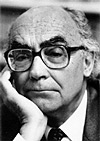
For the 2009 Christopher Benfey review in the November NEW YORK TIMES (he agrees with me about the quality of picaresque) see http://www.nytimes.com/2009/11/01/books/review/Benfey-t.html

Two more on the Kindle: THE ELEPHANT'S JOURNEY by José Saramago. This is also historical in its essential outlines– that the king of Portugal sends his elephant to Vienna as a gift, but the tone and story are quintessential Saramago– the best characters workers and soldiers and elephant handlers, and the animal itself: big personality and very wise, but fully an elephant, never a human being. Everything is told richly and simply – Solomon/Suleiman the elephant, his mahout, the Portuguese soldiers and their commanding officer, the crossing of the Alps, the Austrian soldiers and the archduke– the apotheosis of an elder writing in the fullness of his strength.

And– Kindle owners! A huge bargain: you can get an omnibus edition of 12 Saramago novels for less than $20! With an introduction by Ursula LeGuin! Saramago Collection .

I also reread Mrs. Gaskell's NORTH AND SOUTH, and oh what a delight, perfect for the forward linearity of the e-reader. Mrs. Gaskell's work is very deliberate and clear and straightforward– no need for flipping back and forth. One of my favorite things about her is that she addresses things most of the Old Victorians never touch, or at least don't humanize. The hard thing about her is certain limitations of imagination, in this novel an ideological commitment to the superiority of the educated liberal Christian and the danger of people in combinations such as unions. You have to lay that aside– but once you do, Mrs. G. manages to make her main character Margaret Hale strong, suffering, a little wild, yet a complete lady– and above all a woman with a complex moral conscience.

I also like NORTH AND SOUTH's Mr. Rochester effect, which is that the powerful, passionate man clearly meant to be Margaret's mate, must be brought down from his arrogant high horse before the match can be made. Gaskell doesn't blind her Mr. Thornton as her friend Charlotte Brontë did to her Mr. Rochester, but Gaskell does put him in dire financial straits, and then (take that, Mr. Captain of Industry!) she allows Margaret to inherit just enough wealth to help him. Only then can they meet as equals in marriage.

There's one wonderfully melodramatic but vivid scene when Margaret challenges Thornton to go face the crowd of angry strikers in person, and then, when the crowd gets nasty, she goes herself and stands between him and them. In fact, in her desire to protect him, she throws her arms around his neck. Thornton's reaction (this part feels so right) is actually physical pleasure and a conviction that the young woman obviously is in love with him if she would embrace him in public. He then fantasizes about her touch for weeks– it's pretty hot stuff for the nineteenth century and a novelist who is a pastor's wife.

Somewhat less satisfying, but not bad, is her portrait of a "good" union man, Nicholas Higgins, who teaches Thornton a few things, but also has to learn a few. Thornton, who is in fact a former worker who really did accumulate his own capital, sits down with Higgins, and they come up with some ways of working together. It rejects the all-worker union, but at least gives the privilege to a kind of mutuality.

One note about an element of all Mrs. Gaskell's work that 21st century readers may mistake for melodrama is how characters drop like flies– they die of consumption, of apoplexy, of heart disease and some unnamed female complaint, probably a cancer– but to Gaskell's mind, death of people in their fifties and sixties is perfectly normal, as is consumption taking a girl of nineteen or twenty. Think, in fact, of the Brontë siblings: two dead of Tuberculosis before 30, the brother of alcoholism (probably) even earlier, and Charlotte while pregnant at the age of 38.

And my final Kindle report: THE GOOD SOLDIER by Ford Madox Ford. (You see the pattern– the free books are pre-second world war). This was actually a re-read, but my previous read feels like infinite years ago, and I don't think I got it at all. Or maybe I read it at the wrong time.

It is a beautifully revealed novel about really miserable people. It unpeels like the proverbial onion, starting out conventional to the point of boring, then picking up steam and complications as one character after another proves to be betraying, cruel, even vulgar, The narrator is a totally hopeless idiot who may be forty at the end and possibly still a virgin, whose purpose in life seems to be caretaker for women he thinks he loves– there are suicides, gambling debts, adultery and fornication, insanity, a wife who tries to manage her husband's mistresses, a husband who is repelled by his wife, a wife who refuses to have sex with her husband at all but has lovers under his nose.

Oh, and the serial adulterer is probably the only noble character in the novel. The book is in many ways over the top, but I couldn't stop reading. An astringently nasty novel.

-- Meredith Sue Willis

A SPECIAL REPORT FROM NEIL ARTHUR JAMES ON BLOG FICTION

I've been fiction blogging in some form since 2003. I've been writing Dandy Darkly for three years. Blog fiction is a creative writing form incorporating the use of popular blogging websites, such as Typepad and Blogspot, to present original, self-published works of fiction to a primarily online readership.

Although it represents a fringe corner of the blogosphere and is sometimes regarded as a fad among critical and academic circles, I think blog fiction is a growing medium that will eventually find literary recognition. The medium itself allows for a wide variety of creative formats. Online diaries, a serialized depiction of fictional characters or a collection of short stories are all represented by fiction blogs.

The online format also grants a multitude of options for a writer to go beyond merely typed words on a web page. These include the ability to hyperlink events in the text to real time news stories and other websites, which may be real or fake themselves. Search functions and categorization give readers quick access to characters and themes so they can catch up on details they may have missed.

Online social media such as Facebook and Twitter can be used to progress story lines outside the blog itself while also bringing in readership. Reader interaction can be encouraged through the use of comment boxes and web page sharing. Photos and illustrations can easily be uploaded. Embedded sounds effects or music can create an aural backdrop for visitors to listen to as they read. YouTube is available to present live action segments, be it public readings by the author, visual segments for reference by a reader or a fully staged, live-action scene culled and performed from the story itself.

It is the discretion of the writer how far these other sources of information remove their work from the traditional notion of fiction at its purest, that being solely words on a page. But with so many options at your fingertips, I feel blog fiction can keep true to that ideal while offering so many other avenues for the writer to express himself or herself. Blog fiction is in the process of finding its own shape.

Any literary project morphs and reveals itself the more you write, but this fact feels especially true of a fiction blog, particularly as new technology and social media trends go in and out of vogue. My fiction blog, Dandy Darkly, has shifted from what began as highly serialized, short stories to a longer format with many recurring characters and far reaching plot lines. The challenge has been in presenting short works that stand alone in both quality of writing and clarity of story while keeping true to a larger narrative arc and hinting at things to come. At times if feels like I'm improvising a novel in published chunks.

Another challenge is finding an audience. Hawking my blog is an exhausting task. Attention spans are short on the web. With an inundation of websites to browse, readership can be sparse for a fiction blog. Hence many of the "bells and whistles" listed above. Ideally a writer wants the strength of the words alone to draw in and keep readers, but on the web that simply isn't always the case. I have a fiction blog because I love the evolving format and I'm passionate about what I'm writing and performing. Ultimately I'm as along for the ride as my characters are. I recommend every writer play with the format. It's been a rewarding journey and I'm eager to see what will happen as technology evolves and more writers turn to fiction blogging to express themselves.
– Neil Arthur James

For the full issue, with announcements and reader responses, go to http://www.meredithsuewillis.com/bfrarchive141-145.html#issue142

Saturday, May 21, 2011

The Last Day...


... is beautiful after days and days of rain. I'm under the weather, but heading out soon for Saturday night events-- cut grass, planted some squash I forgot, more cilantro, got an article proposal off, and I'm feeling like it's a vacation day. Not that I'm doing nothing, but that I'm on the back porch (just cleaned yesterday!) hearing birds of various stripes chatting, sun and clouds, grass marvellously green-- the back needs cutting too. I am so glad to be out here, to be here, which is the best mood for whatever comes next.

Saturday, April 09, 2011

Haiku Season

Palest green scumble,
Tan fluff and small maroon buds--
It's haiku season!


I have been composing haiku as I do my exercise with my Nordic walking sticks. Haiku works nicely because they are short (and I have to memorize what comes to me when I'm walking). Also, the syllable counting seems to go nicely with physical movement-- and, along with the 7-7-5 syllable format, the other standard requirements for haiku are nature (I'm out-of-doors) and a little surprise. So I recommend taking a walk, counting out a haiku for yourself and memorizing it to bring back to the pencil and paper or keyboard. Here are a couple of mine (no laughing--I'm primarily a novelist):


Realm of green below,
Yellow, purple, pink between–
Over head, it's red!

Saturday, March 26, 2011

Biggest Bargain Books-- and Good Food!

I was thinking about José Saramago, the late Nobel prize winning Portuguese socialist expatriate, so I went to the Kindle Store to see what his books were selling for, and I found the biggest bargain yet except for the totally free Victorians: an omnibus collection of twelve of his novels for $19.80. That’s right, 12 novels (as far as I can tell, all of his fiction except the newest, possibly posthumous Cain. )There is also an appreciation/introduction by Ursula LeGuin that I enjoyed a lot (and you can read in the “sample” format that is free). I did my shopping due diligence and made sure the translators were the same ones as my three hard copy Saramago’s have. And I’m now reading The Elephant with great if intermittent pleasure.

And I have a thought that his crazy wonderful breathless style with commas for periods and no quotation marks may be exactly right for the full speed ahead book tunnel of the e-reader. I’m happy as a clam.

Actually, I'm happy as a clam about going to dinner at Munchie's, too, the new South Orange Jamaican restaurant: spicy red snapper brown stew with rice and "peas," planatains, stewed cabbage. So glad we finally went over and tried it.

Tuesday, March 15, 2011

Such Fun Reading With Edith KoneckyLast Night!


It was a lovely evening at the Teachers & Writers Collaborative event in New York last night with Carole Rosenthal emceeing for Edith Konecky and me. Edith read beautifully; it was a responsive, happy crowd, pretty much filling the Teachers & Writers reading space. Amy Swauger, director, made everyone welcome. People from the Writers Group and the Hamilton Stone collective-- old friends from Teachers & Writers Miguel Ortiz and Nancy Shaprio- well, I'm not going to start naming people, but need to say it was warm and beautiful, and there was a good microphone that allowed for subtlety in tone.

Photos include me above signing a book; clapping for Edith after she read below; and laughing audience.


Monday, March 14, 2011


Unclad trees, sky lace,
Filagree and fastener,
Protect tiny green.

Sunday, March 13, 2011

Technology Moving Fast for the Kindle...

So I am suddenly expanding the Kindle. First, there are the sites for lending books with Amazon. They allow you one loan per book. Not much. As usual, I learned about this by plunging in. I just signed up at http://www.booklending.com/ after reading praise of it, and tried to think of a possible recent book I’d like to read but not buy– for example, the kind of thing I’d borrow from a library, if I were a regular library goer. I decided to try WOLF HALL by Hilary Mantel, and the site said it was not available. Fine, so I forgot about it– and three days ago got an email saying it was waiting for me! Mercy. So now I’m hurriedly reading it before the 14 days are up. In order to be nice, I decided to loan the two books I’ve actually paid for– and found out that they are “nonlendable,” a decision the publisher makes.

There’s a lot of confusion right now among technology, profit taking, ownership, books as physical objects and books as reading experiences.

Next move, I read some more online and discoverd the existes of Calibre, an open source software that will translate e-pub or whatever for kindle (or just about anything to anything, actually). You are supposed to be able to have books emailed to your Kindle account, but why? It also loads directly to the device if attached to the computer, so I’ve translated my first book (just Calibre’s handbook) and downloaded. Cool.
This is all new and happening fast.

Thursday, March 10, 2011

I Borrowed a book on the Kindle!

I just borrowed Wolf Hall for the Kindle– I got an email saying it was available, and I said OK, and it was delivered to my account, then downloaded by wi-fi to the Kindle– and I have it for two weeks! I hope I have time to read it. This was done experimenting here, experimenting there– never thinking it would come so fast, but here it is. A little too easy, if you ask me….

Sunday, March 06, 2011

More Ebook

I’m still being going for with the Kindle, because there is a real tendency to hear of a book and go buy it– just what Amazon wants, of course! Last night I was exploring some of the free sites, especially Gutenberg, and I downloaded the major novels of Mrs. Gaskell, which I’ve read, but am ready to read again. I think downloading to the computer directly from Gutenberg (and then transfering by wire to the Kindle) may be easier than buying free from Amazon because it’s time consuming to figure out which edition you want on Amazon– some free, some 99 cents, some as much as $12.00.

I finished the final Palliser novel (The Duke’s Children), which was surprisingly cheerful after the heavily dysfunctional relationships of The Prime Minister. The Duke’s heir Silverbridge (“Silver”) grows on you: not overwhelmingly smart, with no real political convictions, making one error in life after another, but lovable and good hearted and once he was in love willing to stick to it! His sister also sticks to her choice in a love, and there’s another of Trollope’s pathetic woman of power, Mabel Glax, tramelled by sexism, the class system, and the disaster of turning great gifts to love alone.

It isn’t that I’m not reading contemporary books: I’m working on a new issue of my newsletter with one unpublished book and a couple from a couple of years ago. But the fact is, the brand new books are expensive and harder to get on the e-readers. Let me rephrase, not harder to get, but harder to get free. I have this feeling I should be able to borrow, as in the library, and there seems to be some of that developing– Amazon has some books you can borrow for two weeks, if the owners allow (I think I’m getting this right) but they can only be borrowed once. There’s something all wrong about this– I’m still having trouble with the ethics of all this and the logistics. The ethics of copyright is fascinating and annoying: I just read somewhere that the entire twentieth century’s output of books– at least after 1920– is going to be dead to e-books unless the publishers and authors get their heads straight and give up the infinite copyrights. Easy for me to say, with how little I make in royalties.

Friday, February 25, 2011

From ignorance to slightly less ignorance

One of the things about the various demonstrations, revolutions, brutal crackdowns, and civila wars going on in the so-called Middle East is that I am finally emerging a tiny bit from the muck of absolute ignorance: I've begun to be able to separate not just the geographical countries from one another, but also the types of government, a sense of who is Sunni and who is Shiite, where there is a large technologically savvy population, who is less strict about women's veiling, etc. etc. We have been-- okay, I have been-- woefully ignorant, and now I'm beginning to distinguish a few things.

Sunday, February 20, 2011

2011--1968--1848??

Some interesting things online: Silas House's op-ed piece in the New York Times about why he sat-in at the governor's office about mountain top removal. Also an eyewitness account of the worst night in Tahrir Square in Cairo, when the Thugs Came by filmmaker Tom Hurvitz, another of our cohort who sat in at Columbia University in 1968.

It is a superb moment in many ways: possible one of those times when many fires are lit at once: the Mountaintop Removal Sit ins in Kentucky; the demos versus taking away the right to collective bargaining in Wisconsin; Cairo; Bahrain. Some of it going very badly, some seeming hopeless, but a moment like the fires lit on the mountaintops in 1848, in 1968.

Saturday, February 12, 2011

Books for Readers # 139 February 10, 2011

See this in color, with pictures and live links-- on my website here!


I got a Kindle for my holiday gift. For months I spent time agonizing over corporate misdeeds and which device had access to the most books. In the end, I was sold by the lightness and visual neutrality of its little gray self. It pops into my bag with almost no added weight. I can lie in bed and hold it over my head as I read (try that with a three pound hard cover novel). On the train, if I don't feel like using glasses, I can make the type larger. There are no colors, no music (although you can have the text read aloud if you really want it). I've now got a whole blog with my ongoing commentary of this new kind of reading and how the digital revolution feels to a literary person. It's called Literature and the Web .

The thing I want to focus on in this issue, what is absolutely stunning to me, is that I am gradually downloading for FREE all my favorite Victorians and more. A couple of nights ago I got the free versions of all the major Jane Austen novels. I've got all of George Eliot except Theophrastus Such. I have all six Trollope Palliser novels (that would be Can You Forgive Her?, Phineas Finn, The Eustace Diamonds, Phineas Redux, The Prime Minister, and The Duke's Children.) and my favorite E.M. Forster (Howard's End and A Passage to India.). Indeed, a huge per centage of literature that is out of copyright is available to download free on the Kindle (or any other electronic reader).

Some of you are going to say, Well I have all of the Victorians in my local library, or I have an omnibus edition of George Eliot sitting on my shelf right now. To which I say, Great, so do I, but can you carry it all with you on the commuter train in to New York? In your suitcase for vacation?

The first book I read on the device– finished, not started– was Trollope's The Prime Minister. My first full book (also free) was P.G. Wodehouse's My Man Jeeves, short stories, followed by Right Ho, Jeeves, (novel), both as light as meringues, and just as delightful: eh what old chum?

The first (and so far only) book I purchased for money was a George R.R. Martin sword and sorcery, A FEAST FOR CROWS. I am now contemplating purchasing an early Cormac McCarthy, one of his novels set in Knoxville, Tennessee back when he was an Appalachian writer, before the border trilogy and BLOOD MERIDIAN (see review of BLOOD MERIDIAN below). You can, of course, buy many current books too for the Kindle, but they aren't cheap, and you can't pass them on. So far, I'd rather buy a used book or trade on at Paperbackswap.com.

So, here are a couple of official responses to old books, as experienced on the flat gray screen of the Kindle:

THE PRIME MINISTER, while not my favorite Trollope, is, as always with Uncle Tony, an interesting look at human beings in a different time and place. This novel is even more loosely connected with Parliament that the Phineas Finn books– this one is about how a good man can be a bad politician, and it is also about the vicissitudes of marriage. In particular, pride destroys lives here: Plantagenet Palliser, now Duke of Omnium, never wanted to be Prime Minister and now that he is and it's time to step down– he doesn't want to give it up. Not because he thrives on the role, but because of pride. It's his ever lively wife Glencora (Lady Glen, the Duchess), who should have been the Prime Minister. The other story line is about Emily Wharton Lopez, who makes a disastrous marriage and is too proud either to get down in the dirt where her handsome husband is striving to succeed (a man with no antecedents– probably Jewish or Portuguese or both) and far too proud to leave him. She is a really miserable case: blind and stupid pride insisting on marrying who she wants, in a time and place where she is by custom and in fact ignorant of who she is marrying– and then determined to embrace her suffering. I was hoping she'd remain a widow and live as a monument to her own stupidity, but Trollope likes his old English squires too much not to let them win in the end.

So it's essentially an unpleasant story, a study of marriage and money and the emotional underpinnings of parliamentary politics– the general themes of the whole series, particularly highlighted in this one. Glencora Palliser, the Duchess, continues to delight, but she is, au fond, pretty much without fond, i.e. shallow. She was wonderful in Can You Forgive Her, when she was young, with her fondness for impropriety.

All the Palliser novels play with outsiders: Trollope's Irish (Phineas Finn) and Jews (probably the redoubtable Mrs. Max now Finn) are worthy in as far as they remake themselves into English gentlemen and women. Politically, I far prefer George Eliot, who shares a lot of the general attitude– that English gentility is superior to most other ways of being– but she goes much farther in her efforts to understand the other. In DANIEL DERONDA, for example, the quintessential, heroic gentleman is not only Jewish, but becomes a Zionist activist.

Finally, A PASSAGE TO INDIA, E.M. Forster's highly praised last novel, was a reread for me, but as I started reading, I realized that I remembered just about nothing. I think I must have read it as a student, probably in a Great Novels of the Western Tradition context. I remembered the scene in the mosque at the beginning; I remembered the unpleasantness (and importance to the book) of the Malabar caves, and I knew Mrs. Moore died but had no memory at all of the last third of the book (the temple part). It was like reading a completely new book. Also, I was mistakenly looking for the famous Forster phrase "only connect," having associated it with Mrs. Moore when all along it was from HOWARD's END. It's as if all that was left of my previous reading was Mrs. Moore. I remember her not as more important than she was– because her compassion and her religious devolution are indeed central to the book– but I didn't remember what happened to the other people. I didn't remember that Dr. Aziz was actually the main character, the changes he went through, and mainly, I didn't remember the actual political study of the awfulness of the racist colonial British in India.

This really reminds us of the wonder of books that are works of art: that they are different to us at different times, that they are really experiences rather than objects, and this perhaps is why, for me, there is very little attachment to the book as object: it is the experience and re-experience that matters.

-- Meredith Sue Willis


JOEL WEINBERGER ON CORMAC MCCARTHY'S BLOOD MERIDIAN

A blood-soaked, epic tale of the West as a not-so glorious look at Americana and our history, not to mention the essence of humanity. The imagery is certainly off-putting, to understate it quite a bit. Between the blood, death, rape, pedophilia, the squeamish should think twice before picking this up. Even as a suitably desensitized Generation Y-er (thanks, T.V.!), the book was extraordinarily disturbing. Seriously; BLOOD MERIDIAN is probably the single most brutal piece of art (literary, theatrical, musical or otherwise). However, in the end, it was absolutely worth it.

The plot is not necessarily the essence of BLOOD MERIDIAN. It is a tale of an unnamed boy who travels the West in the 1800s with a group of scalpers, attacking and killing any Native Americans they can get their hands on. Along the way, he meets many characters, all of whom, it seems, partake in the gory episodes the book recounts. The plot mainly serves as a vehicle for presenting violence, which is what the book is truly about.

Now, no one is saying this book is accurate. I'm not referring to the historical nature of the novel (of which there is plenty: many of the characters are based of real people, and most of the events are tied to true historical ones); I'm referring to McCarthy's view of human nature, which is the essence of the book. His extremely disturbing view of human nature– and his gory description of the violence in which humans partake– is quite negative, only enhanced by one of the more prominent characters in the book who can only be described as satanic-like. But McCarthy's view is vivid and important, none the less. He makes you question the good in the world by focusing so much on the violence.

This book is a must-read, if you can take the blood, gore, and rape. A true American classic. You may not agree with McCarthy's ultimate points regarding human nature and violence, but he certainly raises a multitude of important questions. On top of all this, as usual, McCarthy's command of American English is superb and wonderful, his descriptions are unmatched, and the language is generally a joy to read.


MONEYBALL: THE ART OF WINNING AN UNFAIR GAME BY MICHAEL LEWIS REVIEWED BY JOEL WEINBERGER

While this book is certainly a "baseball book," and will be most appreciated by baseball fans, it should be appreciated by any sports fan in general. Lewis takes a deep look at the Oakland A's of the early 2000s and how they were able to win so many games with so little money.

Lewis mixes up what is effectively basic economics with sports excitement. He jumps between describing how the A's general manager (GM), Billy Beane, is able to exploit market inefficiencies in how players are evaluated to the excitement of a GM trying to pull a coup in a trade to the big moments in a baseball game. Lewis's writing style is blunt and to the point, but generally very gripping. He also ties in the historic aspects of how these new evaluation tools were created very nicely.

The message of the book gets strung out a little bit long. Yes, we get it, baseball teams were not properly evaluating on base percentage. We don't need a 20th story about this it understand it. For two-thirds of the book, this is the message, and it gets tedious. Eventually, towards the end, he starts to address pitchers' market inefficiencies, but this certainly gets the short end of Lewis's stick, probably because it was not the Oakland A's priority. However, overall, Lewis's book is fascinating, if for no other reason than how dumb most GMs in Major League Baseball seem to be.


TAINA WANTS TO SALSA BY JO ANNE VALLE REVIEWED BY MARGARET BACKMAN, PH.D.

Taina is a strong, curious girl, but sometimes life can be very difficult. She is young and inexperienced in the ways of life. Her parents are from Puerto Rico, the Spanish-speaking island in the Caribbean Sea. They live in New York City and their lives are a mixture of both PR culture and that of the mainland US where they now live.

Chapter by chapter, Taina deals with the complications of growing up: negotiating the ups and downs of her relationships with friends at school, struggling with the confusing feelings of a first love, Eddie the Cutie ("Is he looking at me?" "Does he like me?")--while all along being plagued by her parent's fretful marriage, her mother's seemingly unreasonable demands, and her father's absence.

The author, Jo Anne Valle, has a wonderful way of getting inside the heads of young people—gathering insights from her own experiences, as well as from the pupils she knew, when she was teaching school. Ms Valle holds a Masters Degree in Philosophy, and has Taina discovering philosophical principles that help her find her way.


MSW ON COLIN PRESTON ROCKED AND ROLLED

COLIN PRESTON ROCKED AND ROLLED by "Bert Murray" is a novel that does a wonderful job of capturing the voices and lives of a certain time and place. The use of music– both music contemporary to the characters and Colin's beloved Beatles (already, of course, at the time of the novel, classic)– works especially well. Instead of using words, Colin, when in the grip of a strong emotion, puts on an appropriate song. Overall, the compactness of the story and the ease with which one identifies with Colin and his situation create an inevitability about the events that has an almost tragic quality as well as a strong structure. I felt I experienced it all with Colin, and it was a pleasure to read.


MEREDITH SUE WILLIS ON MÖBIUS

The current, 28th anniversary, issue of MÖBIUS is, as always, a rich cornucopia of poems by people like Jane Stuart, Laura Boss, John McKernan, Thaddeus Rutkowski, Simon Perchik, Sonia Sanchez, Nikki Giovanni, Marge Piercy, Rita Dove, Daniela Gioseffi– and of course the editor-in-chief and publisher, Juanita Torrence-Thompson. One interesting surprise among many was a group of Sonia Sanchez's striking haiku ("i see you Nubia/walking your Mississippi walk/God in your hands.") but also "Where I'm From" by fifteen year old Sydney-Elise Washington ("I am from pots overflowing with cachupa and pans of beef roti.") For information about buying the magazine, see Below or go to the website at http://www.mobiuspoetry.com.


RESPONSE TO LAST ISSUE

Dolly Withrow writes in response to Joel Weinberger's review of Peter Singer's ANIMAL LIBERATION in the last issue (http://www.meredithsuewillis.com/bfrarchive136-140.html#138): "With respect to our treatment of animals, it wouldn't take much to transform me into a vegetarian--not a vegan, if I have the terms correctly defined. I don't believe Elsie, the famous cow, would mind if I had a drink of her milk of a pat of her butter--that is, as long as she could be treated with kindness. My husband and I now live with one 26-pound cat (he's on a diet) and three dogs--all strays. I've written about Freddie Flealoader, but the other two have not as yet found fame."


One Writer's Experience with CreateSpace

Bert Murray on Working with CreateSpace: "Createspace...was a very good experience. They let you call them on the phone. You are assigned a team to work with and you can call a hundred times until all your questions are answered. They are polite, friendly and have an answer for all your questions. I've worked for a few fortune 500 publishing companies selling academic books to schools and public libraries during my business career. I guess I was expecting a self publishing company to be difficult to work with. I was wrong. Createspace is easy to work with and they do a great job helping you make your book. In my opinion, they are an option anyone who is considering self publishing should consider."


ANNOUNCEMENTS, NEWS, AND MORE

If You Are in Oakland, California, drop by Diesel Books on Sunday, February 13 at 3:00 PM for a celebration of Alan Senauke's book: THE BODHISATTVA'S EMBRACE —DISPATCHES FROM ENGAGED BUDDHISM'S FRONT LINES. The address is 5433 College Avenue at Kales (near Manila) in the Rockridge neighborhood of Oakland. Alan will read from and discuss his new collection of essays from Clear View Press. For information contact: alan@clearviewproject.org or look at the Clear View Blog: http://clearviewblog.org


Oritte Bendory has an essay in the brand new Simon & Schuster anthology LIVE AND LET LOVE a collection of essays written by women whose lives have been transformed by love. The book was featured on GOOD MORNING AMERICA on Feb 3, 2011.


MÖBIUS, THE POETRY MAGAZINE is available for $15 each copy, which covers shipping & handling. Mail orders to MOBIUS, THE POETRY MAGAZINE, P.O. BOX 671058, Flushing, NY 11367-1058. Print order form at: www.mobiuspoetry.com fill out and mail.

Friday, February 04, 2011

Egypt

I am not a political commentator, although I am a political person. Today I've been online looking and listening to Aljazeera English and the BBC and some of the Meretz blog posts about how it all looks from Jerusalem. Andy and I watched Anderson Cooper and some others late last night, and picked up some of the frantic quality of t.v. news which we so rarely watch.

We discussed where we get our news at my writers' group last night, and I took my usual position that if you watch t.v. you get scared: better NPR, WBAI, newspapers, or the little cooler images as seen on the computer. Some defended MSNBC and to a lesser degree CNN, but after listening to Anderson Cooper (from an "undisclosed location") getting all excited about the way the thugs had been treating journalists (but I should add, Nicholas Kristoff was on voiceover a little later, and he was full of portentious feelings about the meaning of attacking journalists too-- to move them away from something planned for tomorrow?)

But now it is tomorrow, and the massive peaceful demonstration appears to have been supported, or at least protected, by the Egyptian army. Perhaps the journalists were too full of the importance of themmselves with their hints at a new Tianamen Square. So far today (and it's night in Cairo) the pro-Mubarak hired thugs seem to be gone.

Tuesday, February 01, 2011

Ice Storm Here, Demonstrating There!

It's a strange moment, with the powerful weather continuing to cause problems across the Midwest and northeast in this country, sleet and ice outside my windows, and in Egypt, at this moment, they're waiting for a speech from the present president whose resignation hundreds of thousands are demanding. And that's what the world is: white lonely cold here, spritzing semi-solid moisture, and there, great masses crying for change. I think they call it freedom.

Saturday, January 29, 2011

Blog Changes

I'm making some changes in my blogs. This is becoming my regular spot for notes and newsletters. I am also continuing to keep Literature and the Web in its usual place-- latest post on "The Joy of George Eliot!"

I now have a page on my website here with links to very old blogs and family photos. I had a lot of fun with that blog, back when things were more computer based--earthbound rather than The Cloud! But the time has come to consolidate and update!

For the record, here are the links to old things:
Blog 2010
Blog 2009
Blog 2008

July-December 2007
Jan-June2007
Jan-June 2006
July-Dec 2006
Blog 2005
Blog 2004
Personal Photos

Photos of MSW for Publicity Purposes
College Graduation
Christmas 2006
Andy's Honoring

Thursday, January 27, 2011

Snowed in again! Andy is snowblowing after a scare when the machine didn't work for a while, I've been out shovelling steps for two porches, will go out later for the car. The sun just came out so it is extraordinarily beautiful, a little blue sky peeping, and this means we'll get a lot of melting and evaporating, but this wa at lot of snow.

The picture above, from my office window was from before it snowed again.


I've now got all (I think) of George Eliot's fiction on the Kindle. This probably says a lot about my prehistoric taste in literature. I just read "Brother Jacob" and "The Lifted Veil," probably the only fiction of hers I’d never read before. Often grouped together because of length (short) althought the lifted veil was written between Adam Bede and The Mill on the Floss .

"The Lifted Veil" is a kind of Henry James-in-his-supernatural mode story with a touch of Poe, very overwrought and with a totally bizarre medical experiment in the end that causes a corpse to Tell All– still, there were parts that completely gripped me, the strnage passive narrator who sees too much and is involved in a truly rotten marriage-- which I'm beginning to think is the great Victorian subject-- being caught in a relationship with the wrong person and being unable to get out of it.

I’m reading a little in Haight’s bio of her, too, the parts I didn’t pay much attention to like her first time alone, in Geneva, in pensiones, a thirty year old mademoiselle, not beautiful (even the drawings of her barely manage to flatter– the big hooter, the half-blind eyes, the pendulous lower lip). Thank God for George Lewes making her happy and thus Middlemarch and The Mill and Adam and Daniel and Gwendolyn and all the rest.

"Brother Jacob" is a parable, unpleasant family thief found out by his enormous pitchfork toting retarded brother.

I LOVE getting these free and reading them in the calm gray linear environment of the Kindle.

Sunday, January 02, 2011

Reading on the Kindle Notes

I’ve finished my first book on my Christmas Kindle: Anthony Trollope’s The Prime Minister. I did not start the book on the Kindle, having read maybe a fifth of it in a Penguin paperback, but read most of the book on the e-reader, including early pages that I didn’t read well becaues of self-awareness and awareness of the device.

Once I got used to it, I liked it a lot. Here are some initial observations:

The lightness of the device (when it isn’t wearing its new protective cover), is amazing and much better for reading in bed than any book I’ve read since comix.

Something about the format, the relatively small screen, which is highly readable, changes my reading style with the intense focus on the present paragraphs. I find it hard to skim and modulate my speed, which I apparently never realized I did so much of. Since I will also be reading hard copy books, as well as the Kindle, I hope this simply turns into another way of reading, an addition to my reading repertoire.

What does look likely, and as I planned, is that I will gradually get all the free Victorian novels onto the Kindle and always travel with Geo. Eliot, Jane Austen, Uncle Tony, Charles Dickens, and all the rest of them. I’m not so sure about the Great Russians because of the issue of translations– the best translations are probably not going to be free. Do I really want Constance Garnett’s Tolstoy? Maybe I do. Anyhow, what I’m likely to carry with me is going to be out-of-copyright English language novels.

I haven’t tried poetry yet.

I haven’t bought a book for money yet. I was going to try the last of the Fire and Ice George R.R. Martin sword and sorcery books, but had already ordered a cheap used copy– a giant hard back. Too bad. I might still shell out six dollars to try it on the Kindle.

I’m not satisfied with how some of the books for Kindle look that are from sources other than the Amazon store (including the Smashwords books ): they have a double space between paragraphs, a combination of business letter and conventional narrative paragraphing that irritates me because it denies us novelists another means of expression– the double space.

More anon.

Saturday, January 01, 2011

Yes, Yes, It's January 1, 2011

January 1, 2011

A slow logy start to the new year. Banana waffles a la Andy, journal entries, bright and snowy uotside. It's a house bound few days for me followed by 4 days with Wayne 4th graders.

We saw a DVD of It's Complicated last night with Meryl Street and Alec Baldwin and a somewhat wasted Steve Martin (although knowing his comic genius makes his attractiveness to her believable– external to the movie, of course, except for one scene when high on pot and dancing, his zaniness busts out, his physical comedy) Streep is beautiful with her sixtyish face that occasionally collapses into crepey wrinkles, but comes back to beauty-- very realistic. Alec Baldwin is brilliant– fatuous, sleekly fat with his dense pelt of hair, smooth talking– steals the show, as does the actor who plays the older daughter's fiancé.

And then there is Southern California. When do we get a working class story in which the people look spectacularly attractive and have complex feelings and act generally ethically, or at least correc their errors? Hollywood, of course, doesn't believe this is possible.

There is something really obnoxious, too, about how these people live, that part of the plot hangs on Streep finally getting the kitchen she has always wanted– an extenstion for a house that is perfect as it is. Give me a break. As I have always said in these situations, sure it's fine to hear about the sufferings etc.– of the rich and beautiful, and the intrense interior struggles of straight white men– but only if we get the other side too! And the other side is not just symbolic suffering of the pathetic poor! Being working class isn't tragic.

But you won't get it from Hollywood, nor, apparently, from conventional novels.

Does this mean I ought to be adding a POV for Merlee to Safe Houses?

Wednesday, December 29, 2010

My New Kindle!

I don’t know why I didn’t notice this on the first two days with my Kindle, but suddenly, last night, reading in bed, I started noticing a black “negative” of the page as it advanced to the next page. I thought at first it was some kind of lowered power level as the battery got used up, or maybe my tired eyes. But the battery was fine, and it was the same in the morning.

Well, I googled “kindle page turns negative,” and there was a site with a lot of commentary about this from people with identities like “Shangrilachica,” “Desertmama,” “Mccook666,” and a whole host of others who all agreed that there is something inherent in the e-ink technology (Nook, Sony, Kindle, all of them) that causes a black flash (what I called a negative) when you turn the page.

So it looks like get used to it or don’t use it. Which is fine, I’m willing.

What’s odd is why it took me so long to notice it. Was it that I was only beginning to get comfortable enough to sink into the story and be irritated by something pulling me out? Up to this point, I may have been less reading and more enjoying the awareness of Me Reading My Kindle.

But now I know: I have to suck it up until it becomes as invisible as my hand picking up the corner of a piece of paper and turning it.

Tags: , , ,

Sunday, December 26, 2010

The lightness and relative transparency of it delight me. I downloaded Trollope's The Prime Minister, which is what I've been reading in a paper back, and is something I like but am not totally caught up in or totally admiring of. The black words on gray are a complete pleasure, the lightness on my fingertips the size and shape please me. I lay in bed and held it up in the qir over my face. Easy. I like the two sided controls forward and back, although the left hand one, useful as it is,takes some getting used to -- intuitively, left should be back in my old brain. But that I see immediately is useful. Being a ble to make b igger letters to read temporarily sans glasses is good (I'll try that at night to read in bed).
The only thing that is disturbing me at the moment is the narrow focus on the present of the screen. I think (and I didn't know this) that I must , when I'm reading a conventional book, flip back and forth, unconsciously checking how much of the book is read, yet to read, taking a break from the simple focused reading. I check things, in other words, move back and forth a lot.
This electronic device is, for the moment, more linear than a book! Wow!

Friday, December 24, 2010

Whatever Your Holiday,
Celebrate the Light
The Love the Warmth


Ellen and Greg on their way, Joel and Sarah flying from Puerto Vallarta in a few hours.

Wednesday, December 22, 2010

December 22

Big news: I'm now legit with Dreamweaver (CS5, but really just Dreamweaver 11). I had no idea how stuck I was on that program till the flashing gremlins and grokking neutrons and other space trash zapped it and I couldn't cut and paste anymor. I use it A LOT, and that's without coming anywhere near using its full capabilities or even understanding much of it.

Tuesday, December 21, 2010

Today is the Winter Solstice.

From here on-- the Days get Longer!

The January online class, Strategies to Write Your Novel, is now closed. For information on future classes, click HERE

Friday, December 17, 2010

Well, this day I woke all cozy with things I wanted to journal about, and then had to move the Christmas tree so the man from the oil burner company could get in and diagnose the problem with the heating system, and now we’ve got the Petro guy in the basement. Sigh.

Meanwhile, yesterday saw the Jan Gossart (Gossaret, Mabuse, etc.) exhibit at the Metropolitan Museum yesterday. Until I started to get tired, I had such a lovely sense of being right where all the power lines come together, which is to say I was having a really good time. The painter a new one for me, old Dutch master, moving from Medieval to Renaissance, contemporary (and mutual influence with) Durer. He went to Rome as a young man and then gradually participated in the invention of the more fully molded Renaissance humanist painting style in which the three-dimensional forms come into the viewer’s space, as the curators say.

There was a nice video at the end about cleaning the pictures, and I almost missed the portraits at the end that were most thoroughly Renaissance in their particularity and penetration into my space. Also lots of mildly scholarly observations in the documentation about the specific statues and images and possibly pieces of statues used for models for images. Especially something called the Spinario, or "Boy With Thorn," a kid a thorn out of his foot. Funny drawing of the back of a statue at a strange angle. I loved Gossart/Mabuse's monkey-blunt-faced Jesuses (two versions of "Christ on the Cold Stone"), one twisted in pain, one looking up at spiritual ease in spite of torture. Anyhow, a wonderful exhibition, leaving me with the ususal awareness of gaps in my knowledge but great delight that I can be in the same space with all that human history and accomplishment.


December 5, 2010


Two December Haiku


Sillver lining clouds,

Early December ev'ning.

Suddenly-- huge sky!


Saturate my hues--

Sharpen each newly bare twig

Breathe in deeply-- Me!