Wednesday, December 12, 2007

Books for Reacers # 102

I had the kind of day yesterday I’d been yearning for– almost no phone calls, just me looking out at a gray sky, some writing, some computer business, a stack of papers for my last Advanced Novel Class tonight, books. I took a long walk, went to the dump with cardboard, finished Howard’s End for the umpteenth time, but probably not in ten years. Better enjoy the quiet, as soon my mom will be here, and then Joel and Sarah for a whirlwind of activity. Christmas tree, cards to send out, a Christmas letter. Christmas dinner.

Here's this week's...

Books for Readers

Newsletter # 102

December 9. 2007

I write often about how many good books are going unpublished, unpublicized and thus unpurchased and unread. I probably don’t always praise highly enough the books that are getting published. My most recent discovery– hardly much of a discovery, since the Portuguese author won the Nobel Prize for Literature in the late 90's– is BLINDNESS by José Saramago. I’ve read a couple of Saramago’s books in the past, and am particularly bond of BALTAZAR AND BLIMUNDA. This novel falls in the general category of speculative fiction, which means that it’s a novel set more or less in this world we live in, but some premise is put forth that is not actually happening, as far as we know. Generally, speculative fiction is less full of magic and myth than, say Magical Realism, but on a continuum would be tucked in near Magical Realism. I wrote recently about NEVER LET ME GO, also probably speculative fiction as well as high literature. In BLINDNESS the premise is that a mysterious disease is suddenly, catastrophically, making the entire population of a city go blind. There is apparently one exception.

As the disease strikes rapidly but not simultaneously, the early cases are quarantined in a deserted mental hospital, where blind thugs take over the food distribution and everyone defecates wherever they feel like it– after all, no one can see. The prominence of feces in this novel is particularly striking: wherever people walk, it is underfoot, and the smell assaults everyone all the time. There are some ugly rapes, but they actually lead to a solidarity among the women, whereas the defecation calls up no unity.

It’s a remarkable novel, in a wonderful way a kind of old man’s novel. This is not to suggest that young people wouldn’t get anything out of it, and certainly not to suggest it lacks any vigor or invention. Rather, I mean that where novels by young people often rage between flares of hope and depths of despair, this one moves forward focused sparely on survival, which demands co-operation. The spareness includes not using proper names, for example, and a dry practical conviction about what is likely to happen to people when they don’t have their ususal props and rules. Even the emphasis on the scatological is oddly moving: an elder’s recognition that bodily functions are not to be taken for granted in any way.
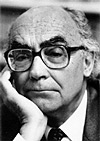
I’m still not sure after three books what Saramago gets out his quirky punctuation, which is half page paragraphs with nothing but commas for separation. Speakers run from one into the next in a polyphony that is remarkable among other things for how quickly you get used to it. Saramago is famously a leftist, of course, and this is a group novel. The one person who can see has a great deal of strength and kindness, but it is clear that she is no different from the others, except that she can see. There is no hero of supreme egotism and daring. There is enormous individuation and plenty of human dignity, and even some heroic actions , but it is all shared among many, which is, when you think about it, how the real world is.

So I recommend this book highly, in spite of how intimidating the pages look. You find yourself loving the girl with sunglasses; the first blind man; the little boy with a squint; the doctor, the doctor’s wife, and rooting for their tiny, hard won victories. I’m so glad Saramago is still writing, and that there are more of his books I haven’t read yet.

–Meredith Sue Willis

SUPPLEMENT: A WEST VIRGINIA WRITER DIES
Many of us are still struggling in and on the fringes of the New York commercial book scene. There are many other literary worlds, however, some regional, some based on regions, ethnic groups, and other affinities. These smaller circles are essential to the richness of literature, to the self-exploration of individuals and groups– plus they produce lots of wonderful things to read that are often never seen by wider audiences. One such circle I know a little is the northern West Virginia writing community that centers around Morgantown, the home of West Virginia University. I’m not speaking here, however, of the Univeristy’s writing programs and internationally known literary artists, but rather the people who socialize, read, and sing in small groups or at local bars. Sometimes they work in groups, sometimes all alone. George Lies’s obituary of one of these writers, Joe Gratski, is at the bottom of this page.
MORE ON ISHIGURO
Rebecca Kavaler writes, “Thanks for reminding me of Ishiguro's wonderful novel, NEVER LET ME GO. Every review at the time, whether misjudging this as science fiction or understanding it as a metaphor for the human condition, used the adjective "disturbing." And disturbing it is to think of how "completion" is inevitably our fate, how we lose one by one our faculties, how we are reduced to hoping for immortality in art (Madame and the Gallery, and yet this does not fully explain the emotional impact of this novel. It is impossible (for me, at least) to weep for the human race--but only for Kathy and Tommy and Ruth, and, attesting to the skill of this writer, weep I did. It was the hopelessness that was so sad. For even the pale satisfaction of surviving in our descendants is denied these childless clones. And how clever of Ishiguro to refuse to explain the workings of this world--making it clear this is not science fiction, merely fiction--of the highest kind.”
MORE RECENT READING
MY LOVE, MY LOVE: OR, THE PEASANT GIRL by Rosa Guy is a tale that charmed me in the end. They made a musical out of it a long time ago. It has voudoun gods and class barriers and a tragic ending, but is also somehow light and delightful: broad emotional storkes, but precise details of landscape, conflcts, fruit.
Noah Lukeman’s A DASH OF STYLE: THE ART AND MASTERY OF PUNCTUATION has some interesting and very quotable passages, but in the end it is a monograph padded into being a book. Each chapter ends with a sort of “Your Personality As Shown Through Your Writing Style.” I don’t recommend paying full price for it, but it’s not a bad work to have around for reference.
Kent Haruf’s justly praised PLAINSONG is big popular book from a couple of years ago that I had meant to read and finally did. It is Midwestern laconic and very touching, managing to be a gripping story without a lot of pyrotechnics. Haruf has a quirk of not using quotation marks and also very few tags or descriptors of how things are said. This seems to work, especially for his particular characters. It also creates a sameness in the voices so that you have a feeling of a large silence even when the people talk. The pattern is landscape and events with his sad but sympathetic characters, and then there will be a few unadorned lines of dialogue. It had a flat quality that was totally inappropriate, but occasionally annoying. There is a lot of white space in the novel anyhow, so there are a couple of scenes that felt like they had too much to me, especially a scene in which two old brothers decide to take a pregnant girl in to live with them. I believe they would do it, but this is one of those cases where I prefer mystery or elision rather than a dramatized scebe. He leaves the mother’s leathing a mystery, so why not also a mystery about this thing? Mostly, though, it’s just a solid, moving story.
I also read ISTANBUL: MEMORIES AND THE CITY by Orhan Pamuk. I wanted to like this more than I did. I adored the black and white photos that Pamuk loves too, and a lot of the thoughts and considerations about the sadness of a post empire-city. The book has a powerful ending and a fair amount of humor, but for some reason, I didn’t really like Orhan the little kid much. This is unusual, as I’m ordinarily a sucker for little kids. But there is some tone in this book that I think is meant to feel hard nosed and unsentimental toward his little self from the past, but it ends up by creating (again, to my taste) an unpleasant little kid. I liked the teenage parts best and the adult mullings. Pamuks’ family didn’t seem very attractive. I don’t know whether the effort to be honest did away with affection or what. But oh those pictures and stories about Istanbul!
GOOD NEWS
Rochelle Ratner has a new book out, SPEAKING IN TONGUES: A STUDY OF PERSONA IN AMERICAN, CANADIAN, AND BRITISH POETRY . This was written back in 1984, a critical study never before published. Now “Galatea Resurrects” will be publishing selected chapters: It examines the work of Bill Knott, Andrei Codrescu, Armand Schwerner, and Jack Spicer as well as the writings of HD, Diane DiPrima, and Margaret Atwood.
Cat Pleska has an interesting online article on West Virginia woodworking in the magazine WONDERFUL WEST VIRGINIA. It is featured on their website, so you can click on the link. At the top, you'll see a photo of a man working on cradles, and the title is "Hearts and Hands at Work." Click on that and it'll take you to the article. Her husband, Dan, is a member of this group and one of the toymakers. See www.wonderfulwv.com .
Chris Grabenstein has a new holiday thriller: HELL FOR THE HOLIDAYS, which PUBLISHER’S WEEKLY says “has a spectacular finish...sure to please his fans." Chris offers autographed bookplates to personalize your gift– Just e-mail Chris at Author@ChrisGrabenstein.com and he'll mail as many as you need back to you!
Roberta Allen has stories coming up in THE BROOKLYN RAIL; THE SAINT ANN’S REVIEW; THE VESTAL REVIEW; KGB Bar Lit Online; the anthology UP IS UP BUT SO IS DOWN; RIVERINE: An Anthology of Hudson Valley Writers; CREATIVE WRITING IN FOUR GENRES; and GARGOYLE MAGAZINE.


Barbara Crooker has new poems up .
BOOKS RECEIVED
(Some of these I’ll be reviewing in future issues, but you may want to think about them for holiday gifts now!)
FROM MAY TO DECEMBER by Pat MacEnulty
KING OF SWORDS by Miguel Antonio Ortiz– website at
http://www.intervalepress.com/http://www.intervalepress.com/
OHIO RIVER DIALOGUES A novel by William Zink See http://www.sugarloafpress.blogspot.com/
THINKING OF MILLER PLACE A MEMOIR OF SUMMER COMFORT by Ethel Lee-Miller has just been published.
READ IT ONLINE
Two good articles about the future of the book, e-readers, etc.:
http://www.newsweek.com/id/70983/page/1http://www.newsweek.com/id/70983/page/1
and http://www.hyperorg.com/backissues/joho-nov19-07.html#bookhttp://www.hyperorg.com/backissues/joho-nov19-07.html#book
Writing advice, inspiration, conversation, a community of writers -- you'll find all this and more at TRUEVOICE, THE BLOG by Bill Henderson. Take a look!
http://www.truevoice-blog.com/
http://www.williammccranorhenderson.com/
Book Critics Circle has a nice blog with book thoughts:
http://bookcriticscircle.blogspot.com/
Here is the latest issue of WORDRIOT at http://www.wordriot.org
In this month's issue: Fiction by Chuck Augello, Randall Brown, Lawrence Buentello, Andrew Coburn, Maria Deira, David Gianatasio, Drew Lackovic, Mathias Nelson, John Nyman, Mitch Omar, Nick Ostdick, Philip Oyok, Sean Ruane and Corey Zeller plus poetry and more.

SUPPLEMENT
WEST VIRGINIA LOST ANOTHER WRITER.
By George Lies
Poet Joe Gatski, a mountain wanderer, ginseng and mushroom hunter, a man with a bow and arrow, and more - a minstrel, and songwriter-singer.He passed away in his apartment last night. He was born on April 5, 1956 in Fairmont. West Virginia.
He had just visited me this past Sunday, coming in through the backyard, asking, *Am I welcome? I*ll just take the coffee black and a little sugar. Can you get me some copies of *Promontory** that you published. I need a sample or two for the road. I thank you much.*
He left. He was wearing two different gloves, two different boots, a back pack (his Bowie knife likely inside) - most of his friends would recognize him like that . . . and knew that he could strum a tune and narrate poetry, filled with lore and history and guts. He knew the mountains, the patches of ginseng and where to hide his cache.
We met many years ago, in a place called, Flo*s Diner, in Morgantown, which served pancakes. We drank Detroit wide-mouth beers. He seemed odd at that time. He had picked me, I thought. We lasted in spite of rough spots for a long time. He left me a bamboo flute that he had carved, and a backyard patch of bamboo, and one painting, which I call, *Almost Spring.*
On that last day, he said he had venison and that he*d come over next week, and cook again at the house for Lucia and me. I laughed, since I*m still waiting for smoke to clear from the last time he cooked in our kitchen. But I know I*ll always wake up when I hear a quiet
tap, tap, tap . . . knocking at my back door. . . Am I welcome . . . ?
* *Promontory* was his collection of poetry, which I helped him with, but he had other chapbooks, like *Annie*s Stick* which other writers, like Greg Leatherman and Candace Jordan, helped produce. He also had a CD with some 20 songs. I*ve given copies of his poetry to scores of international visitors I have welcomed to WV over the years, and *Promontory* is now in place at various locations in Mexico, Brazil, Germany, Canada, Italy, Mali, Japan, China, and other places in between..
I pasted two of his poems below from *The Highlands Voice*, Feb. 5, 2005, published by the WV Highlands Conservancy. His words almost seem to suggest that he*s on another road now, ready and packing for the end of the trail . . .
Hearthstone
By Joe Gatski
Though o*er
a many rough wilderness
I may travel
I know that somewhere,
at the end of the trail,
there are folks who will welcome me with kindness and grace.
Wine is on the table
and the parlor is filled with song.
In the kitchen the women are eagerly preparing
to serve up warm helpings of love.
Snowbird
By Joe Gatski
Up the valley
through the rain shadow
climbing reaching sky
features finely cut
in white stone of medina sand
with all but one of seven suitors left
far below,
see now, how proudly she stands
for tonight the stars are her crown
Joe Gatski, a West Virginia Highlands Conservancy member wrote this comment, upon submission of his poetry - “I am a firm believer in your cause. Here is a poem I have written that I hope you may enjoy. Hearthstone is about the Allegheny Mountains, the land and its people. Snowbird is about the legend of princess snowbird and her famous climb up Seneca rocks.”
Joe Gatski attended High School in Grafton, WV. He was an avid outdoorsman and spent a lot of time in the Appalachian Mountains. His activities were hunting, fishing, canoeing, horseback riding, gathering and growing wild herbs, edible plants and mushrooms. He was also an artist, singer-songwriter, and musician.
- George Lies
George.Lies@mail.wvu.edu
There is a wonderful video of Joe Gatski on Youtube at http://www.youtube.com/watch?v=KgFQDLRFXiY
Also, Norman Julian’s weekly column in the Dominion Post (www.dominionpost.com) for December 3, 2007. Is about Joe Gatski.

Monday, December 03, 2007

A Pell-Mell Sunday

It's been a kind of pell-mell Sunday, that leaves me feeling energized in my lungs, although tired now at going-on ten o'clock. I started with papers, which I've been doing all day off and on and yesterday too, then worked on an op-ed piece for the News-Record for the Social Action Committee,then walked through snow early to Ethical to greet, everything running slow there, and they needed a presider, and I did it, and Boe spoke, and we had a short Social Action Committee after, I walked home, feeling my cheeks pink, gray sky and more snow. Hastily did my soc action notes, redid the ethical website for next week's platform, a few other things, another paper, ate lunch, played with parakeet, did all the things for dinner, to make sure it would go fast: marinated chops for the George Foreman Grill, sliced broccoli and chopped garlic for a crispy broc stir fry, etc. Then off at 4:00 to the Executive Committee meeting for the Coalition, lots going on for two hours as usual, came home, cooked dinner, and since have been reading the book about America before Columbus, 1491 . Supertired now, but cheerful from all the activity, breathing deeply.

Thursday, November 29, 2007

Mentors and the Up and Coming Cohort

I’m getting lots of requests for help with applications, letters of recommendation, etc., these days, and it makes me feel old! There's nothing terrible about doing them-- they're usually even fun, and I love interacting with the young and lovely, and this is what is expected of teachers and mentors and such people, but it also feels like I've crossed over some hump-- I used to be the up-and-coming one with everything before me, and now, any way you slice it, there's less than half of my life ahead. And lots of assumptions about how my role now is to help the next cohort move on up. I’m just p.o.'d that I've discovered that I went from being young to old when I wasn't paying attention. I think it happened while Joel was growing up– I always said that having a child late made me not notice turning forty, nor did I really take much note of turning fifty. But now! Now my job is to be nice and help out the young 'uns!

Wednesday, November 21, 2007

If only everyone weren't traveling...

Joel and Sarah flying tonight, then we'll drive to Ellen's in Clinton, CT for family, food and cetera. I've still got vacuuming to do, but no cooking! Andy and I had lunch at the Chinese place next to his office, then went to look at a potential new office. My mom is in Cleveland with Harley and Faye, and if everyone weren't travelling (the neighbors in the middle of an eleven hour drive to Indiana!) it would all feel good and safe.

Saturday, November 17, 2007

Cozy Saturday

A part of the Arts Catalyst project at the Newark Museum that was supposed to happen today has been rescheduled, and I couldn't be more pleased to have a day with no work out of the house. There's plenty to do here, of course, particularly the finishing up of a manuscript consultation, and I just did a lot of desk work, invoices, NJ Writers Project acceptances of future work, email of course, the endless emails. I only have one NYU class next week, so fewer papers than usual.

Meanwhile, it's a bright but gray November sky, and the trees only now coloring up, very late, and people are whispering about global warming. In the paper today, the U.N. group making more strong statements about what has to be done to stave off global catastrophe. But it's hard for me to feel it on a cozy Saturday morning when Andy makes pancakes and his strong coffee, and I'm still in my hot pink flannel nightgown (but building up to a walk and some physical work!).

Joel and Sarah are coming next week, and while I'm not allowing myself to look forward to it ecstatically, I am not obsessing about airplanes yet either. My mom goes to Cleveland Monday, getting picked up by Harley and Faye by car, so her winter migrations are commencing.

And the psychological weather here isn't bad.

Monday, November 12, 2007

Today is Veterans' Day


Here is Wilfred Owen's famous poem. Owen died in a World War I battle a few days before the Armistice was signed.


Dulce Et Decorum Est
Wilfred Owen
Bent double, like old beggars under sacks,
Knock-kneed, coughing like hags, we cursed through sludge,
Till on the haunting flares we turned our backs
And towards our distant rest began to trudge.
Men marched asleep. Many had lost their boots
But limped on, blood-shod. All went lame; all blind;
Drunk with fatigue; deaf even to the hoots
Of disappointed shells that dropped behind.
GAS! Gas! Quick, boys!- An ecstasy of fumbling,
Fitting the clumsy helmets just in time;
But someone still was yelling out and stumbling
And floundering like a man in fire or lime.
Dim, through the misty panes and thick green light
As under a green sea, I saw him drowning.
In all my dreams, before my helpless sight,
He plunges at me, guttering, choking, drowning.
If in some smothering dreams you too could pace
Behind the wagon that we flung him in,
And watch the white eyes writhing in his face,
His hanging face, like a devil's sick of sin;
If you could hear, at every jolt, the blood
Come gargling from the froth-corrupted lungs,
Obscene as cancer, bitter as the cud
Of vile, incurable sores on innocent tongues, -
My friend, you would not tell with such high zest
To children ardent for some desperate glory,
The old Lie: Dulce et decorum est
Pro patria mori.
(The Latin dulce et decorum et pro patria mori means "It is sweet and proper to die for the fatherland." )

Friday, November 09, 2007

Mom's Group

Jody Nancy Maddie me but not Evelyn last night at North Square in NYC. In the link image, it looks larger than it feels--part of what's nice about it is the intimacy. I had California Sunfish with chipotle sauce over risotto and spinach with a side of mashed potatoes with chives (I didn't know the risotto was part of the dish). We had our usual sharing about our lives and our kids--this is my group that had a baby play group in Park Slope, Brooklyn, in the late eighties, and the big kids are all now college graduates. The others had at least one more child, but not me. It is always a deep time, full of the intense feelings of motherhood. I was so glad to see them, just to talk-- no need for action, work, papers to go over! Food wine bronze glow of North Square the young people serving. Great pleasure.

Sunday, November 04, 2007

Books for Readers Newsletter # 101

Between traveling, plunging into a lot of writing by students in my classes, and trying to do at least a little of my own writing, my reading has been haphazard at best this fall. Still, sometimes that’s the most fun. One thing I picked up over the summer and only got to a couple of weeks ago was MY BRILLIANT CAREER by the Australian feminist, Miles Franklin. She published this in 1901, having written it when she was just sixteen or seventeen. It is wonderfully scattered and mercurial: sensually alive, changeable, and enthusiastically despairing. I kept wanting to give her a big hug. The character is endlessly saying outrageous things, stumbling when she doesn’t have to, getting in scrapes, refusing to take what is offered to her. I also was fascinated by the inside look at rural 19th century Australia: lots of practical jokes and casual racism. I recently read Jared Diamond’s COLLAPSE, which includes a section on the misuse of the thin Australian soil by the settlers, and the lives of the farmers and itinerant workers here sheds light on that. All this, of course, ignores the people who were there first. It’s a worthy little book, and in spite of all the Sybylla’s troubles, full of energy.

I also pulled an American classic of my shelf, after hearing it discussed in a taped lecture on literature and the law (from The Teaching Company ). Nathaniel Hawthorne’s THE SCARLET LETTER is a vivid tale, and Hawthorne was a quintessential teller, not a shower. That is to say, for all the drama in the novel, much of it is narrated like a fairy tale. The relationship of Roger Chillingworth and Arthur Dimmesdale is told in evocative prose that never quite demonstrates how the revenge-seeking Chillingworth actually works his way into Dimmesdale’s heart. It is made very clear that Chillingworth is making his enemy ill, but you never see it happening directly. Little Pearl, on the other hand– the fruit of the Adultery that Hester Prynne wears symbolized on her dress– has her actions and words dramatized thoroughly and well: she is an interesting little character, treated with some sentimentality but also with an astringent other-worldliness. The indirection often works brilliantly, too: it is never exactly said what Arthur has been doing to his “breast.” The horror is left to our imagination– although we have a pretty definite idea that it’s some kind of capital “A” in blood. I was gripped by the story, and this time I understood how Hester actually becomes a mature and constructive woman out of all this, while Arthur’s pride in his place and skills dooms him. You have to wonder, though, whoever thought this is a book that ought to be taught in American high schools.

Then I read THE UNTOUCHABLE by John Banville. Banville has that enviable British conviction that words and fiction still matter deeply. Pat Barker and Sarah Water, whose work I also like a lot, have the same assumption– that the novel is the best lens for getting a clear understanding of the world. I believe it too, but I’m not sure most American readers and writers do: we people being artists, and we have lots of members of the cult of originality. We certainly have great literary entertainers, and we have people with raw and gripping stories to tell. But Banville offers the complete experience, lots of scenes, lots of words, lots of action, and lots of rumination. Victor Maskell is part of the Oxbridge spy rings of the twentieth century, and however factual it is, it feels very real. The secret gay sex stuff is well done and since I believe Banville is a hetero himself, the depiction of the illicit illegal upper class British homo-sex is something of a tour de force. Some of my favorite characters were the ones with a touch of mystery about them like Victor’s wife Vivienne and the “handlers” from Russia and Europe. I’m looking forward to reading more of his work.

Finally, a novel that just blew me away with its poignancy. I liked Kaszuo Ishiguro’s REMAINS OF THE DAY, but this one, NEVER LET ME GO, the one set in an alternative world where clones are raised for organ donations, is one of the saddest stories I’ve ever read. You keep wanting to say to the characters, Leave! Run away! Rebel! But they accept who they are with the same complete belief that we have about knowing we will die someday. You could say that it’s different, we really do have to die, but the point is that these young people think it is also a fact that their time will come for their “donations,” and that too is a fact. I suppose this is what makes it all so sad– we may not have been raised to be body parts, but we won’t get out of this alive either. The science fiction part isn’t worked out in any great detail (who finances their lives as young adults, who runs things and sends them their “donation” notices, how they are cared for as infants). Probably the weakest part of the whole novel– maybe the only weak part– is also the most explicit part, which is when one of the people who ran the school for the children, Miss Emily, makes a speech from her wheelchair about her motivations in running their school. I guess I would have been disappointed if there hadn’t been even this partial explanation, but it feels alien and unlike the rest of the book. Maybe that’s the point? To make the protagonists finally know there is nothing outside for them? Anyhow, a wonderful book.

–Meredith Sue Willis


P.S. Scarlet Letter image is of the 1926 film directed by Victor Sjöström with Lillian Gish as Hester Prynne


CONGRATULATIONS TO US

Carol Brodtrick writes to say, “Penning 100 newsletters merits a good bit of admiration and respect, plus, your newsletters have given this reader/writer a trunkful of book suggestions I might never have uncovered. I look forward to newsletter #101, and hope you reach #200 and beyond. Congratulations, and thanks.”

Cat Pleska writes: “Congratulations to you on your one hundreth newsletter! I enjoy reading it and thank you for providing interesting topics and inviting us to discuss. I must get back to updating my blog--it's been a busy, busy summer. I did hear today from someone in Austrailia writing to say he enjoyed my blog on Loretta Lynn's home place (http://www.rednecromancer.typepad.com/mouth_of_the_holler/). He says that where he lives in Victoria is very similar to Appalachia. He loves all things bluegrass and has been to eastern KY twice. It's always fun hearing from people about something you've written about. I can imagine that has been quite satisfying to you to correspond with your readers through your newsletter. Keep up the good work. I'll keep tuning in!”


MORE ON THE POISONWOOD BIBLE

Norman Julain writes to say, “I read THE POISONWOOD BIBLE a couple of years ago and that established [Kingsolver] at the forefront of American novelists I like. Wondering, has she published anything since? I feel she may be hard at work on another good one - at least I hope so.”

Fran Osten suggests, “A good companion piece to POISONWOOD BIBLE is KING LEOPOLD'S GHOST, by Adam Hochschild, which came out about the same time as POISONWOOD BIBLE and is a non-fiction horror tale of events in the Congo. On another note, or perhaps a segue on the issues of cultural misunderstanding/understanding. I have been seeking out books on the immigrant experience recently, with all the issues around our current immigration policy and thinking about my own parents and the experience of my Kenyan son-in-law......the nuances, the misunderstandings, all the losses and gains in the immigration experience and the struggle to make a place your own. I really enjoyed Wayson Choy's novel, ALL THAT MATTERS, about a Chinese family in Vancouver in the 1930's and 40's. It is a sequel to THE JADE PEONY, which I still want to read.”


MORE RECOMMENDATIONS

“Looking for a memoir about teaching to teach this semester,” writes Ingrid Hughes, “I came across TEACHER: THE ONE WHO MADE THE DIFFERENCE, a high school memoir by Mark Edmundson, a scholar with a reputation for literary and cultural criticism. It’s a terrific description of the people in his life, and the culture of his high school during his senior year in the working class suburb of Boston, Medford in 1969. It focuses especially on one teacher, Franklin Lears, whom he credits with turning him from a jock, a thoughtless supporter of the Vietnam War, and a weak student at a weak school, into a reader and thinker. The writing is good, the characters memorable.”

From Carol Brodtrick: “I want to tell you about a book I just found at the library and loved reading. It's called LAST DAYS OF SUMMER, written by Steve Kluger. It was first published in 1998, and if it made a splash when it came out, I was unaware of it. The 1940's story is that of twelve-year old Joseph Charles Margolis, the only Jewish kid living in an Italian neighborhood in Brooklyn, whose bedroom overlooks Ebbets Field, home of the hated Brooklyn Dodgers. Yes, it's about baseball, and Joey's love for the NY Giants, but it's not about a game. It's about relationships; a father who divorced his family, a gentile third baseman who learns to love this kid in spite of himself, a mother, an aunt, a teacher and a principal who care, a Rabbi who bends, an interested psychologist, and even FDR, President of the United States. This book is for adults, and is that rare mixture of humor, pathos, and contradictions of human nature that has you laughing one second and crying the next. It's a bit of history, too, about the war years, and a delightful read.”


FOR WRITERS

John Birch recommends a book for writers. He says, “Sol Stein, author of nine novels, publisher, teacher and editor (he’s edited the work of James Baldwin, Jack Higgins, Lionel Trilling, W.H.Auden and Dylan Tomas), knows more than a thing or two about writing fiction. His 320-page book STEIN ON WRITING (ISBN 0312136080) has invaluable advice on every aspect of writing a novel.”

GOOD NEWS

The NEW YORK TIMES BOOK REVIEW gave a good review to West Virginia novelist Ann Pancake’s BURIED ALIVE.

Grace Paley’s Glad Day Books is reissuing EDGES: O ISRAEL O PALESTINE by Leora Skolkin-Smith. After selling out of two successive print runs, Leora Skolkin-Smith’s intoxicating novel about a young girl’s personal and political discovery in 1960’s Israel and Palestine is being re-released in a new edition by Glad Day Books. This new incarnation will include the author’s afterword and dedication to her mentor, Publisher and Editor of Glad Day Books, Grace Paley.

(Image to the left is of Grace Paley)

NEBRASKA PRESENCE, a new anthology from The Backwaters Press, is now out, and Marilyn Coffey is one of dozens of poets included.

Nathan Leslie's sixth book of short fiction, MADRE, has just been published by Main Street Rag Books. Visit Main Street Rag for more information on this collection.

Bob Heman reports that some of his "information" series of prose poems just went up on the site of a new e-mag called Clockwise Cat - if you follow the link below you can find them at:
http://clockwisecat.blogspot.com/2007/09/five-poems-by-bob-heman.html
Also recently, a group of 20 information pieces titled "Recent Information" was published as a special issue of Joel Dailey's long running New Orleans magazine FELL SWOOP

Theodore Rutkowski has a new prose poetry chapbook from BoneWorld Publishing, 3700 County Route 24, Russell, NY 13684. $6.

READ IT ONLINE

There is an interesting Interview with Gail Adams at http://www.prickofthespindle.com/interviews/interview.htm.

The latest issue of the Pedestal # 42 is up at http://www.thepedestalmagazine.com/

Thaddeus Rutkowski has a whole string of new work to read online: "Bird's Eye," poem, Mobius, Vol. XXII, 2007 at www.mobiuspoetry.com ; "Captivity," story, Summerset Review. www.summersetreview.org/07fall/toc.htm ; "Hell-Bent," story, Arlington Literary Journal, No. 14. www.givalpress.com. Click on "Authors" or scroll to "Gival Press Authors" or "Arlington Literary Journal." ; "Nuts," story, Houston Literary Review at http://thehoustonliteraryreview.com/fall2007fiction.aspx ; "Bad Magic," "Serenity Prayer," prose poems, New York Spirit, Oct./Nov. issue www.nyspirit.com Click on "Illuminated Ink."


SUBMIT

Send one or two unpublished poems celebrating William Carlos Williams and North Jersey, no longer than two manuscript pages, to Maria Mazziotti Gillan, Executive Director, Poetry Center, Passaic County Community College, One College Boulevard, Paterson, New Jersey 07505-1179 or see www.pccc.edu/poetry Poems should have something to do with North Jersey and be written in the poets own style and not imitate the poetry of William Carlos Williams. Send two copies of each poem, one with and one without contact information. DEADLINE January 1, 2008. Include short third-person bio.


ONLINE GROUPS AND CLASSES

Do you want a poetry workshop without leaving home? Try try Neopoet! at www.neopoet.com, an online poetry workshop and community where you can meet poets from around the world, share critiques, and improve as a poet. Neopoet hosts a monthly newsletter, frequent contests, and an active forum.

Meredith Sue Willis will be offering an online writing class in January 2008, four sessions on Prose Narrative. For information, go to http://www.meredithsuewillis.com/ProseNarrativeJan2008.html


REAL TIME REAL PLACE NON-VIRTUAL WORKSHOP

"Finishing Touches" will begin on Monday evening, Nov. 5, at the Writer's Voice of the West Side YMCA. The course will encourage writers of fiction and creative nonfiction to complete works in progress. Substantial class time will be provided for individual critiques. Eight meetings. Open to all. Almost free for YMCA members. Contact Glenn Raucher at 212 875-4124, or graucher@ymcanyc.org.

UPCOMING READINGS

Bob Heman’s next CLWN WR reading will be Thursday, November 8, 7-10 pm, once again at the SAFE-T Gallery in the DUMBO section of Brooklyn, featuring John M. Bennett (from Columbus, Ohio), Craig Czury (from Reading, Pennsylvania), and Brooklyn's own Elizabeth Smith - along with "special guests" Sheila E. Murphy (from Phoenix, Arizona), Jean Lehrman, Nathan Whiting, Liza Wolsky and a few others yet to be announced - so mark it on your calendar.

Thaddeus Rutkowski will be reading November 9, Friday, 7 p.m., Memoir Reading, Callanwolde Fine Arts Center, 980 Briarcliff Road N.E., Atlanta, Info: jakers1@mindspring.com ; November 17, Saturday, 8 p.m. Berlin Poetry Hearings. Salon Rosa, Sophienstrasse 18, Berlin-Mitte, Germany. www.myspace.com/poetryhearings ; November 28, Wednesday, evening. Green Pavilion Restaurant, 4307 18th Ave., Brooklyn (F train to 18th Avenue); December 10, Monday, 7 p.m.; his story "Before the Move" will be read by an actor in Writing Aloud. InterAct Theater, 2030 Sansom St., Philadelphia. www.interacttheatre.org; January 4, 2008, Friday, 9:30-11:30 p.m.; Panel discussion: "Polish American Writing: From Polish Tradition to the American Identity." Polish American Historical Association, Washington, D.C.

JUST OUT

Fall 2007 issue of theBLRnow available in bookstores, by subscription,
or at www.BLReview.org . It is published by NYU's Department of Medicine twice a
year.

Phyllis Moore draws our attention to SURREAL SOUTH, twenty-seven stories and poems edited by Laura & Pinckney Benedict. It contains work by, among many others, Ann Pancake, Chris Offutt, Joyce Carol Oates, Laura Benedict, Lee K. Abbott, Robert Olen Butler, and Ron Rash.


THE NOTE ABOUT AMAZON.COM

Ingrid Hughes writes: “My union newspaper says, ‘Forget Amazon.com, which has engaged in union busting on two continents. Try Powell's Books (http://www.powells.com)- the largest unionized bookstore in America....An alternative way to reach their site is from http://www.powellsunion.com; prices are the same but 10% of your purchase will go directly to the [Powell’s bookstore] union's benefit fund.’” But also see Jonathan Greene’s comments above and more of the discussion in Issue #98 and #97.


WHERE TO FIND BOOKS MENTIONED IN THIS NEWSLETTER

If a book discussed in this newsletter has no source mentioned, don’t forget your public library and your local independent bookstore. To buy books online, I often go first to Bookfinder at http://www.bookfinder.com . I also like Alibis at http://www.alibris.com. A lot of people I know prefer to use the unionized bricks-and-mortar and online bookstore Powells Books at http://powellsbooks.com. Good sources for used and out-of-print books are Advanced Book Exchange at http://www.abebooks.com and All Book Stores at http://www.allbookstores.com/ . Both Bookfinder and All Book Stores both have a special feature that tells you the book price WITH shipping and handling, so you can compare what you’re really going to have to pay.

RESPONSES

Please send responses and suggestions directly to me. Unless you request otherwise, your responses may be edited and published in this newsletter. Please e-mail Meredith Sue Willis at MeredithSueWillis@gmail.com.


BOOKS FOR READERS is a free, independent newsletter written and produced by Meredith
Sue Willis. To subscribe, send a blank email to Readerbooks-subscribe@topica.com. To unsubscribe, send a blank email to Readerbooks-unsubscribe@topica.com. Copyright 2007, Meredith Sue Willis

Now November

Tomorrow is my late father's birthday: we use his name for a password on my mother's email, and I sometimes type it in in order to see what's going on with her email (it's my way of finding out if she's off line again). It always feels like keeping him alive-- to type his name. A death of someone who you don't live with doesn't leave the same hole in you life as someone you do live with. There are a lot of people in my life who I don't see regularly or even very often, and they come and go in my imagination. So suddenly, when I type his name or note that it's his birthday coming up, he's there in a different way--as if he were still sitting in his recliner in Shinnston reading and watching t.v. And yet know there is no change, nothing to do with that image but hold it: his absence means there can be no new memories. New imaginings, new information, but no new memories.

I went Friday night into New York and met George and Connie Brosi and their son Eagle who has a play called America Perseveres off off Broadway through a New York/Kentucky exchange. It turned out that the theater is underneath the famous funky KGBG bar! We met at the venerable (but somewhat remodeled) Strand bookstore (George and Connie run a major Appalachian book business-- travel all over with their books), had a bite a Veselka, and then went to the play, which was about George and Martha Washington and Chief Pontiac and the Original American sin of violence and racism. Which does not capture how funny the play was. That was a treat-- to see friends, to see Eagle's play.

Friday, October 26, 2007

What I've been doing...

I've not been very good about writing in my blog/journal this month. We were in San Francisco, then catching up, then there has been major teaching! And Coalition events! And the social action committee is giving the platform at Ethical Culture!

I'm teaching Beginning Your Novels on Mondays at the Norman Thomas High school on East 33rd Street, part of NYU's extended empire, then Advanced Novel at the big library on WAshington Square on Mondays. I'm also working on scheduling school visits starting in January. I'm out at Playwright's Theatre teaching an adult Prose Narrative class on Thursdays, and most Thursdays either have Writers Group in New York in the evening or the Coalition's monthly Trustee meeting. Many nights there are executive committee meetings or other events (this Tuesday we have a Parent Advocacy Workshop). I'm not going to the demonstration in the city tomorrow because I have to prepare my part in a panel on health care issues and the presidential candidates on Sunday. Meanwhile, my garden needs fall cleanup and is still producing greens, and I've got a one day class next week end called Jump Start your novel plus a fancy celebration Saturday night for the Coalition-- and on Friday, Eagle Brosi's play.

I shouldn't have started listing. It makes me tired, and yet I'm having fun, and working on Safe Houses most mornings. I've chosen almost all of these things I do.

Saturday, October 20, 2007

Bird Behind

Earlier today Andy was about to go out on a bike ride, and he was all dressed in his biking clothes with a helmet and a fanny pack (the little waist pack you strap on and slide around behind you). We were in the kitchen and Taxicab was at liberty. I suddenly realized I couldn't see the bird anywhere, and Andy couldn't either. We heard him-- it sounded like he was out in the hall or maybe had fallen behind the microwave-- but he didn't sound alarmed, just chirping cheerfully. It was totally weird--we looked behind the cookbooks and on the floor, and finally Andy turned toward the cabinets-- and I saw the bird.

He was on Andy's fanny pack happily singing to the zipper and kissing it. We laughed a long time about that.

Thursday, October 11, 2007

Shaggy Trees

MSW in the Pacific

Back in shaggy-treed New Jersey, which is what I’m mostly noticing when I'm out: the untidy ground and street, the variety of trees, dense down very low. Of course we were in a city in California, so there was generally more pavement than vegetation, but even out in the country, there was less grass, and the trees mostly evergreen. The shaggy here comes from deciduousness, too, and while we are still mostly green, leaves are beginning to drift down, brown and yellow and burnt oranges, a slight crunchiness underfoot.

Back to putting up lawn signs for the Coalition’s Report to the Community. Back to getting the DSL back online, which took a long time and a lot of crawling under the table while talking to some lady in India.

Some pictures of us in San Francisco on the snapshot page.

Tuesday, October 09, 2007

Last Day in San Francisco

We’re still in the hotel room, but will pack and leave soon– Golden Gate park in the plans today, checked out, plane tonight. Yesterday Andy and I walked up up up to the Cable Car Museum and then up up some really steep hills to Coit Tower, which I liked for the Depression era works administration socialist realism murals– quite good ones, really, and the woman who gave the money for the tower had been a little girl in 1906 and cheered the fire fighters and was named their mascot.

From there, with the usual wash of brilliant light and lovely if slightly smoggy views, we took a bus down to Fisherman’s Wharf, which was super touristy with people selling tours and boats coming in and out and long lines for the ladies’ room. But we got Boudin sourdought bread bowls of good chowder, clam for Andy, crab and corn fo me, and then went to the submarine you can visit. I was only going along for Andy, but it was actually a very worthwhile even moving half hour– the audio tour had voices of guys who had been on this ship or others, old world war II American guy voices, those slightly thin Midwestern to movie tough guy from the west or Brooklyn voices, touching, especially the story of how they rescued a lot of British and Australian prisoners of war floating in the ocean after they had blown up the Japanese ship the prisoners were being transported on. As for the gray paint and compressed quarters– a claustrophobe’s nightmare. I kept imagining I smelled the eighty plus men with rare showers and too much heat with too little air.

From there, we made our way very slowly by cable car and muni subway over to Joel’s office on Mission and First Street, saw the office, which I had pictured, seven or eight guys with big computers, but also a “machine room” full of enormous computing power and air conditioners, and then a whole other office suite where they play “fish pong,” their own team sport based on ping pong, competitiveness, and group esprit..

Back to the hotel for a swim (me) and a shower, Joel joined us, we joined Sarah on the BART for a ride to La Taqueria in the Mission District, followed by a lot more walking in that rapidly gentrifying neighborhood, tons of restaurants and bars, more attractive bookstores, one with wonderful pages taped to the window of Memorials of people in the arts and politics by an artist that I really liked (see her page at http://www.veronicadejesus.com) . Many murals, which I liked a lot, especially on the Women Building that Sarah took us to. The next time I come out, I’m going to get a mural tour of the city, or maybe just the one a nonprofit called Pacita Eyes (?) gives of local Mission District stuff. Then back to the hotel, exhausted and sad again over Joel growing up and leaving. He’s a great host, but he doesn’t live with us anymore.

And now we've got a lot day ahead with a visit to Golden Gate park, museum, airplane.

Monday, October 08, 2007

San Francisco

Golden Gate Bridge after we'd biked over-- photo by Andy Weinberger

October 7, 2007

It's Andy's birthday and we're in San Francisco visiting with Joel and Sarah. They are being just super with giving us time and attention. If anything, Joel seems disappointed when we want to take a break-- right now it's five thirty p.m. here, and we went out this morning and rented bikes and biked along the Bay to the Golden Gate Bridge which we biked over! A perfectly doable bike ride, not really challenging enough for Joel and Andy, but I had a great time, got tired, was stunned by the beauty of the bay, the sailboats, the birds. The bridge itself is such a familiar image that I was struck, as we rode along the bay, by how in the near distance was a flat grassy field, part of the park, and then on the other side the red hills with gray greenscrub--as if at that moment the bridge had nothing to do with water at all. We also had cable car adventures and lunch in Sausalito, ferry back to San Francisco-- and it was Fleet Week! The crazy Blue Devils or is it Angels doing tricks in the sky making us cover our ears while we rode the ferry, waited for the cable car.

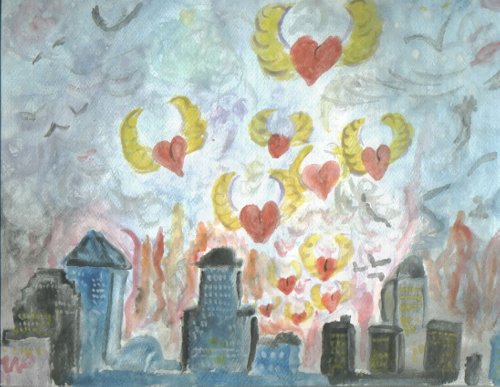
Yesterday it was Mission Dolores, South Bay! Pacific Ocean! I waded in the ocean with some squealing little girls in bathing suits at a big golf resort with fancy condos where they permit the public access to the beach by law no doubt not the kindness of the capitalist heart. I loved the Mission, began to read a little about strange California History. Sarah and Joel so loving and fine.


Friday, September 28, 2007

Coalition Work

Well, it didn't feel like fighting racism. Andy drove me around South Orange and Maplewood after we went to Jersey City to the accountant to do our taxes, and I dropped flyers at the elementary schools to publicize a schools committee workshop on Parent Advocacy. I like doing it, pretty well, the survey of the schools, how they smell, the kids looking cute for the most part, the sense of how each of them is a bustling little world of its own, but it feels like being a PTA parent more than a political struggle. I know the connection of course, that we're working to empower parents, narrow the achievement gap, and thus make integration work and in the long run destroy racism-- but golly making flyers and distributing them feels far away.

What would feel more like it to me? Direct action, of course, marching,yelling. Singing is good.

But for ten years my largest single political action has been through the Coalition, and it works for me in a lot of ways-- I've made friends, I've had to deal with people in a different way, and people I would never have dealt with probably otherwise, but it isn't always easy to keep the long view--

September 25, 2007

Today is the fiftieth anniversary of the first day the Little Rock teenagers actually got to stay in their high school--with U.S. troops protecing them. Here's an interesting reflection on the anniversary from commentator Juan Williams.

One Hundredth Newsletter!

This Newsletter is Number 100! My first one was written in December, 2000, and I still do them for essentially the same reasons I stated then: http://www.meredithsuewillis.com/bfrarchive1-5.html#1 . What has been an unexpected pleasure has been the response and contributions of the readers who have consistently contributed suggestions and even done whole guest columns– keep them coming!
And please do spread the word and invite friends to subscribe. I cannot, by the way, subscribe people; they have to ask for the newsletter. This is easy to do: just send a blank email to Readerbooks-subscribe@topica.com.

I want to recommend several books I’ve enjoyed in different ways over the just-ended summer. First is a brand new novel by Pamela Erens called THE UNDERSTORY. This is a finely written, rich short novel, about a man named Jack who is one of the quiet people moving around the streets of New York City– part of the “understory” of plants that grow under a great forest’s canopy. An obsessive compulsive, he has an upper west side brownstone apartment that is being rehabbed, which upsets all his routines. He is finally forced out of the apartment– he wasn’t there quite legally in the first place, but how he is made to leave is hardly legal either: there are fires, and the last one destroys all his possessions. Simultaneously, Jack’s carefully organized life is being disrupted by falling in love.

The loss of home and his love story alternate with the present story in which he is living in a monastery in New England, earning his way by working with bonsai. Previously, his special interest had been Central Park’s plant life, especially the saplings and weeds in the understory that gives a measure of the health of the woodland. The two time frames move forward in a nice tangle until an act of violence brings everything together at the end.

For me, the great value of this novel is Jack’s self awareness as he falls in love and falls apart– and how both things cause him pain. He, of course, is an important part of the understory of the city and society, and his distress is an indicator of the state of society’s health. As such people and plants lose their tenuous hold on their place, the world loses richness, and, in the end, the less marginal people are endangered as well. It’s an interior, precise, and carefully imagined novel that makes a powerful social statement in an oblique but focused way.

THE UNDERSTORY is not going to appear in a large stack near the cash registers at your local Barnes & Noble, so you'll have to look for it. In Barnes & Noble’s defense, I am confident that they would accept the thousands of dollars it would cost to have the book featured that way, but the only publishers with that kind of disposable income are part of the big commercial conglomerates betting on what is going to be a best seller. So make the effort to get hold of THE UNDERSTORY and other books like it– and share with us more such books at Books for Readers.

By the way, I want to report that I did read a best seller over the summer– one that I think actually deserves the accolades and income it generated-- Barbara Kingsolver’s THE POISONWOOD BIBLE. I really liked this novel, which isn’t perfect, although I don’t think big ambitious books are ever perfect. The last third in particular, in which the characters grow up and grow older, has a lot of weaknesses. It could have been shorter, and although it was gratifying to learn what happened to everyone, the various narratives are flaccid in comparison to the first two thirds. And those first two thirds are really splendid, powered by wonderful voices and interesting children and an incredibly gripping plot question: Which child is going to die? The mother says early in the novel that she left one child buried in Africa, and since we meet four daughters, we are caught up in the suspense of who will live and who will die.

Then, after we know that, and after the powerful action of escaping from the crazy missionary Father, the rest really is dénouement, unraveling the knots– important and gratifying, but probably best accomplished swiftly.

Among the delights of this novel– aside from the obvious ones of the suspense, the voices of the girls, and the thick specificity of life in the Congo in the early nineteen-sixties– are Leah and Anatole’s love story, and a skillfully inserted modicum of the history of Congo/Zaire. I also liked the dumb blonde sister (although her malapropisms are laid on too thick in the early part) who turns out to have in some ways the most interesting life. The final chapter told in the voice of the dead sister is artful and satisfying as an ending.

What puts this over the top for me as a truly successful book is that it is in the end a political novel. Yes, it teaches you a little about Patrice Lumumba, and it has a distinct ground level view of colonialism, but it has the novelistic political quality of allowing some of its characters to effect at least small amounts of change not only in themselves but in their environment.

I read on Kingsolver’s webpage in her FAQ’s that she actually did spend a year in the Congo when she was seven or eight (her parents were NOT missionaries, she hastens to assert). She also did ten years worth of research for this book. The finish of her writing shows it. When I wrote an essay on Kingsolver’s work for Appalachian Journal back in 1994, I said, “Some of the work seems to me to have been written too rapidly....Whether her work is at its most highly polished or relatively rough, however, she is consistently worth reading for her breadth of perspective and generosity of spirit....” THE POISONWOOD BIBLE is polished in all the good ways, and it carries some of the same themes I wrote about then: the creation of community, mother and child love, how people on the ground, as it were, react to, live with, live under, struggle against, oppression. I deeply admire Kingsolver’s commitment to literature that is socially engaged, and this is one book whose popularity is well deserved.

Okay, I read another best seller this summer: HARRY POTTER AND THE GOBLET OF FIRE. The first really hefty volume of the series, it moved just as fast as the others. It has the usual Enormous Confrontation with Evil at the end-- and even though Voldemorte resurrected seems to me less awe-inspiring that Voldemorte Almost Dead, it’s still a good read. I especially appreciate how the books get more complex and darker, as Harry and company get older. The appeal of Voldemorte to his followers, however, totally escapes me. Didn’t the wizards ever read about Muggles fascist dictators like Adolf Hitler?

Finally, I want to mention two books I read out of indulgence in my own interests, and I would certainly recommend them if the subjects interest you: Chrisopher White’s REMBRANDT, part of the Thames & Hudson World of Art series gave me a good overview of Why Everyone Talks about Rembrandt.

I picked up ANCIENT GREEKS FROM PREHISTORIC TO HELLENISTIC TIMES by Thomas R. Martin because the Metropolitan Museum of Art in New York has totally redone their Greek and Roman galleries, and I started to walk through, and realized I hadn’t the faintest notion of the differences among Archaic Greece and Mycenaean Greece and Ancient Crete. This book, excluding notes and bibliography, is just over 200 pages, and did exactly what I wanted: gave me a survey and will sit on my shelf for reference. I may even carry it to the museum with me the next time I go.

What have you been reading?

–Meredith Sue Willis
BARBARA RASMUSSEN IS READING..
Barbara Rasmussen writes to say, “I’ve just finished WATER FOR ELEPHANTS, and ELLA MINNOW PEA, which are just delightful flights of fictive fantasy. Who doesn’t want to work in the circus? Or live in an imaginary land where the dictator declares war on alphabet letters – respectively.”
HIGHLY RECOMMENDED: RITA SIMS QUILLEN”S LATEST BOOK OF POETRY
Michael McFee says the book is “heartbreaking but also witty, feisty, sassy.” I say it is all that and really worth your time and money. It’s Rita Sims Quillen’s latest, HER SECRET DREAM. I sometimes have trouble finishing entire volumes of poetry– I hear a poet or am attracted to a poem, get the book, read a few, and then put the volume on my beside table stack. But this one I kept on reading. Some of it is imagined lives of Appalachian farm women, some of it is from Quillen’s own childhood, some of it is about trying to be a poet and a mother. The following is the beginning section of “Woman Writer:”
Spending the days attending to bodily functions
Our own and everyone else’s
Gives us a handicap.
Words crawl into the laundry basket
Hide among the socks
Circle and scream in the toilet
Hang in the closet and beg
For freedom.
While my son warms in my arms
A line that could make me famous
Leaps up in my face
Spits and leaves by the back door....
JUST OUT!
A WORKING MAN”S APOCRYPHA, short stories by William Luvaas has just been published. Luvaas’s work has power that comes from the rigor of incisive images and a serious journey through human minds and hearts.
Of Tamara Baxter’s ROCK BIG AND SING LOUD: SHORT STORIES FROM SOUTHERN APPALACHIA, Robert Morgan says: “These stories take us to places we did not expect to go, and just when we think we have seen what is strangest, most absurd, most alien and outrageous, we recognize something of ourselves.”

AGAINST WORKSHOPPING
Caol Bly has an interesting book out especially for writers and teachers of writing. It’s called AGAINST WORKSHOPPING, and you can find it at Bly and Loveland Press's site.
MORE GOOD NEWS
Suzanne McConnell has an excellent piece in the Hunter CUNY ENGLISH COMMUNITY PLACE http://fm.hunter.cuny.edu/english_dept/?p=28 on her memories of studying with the late Kurt Vonnegut.
Scott Oglesby is featured in the Fall 2007 issue of THE BELLEVUE LITERARY REVIEW.
Scott also will be one of their featured readers at the Fall reading on Sunday, October 14th, at Bellevue Hospital.

MORE ON BOOK BUYING, AMAZON, AND SMALL PRESSES
Phyllis Moore writes to say, “Jonathan Greene's comments [see http://www.meredithsuewillis.com/bfrarchive96-100.html#99 ] cover the facets of the topic very well. Often neither the local book store (we have one) or local libraries (we have three) have the books I want to read. Ordering them requires at least a short wait and a trip to pick up the books. Last week, I learned of an upcoming visit by West Virginia Author Anne Barnhill. After a futile local search for her memoir, AT HOME IN THE LAND OF OZ, I ordered it from Amazon.com. It arrived in my yesterday's mail. Receiving books quickly at a reasonable price is an Internet service I greatly appreciate. Because of Amazon.com and Powell, etc., I have quick access to many new-to-me authors.”
And my brother-in-law David Weinberger the Internet commentator and Harvard Berkman Center Fellow, featured Jonathan Greene’s remarks from Issue # 99 on small presses and Amazon up on his blog (See http://www.hyperorg.com/blogger/mtarchive/amazon_and_small_presses.html)

JOURNALISM PRIZE FOR WRITERS ON MENTAL HEALTH
One of my students has suggested that those of you who write nonfiction take a look at the Roslyn Carter Fellowship for Mental Health in Journalism, information at http://www.cartercenter.org/health/mental_health/fellowships/index.html
ELLEN BASS WORKSHOP IN MALLORCA
Writing For Our Lives at La Serrania, a remote and gorgeous retreat center in Mallorca with Ellen Bass May 3-10, 2008 . “This week will be an opportunity to delve into our writing in an inspiring setting, to nurture the creative voice. There will be time for writing and time for sharing and response, hearing what our work touches in others. We'll help each other to become clearer, go deeper, express our feelings and ideas more powerfully. With the safety, support, and guidance of this gathering, you have the opportunity to create writing that is more vivid, more true, more complex and powerful than you've been able to do before.” Both beginners and experienced writers are welcome. Whether you are interested in poetry, fiction, nonfiction, memoir or journal writing, this workshop will provide an opportunity to explore and expand your creative world. This size of the workshop is limited to 14 participants. The early bird fee for the workshop (which includes accommodations and all meals) is $1500 until December 31. After that the regular fee is $1750. A $550 deposit is required to hold your place. Most rooms are doubles, but there may be single rooms available for a surcharge. For more information about LaSerrania visit www.laserrania.com. For more information about the workshop and to register, please email Ellen Bass at ellen@ellenbass.com or call 831-426-8006.
SNAPFICTION.COM
There’s a new site that looks like a lot of fun at http://snapfiction.com/ The idea is that you get a writing challenge each week to try. So if you’re looking for writing exercises and some swift feedback, give it a try.
ANN PANCAKE ON TOUR!
Ann Pancake will be reading at various places this fall from her new novel, STRANGE AS THIS WEATHER HAS BEEN. The novel is about a family struggling with the fallout of mountaintop removal mining in southern West Virginia.
– September 28-29: Kentucky Women Writers’ Conference, Lexington, KY. Reading in the Carnegie Center at 1:30 on the 29th.
– October 22: Marshall University, Huntington, WV. Reading at the Marshall University Student Center at 8 p.m.
– October 23: Catawba College reading and community forum, Salisbury, NC, at 7:30 p.m.
– October 24: Appalachian State University, Boone, NC. Reading at the bookstore at 2 p.m.
– October 25: Salem College, Winston-Salem, NC. Reading in Shirley Recital
Hall, Salem Fine Arts Center, at 7 p.m.
– October 26: Malaprop’s Bookstore, Asheville, NC. Reading at 7 p.m.
– October 27: Taylor Books, Charleston, WV. Reading at 5:30.
– November 1: West Virginia Wesleyan, Buckhannon, WV. Reading at 7 p.m.
– November 5: West Virginia University. Reading in the Robinson Reading Room of the Main Library at 7:30 p.m.
– November 6: University of Pittsburgh at Johnstown, PA. Reading in the chapel at 7:30 p.m.
– November 7: University of Pittsburgh, Pittsburgh. Reading and question/answer session in Chuck Kinder’s class from 6:30-8 p.m.
OPEN READING IN BROOKLYN
First Unitarian Congregatonal Society: Wednesday Oct. 17th, 48 Monroe Pl. Bklyn. cor Pierrepont.From 7:00-9:15 PM Brooklyn Heights Poets (Pierrepont Players) Wide Open Reading + Feature: Jel Spiegelman, Author - Published poet...718-377-1253
THE NOTE ABOUT AMAZON.COM
Ingrid Hughes writes: “My union newspaper says, ‘Forget Amazon.com, which has engaged in union busting on two continents. Try Powell's Books (http://www.powells.com)- the largest unionized bookstore in America....An alternative way to reach their site is from http://www.powellsunion.com; prices are the same but 10% of your purchase will go directly to the [Powell’s bookstore] union's benefit fund.’” But also see Jonathan Greene’s comments above and more of the discussion in Issue #98 and #97.

Thursday, September 20, 2007

Monday entry

I slept an hour later than usual today, totally wiped out after yesterday, which included Leny, finishing two stories to send off. Then I did a really quick nordic walk, cleaned myself up, went to the Newark Museum for a gallery walk-through to prepare for my teacher training job there– that was fun! They have a new contemporary India exhibit opening tomorrow that promises to be really exciting– photos and installations mostly.

Then hurried back to prepare remarks for the forum last night, then to a lovely small dinner with the speaker and a few others at Les Saisons, Art and Libby Christensen’s bed-and-breakfast on Elmwood Avenue.

Then the forum, which I moderated. I had a sensation of channelling Carol and Audrey and others as they asked me to introduce people who'd just come in, etc. An interesting feeling, but I wasn’t listening to the words said as much as surveying the crowd and making things happen. Even if I didn’t attend as closely as I could to what was said, it felt like a good forum-- the Coalition's first big one since 2005-- more than 150 people, and this with no high school students required to come. They ususally add another forty or fifty to the crowd. We had the News-Record and the Star-Ledger there, mayor of East Orange and South Orange, also an Essex County freeholder. Good representation of political people, then, even though there was a school board meeting in process and some other meetings-- the youth task force maybe. So this was a grown-up but very attentive and interested good audience, including people I hadn't seen in years, lots of very quick conversations, some who’ve been around a long time but hadn’t really participated with the Coalition.

Professor john a. powell was inspiring, speaking about the spiritual value of integration– which I’m not sure I held onto, but at the moment was totally inspired by. Maybe inspiration is what we needed at this moment, though, with lots of bad news, as from Tuscaloosa. Professor powell insists that the spring Supreme Court decision has a silver lining, and perhaps another silver lining is that people may be realizing integration is under attack.

Friday, September 14, 2007

On being pale

Read Maude Newton's funny blog piece about growing up in Florida and not tanning....

Tuesday, September 11, 2007

09-11 Again

September 11, 2007

I didn't really want to go out to nigh to the South Orange Library's annual 9-11 remembrance. This was the second time I'd gone, representing the Coalition with Carol, but as the day progressed I kept hearing commentary on what was going on at Ground Zero etc, and was finally glad to be doing something to observe. Here are notes for what I finally said without using notes:

I came to South Orange dreading what I imagined the suburbs would be like, and a lot of the suburbs we visited did put me off– But then, in this community, I saw all the pretty houses and trees, but also 3 boys, white, black, and Asian, and and I thought–that’s the community for me.

Oddly, one of the times when I felt that community most intensely was in the weeks and months immediately after 9-11– discussions, parties, a sense of valuing each other. These intense moments can’t last, not in their full intensity.

But in the wars and misunderstandings that have followed, it has seemed clearer than ever to me that the work of the Coalition explicitly, and the culture of integration and inclusion that most of the people in this community profess– are indeed a way of fighting the attitudes that led to the terrorist attacks.


9-11 art by Mahasin Pomarico

It is the inability of people to imagine that the Other is also Human that leads to terrorist attacks as well as to the kind of ugly anti-Muslim attacks that have too often followed, and to war as well. The idea that some human beings are disposable , including themselves, that allowed those men to crash those planes into those buildings– that inability to imagine the other as human– that is the thing that I want to work to end.

In the United States, that failure of imagination, that inability to imagine that those who are different are truly human led to near-genocide of the indigenous native Americans and also to the horror of chattel slavery and to the hundred and fifty years of racism that have followed.

In some ways, the work of the Coalition seems at a great distance from fighting racism: we run tours, we have neighborhood associations, we give a pre school open house–next Monday we’re running a forum called Integration Matters!– these things are, in my mind, part of a broad, complex response to the dehumanization that allows us to think those who are different from us are not human.

Books for Readers Newsletter # 99

Newsletter #99
September 10, 2007

This issue continues the discussion about whether Amazon.com is doing more good or ill to writers and small publishers, this time with comments from Jonathan Green, long time publisher of beautiful books at Gnomon Press. There is also part of a review by Molly Gilman plus suggestions and responses from Norman Julian and John Yohalem. Don’t miss, as usual, lots of good news about new work and small presses. Please send me what you’ve been reading and thinking about in the world of literature– the next issue, to my astonishment, will be #100! Let me begin thanking you all now, friends and strangers, who have contributed to this newsletter.
–Meredith Sue Willis

JONATHAN GREENE ON AMAZON AND INDEPENDENT PUBLISHERS

Just back from the [Kentucky] State House chambers and the uphill useless fight against legislation to give Peabody Coal millions in incentives which may very well result in more mountaintop removal devastation in the eastern coalfields.

But back to Amazon, this from the view of a small publisher (with over 40 years experience): The way the book world is set up is less than ideal for a small publisher. Amazon is not Evil in that in many instances it gives access to readers who want small press books that are not otherwise easily available. Certainly I agree with my friend Gordon Simmons: first support your local independent bookstore if you are lucky enough to have a good one in your neighborhood; they are a dying breed.

But not all such bookstores will go to the trouble to order a book that is not distributed by the near-monopoly of Ingram Book Co. Ingram takes the same deep discount (55% off of list price) that Amazon takes, but (unlike Amazon) Ingram often returns much of what it buys in beat-up condition which the publisher has to eat plus pay the UPS cost back to its door. I once got a hardback book returned by Ingram with a razor cut the length of its spine through both the jacket and the cloth. And had to pay for its trip back to my warehouse. As far as Amazon being non-union, I doubt many bookstores are union or pay what many would consider decent wages. Not right, but friends who work in stores complain to me about this fact without telling me their specific salaries.

Readers can also try to support publishers directly if their local store will not bother to order a book that Ingram does not carry. Research on-line and contact or buy from the publisher directly. Not all publishers take credit cards, a reason some would prefer to deal with Amazon. Barnes & Noble often will not order from small publishers directly, but often seem to give out their telephone numbers to those that want books from those publishers. Small Press Distribution and Consortium that distribute books for many small presses return even less to small presses that Amazon: they normally sell books to stores or chains at 40% - 55% then take half of the gross receipts of any payment and put the amount due the publisher in escrow for three months. And Consortium charges the publisher a re-stocking fee for any books stores or distributors return. In other words, it is almost impossible for a small literary publisher to survive without massive infusions of grants from NEA and foundations. Or increasingly asking for author subsidies. And this affects writers who want to be published by small publishers. The health of these publishers helps the writers they publish. The worsening condition is also caused by big publishers deciding to kill of their mid-list authors, authors who do not sell books at or above the 10,000 range. They would rather publish fewer authors selling more product (a ubiquitous hateful word now in the book trade).

Print-on-demand vendors are a new avenue for authors and publishers. Or in many instances now the author is the self-publisher. A complicated situation. Bashing Amazon is not really helpful. Bash Ingram, bash the fact that mainstream literary publishing is now dominated by multi-nationals. Knopf, Random House, Farrar Straus, etc. are now owned by German companies. Or lament the fact that just released figures state that 27% of Americans do not even read one book a year. One was quoted: reading made them sleepy. Well, then tout reading for insomniacs as much healthier than sleeping pills. That should boost book sales.

– Jonathan Greene, Gnomon Press

NORMAN JULIAN’S RECENT READING
Norman Julian writes to say, “I am trying May Sarton, among your recommendations. I much like her essays. She has a facile grace of writing which looks easy but, as we both know, isn't. Or at least it takes years and probably decades to get to the point where it isn't as hard.
“I am also reading ECHOING SILENCE – Thomas Merton on the vocation of writing. Edited by Robert Inchausti. Worried about whether you write for emotionally and spiritually healthful reasons? Try Merton. He'll get you properly directed, if you aren't already. He might also preserve a little of your sanity, no easy task when adrift in modernity. A fancy phrase of mine that last, no? I shoulda been a NEW YORK TIMES critic, instead of a toiler at THE DOMINION POST, but didn't have the time to get up there. Besides I didn't want to be away from my dog or garden....”


ON M.F. YOUNG’S BOOK, THE MEDICI
Two and a half years ago, I commented on a book by M.F. Young published back in the 1920's called THE MEDICI . I recently received the following note. This is one of the wonders of the Internet, that something I wrote all that time ago is now getting this thoughtful response. John Yohalem writes: “ I too have just read M.F. Young's THE MEDICI – I don't see how you can allege that he prefers simple soldiers to bookish types; he goes on and on about how much Lorenzo il Magnifico spent on books, and how much all of western civilization owes to him for it. Lorenzo is his hero if anyone was. His defense of Catherine (note that he quotes her own letters -- everyone's own letters -- wherever he can) is a response to the way she had been treated up to that time, and even later by Garrett Mattingly in his otherwise superb THE ARMADA: If you were Catholic, she was treacherous in opposing the Guises; if you were Protestant, she was doubly treacherous in plotting the Massacre and pretending to be for peace. No one ever looked at the woman and tried to figure out human reasons for her actions. (It is my opinion that she DID plan the murder of Coligny, and let the Guises pull it off, but that the general massacre took her entirely by surprise. As he notes: she did not plan it with Alva four years earlier, as many Prots said -- we have her letters and his, and they hated each other at that meeting. So this may be the first more or less objective treatment of her. (Young, of course, is clearly a Protestant, but fighting down his prejudices.) It is interesting that he goes out of his way to praise Fernando I for opening Livorno to Jews and Protestants, and for lending Henri IV money, but he holds himself back from condemning the priest-ridden policies of Cosimo III that sank the duchy in poverty. (He decided to have one monastery of each accredited monastic order. Leopold I closed most of them.) I would certainly recommend this book (if anyone can find it) for anyone who loves both art and history and plans to spend a lot of time in Florence."
THE DOGS OF BABEL REVIEWED BY MOLLY GILMAN
This review by Molly Gilman is available in full at Live Journal (http://halflingmerry.livejournal.com/ Scroll to the entry for Thursday, August 23rd, 2007).

This past Saturday, on my way to visit my cousin Rosie, I picked up THE DOGS OF BABEL by Carolyn Parkhurst from the free rack in my town's train station. In the ten minutes between waking up and catching the train (which hadn't exactly been my plan, but I made it!), I'd crammed two novels, a crossword puzzle book, and a sudoku book (gah, I've joined the throng) in my bag already but wasn't quite satisfied with any of them. Still, I'd expected just to add DOGS OF BABEL to their weight and shuffle between the lot for the four sets of 40-minute train rides ahead of me (New Jersey to New York Penn Station and Grand Central Station to Scarsdale, Scarsdale and back).

I didn't expect to use the total transit time that day (amounted to about five hours, including Shuttle time—which included the stranger sitting next to me asking about the book and getting into a semi-deep discussion—and a fifty-three minute wait back at Penn that night after just missing the intended homeward train) to read the book cover-to-cover, making it my second quickest full-length adult novel read after WATERSHIP DOWN. It would have been one sitting if not for the day of visitation in the middle....I completed the final page just as the train stopped at the station before my own, and used the last two minutes of train time to read the author's note and some "discussion questions"—still I'm left with the urge to review it a bit here. I think my reactions will be spoiler-free, but be warned that they commence after this point....The specifics of the story are unique, and some outrageous and unlikely to be encountered in anyone's life. But on the whole, every rare and bizarre story and incident, the moments of horrifying grotesqueness (only one, really; if more I may not have been able to read it), everything serves an incredibly realistic and relatable emotional experience (or thirty). The central bizarrity of the story is an understandable manifestation of the narrator's experience, once you get inside it. Which I found to be fairly instantaneous, in the general sympathetic way, though deeper understanding came to the reader at about the same pace as the narrator.

Who, by the way, I may or may not find detestable. Or at least unlikable, in a way that particularly resonates with me. Even in that, though, he's relatable and can be empathized with. And reading this story through his subjective eyes (which is also a reductive statement as it's as much the story of his reactions and experience as the events he goes through in the present and relates from the past), learning and experiencing as he does and forming your own judgments and conclusions in the wake of that... well, maybe feels real in a uniquely literary way... I'm not going to like any wording of this statement.

It does kind of segue, if I've managed to impart anything of what I mean, into some of the themes I found most compelling—and able to articulate. The [probably] central one [certainly to the narrator's development] is that of... not objectivity, not wishful thinking, but projection. Our perception is, in perhaps unquantifiable percentage, projection, and desire makes it more so. The reader sees the narrator do it throughout the novel, but also is presented with unignorable opportunity to do—and catches themself doing—it as well. Historical and legendary anecdotes to be found, selected and interpreted as evidence for an obsessive experiment. An unanalyzed dream journal. A list of book titles divided by ownership, left in perhaps an intended code by a character for another and perhaps an unintended [by the character] one reflecting on their owners' personalities for the reader. Indistinct sounds that may or may not be taken as speech. The behavior of a creature who cannot communicate in specific, humanly understood terms. A lover's whole knowledge and perception of their partner and their shared life.

Emotionally, I was quite invested in the exploration of grief, obsession, and depression. The stages of grief were not labeled, pointed to, or even overtly described, but the progression of timelines past and present [though that sort of storytelling is starting to seem bandwagonish, a symptom of current trends; still enjoyable and to a purpose here], the emerging picture of the other main character, the arisings and collapsing of mysteries and problems to solve, are... basically, what I meant by realistic and relatable emotional experience, which is putting it too cerebrally to match the intent behind it. As for obsession... well, here's where one of the book's most controversial (it seems) aspects comes into play....There are moments of horrendousness towards dogs, however much the book is written by a dog-lover and one of the main characters, intensely compelling, interesting, and empathetic, is a dog. But without those moments of horrendousness, I don't think the book would be as intense and full an exploration of the emotional core. It shows the difference between obsession and irrational thought and behavior when sparked by intense emotion in a generally stable person, and when those things are the manifestations of a clinically disturbed mind. ...And also, the moments of horror were far fewer than I'd feared when first reading the dustjacket. People who know me, the greatest endorsement I can give for this book not being too much to handle in the disturbance-area: I was able to handle it. There was only one section that was very difficult to get through from the disturbance/disgust angle, and as I said, I would not skip it or have wished it omitted.

The front cover of the book also mentions something cheesy about "love and loyalty", but, without quite knowing how to go into it further, I found it intrinsic, moving, and not cheesy or overemphasized at all... which is to say, another thing it's difficult to mention at all without feeling I'm being reductive. I guess I'll say: every level of emotionality in the book, from physically-trembling horror to almost crying-happy, was very much earned and natural and there because it was part of the whole.

So, I recommend it. ;-) But more than that, would love to chat about it with anyone else who's read it....

-- Molly Gilman
GOOD NEWS FROM IRIS PRESS
Bob Cumming, Publisher of Iris Press writes to say: “I'm pleased to report that another Iris Press poet has had a poem selected by Garrison Keillor to be featured on his American Public Media program, THE WRITER'S ALMANAC. Rebecca McClanahan's poem, ‘Autobiography of the Cab driver Who Picked Me Up at a Phoenix Hotel to Catch a Four A.M. Flight and Began to Speak in (Almost) Rhyming Couplets’ from her book, DEEP LIGHT: NEW AND SELECTED POEMS, 1987--2007, (Iris Press, 2007) will be featured on the program to be aired on September 25, 2007. APM currently distributes the program for broadcast to about 320 non-commercial public radio stations around the country. The program is also streamed and podcast from and archived on the APM website at http://writersalmanac.publicradio.org and may be streamed, archived on carrying station websites as well.”
COMMENTARY ON FRANCES’ MADESON’S COOPERATIVE VILLAGE
Frances Madeson’s COOPERATIVE VILLAGE received some good press at the August 20, 2007 entry on http://noggs.typepad.com/the_reading_experience/2007/08/responding-to-t.html .
MARSH HAWK PRESS
Marsh Hawk Press has new books and good events in New York City. See their website at http://www.marshhawkpress.org/ .
MORE GOOD NEWS
John Amen had a poem in the August issue of STIRRING– see it at http://www.sundress.net/stirring/archives/v9/e8/index.html His poem "Triptych" appeared recently in RATTLE has been posted at www.myspace.com/johnamen. His books CHRISTENING THE DANCER and MORE OF ME DISAPPEARS as well as his first CD, ALL I'LL NEVER NEED are currently available through various sites, including Amazon and www.johnamen.com.
WRITE IN THE SOUTH OF FRANCE WITH KRISTA MADSEN...
Novelist Krista Madsen writes that she has been offered “the chance to teach at the Abroad Writers' Conference, next stop the little southern village of Cassis, France. There will be workshops (I believe you take two, one lead by a lesser known soul like me, and one by a more established author) in which the focus is giving/receiving feedback on a good body of work. Each evening there are readings/programs offering the chance to further mine the minds of all these amazing folks. Along with food, lodging, private consultations, time to write & wander... I can't wait to go, perhaps you'll join me? I know June seems a long way off, but reservations must be made soon for this to happen...... [Get in touch with] Nancy Gerbault, abroadwriters@yahoo.com, http://www.abroad-crwf.com, and her number: 209-296-4050; tell her I sent you. Let me know if you decide to do this, and if you know anyone else who might be interested, pass it on!” ABROAD WRITERS' CONFERENCE--Authors without Borders at Camargo Foundation, CASSIS, FRANCE, June 14 - 28, 2008. Abroad Writers' Conference: http://www.abroad-crwf.com Camargo Foundation: http://www.camargofoundation.org/ Abroad Writers' Conference, 17363 Sutter Creek Road, Sutter Creek, CA 95685.

UPCOMING READINGS IN NYC
D. S. Nurske, Michael Graves, and Burt Kimmelman will read September 30, 2007 at Bengal Curry, 65 West Broadway betw. Murray and Warren Streets, 1½ blocks south of Chambers), NYC 10007 Phone: (212) 571-1122
Carol Stone and Burt Kimmelman will read March 25, 2006, 7:00 PM, Watchung Booksellers, 54 Fairfield Street,Watchung Plaza
Montclair, NJ 07042 973-744-7177
THE NOTE ABOUT AMAZON.COM
Ingrid Hughes writes: “My union newspaper says, ‘Forget Amazon.com, which has engaged in union busting on two continents. Try Powell's Books (http://www.powells.com) --the largest unionized bookstore in America....An alternative way to reach their site is from http://www.powellsunion.com; prices are the same but 10% of your purchase will go directly to the [Powell’s bookstore] union's benefit fund.’” But also see Jonathan Greene’s comments above and more of the discussion in Issue #98 and #97 .

Wednesday, September 05, 2007

Hillary, Revolution, and the Romantic Artist

There was an interesting article on the front page of the Times today about Hillary Clinton in 1968– I doubt it would have the same resonance for people of other generations than mine. She arrived at Wellesley a Goldwater Republican, did a senior thesis on Saul Alinsky, who she thought was one of the few radicals who was actually effective, worked on both democratic presidential campaign and for a republican in Washington (Melvin Laird, future defense secretary). This latter was as an intern (I wonder if Mel ever made a pass at her...).

But she realized pretty quickly that she wasn't a Republican. She visited from home the Demo convention in Chicago and smelled the tear gas. Was Wellesley student body president, organized a strike and attended some protests, but definitely wanted to work within the system.

She has been quoted saying various things about working within the system, about making change from within, compromise, etc. that remind me of my friend David Hardesty, outgoing president of West Virginia University-- but also of someone much younger, Joel’s Sarah, who is looking to do good concretely in the field of health care policy.

But the point for me is that the discussion is my generation's discussion--I've even had it with David-- doe we work from within, or work from outside? These ten years of effort I've put in with the South Orange Maplewood Community Coalition on Race have been as close as I’ve ever been to working as an insider. I've never made the transition fully, though, always envying the ones who still put great effort into mass protests, still belong to small left wing revolutionary parties that view everything as best they can through the lens of the oppressed.

It is of interest to me that the people who engaged in the conversation about where to work but assume that working for change is the real thing, those people really are in power now, although we’re beginning to retire.

I talked with Carol, the Chair of the SO/Ma CCR last night after our Schools Committee meeting about a piece we've been working on for the local paper, and she commented on how it’s gotten easier to write these pieces representing the ideas of the group, and it occurred to me how much satisfaction I’ve taken from drafting them. It is a special privilege and pleasure to write things that express (and of course influence) the thinking of more than just me. This is definitely not the recommended stance for a Romantic Artist. We're supposed to suffer in loneliness and then become famous.

But what if these pieces I've written for the Coalition about integration in the 21st century turn out to be the most powerful things I ever write? That makes me uncomfortable at best, but of course I won't really know in my lifetime. And I never really bought into the myth of the Romantic Artist. It is a narrative that has come to the end of its usefulness, and probably never applied to women even in the 19th century. What I do believe, most deeply, is that my friend Shelley's full time revolutionary partner Teresa and probably even Hillary are in some way on the same side. I know Teresa wouldn't stand that for a moment, and probably not Hillary either. But my deepest world view, when it isn't simply dark and despairing, has none of us knowing the truth, and all of us slogging through the mire with many missteps, but more of us that you might think slogging in a progressive direction.

That sounds incredibly fuzzy headed, vague, and optimistic if not mystical, but that's because I tried to say it directly instead of slant...

Sunday, September 02, 2007

Back from the lake again

Well, I went up for 24 hours, and Ellen and I divided up the summer's left over cans and bottles and cleaned the kitchen (she did most of the cleaning, I carried things up to the cars). It was a beautiful week-end, and Andy was home, on, and Ann broke her foot, and we all ate too much pasta and came home.