Friday, February 26, 2010

Books for Readers # 129

Meredith Sue Willis's

Books for Readers #129

February 26, 2010

MSW Home
For a free email subscription to Books for Readers,
send a blank email to Readerbooks-subscribe@topica.com

Previous Issue: Article by Jeffrey Sokolow on the 50th anniversary
of the Greensboro lunch counter sit-ins and the beginning of the Civil Rights Movement

Featured This Issue: New and Recommended Small Press and Indie Books


Note: If you want to link to something in this newsletter, you should use the permanent link here rather than this page, which changes each issue.

I have a string of interesting but mostly unrelated books that I’ve been reading, many from suggestions in this newsletter. This first one is a re-read. My initial encounter with José Saramago’s BALTASAR AND BLIMUNDA was several years back. I was impressed, but as time passed, I would find myself thinking of it, and I’d exclaim mentally: Oh! I own that book! I can read it again any time I want! So I finally did. It’s quite beautiful, and has to qualify as one of my favorites, which does not mean that I was entranced at every instant and never skipped anything, It has magical realism and a very real early eighteenth century Lisbon and surrounding areas. There are small parts for historical figures, notably historical figures like the composer Scarlatti and an inventor-priest. There is a wonderful set piece on the Inquisition. At the heart of it all is the passionate, monogamous love between Baltasar and Blimunda, and their loyalty to the priest and his quixotic creation, the great imaginary flying machine. One typical Saramago touch is that Blimunda has a mysterious talent for being able to see inside people– quite literally, to their organs. She sees diseased organs, usually, and her special power is of absolutely no use to anyone. Woven among these elements are the self-recounted stories of dozens of working people who tell their lives, who run home to have sex with their wives, get crushed under carts carrying enormous blocks of stone. The stones are for a basilica being constructed because the king made a vow. The royals are slow-witted and pitiable, but their whims sow general destruction. The donkeys and oxen are charming; the friars are randy. Standing against all the suffering is the romance of the impoverished, illiterate lovers, one the child of someone caught up in the Inquisition, one without a left hand because of his service as a solider. I’m already starting to think from time to time, O, I can go back there anytime I choose and read in that world again.
Then I read William Gay’s PROVINCES OF NIGHT, which also has a certain amount of magical realism or perhaps tall tale, but I liked best the more mundane parts: the way the main character young Fleming Bloodworth walks down a hill or gets out of a car and just takes in the world around him: trees, hills, fireflies, cold air, smoky air, damp hot air– whatever. It’s farther south than the Appalachians where I grew up, but it smells like home. I especially loved the dialogue of the old men who sit around weaving stories and memories. The very end has, to my taste, a breakdown of the natural flow– a self-conscious assumption of the mantle of Southern Gothic style. Some of the violent stuff seemed just right– the fighting, the good old boy practical jokes that veer off into torture, and even Fleming burning down his house (the TVA is taking it over anyhow for a dam). I even believe Fleming’s father’s murderous rages, but the very end has a few too many portentous coincidences. But most of the novel is topnotch– like a comic character named Albright who starts out as humorous relief but takes on more depth and interest by the page. In other words, that which is character-driven in this novel, however bizarre, strikes me as superb.

A recommendation from this newsletter, nonfiction, was BOUND FOR CANAAN (see issue #126 ) by Fergus M. Bordewich. This is a history of the Underground Railroad from its informal beginnings through increasingly elaborate arrangements for getting people out of slavery. Most interesting, though not surprising, was the agency of the enslaved people themselves. The typical image in white people’s eyes is of kindly white Quakers helping poor terrified slaves, with maybe the exception of Harriet Tubman. Tubman, but in this book we learn about a fascinating variety of other enslaved and free actors of color:some are leaders, some lend a hand, some are heroes, some quarrelsome. I learned names like Josiah Henson and William Still and Mary Ann Shadd. I also learned about some working class whites like Jonathan Walker who got his hand branded SS for slave stealer, and about the many African-Americans both free and slave who went to Canada, where slavery was outlawed (slavery abolished in Britain and domains in 1833).

There’s a stimulating paragraph in the epilogue to the book about what amounts to the conflict between law and political movements that challenge the assumptions of the laws. Bordewich writes “While the Underground Railroad and the larger abolitionist movement clearly made a profound contribution to progressive politics by attacking racial discrimination and asserting for the first time that each individual had a personal responsibility for others’ human rights, it is less obvious that it was also the seedbed of religious activism in American politics. Most members of the underground uncompromisingly regarded their work as answering only a law higher and more sacred than those enacted by mere men. In this, they were hardly different from modern activists who today cite the same ‘higher law’ to justify their attacks against abortion clinics....The story of the Underground Railroad thus sheds light on, if it fails the answer, uneasy questions about what happens when revealed religion collides with a secular society that shares neither its politics nor its reading of the Scriptures.”(pp. 438-439)

I wish I had read this inspirational book after instead of before the extraordinary but depressing NAMING NAMES by Victor S. Navasky. NAMING NAMES is a book I’ve known about for a long time, a history of the Communist-hunting congressional HUAC hearings in Hollywood in the early nineteen fifties. It is essentially about the multiple ways people can cave in to political pressure, betray each other, and then argue he-said-she-said for their rest of their lives. Of course I’m glad I read it, because I knew so little about those days when anti-communism became the thing it ostensibly was fighting against:--thought control, spying, brow-beating people into ideological conformity. The emphasis in NAMING NAMES is on Hollywood, where many, many idealistic young people had joined the Communist Party in the 1930's for its unwavering support of civil rights and workers’ rights. During the second world war, the U.S. itself propagandized in favor of Uncle Joe Stalin– and it was only after the war, and with the beginning of the cold war (and of course the inklings of the Stalinist horrors in the U.S.S.R.) that things began to get really ugly.

This book mentions the big spy trials (the Rosenbergs, Alger Hiss) mostly in passing: the focus here is not on people who did (or did not do) anything illegal, but rather people who were accused of membership in a legal organization– the CPUSA. There was enormous pressure to admit their membership before members of Congress and then to tell who all they knew who had been members (the “naming names”). Then, for those who wouldn’t talk (the “Hollywood Ten” and others) there were jail terms for contempt of congress, and for them and many, many others, an informal but devastating blacklist– no work in Hollywood for Reds. Most important things I learned here: How all of the HUAC stuff was not about anything illegal. That the naming of names was about getting people to come up with names that the FBI already knew. That the naming was a kind of ritual, meant to force people to choose groveling and betrayal of friends to get on the right side and, then, maybe, be able to work.

One of the odd things was that I never could remember who were the good guys and who the bad– when I was a kid hearing about this, it was the reds of course who were bad, and then, when I became a lefty myself, it should have been the informers who were bad, but I never could get them straight, and this book makes it clear that some of the “heros” weren’t particularly nice, and some of the “stoolies” were tortured and pathetic.

Finally, I did some reading just for fun: MOTHERLESS BROOKLYN by Jonathan Lethem is a mystery starring a man with Tourette’s Syndrome. Lethem’s world of semi-gangster white boys from Court Street in Brooklyn is well-created world and highly entertaining. THE WHITE TIGER by Aravind Adiga, like THE RELUCTANT FUNDAMENTALIST (see #126) is a monologue novel in which a powerful voice demands to have us listen to his story. This character analyzes servant/master relations and some caste things in India, and the relationship between entrepreneurship, freedom, anger, and much more. Would be an excellent book group book for discussion.

And finally– I set myself one of my little professional tasks to see what The Public is buying these days. TWILIGHT, the teen vampire novel (and series) by Stephenie Myers, is a super best seller with an engaging first portion, then a trailing off. Some of the plot stuff (the vampire baseball game, for example, to which the good vampire family takes the non-vampire narrator and then the bad vampires smell her and start chasing her) seems clunky. The vampires self-segregating at their own table in the high school lunch room works well. The narrator’s boyfriend Edward is wonderfully perfect as he suffers controlling his urge to suck her blood– here’s this incredibly attractive and powerful male figure who cares enough to control his instincts/urges. That, along with the bright, practical protagonist makes this work, at least for one book's worth.


—Meredith Sue Willis


NEW AND RECOMMENDED FROM SMALL PRESSES AND INDIES

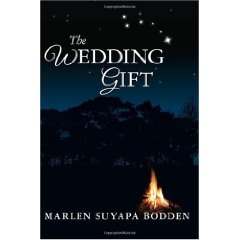
Marlen Suyapa Bodden’s new book THE WEDDING GIFT is the story of complex relationships among enslaved people and the people who hold them in bondage during the decade before the Civil War. The novel is told in the alternating view points of Sarah Campbell, a light skinned young slave woman who learns reluctantly where her mother goes at night as well as how to read and write, and Theodora Allen, the white lady of the plantation who discovers that her husband is both the father of her own daughter and of Sarah. The novel has a powerful momentum that drives it forward: How badly will Mr. Allen treat the women in his life? How much evil will he perpetuate on his slaves? Who is the black father of a certain young white woman’s child? Who will live and who will die? Will Sarah be able to use her intelligence and skills at last to make a run? The final quarter of the novel alone has enough plot material for another two books. In spite of horrors and suffering, this is a novel in which the human spirit rises up triumphant.
THE CALABOOSE EPISTLES by R.T. Smith is a varied collection of stories, mostly set in the Southern mountains. The stories have been previously published in excellent journals like TriQuarterly and Prairie Schooner and Story South and Southern Humanities Review. Some, like “The Pig is Committed” and “Against a Sea of Troubles,” are vintage Southern gothic combining humor, violence, tall tale, and exquisite romps of language. The writing is always brilliant, exuberant with word explosions that combine a modernist experimentalism with Appalachian richness of vocabulary and dialect: “Mussed and wizened but rat-agile.” he writes in “Rampskin,” a retelling of the fairy tale Rumpelstiltskin. The title story is a humorous tour de force in letters a woman is writing to a manipulative incarcerated man. There is another, more serious story about corresponding with a prisoner called “Correspondences,” in which a college professor corresponds with a convicted felon, and I especially liked the felon’s subtle fictions and persuasive writings. Several of the stories in the second half like “Red Jar” and “Ruminants explore relationships between a man and his significant (female) other, often having him follow some dead end path for a while before realizing he needs to return to the woman and the relationship.
Juanita Torrence-Thompson’s latest collection of poems is called breath-life includes a rich variety of poems including “Her Sweet Ear Flowered,” representing her exploration and compression, and “Aida,” a dramatic monologue about singing with Placido Domingo. I especially liked “My Soul,” where she writes in the first stanza: “My soul, a rhapsody/plays melodies at each stanza/each insatiable syllable.” She experiments with many forms, offers many delights. Check out a longer review at http://rattle.com/blog/2010/01/breath-life-by-juanita-torrence-thompson/.
Barbara Smith’s THROUGH THE GLASS centers on a time of crisis for Patricia Yokum Tazewell, a stained glass artist who is the heart of a tiny West Virginia community of new homes and diverse families. Patricia is a surrogate grandmother; mother of less-than-ideal children; and a woman with many men in her life, including the husband she loved passionately who died four years before this story begins. During the handful of spring days of the novel, she deals with her past, and her past mistakes, faces up to some unpleasant wannabe-gangster teens, the possible reappearance of an estranged brother, her daughter’s emotional deterioration, and a shocking death. It was a lot of fun to get to know Patricia– fun because she’s sixty two and desirable to several men, because she drinks and gets into physical altercations to protect her bipolar daughter and her property. Fun because her spiritual life is pretty equally divided between her dead husband and God. Pat faces everything that life throws at her with energy if not necessarily aplomb. The loose ends are not tied up neatly, but you finish the novel rooting for her and deeply pleased to have been invited into her rich and complex life.
And finally, from West Virginia University Press, Lee Maynard’s THE PALE LIGHT OF SUNSET. For a full length review, take a look at what Phyllis Moore wrote in APPALACHIAN HERITAGE Maynard writes better than anyone I know about how a boy is infused with the rules of American manhood. Maynard calls his new book a fictional memoir– a kind of heightened and imagined life that Maynard describes in the subtitle as “Scattershots and Hallucinations in an Imagined Life.” Organized chronologically from 1936 to 2005, it is a series of beautifully written short narratives. They begin with the story teller as a free-ranging boy in the mountains; he is then transplanted for a time to the mean streets of Baltimore, Maryland; then he is back in Crum, West Virginia– the scene and title of his extraordinary first novel. Many of the pieces here are about the boy and then man pitted against nature– sometimes inadvertently as in the horrific incident with the hornets (yes, it’s as bad as you can imagine), and then, as the narrator gets older, he sets the physical challenges himself. He braves trial by snow, desert, ocean water, and storm– and these are the bracing, honest struggles. The really ugly stuff (excluding those hornets) comes with his run-ins with various human low-lifes. I especially liked the story of the narrator against the quintessentially corrupt boss Frank Rizzo, owner of a swimming pool and dance hall called Dreamland. Here the youthful narrator is exploited in many kinds of hard work with extremely long hours– including night duty driving from West Virginia, a dry state, to Kentucky, where you can buy liquor. The narrator does everything asked of him, including escaping the police and swimming the river with his shipment of alcohol. Then he defies the boss he has just risked so much for and takes off once again. The persona Maynard creates, the experiences he offers us, make for a truly gripping book that you find yourself halfway through when you only meant to read a few pages.

READER RESPONSE TO ISSUE NUMBER 128

Dreama Frisk writes in response to Pamela Erens on FATHERS AND SONS: “I am reading FATHER AND SONS now. Erens is so right about Turgenev's clarity. My copy of the book has an intro by John T. Winterich who writes that Turgenev was influenced to write FATHERS AND SONS in 1860 after he met a country doctor in a railroad car who spoke of treating anthrax. In their conversation he came to understand that the doctor was a man of the people who had pulled himself up by his bookstraps. ‘Turgenev could recall no counterpart of his type in Russian fiction.’ By the way, I was led to FATHERS AND SONS after reading that Hemingway had commented on its importance to literature and on Turgenev's place as a writer.

GOOD STUFF ONLINE

Hamilton Stone Review #20 at http://www.hamiltonstone.org/hsr.html
Ed Davis’s new blog: http://www.authoreddavis.blogspot.com . Entries include: "Anatomy of a Reading: What I learned from a recent innovative literary event at Tipp City Public Library" and "August 13, 2009: More on Writers’ Workshops. Valuable or destructive? Should workshops “fix” poems and stories?"
An excellent interview with novelist Jane Lazarre at http://tommanoff.com/articles/4606/an-interview-with-jane-lazarre-2 is about her writing, about her father, a Communist and member of the Abraham Lincoln brigade, and about her African-American family.
Marc Harshman, poet and children’s book author at http://www.lauratreacybentley.com/apps/blog/entries/show/2733899-seven-marc-harshman
Also, see Laura Treacy Bentley’s webstie at http://www.lauratreacybentley.com/
Bob Feldman recommends a video of a talk with Q & A by Stefan Bradley that was broadcast on CSPAN. Bradley, as you recall, is the author of HARLEM VERSUS COLUMBIA UNIVERSITY. The URL is http://www.c-spanarchives.org/program/291160-1
Don’t miss Shelley Ettinger’s article in Workers World about the late Howard Zinn at http://www.workers.org/2010/us/howard_zinn_0211/
There’s a neat hour of music and discussion with Hilton Obenzinger from a Stanford University radio program. The music includes Haitian protest songs, lots from Barbara Dane, Al Jolson singing “Brother Can You Spare a Dime?” the Carter Family with “Keep on the Sunny Side,” Woody Guthrie, Josephine Baker, Michael Jackson, Paul Robeson! and much, much more. See: http://www.radio4all.net/index.php/program/39881

FROM PHYLLIS MOORE

“[The winter 2010 issue of APPALACHIAN HERITAGE] contains, as always, interesting articles, poems, and stories. Sandy Vrana has a terrific poem in the issue, and I (voluntary disclosure) have a review of Lee Maynard's latest novel.“Having just visited Hemingway's Key West home, I've been revisiting his work and ran across a statement he made about his ‘aesthetic theory and it fits well with a short story in A. H., ‘The Beauties of This Earth’ by Mark Powell. The first version of in our time (characterized by the lowercase letters in the title) was published by William Bird’s Three Mountain Press in 1924 and illustrated Hemingway’s new theories on literature. It contained only the vignettes that would later appear as interchapters in the American version published by Boni & Liveright in 1925. This small 32 page book, of which only 170 copies were printed, contained the essence of Hemingway’s aesthetic theory which stated that omitting the right thing from a story could actually strengthen it.

“My Hemingway search found this interesting tidbit about Hemingway's injury in WW I. http://www.lostgeneration.com/ww1.htm: ‘The explosion knocked Hemingway unconscious, killed an Italian soldier and blew the legs off another. What happened next has been debated for some time.' In a letter to Hemingway's father, Ted Brumback, one of Ernest's fellow ambulance drivers, wrote that despite over 200 pieces of shrapnel being lodged in Hemingway's legs he still managed to carry another wounded soldier back to the first aid station; along the way he was hit in the legs by several machine gun bullets. Whether he carried the wounded soldier or not, doesn't diminish Hemingway's sacrifice. He was awarded the Italian Silver Medal for Valor with the official Italian citation reading: Gravely wounded by numerous pieces of shrapnel from an enemy shell, with an admirable spirit of brotherhood, before taking care of himself, he rendered generous assistance to the Italian soldiers more seriously wounded by the same explosion and did not allow himself to be carried elsewhere until after they had been evacuated. Hemingway described his injuries to a friend of his: ‘There was one of those big noises you sometimes hear at the front. I died then. I felt my soul or something coming right out of my body, like you'd pull a silk handkerchief out of a pocket by one corner. It flew all around and then came back and went in again and I wasn't dead any more.'"

NEWS

Rick Rofihe of ANDERBO has announced the winner of the 2009 Anderbo Poetry Prize Is Nancy K. Pearson of Cape Cod, Massachusetts for her poem, “Prairies" (http://www.anderbo.com/anderbo1/anderprize2009.html). The judge was William Logan.
Halvard Johnson’s new poetry collection THE PERFECTION OF MOZART’S THIRD EYE AND OTHER SONNETS is available in an online edition at http://www.scribd.com/people/documents/14481250-chalk-editions
Shelley Ettinger has a story in a new collection called LIBERATION LIT, a massive collection of political literature. The link to the book’s website is Lit: http://liblit.org/ . To view it on Amazon, go here. Shelley writes a good block about the book at http://readwritered.blogspot.com/2010/02/liberation-lit.html
Daniela Gioseffi’s new book is WILD NIGHTS, WILD NIGHTS, a book about Emily Dickinson and “Master.” See information at Plainview Press.
THIS PLEASANT LAND: A BLUE RIDGE HISTORY by Max S. Thomas has just been published. The first half of the book is a 250-year chronological history of the middle Blue Ridge where Thomas lived for 92 years. The second half of the book is a collection of the author’s earlier writings on a variety of topics such as early music, the language of the area, early roads, the mountain economy, country stores, old-time tools, fences, foraging, early marriages, women and their lives, photography, weather, geology, critters and maladies that caused problems, passing on, old-time medicine, and communicable diseases. To learn more, go to http://www.HarvestwoodPress.com, email info@HarvestwoodPress.com, or phone (540) 745-3173.

ABOUT AMAZON.COM

The largest unionized bookstore in America is Powells Books. An alternative way to reach their site and support the union is via http://www.powellsunion.com. Prices are the same but 10% of your purchase will go to support the union benefit fund. For a discussion about Amazon and organized labor and small presses, see the comments of Jonathan Greene and others in Issues #98 and #97 .

WHERE TO FIND BOOKS MENTIONED IN THIS NEWSLETTER

If a book discussed in this newsletter has no source mentioned, don’t forget your public library and your local independent bookstore. To buy books online, I often go first to Bookfinder or Alibris. A lot of people whose political instincts I respect prefer the unionized bricks-and-mortar bookstore Powells that sells online at http://powellsbooks.com. More good sources for used and out-of-print books are Advanced Book Exchange at http://www.abebooks.com and All Book Stores at http://www.allbookstores.com/ . Both Bookfinder and All Book Stores both have a special feature that tells you the book price WITH shipping and handling, so you can compare what you’re really going to have to pay.
For more comparison shopping, you might want to take a look at CampusBooks.com , another free comparison shopping website for textbooks that says they search over two dozen bookstores to find the lowest prices in textbooks and more.
A couple of other ways to get books: I have used and like the paid lending library Booksfree.com. Also, check out Paperback Book Swap at http://www.paperbackswap.com/index.php , a low cost (postage only) way to get rid of books and get new ones! Also, check out Paperback Book Swap at http://www.paperbackswap.com/index.php , a low cost (postage only) way to get rid of books and get new ones!


Friday, February 19, 2010

My Wonderful Writers' Group

February 19, 2010

I have such a good Writers' Group! Last night we had an interesting discussion about an excellent short story of Carol E.’s– time travel (people from a nearly-destroyed future version of our world come back to feed their children real food.) Anyhow, Shelley objected to a scene where the local cops beat up the “rich” people (who are only rich because of devalued currency). Shelley loved the story, as did I, but didn't believe cops would support local thugs beating up rich people. I said something about small towns being different, which I don’t think was expressed very well, because no one seemed to get it.

Anyhow, in an email this morning Carol E said that she figured out that those "rich" people from the future didn't have any connections here at all. And wondered if she should add that to the story. Which sharpened my thought, and I wrote back to All: “That was sort of what I was trying to say last night about class distinctions in a small town-- they have a very different quality from class distinctions in cities. In a small town, the rich guy who gave the library and owns the one business in town that hires is definitely a power, but a group of Big Spender Aliens is more comparable to the summer people in some working class vacation communities (‘Summer People, Some 'r Not’).”

I love the discussions we have there. More from last night: Edith’s journal: a wonderful insight about how when someone dies, also dying is who we were in that other person ’s eyes: she spoke of how her mother’s face lit up when she saw her. The eyes lighting up for me were my father’s: that is gone, me as an amazing phenomenon for having simply stood up and taken a step. Each of my accomplishments, small or large, totally delightful to him. No strings attached.


Friday, February 05, 2010

Summit Academy Charter School! Back to Brooklyn

February 5, 2010

I'm exhausted: took a train and two subways to go to Red Hook, Brooklyn, to do an author visit in a new charter school-- so far all sixth graders: the Summit Academy Charter School. Look at the website to see some of the kids I taught!

It was a good experience but wore me out. Just twenty or thirty blocks from where we used to live-- I crossed Court Street and Clinton and Henry and Hicks. Neat to be down there, briefly in Carroll Gardens, then under the BQE and over to the school. The kids were lots of fun-- a teacher founded school, and my connection via Teachers & Writers has written them (successfully) some grants. Lots of emphasis on colleges-- they have signs saying the year their class will graduate from high school and college!

Sunday, January 31, 2010

Books for Readers # 128

Meredith Sue Willis's

Books for Readers #128

February 1, 2010

MSW Home
For a free email subscription to Books for Readers,
send a blank email to Readerbooks-subscribe@topica.com

Featured This Issue:
Jeffrey Sokolow on the Fiftieth Anniversary
of the Greensboro Lunch Counter Sit-ins and more


Ezell A. Blair, Jr. (now Jibreel Khazan), Franklin E. McCain, Joseph A. McNeil,
and David L. Richmond leave the Woolworth store after
the first sit-in on February 1, 1960.

If you want to link to something in this newsletter, you should use the permanent link here rather than this page, which changes each issue.

February 1st is the 50th anniversary of the beginning of the Greensboro, NC Woolworth lunch counter sit-ins. I am honored to give you the main article here on books about the Civil Rights movement, especially SNCC, guest edited by Jeffrey Sokolow .


—Meredith Sue Willis

JEFFREY SOKOLOW ON THE FIFTIETH ANNIVERSARY
OF THE GREENSBORO LUNCH COUNTER SIT-INS:
FEBRUARY 1 - APRIL 15, 1960–2010 AND
REMEMBERING THE STUDENT NONVIOLENT COORDINATING COMMITTEE

As Tom Hayden notes early on in his recently published book, THE LONG SIXTIES: FROM 1960 TO BARACK OBAMA (Paradigm, 2009), this year we will be commemorating the 50th anniversary of every event that occurred in the 1960s. A good place to start might be February 1st, which marks the date on which four black students sat down at a segregated “whites only” lunch counter at a Woolworth's store in Greensboro, North Carolina, and asked to be served a cup of coffee, thereby sparking the sit-in movement that swept the south in the weeks and months that followed. Like a stone thrown into still water, that act set off ripples that resulted in the greatest mass democratic popular movement in American history.

A second significant date is April 15th, which will mark the 50th anniversary of a conference convened by Miss Ella Baker (then on the staff of the Southern Christian Leadership Conference [SCLC]-- See photo below right) at Shaw University in Raleigh, North Carolina. This meeting resulted in the formation of the Student Nonviolent Coordinating Committee (SNCC), which was to lead mass action campaigns to end racial segregation and conduct voter registration campaigns to enfranchise black citizens in the Deep South. This small group of dedicated young men and women, together with the “local people” they found and empowered to lead themselves, were the “point of the spear” that finally broke the back of state-sanctioned apartheid and terrorism in the Deep South. SNCC workers wanted “more than a hamburger”; ultimately, they wanted a radical democratic restructuring of American society to benefit people on the bottom of the existing order.

Confronting unrelenting segregationist resistance and KKK terrorism, betrayal by its putative allies in the liberal Democratic Party establishment, and resulting burnout and radicalization, SNCC lasted for only six years, ending in a cul-de-sac of sectarian ultra-radicalism that alienated it from its community base and finally destroyed the organization. But the courageous path that SNCC field workers blazed is a story every American who values freedom should honor and remember.

SNCC is the subject of an important new book, THE SHADOWS OF YOUTH: THE REMARKABLE JOURNEY OF THE CIVIL RIGHTS GENERATION by historian Andrew B. Lewis (Hill & Wang, 2009). Lewis draws on published and oral histories to paint a moving narrative history detailing the rise, fall, and afterlife of this important organization. Although Lewis omits some important events (e.g., the controversy over Mary King and Casey Hayden's "kind of memo" on the role of women in SNCC and H. Rap Brown's 2002 murder conviction for killing a black sheriff's deputy in Atlanta), his well-researched and well-written book tells a gripping story and shows both the strengths and shortcomings of key figures. An extensive bibliography leads to many other sources.

Two collections of oral histories shed light on the 1960s freedom movement in the South: CHILDREN OF THE MOVEMENT by John Blake (Lawrence Hill, 2004) and GENERATION ON FIRE: VOICES OF PROTEST FROM THE 1960s by Jeff Kisseloff (University Press of Kentucky, 2007). Blake's profile of the children of movement figures offers insights into the complex psychology of such individuals as James Farmer, Bob Moses, and Julian Bond. Kisseloff's collection, which spans the gamut of 1960s activism, includes moving oral histories by two incredibly brave SNCC workers, Bernard Lafayette and Bob Zellner. The latter's remarkable autobiography, THE WRONG SIDE OF MURDER CREEK: A WHITE SOUTHERNER IN THE FREEDOM MOVEMENT by Bob Zellner and Constance Curry (New South Books, 2008), gives a powerful account and is highly recommended.

Black women played an important role in SNCC and in the freedom movement. SOON WE WILL NOT CRY: THE LIBERATION OF RUBY DORIS SMITH ROBINSON by Cynthia Griggs Fleming (Rowman & Littlefield, 1998) tells the story of an exceptionally courageous and forceful young woman who joined the freedom movement as a teenager, became executive secretary of the Student Nonviolent Coordinating Committee, and died of cancer at a very young age (25). Fleming examines issues of sexual politics in great depth and offers perceptive comments on the divergent perspectives of black and white women in SNCC. Her book is based on both published sources and extensive oral interviews with Ruby Doris Smith Robinson's movement colleagues.

A substantial proportion of the white northern students who joined the movement were Jews (such as Andrew Goodman and Michael Schwerner, who were murdered with James Chaney in Mississippi). In 1962, at the age of 19, Danny Lyon, a white Jewish kid from Chicago, went south with a camera to work with SNCC. Understanding the importance of documenting the struggle and the role of images in framing public perception, SNCC Executive Secretary James Forman put him to work as a photographer. Lyon’s oversized book, MEMORIES OF THE SOUTHERN CIVIL RIGHTS MOVEMENT (University of North Carolina Press, 1992), combines his iconic photographs with commentary, including on-the-spot reports, which document the incredible heroism and humanity of the SNCC staff and the "local people" they worked with in the Deep South. Like no other book on the movement I've seen, Lyon's book gives the reader a visceral sense of being there in the moment.

In no southern state was the movement faced with more vicious terrorism, Klan bombings, economic and physical intimidation, and police-state tactics than in Mississippi. In a massively documented narrative history, LOCAL PEOPLE: THE STRUGGLE FOR CIVIL RIGHTS IN MISSISSIPPI (University of Illinois Press, 1994), John Dittmer draws on published materials, archives, oral histories, personal interviews, and reunion conference proceedings to tell the story of the courageous "outside agitators" who came to the Magnolia State to bring about a second Reconstruction and of the heroic "local people" they worked with. Dittmer grounds what happened in the sixties in what went before, starting with the return of black soldiers from World War II and the organizing campaigns they attempted. Aspects of the story have been told elsewhere, either in chapters in books or in memoirs of participants; Dittmer draws on all these materials and many others to paint a rich and multifaceted picture of the movement, nor does he shrink from examining its inner dynamics, conflicting interests and personalities, and weaknesses as well as its moral strength. A work of prodigious scholarship, Dittmer's narrative makes for exciting reading (it probably goes faster if you skip the footnotes, but then you miss out on a lot if you do).

Dittmer’s book should be read in tandem with I'VE GOT THE LIGHT OF FREEDOM: THE ORGANIZING TRADITION AND THE MISSISSIPPI FREEDOM STRUGGLE by Charles M. Payne (University of California Press, 1995). This important analytic history shows how SNCC’s grassroots community organizing approach was based on the pioneering work of the preceding generation of black organizers in rural communities. Payne’s material is drawn largely from oral interviews with movement participants, and his findings challenge many widely held myths. The sectors of the community that responded most readily to SNCC workers were the older generation and the younger; in the middle-aged group, women were much more likely than men to join the movement. Payne traces the tradition of community organizing in rural black communities, especially the role of women in the black church, and shows how SNCC’s idea of grassroots democratic bottoms-up organizing was in synch with this organizing tradition. Payne shows how SNCC’s turn away from grassroots organizing after 1966 and its subsequent emphasis on ultra-radical rhetoric rather than on base-building led to demoralization, demobilization, and finally the victory of the more moderate and establishment-oriented section of the black community over the radicalized poor.

The literature cited in these books is vast. I’ve made sketchy comments on those I’m familiar with.

-- Jeffrey Sokolow

MEMOIRS OF PARTICIPANTS

  • THE MAKING OF BLACK REVOLUTIONARIES by James Forman (University of Washington Press [reprint], 1997). Autobiography by SNCC’s Executive Secretary, who died in 2005. Capsule bio: http://www.stanford.edu/~ccarson/articles/left_2.htm.
  • WALKING WITH THE WIND: A MEMOIR OF THE MOVEMENT by John Lewis with Michael D'Orso (Harvest Books, 1999). Lewis was an early Chairman of SNCC. He is currently a member of Congress from Georgia.
  • READY FOR REVOLUTION: THE LIFE AND STRUGGLES OF STOKELY CARMICHAEL (KWAME TURE) by Stokely Carmichael with Ekwueme Michael Thelwell (Scribner, 2003). Although I’m not a fan of his later politics, I must say this massive, posthumously published autobiography is gracefully written and reflects a gracious spirit.
  • THE RIVER OF NO RETURN: THE AUTOBIOGRAPHY OF A BLACK MILITANT AND THE LIFE AND DEATH OF SNCC by Cleveland Sellers with Robert Terrell (Morrow, 1973)
  • BAREFOOTIN': LIFE LESSONS FROM THE ROAD TO FREEDOM by Unita Blackwell with JoAnne Pritchard Morris (Crown, 2006).
  • MISSISSIPPI HARMONY: MEMOIRS OF A FREEDOM FIGHTER by Winson Hudson and Constance Curry (Palgrave Macmillan, 2002)
  • FREEDOM SONG: A PERSONAL STORY OF THE 1960S CIVIL RIGHTS MOVEMENT by Mary King (William Morrow & Co, 1987). King was a white member of SNCC and co-author with Casey Hayden of “a kind of memo” that helped spark the Second Wave feminist movement of the 1960s.

BIOGRAPHIES

  • THIS LITTLE LIGHT OF MINE: THE LIFE OF FANNIE LOU HAMER by Kay Mills (Dutton, 1993) and FOR FREEDOM'S SAKE: THE LIFE OF FANNIE LOU HAMER by Chana Kai Lee (University of Illinois Press, 1999). Mrs. Hamer was one of the most remarkable grassroots “local people” whose leadership SNCC encouraged.
  • ELLA BAKER: FREEDOM BOUND by Joanne Grant (Wiley, 1998) and ELLA BAKER AND THE BLACK FREEDOM MOVEMENT: A RADICAL DEMOCRATIC VISION by Barbara Ransby (University of North Carolina Press, 2002).The founding mother of SNCC, Ms. Baker was an important figure in building grassroots democratic freedom organizations for decades.
  • AND GENTLY HE SHALL LEAD THEM: ROBERT PARRIS MOSES AND CIVIL RIGHTS IN MISSISSIPPI by Eric Burner (New York University Press, 1992). Bob Moses was legendary. Trained as a mathematics teacher, today he works in Mississippi to build math literacy as a path to college admission. See: RADICAL EQUATIONS: CIVIL RIGHTS FROM MISSISSIPPI TO THE ALGEBRA PROJECT by Robert P. Moses and Charles E. Cobb (Beacon Press, 2001).
  • DIANE NASH: THE FIRE OF THE CIVIL RIGHTS MOVEMENT: A BIOGRAPHY by Lisa Mullins (Barnhardt & Ashe, 2007). Diane Nash was a founding member of SNCC and an important leader in that organization.

HISTORIES

  • IN STRUGGLE: SNCC AND THE BLACK AWAKENING OF THE 1960s by Clayborne Carson (Harvard University Press, 1981). The first history of SNCC and still one of the best books on the organization from start to finish.
  • MANY MINDS, ONE HEART: SNCC'S DREAM FOR A NEW AMERICA by Wesley C. Hogan (University of North Carolina Press, 2007)
  • THE STUDENT NONVIOLENT COORDINATING COMMITTEE: THE GROWTH OF RADICALISM IN A CIVIL RIGHTS ORGANIZATION by Emily Stoper (Carlson, 1989)
  • THE CHILDREN by David Halberstam (Random House, 1998)
  • FREEDOM RIDERS: 1961 AND THE STRUGGLE FOR RACIAL JUSTICE by Raymond Arsenault (Oxford University Press, 2006)
  • WE ARE NOT AFRAID: THE STORY OF GOODMAN, SCHWERNER, AND CHANEY AND THE CIVIL RIGHTS CAMPAIGN FOR MISSISSIPPI by Seth Cagin & Philip Dray (Macmillan, 1988)

CONFERENCE PROCEEDINGS

  • A CIRCLE OF TRUST: REMEMBERING SNCC by edited by Cheryl Lynn Greenberg (Rutgers University Press, 1998)

FILM

  • FREEDOM SONG is a 2000 made-for-TV movie that portrays SNCC organizers and the "local people" they worked with in Mississippi in a realistic fashion. It's based on oral histories by participants, and the characters, while renamed, clearly represent Bob Moses, Chuck McDew, Bob Zellner, and other SNCC staff in Mississippi. It's a bit cheesy at times, but it's much closer to the truth than Hollywood productions like MISSISSIPPI BURNING, which glorified the role of the FBI and trivialized that of the movement. Look for it at the local library or at Netflix. It's well worth showing your children. Freedom is a constant struggle.
  • The documentary series EYES ON THE PRIZE: AMERICA'S CIVIL RIGHTS YEARS 1954–1965 has been reissued in DVD. If you have not seen it before on public television, don’t miss it. Make sure your local public library has copies.

MUSIC

  • The southern freedom movement was a singing movement, and the freedom songs sung at mass meetings gave people the courage to persevere. Two CD collections capture these meetings: VOICES OF THE CIVIL RIGHTS MOVEMENT: BLACK AMERICAN FREEDOM SONGS 1960–1966 (Smithsonian Folkways, 1997) and SING FOR FREEDOM: THE STORY OF THE CIVIL RIGHTS MOVEMENT THROUGH ITS SONGS (Smithsonian Folkways, 1990). “Carry it on.” “Lift every voice and sing.


NOW! UPCOMING! EVENTS! WEBSITES!

A conference will be held in Raleigh, North Carolina, April 15-18, 2010, to commemorate the 50th anniversary of the founding of SNCC. Details will be posted here: http://www.sncc50thanniversary.org/. See also http://crmvet.org/ for information on civil rights movement veterans then and now.


The Civil Rights Movement Veterans website (http://crmvet.org) is a goldmine for information. Includes personal reflections, text of panel discussions, documents, archival resources, links to other sites, historical timelines, bibliographies, etc. "Go and study."


Traveling exhibit– “Freedom's Sisters" is a traveling exhibit highlighting the role of women in the struggle for equality. Panels tell the stories of Harriet Tubman, Mary McLeod Bethune, Ida B. Wells, Septima Clark, Fannie Lou Hamer, Rosa Parks, and 13 other women leaders of the civil rights movement. the exhibit is now in Memphis and will travel to Detroit, Birmingham, Chicago, Dallas and Baltimore during the year. Details available here: http://www.sites.si.edu/exhibitions/exhibits/freedoms_sisters/main.htm.

Note: I have a minor quibble with Payne’s book. In a footnote attached to what I thought was a thoroughly innocuous quotation from Myles Horton, the founder of the Highlander Folk School, about empowering poor people to voice their own concerns and define their needs for themselves, Payne claims that “[t]his is almost a perfect restatement of the mass-line theory of the Chinese Communist party, as described by William Hinton in FANSHEN: A DOCUMENTARY OF REVOLUTION IN A CHINESE VILLAGE.” Since, to my knowledge, Highlander workshop facilitators never incited sharecroppers to kill their landlords nor did they require workshop participants to memorize and recite the sayings of Chairman Horton, for example, this conclusion seems to me entirely gratuitous. (No doubt SDS leaders in 1967 would have compared the same organizing approach to what they imagined to be that of “the Guatemalan guerillas,” with equal lack of justification.) Payne is on surer ground when he talks about the organizing tradition in Mississippi than he is when he attempts comparisons to what he imagines to have been the practice of the Chinese Maoists. IMHO.

IN MEMORIAM: RECENT LOSSES

Late January 2010 saw the deaths of J.D. Salinger , who wrote The Catcher in the Rye, and Howard Zinn, author of A People's History of the United States. Personally, I'll especially miss knowing that Professor Zinn is in the world with us.

READER RESPONSE TO NUMBER 127

Sondra Olsen writes: "I think you had trouble with Olive Kitteridge because it's a story collection. I haven't read the Johnson book, but it seems to me that any worthwhile novel will pull you along faster. As the author of a book of linked stories I can attest that you stop when you've finished writing one story and then start up again slowly, even though you're mindful that you should be speeding the reader along. It's not a completely fair comparison."


REMINDER OF SOME GOOD BOOKS AND HAITI

Phyllis Moore writes, “I bought a copy of BLINDNESS at the Gulf Shores library book sale and read it and THE ROAD by Cormac McCarthy last week. Both novels made me even more aware of what it must be like in Haiti with no public services, no law enforcers, no food, water, doctors, meds, etc.”
She also draws out attention to the 1998 press release on Saramago winning the Nobel Prize: http://nobelprize.org/nobel_prizes/literature/laureates/1998/press.html

PAMELA ERENS ON TURGENEV’S FATHERS AND SONS

Pamela Erens says:"After spending time with Tolstoy and Dostoyevky, Turgenev seems so compact, so pellucid; no wonder Flaubert admired him. Fathers and Sons is both a portrait of a dynamic, even violent time in Russian history (the late 1850s, as feudalism was giving way to a more Western-style economic system) and a universal tale of aimless young men and women and the grownups who don't understand them. In the end it's really about the way we all shuttle between a conviction that life is meaningless and a conviction that even what is transient can be meaningful."

ONLINE

There’s a new issue up of the Internet Review of Books at http://internetreviewofbooks.com

WORKSHOPS

Anndee Hochman has several workshops coming up this year--both short-term and longer, both near and far. Take a look at her website at http://www.anndeehochman.com/events.shtml

NEWS

Peter Brown’s latest children’s book is THE PURPLE KANGAROO. The book written by comedian/actor Michael Ian Black, and illustrated by author/illustrator/juggler Peter Brown. Get book event information at http://www.peterbrownstudio.com/pb-booktour/pb-booktour.html
Marc Harshman has work in the latest issue of La Petite Zine at http://www.lapetitezine.org/Marc.Harshman.htm.
Laura Thompson was awarded Le Cadre d'Or 2010 for her book of poems MOSAIC OF LOVE in the world poetry category, in Paris, France. See http://www.cadredor.org .

Marlen S. Bodden’s novel THE WEDDING GIFT (about a woman given as a gift in slave times) has just been published. See http://www.amazon.com/Wedding-Gift-Marlen-Suyapa-Bodden/dp/1439255830 .

Black Lawrence Press announces DUTCH TREATMENT by D. E. Fredd a collection of three short stories, winner of the Black River Chapbook Competition. The stories are about humans trying to understand themselves and each other, specifically across cultural borders, against the backdrop of war, and within the confines of marriage. The book is available from the Black Lawrence Press website at http://blacklawrence.com/fredd.html
There’s a new short short by Carole Rosenthal in Citron Review at http://thecitronreview.wordpress.com/2009/12/10/smile/

The American Association of University Women, NYC Branch, has recently named JUANITA TORRENCE-THOMPSON one of 10 women who “Make A Difference.” They said Torrence-Thompson “broke down barriers” and was especially “dedicated to Black History and to Diversity.” Juanita is a poet, writer, instructor, actress and Editor-in-Chief/Publisher of MOBIUS, THE POETRY MAGAZINE.
Burt Kimmelman’s new book of poems, AS IF FREE (Talisman House, Publishers), is now available from Amazon and SPD / Small Press Distribution. Jerome Rothenberg says, “Make no mistake about it: Burt Kimmelman appears here – & not for the first time – as a successor to the lineage of William Carlos Williams & George Oppen (to name but two), no less so for being a master of that lineage worn proudly.”
Spuyten Duyvil Announces Lynda Schor's SEDUCTION, STORIES OF LOVE AND ART– “a new and rare collection of tales of extraordinary madness.” Purchase a pre-publication copy and support Spuyten Duyvil's endeavors to bring extraordinary innovative literature and poetry to the reading public. Pre-publication copies are $16 + $2.50 postage and handling per copy. Please make checks out to: TNT Printworks and send order to TNT Printworks, 42 St. Johns Pl. Gdn Apt., Brooklyn, N.Y. 11217.

Saturday, January 30, 2010

New Restaurant; Close Harmonies

January 30, 2010

It’s Saturday morning, and I’m sad the book is done, also relieved, looking out at a still and extremely cold day. The book was Baltasar and Blimunda, so far my favorite of Saramago's, along with Blindness, but B & B is so much younger a.k.a. hopeful in its attitudes. Historical, magical realistic, politically astute, with working class characters.

We went out last night to the new restaurant just opening, Hat City Kitchen. The food was really good, the menu limited so far, but it's home style and Louisiana, full bar, very attractive, and last night anyhow mostly patronized by people from South Orange and Maplewood! There's to be music often, and here's the part that is unusual and really interesting: it is not owned by individuals, but rather by HANDS (Housing and Neighborhood Development Services) in Orange.

The concept is that HANDS has been buying properties and investing in "The Valley" in Orange, the small working class and formerly industrial (hat factories, for example) town north of South Orange and south of West Orange. They are renting spaces to artists, and now opening this moderately upscale or at least, meant-to-be trendy restaurant with music in the bar. I wonder if it will work out?

I’ve got an invitation to participate in a literary reading in another of the HANDS locations, the Luna theater. It seems to me that this is at least possibly part of the spilloover work of our South Orange/Maplewood Community Coalition on Race : that we may see white people re-integrating 75% African-American Orange-- for arts and entertainment, but perhaps also the good but cheap housing stock. Regional integration strategy? And what about super-white Millburn? When does that become a location of choice for People of Color?


Close Harmonies: Reading, Music, and Dancing: 1983 in New York City.
MSW on left, then Maggie Anderson, and on far right, Marc Harshman.

Sunday, January 24, 2010

Technology rampant

Once again, late at night, I take a break (from re-reading Saramago's Baltasar and Blimunda, in English of course), go upstairs, check my email, and end up involved in some technical wrangle.
Tonight I decided to install WordPress which I have in mind is somehow a better way to blog than this Blogger, maybe purer in its open sourceness? I've been meaning to start a real blog in January-- not just an edited journal, which is what's on my web page blog has been, and somehow I've never really gotten into using this Blogger although it works just fine. Anyhow, I spent an hour or so with Startlogic my overly technical web host and fooling with WordPress itself and got it set up, but of course all the energy went to setting it up. And even now, writing on my little Acer in order to focus on words instead of all the neat software I can use, I start thinking Oh, I suppose I could go there from this computer too right?
(And I did it, but refrained from actually writing there–refrained as in more not writing).
A whole word of dashboards and views and page sources and commands that do all kinds of things but of course my body gets tight, and it's all eyes. And then I remember I'm old almost and WTF, why am I trying to master this instead of reading leatherbound books in a woody study with french doors open to a lawn and birdsong?

Friday, January 22, 2010

MOMA revisited


Well, a day away from the computer, and it takes me over an hour to do the various tasks associated with email. I did a little more than that-- a homework from the online class, but mostly email.

I got so behind because I spent yesterday in New York, including a visit to the Museum of Modern Art. I hadn’t been there since it reopened, which I now learn was in fall 2004-- a little over five years! I've been going a lot to the Metropolitan, where I have a membership, and also doing more museum visits when I'm away from home, like the Sterling Clark in Williamstown, and of course San Francisco Museums, the winter the MOMA reopened, we went to Italy. The truth is, I don't go to museums nearly as much as I think of the art there.

Anyhow, at the MOMA, I especially like the way everything circles around the central space. Right now, there's a huge whale skeleton, real but with paint on it, hanging on the second floor and you see it from below and later from above. This is by Gabriel Orozco, along with a lot of other things. I liked his work (but I still can’t get clear his family line– was the great contemporary of Siquieros and Rivera and all of them his grandfather? My lazy-- emphasis on the lazy-- google search isn't answering my question. Anyhow, he does a lot of different things, worth looking at more.

I was less enamored of the very crowded Tim Burton exhibit– I like his movie work pretty well, but didn’t find the sketches particularly exciting, or maybe just didn’t like the crowds.

Also just wandered around enjoying the space and visiting old friends– Matisse’s big red room and Chagall’s floating goatheads and lovers and oh all the incredible stuff there in MOMA. Blows you away, really. When I first went, they still have Guernica in your face.

Monet’s water lilies are in a not-huge gallery on the second or third floor next to a café-- almost perfunctory, as if the new curators are saying, Okay, tourists, you came to see the water lilies, here they are now get over it.

Even less pride of place to Christina’s World, also on a lower floor in a hall–easy to find, but dimly lit and just there. A message-- disdain for the tourists? A statement about how rapidly modern art isn't modern anymore?

The water lilies seemed smaller than they used to be. Partly the old room was hushed, and I remember it as spacious and lavender or blue, with a small peek out to the street, and they so enormous just two of the big paneled paintings. Partly I was so much younger and so much one of the breathless ones: Oh! The actual Water lilies! Themselves! Here they are!

Otherwise yesterday was bright cold New York, Ingrid down at a café on Second Avenue and tenth, then to Carol’s for writers’ group, and we had a really animated discussion (centered on Joan’s story) about couples and sex after seventy.

Wednesday, January 20, 2010

Books for Readers # 127

Meredith Sue Willis's

Books for Readers #127

January 13, 2010

MSW Home
For a free email subscription to Books for Readers,
send a blank email to Readerbooks-subscribe@topica.com

Featured Contents This Issue:
Olive Kitteridge and Wrongfully Mine

Shelley Ettinger and I Have Words over Joyce Carol Oates

Lots of News!


Coming Up: a special on Civil rights books

(February 1st is the 50th anniversary of the Greensboro, NC
Woolworth lunch counter sit-ins)

If you want to link to something in this newsletter, you should use the permanent link here rather than this page, which changes each issue.

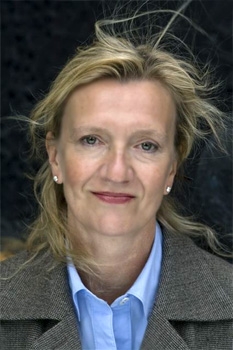
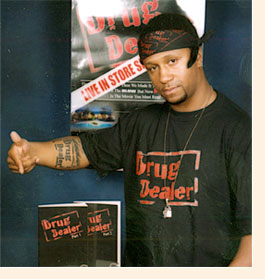
A few weeks ago, I serendipitously read two extremely different books. First I read the highly recommended 2009 Pulitzer Prize winning OLIVE KITTERIDGE by Elizabeth Strout (see her photo left), and then I read Isadore Johnson’s WRONGFULLY MINE, purchased on the street in New York-- my first toe dip into Urban Fiction. (See his photo below right).
I’m going to be saying more about WRONGFULLY MINE than about OLIVE KITTERIDGE, because it’s the book that excited me. OLIVE KITTERIDGE is a collection of short stories set in a small town in Maine, and each story includes at least a mention of a woman named Olive Kitteridge, a teacher whose relationships with her husband and only son are committed, stoic, and far from successful. The collection works nicely to create a whole impression, and I’m pleased that a book about a small town and often hidden lives won a big prize. I wish Elizabeth Strout well, I hopes she writes many more, and I hope people keep reading her work because those people are likely to give my work a try too. So please understand that I’m glad I read OLIVE KITTERIDGE. I admire the book.

But– and you knew there was a but coming, didn’t you?– why did I have no trouble laying OK down whereas I read WRONGFULLY MINE about as rapidly as I could.

WRONGFULLY MINE is a two-volume novel that I bought on Thirty Fourth Street in NYC from the author himself. It is something called “Urban Fiction,” a genre that actually goes back to the sixties and writers like Iceberg Slim and Donald Goines (who died violently in 1974). These men wrote gritty stories of the streets that were in at least some cases commercially successful. More recent urban fiction has been published by hip hop/rap presses or by extremely small family run presses.

WRONGFULLY MINE is in two attractive volumes with a lot of nonstandard features in the book block: the spacing between lines is large, and the paragraphs are not indented. The missing indentations in particular irritate the English teacher in me, and while the spelling is okay, there are instances of odd misuses of words in the narrative (As opposed to within quotations where, of course, anything goes in the effort to capture human speech). The novel is larded with explicit sex (and casual sexism) and plenty of violent deaths, mostly over drug turf. The drugs are treated primarily as an economic product, and the selling turns out to be hard work. The dealers’ own drug of choice is alcohol.

That’s description, but it doesn’t explain why I would read a chapter/story of OLIVE KITTERIDGE, say to myself, That is really well done, or even, I’m moved by that, and then lay the book down. Whereas I had trouble putting WRONGFULLY MINE down. I would pick it up over other books, including OLIVE. Was it the novelty? Was it because I’d met the author and was interested as so many readers are in the connection between a human being and that human being’s imaginative work? Was it prurient interest over the somewhat repetitive sex and the hot guns? Am I just being contrary? I tend to think mostly that it was the energy, the sheer momentum. It made OLIVE KITTERIDGE seem too finished, too quietly complete. WRONGFULLY MINE jumps off the page with pell-mell enthusiasm for its characters and their sadly limited but wildly explosive lives.

Isadore Johnson is clearly ambivalent about his central character, Hassan “Burn” Campbell. Burn gets out of prison and immediately stirs up everything, commanding loyalty and respect from his “peeps,” as in “my people,” but setting off waves of gunfire, revenge killings, and in the end– and this is where the ambivalence comes in– he slips off into the night with a handful of diamonds to get a new start. His best friends are dead or in one case in a vegetative state. The destruction and waste of human life are enormous, and yet there is this attraction to a spirit, perhaps a satanic spirit, that keeps on going and thwarts a system stacked against young African-Ameican men. Burn is a splendid, dangerous, heroically thuggish character, more of a force than a person. Johnson clearly understands that Burn is a negative influence on the world– but he also appreciates the way Burn plays the straight world and survives– perhaps even thrives.

What is moving and even tender is glimpses of connections among the young drug dealers. There is nothing to admire in the bumbling federal task force that gets shot up and fails to capture Burn, nor is there much worthy in the women who include one bitch goddess power figure of a D.A. and a lot of whiny mothers-of-the-men’s-children and even more booty-call sex toys. Johnson tries to do a little more with Burn’s girlfriend, and one of the sex toys turns out to be a reasonably talented singer, but the only strikingly admirable human behavior is the loyalty among the young men. They have the kind of ties that are created in all one-generation masculine cultures like soldiers at war, or the boys raised separate from their mothers and sisters to become radical jihadists– or, of course, urban gangster culture.

The book offers a lot of insight into "the game," which is the hard work of selling drugs. There is an lack of understanding of anything beyond the immediate friendship group and enemies. No one seems to understand that if you kill this guy's brother, he'll want to kill yours and you too. In the structure of the book, any moment of calm–the young men watching t. v., talking on the phone to girlfriends, having sex (usually at the same time in the same apartment as the other young men are having sex), eating some fast food, joking with their "lil homies" – this almost always trumpets a violent scene with a lot of blood and bullets.

There is also a lot of ugly consumerism: Spending money is what the young men do when they aren’t working or having sex. Burn and his top lieutenant travel to resorts and sit by pools and have drinks or comment on the incredible luxury of the hotel. Lavish is good. Benzes are good. Diamonds are good, flawless bodies are good.

I don’t mean to praise the book more than it deserves, but I love to be swept away by a book, and sometimes it is the genre novels that sweep best. I am thinking a lot about the power of genre novels to do that-- to carry me on fictional rides through the rapids and leave me breathless.

— Meredith Sue Willis


SHELLEY ETTINGER AND I HAVE WORDS OVER JOYCE CAROL OATES

Shelley Ettinger had several blog posts at the end of 2009 on her admirable “Read Red” blog about Joyce Carol Oates. I hope you’ll read all of the posts at:

Among other things, she writes, “At [Joyce Carol Oates’s] worst, when her fiction is at its slightest, it is slight, I think, only in comparison to her usual very high standard. It's never really bad compared to the vast dreck-loads of bad fiction foisted upon the reading public in this country....At its best, which it is impossibly often– I mean, come on, the greatest sluggers in baseball only make base hits a minority of their at-bats, most of the time striking out, so why should writers, who, I'd argue, rely on much harder to use body parts, be expected to hit one out of the ballpark every time they step up to the plate (tee hee who ever thought a sports metaphor would find its way onto this blog?), and yet she comes so close impossibly often– at its best, the work of Joyce Carol Oates is stark raving brilliant."

Shelley says she had been meaning to write about Oates for a while, but “got an oomph to do so when my friend the novelist and teacher Meredith Sue Willis wrote something about Oates, or at any rate one of Oates' books, in her newsletter BOOKS FOR READERS (Issue #123 at http://www.meredithsuewillis.com/bfrarchive121-125.html#123 then scroll down). She had just read BECAUSE IT IS BITTER AND BECAUSE IT IS MY HEART (which I have not read), and she'd also just read a novel by the bestseller list denizen Jodi Picoult, and she said that both writers have a ‘sense of entitlement that leads them to dip into places they haven't bothered to imagine fully.’ Well! Of all things! First I was flabbergasted at the suggestion that Oates even writes in the same universe as Picoult. More important, I couldn't imagine reading a JCO book that felt only partially imagined. I can't fault [MSW] for her specific critique since I haven't read this novel and who knows, perhaps BECAUSE IT IS BITTER is one of Oates' worst--but I can say that if there's one thing Joyce Carol Oates can do and usually does, it's to fully imagine the worlds she creates.”

There’s a lot more, and I repeat my recommendation of the blog posts on Oates, especially about her having been taken less seriously than a man of her accomplishments would have been. A lot of my complaint above about BECAUSE IT IS BITTER was about (and I don’t think I said this explicitly) how well Oates did her white characters compared to her black ones, who did not feel fully imagined to me. But on Shelley’s recommendations, I ran out and got BLONDE and I can say unequivocally that it is an excellent and fascinating book. It is enormous, and with large, large portions of it incredibly brilliant, a few passages pumped up with emotion, but over all a really powerful portrait of Norma Jeane a.k.a Marilyn Monroe and of her life and times– a perfect blend of a subject with JCO’s talent. She really nails Hollywood and nineteen fifties womanhood, catches MM’s wit and her fantasy life, her near-split personalities. It’s a big book with big themes.

Next, I want to follow Shelley’s suggestion to read JCO’s Love Canal book, THE FALLS.

PAMELA ERENS ON TURGENEV’S FATHERS AND SONS

Pamela Erens Pamela says: "After spending time with Tolstoy and Dostoyevky, Turgenev seems so compact, so pellucid... no wonder Flaubert admired him. Fathers and Sons is both a portrait of a dynamic, even violent time in Russian history (the late 1850s, as feudalism was giving...more After spending time with Tolstoy and Dostoyevky, Turgenev seems so compact, so pellucid... no wonder Flaubert admired him. Fathers and Sons is both a portrait of a dynamic, even violent time in Russian history (the late 1850s, as feudalism was giving way to a more Western-style economic system) and a universal tale of aimless young men and women and the grownups who don't understand them. In the end it's really about the way we all shuttle between a conviction that life is meaningless and a conviction that even what is transient can be meaningful.(less) "

MORE BOOKS

Thulani Davis recommends the followng on Buddhism: “For a wonderful read on who is doing all the thinking and how the ego dominates daily life, I recommend ZEN MIND, BEGINNER'S MINDby Shunryu Suzuki. For a wonderful look at how trouble is an opening, I recommend WHEN THINGS FALL APART or secondarily START WHERE YOU ARE by Pema Chodron. And for practice, I am bound to recommend you experience the teaching in person as it is passed "one mind to one mind."

NEWS

Let me get the sad news over with first: Paperspine.com, the netflix for books, has closed its doors. See the final blog post at http://paperspineblog.com/2009/12/12/a-final-thank-you-to-our-members/#comment-539 . It turns out it was a garage operation, but very smoothly done, and couldn’t weather the economic downturn. Try booksfree.com (not really free of course) if you like the idea of a paid lending library for current paperbacks.
Marlen S. Bodden’s novel THE WEDDING GIFT (about a woman given as a gift in slave times) has just been published. See http://www.amazon.com/Wedding-Gift-Marlen-Suyapa-Bodden/dp/1439255830 .
Albert Meglin’s latest series of one-act plays has just been published: see http://stageplaystheatre.com/publish.htm . Also check the development/reading series page for when there will be a reading of some of his work at http://www.stageplaystheatre.com/reading_series.htm.
There’s a new short short by Carole Rosenthal in Citron Review at http://thecitronreview.wordpress.com/2009/12/10/smile/

Barbara Crooker’s latest poem is online at http://www.bhutantoday.net/happiness.htm

The American Association of University Women, NYC Branch, has recently named JUANITA TORRENCE-THOMPSON one of 10 women who “Make A Difference.” They said Torrence-Thompson “broke down barriers” and was especially “dedicated to Black History and to Diversity.” Juanita is a poet, writer, instructor, actress and Editor-in-Chief/Publisher of MOBIUS, THE POETRY MAGAZINE.
Burt Kimmelman’s new book of poems, AS IF FREE (Talisman House, Publishers), is now available from Amazon and SPD / Small Press Distribution. Jerome Rothenberg says, “Make no mistake about it: Burt Kimmelman appears here – & not for the first time – as a successor to the lineage of William Carlos Williams & George Oppen (to name but two), no less so for being a master of that lineage worn proudly.”
Shawn Dray Robinson http://www.shawndray.com has a new children’s picture book THE SKY IS THE LIMIT dedicated to our children who are living and those who are losing their lives every second. THE SKY IS THE LIMIT is available January 2010. Call 973.373.1377or e-mail dps@shawndray.com.
Spuyten Duyvil Announces the pre-publication Sale of Lynda Schor's SEDUCTION, STORIES OF LOVE AND ART– “a new and rare collection of tales of extraordinary madness.” Purchase a pre-publication copy and support Spuyten Duyvil's endeavors to bring extraordinary innovative literature and poetry to the reading public. Pre-publication copies are $16 + $2.50 postage and handling per copy. Please make checks out to: TNT Printworks and send order to TNT Printworks, 42 St. Johns Pl. Gdn Apt., Brooklyn, N.Y. 11217.

SPRING 2010 BOOKS FROM MARSH HAWK PRESS...

... include: Phillip Lopate, AT THE END OF THE DAY ; Sandy McIntosh, ERNESTA, IN THE STYLE OF THE FLAMENCO; Eileen R. Tabios, THE THORN ROSARY: SELECTED PROSE POEMS & NEW (1998-2010); and Neil de la Flor, ALMOST DOROTHY. See their website at http://www.marshhawkpress.org.

AT STANFORD U.

Hilton Obenzinger does a series of conversations with writers at Stanford. The videos for the more recent ones can be viewed by the public at http://itunes.stanford.edu Once on the Stanford iTunes site, click “Arts and Humanities” and then scroll to “Featured Contributors” and look for the “How I Write” icon. These are writers of all sorts, including most recently Phil Taubman, former journalist and editor for the NY Times. Hilton is writing “How We Write: The Varieties of Writing Experience” based on about 50 of these conversations in addition to panel discussions and what he has learned from students and faculty directly.


NEW MUSIC

Redjeb Jordania’s Sonata d'Amore for duo violins can be seen and heard at http://www.Youtube.com. Once you’re there, go to the search window and search for Redjeb or RedjebJ or Redjeb Jordania. A CD (and an MP3 download) of some of his chamber music is now available from Amazon.com.

Tuesday, January 19, 2010

When Times are Bad, Looking Homeward...

January 19, 2008

Bad news for health care and a progressive legislative agenda: the Republicans took the special Senate election in Massachusetts. Americans express their frustration almost always by Throwing The Bums out. Some comfort: a beautiful old photo by Charlie Cowger of a snowy day on Palmer's hill in Shinnston.

Friday, January 08, 2010

Appalachian Coal Miner's Dinner

Tonight is my third (!) fund raiser Appalachian Coal Miner's dinner-- this one a fund raiser for the South Orange/Maplewood Community Coalition on Race-- and I've got eight people coming, plus Andy and me and my mother, who won't sit at the table. It's legal moonshine and a miniature coal car on the coffee table, Songs of the Coalfields in the cd player, lots of Appalachian books on the side tables. I know what I'm going to wear, and the cooking is pretty much under control. All pig, mostly: pork chops, mustard greens cooked in bacon, beans cooked with bacon, cole slaw, potatoes (fake fried), cornbread, and biscuits. Oh, and pies! apple from Costco, berry pie, and vinegar pie!

Saturday, January 02, 2010

On not being articulate

People assume that if you are a writer, you are articulate, but I have never been very fluent with words– that is, with precise words, long words, vocabulary words. I have always tended to expressive language, word pictures, a surprising word that, if I'm lucky, conveys what I want it to. People I think of as British-trained in universities and high style will write pages and fluent pages with the the perfect word, the great word, the most precise word. I love it when I know those words, and there was a time in my life when I kept elaborate lists of words as I learned them, but when I am precise and especially when I use big words, I am almost always wandering exuberantly in what feels like someone else’s arena.

I also have odd losses, of fairly common words, possibly psychological blanks as once a few years back I lost AUTISM for a week or two.

Technology is exacerbating the problem because I'm developing some new means of expression-- I can make web pages with pictures, for example, and I think some of my struggles with computers and html and now desk top publishing are cutting into my vocabulary developing spaces.

Tuesday, December 29, 2009

E Books Ahead

I’m reading about and excited about getting an e-reader sometime (I'm guessing) in the next year. I am certainly not an early adopter, but I’m very very interested. The idea of having all the classics-- all of Trollope, all of George Eliot and Dickens-- in my bag at all times– that is just super.

My ideal device would be first for reading, with easy-to-read screen, light weight, but also with at least email and note taking capability because I would be carrying this instead of my netbook Acer when I go into the city or on trips.

Meanwhile, of course, I also feel the the gentle mourning for books, for the weight, for dog-earring a corner feeling transgressive for doing it, for the pretty covers, and how you flip back to the pictures section (as in the history of abolitionism I just finished, Bound for Canaan to look at old nineteenth century images of, say, William Still the abolitionist or Clay Calhoun and Dan’l Webster and Mary Ann Shadd (Carey) and a whole slew of people I never knew of.
Going to the pictures or the cover– the multimedia-- is actually familiar to me, as I was a comix aficionada before I was a reader, or simultaneous with it. So I have no intrinsic problem with mixed media (although it makes me a little nervous to think I might be reading books on the same device as doing email, which is definitely a distraction).

And it is a fact that I have almost entirely turned to the Internet for information these days– Wikipedia and more. But would I be as able, I wonder, to pick and choose what I need had I not been trained in college and reading for a critical look at sources, comparing sources, and all that?

How is that being taught today?

Monday, December 28, 2009

South Africa travellers

December 28, 2009

Joel and Sarah left for South Africa this morning! Mom and I took their packed gifts to the post office and mailed to Joel's office at Berkeley, and also mailed the save-the-date magnets! Big production, and big fun coming!

Friday, December 25, 2009

There's nothing as quiet as Christmas...

... between the raucous sounds of exchanging gifts and running vacuums and cooking and the parakeet singing happily and the arrival of guests. But there is this sleepy hour before we have to do the next things, no cars passing on the street, a thick grayness in the atmosphere outside, no one talking, no business being transacted. Christmas quiet, midday pause.

Snapshots before Christmas

December 23, 2009
Well, last night was noisy, but fun-- the Prospect Street Alumni Party-- and I never quite figured out everyone who was there– people stopped by Katherine’s but didn’t come on to our house, and others showed up only at Krois. We had Andrew Sedlak and his mom Susan who I talked to longer that every before in all the twenty plus years I’ve known her; I was up till nearly one watching the logs burn down and finishing clean up. Just grand to see Tony and Mary and Anne and Ryan (who drove straight down from Boston). Ed and Joan and Caitlin and Holly and Katherine and Gordon and Lily and Noel and their au pair and us and Joel and Sarah. Sixth grader Lily and her friend spent a lot of time observing Taxi. Lily (who has a dog and at least 2 cats) said “I’ve never held a bird before!” with Taxi on her finger, and then very astutely asked about the safety of a bird in the kitchen due to gas fumes, and I told her about my decision that company was more important for a parakeet/budgie.
We're due for a quiet day today, and then getting ready for Christmas dinner-- Howard and Alice joining us!

Tuesday, December 15, 2009

Books for Readers # 126

Meredith Sue Willis's

Books for Readers #126

December 13 , 2009

For a free email subscription to Books for Readers,
send a blank email to Readerbooks-subscribe@topica.com


If you want to link to something in this newsletter, you should use the permanent link here rather than this page, which changes each issue.

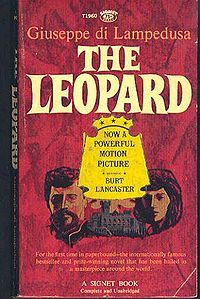
First, I want to mention THE LEOPARD by Giuseppe Di Lampedusa, which I’d been hearing about for a long time. The movie photo below is of Burt Lancaster and Claudia Cardinale in VIsconti's 1963 movie version. I had vaguely thought the book was about the British in Africa shooting big game, and instead it’s a series of moments in the life of an aristocratic family in Sicily from the mid nineteenth century to the early twentieth. The main character is a physically imposing, intelligent, proud, cooly distant member of a deteriorating noble family with a leopard on its escutcheon. He’s not exactly someone you’d want to know or be, and you can’t feel sorry about the fall of his class very much– yet, at the same time,he is so smart, and his observations so abundant and rich, that in the end you mourn with him and ultimately for him.

It isn’t all about him anyhow: there’s a tight, pathetic story near the end where the late Leopard’s unmarried daughters suffer the particular humiliation of having their private relics of saints declared hoaxes, and another wonderful chapter where the household chaplain goes to his home village and deals with a pregnant niece and a family feud. Everything, whether tragic or humorous, is also sad and beautiful. I found myself thinking of the book with a sort of haptic sense of it, as if it were made of chunks you could hold, stroke, heft in your hands– with chapters you can walk in and around, hear the music and the whispers.

Around the same time I read Dani Shapiro’s BLACK AND WHITE, one of the most satisfying contemporary novels I've read in a long time. The events and outcomes are at once expected and perfectly realized: we know the artist mother is dying, we know the daughter will take her daughter to see her, we know there is love along with the exploitation.

I also read John Updike’s ROGER’S VERSION, which has Updike's typical relentless and brilliant detail of observation. In this novel, I just didn't like the main consciousness enough to enjoy his world. He is a divinity professor, and I do like his debates about religion, and I also like his wealth of information about the early church fathers and heretics. I don’t think Updike likes these characters very much, although maybe I'm not separating Roger from Updike. I haven’t read all of Updike’s books, but in the books I have read, there is often more passion for ideas and words than for people. The sex scenes tend to feel yucky to me, like sticky pages in an old sex magazine. For other views of the book, look at a 1986 review of the novel in the New York Times by David Lodge and a review fromTime Magazine .

I also reread Linda Woodhead’s CHRISTIANITY: A VERY SHORT INTRODUCTION (it is VERY short). My previous remarks on this little summary, which I highly recommend to anyone looking for a quick overview of the religion, are at http://www.meredithsuewillis.com/bfrarchive111-115.html#113#christianity.

Finally, at Carole Rosenthal’s suggestion, I read with great pleasure the short and brilliant novel, THE RELUCTANT FUNDAMENTALIST by Mohsin Hamid. This has the immediacy of a short story, but the larger impact of a novel. The gentle, cultivated, courteous voice of Changez the narrator puts an insistent and increasing pressure on the person he is addressing, who is a character but also us readers. This receiver of the novel is an American whose role is first obscure and then closer and closer to something we think we understand. Changez tells him/us to have a cup of this, a bite of that, to stay just a little longer, to listen to one more story. I’m not absolutely sure what happens at the end– Changez brings this agent or whoever he is to be an easy target for–someone– but it isn’t clear what will happen. Some bang bang, I expect, but we don’t know who’s going to live or die. Anyhow, it’s as good a monologue as I’ve read– the reader feels so close to the narrator that we want to spend an evening with him too– but not stay so late!

-- Meredith Sue Willis


JACK WILLS REVIEWS GHOSTS OF WALDEN: THREE CONCORD STORIES

In his GHOSTS OF WALDEN: THREE CONCORD STORIES, Jack Hussey captures the essence of one of America’s most famous towns during its cultural and historical apogee and tells some good stories while doing it. Having honed his skills through years of teaching American literature and producing a film on the lives of some of the region’s most important authors, Neighbors in Eden, Hussey has re-created significant incidents in the lives of Concord’s most famous citizens, weaving them into narratives with fictional characters into three well-crafted tales and an 18-page “prologue” of self-discovery, linked not only by character and place, but by the motif of the journey.

The prologue recounts an incident during the Battle of Concord, “the shot heard round the world,” April 19, 1775. Two of the stories are set in pre-Civil War Concord, in 1844 and 1851, the last, which centers around a pageant to celebrate the town’s storied history, in 1885. As befits the work’s being set during the Industrial Revolution and the Civil War era, railroads–both the “iron horse” and the underground railroad–play an important role in the stories and reinforce the journey motif. The stories’ most important character, author and naturalist Henry David Thoreau, who appears in body or in spirit in each of the three stories, is both amused and annoyed by the Fitchburg Railroad, the underground railroad is the road to freedom for runaway slave Shadrach Minkins, and, in the final story, Sarah Sanborn, sister of “Secret Six” member Frank Sanborn, sees the railroad as the way out of a Concord that has become too oppressive and confining for her. Others have their own journeys of activism or self-actualization, as Hussey not only gives us glimpses of the aspirations, personal lives, and foibles of Concordians like Thoreau, Emerson, Hawthorne, and Judge Keyes, but also provides some sense of the effect on their lives of the great social and cultural currents of the day: feminism, temperance, and Irish immigration, in addition to the issues of abolition and industrialization already cited.

Particularly well-executed and memorable is the fact-based journey of the young Thoreau, in the story “The Wilderness of This World,” to Saddleback Mountain (the name later changed to Mt.Greylock) after accidentally burning a local farmer’s woodlot. With “woods-burner” charges echoing in his ears, Thoreau has initially considered Saddleback a brief stop on his way west to begin a new life, but encounters with a mountain girl named Rachel Rice, two boys visiting their “fort,” and a late, persistent black fly, a “buzzing messenger,” combine to provide the epiphany which convinces him his true work is in Concord. The rigors of Thoreau’s inner journey are graphically reinforced by Hussey’s effective description of his arduous climb up Saddleback, whose slopes are “tangled in arbor vitae, mountain laurel and sumac”; Thoreau has to “pull himself up steep gullies by clutching branches and vines,” which sometimes give way, leaving him “bruised and throbbing.”

Among the more pleasing features of the book is the cast of supporting characters, some real, some imagined, which add color and texture to the narratives. In addition to those already cited, one recalls dapper, cigar-smoking Lewis Heyward, the former slave who transports Shadrach to the Bigelow house; drunken Irish immigrant Hugh Quoil and the wild, doomed woman he befriends; crusading Mary Cooke, hounding Emerson to give an anti-slavery speech; pathetic would-be poet Martha Hunt; and many others. Some of these characters, like Ellery Channing, who goes from irresponsible young Transcendentalist in the first story to dependent old curmudgeon in the third, or Johnny Riordan, who helps Thoreau get into the courthouse to throw the doors open for Emerson’s speech in the first story and is a poetry-spouting patriarch seeking his lost son in the third, also serve to reinforce the sense of continuity in the stories.

An especially noteworthy feature of GHOSTS OF WALDEN is its deft modulation of tone. The reader is allowed to share the agony of Emerson, on his knees in Sleepy Hollow Cemetery, digging with his hands in the grave of his son Waldo, and the tenderness of Thoreau’s hand on his shoulder, comforting and leading him back home; the desperation of Mary Cooke, hinting that pregnant Ann Bigelow do the unthinkable so that Cooke can move from abolition to temperance; the anguish of Shadrach, whose jubilation over his flight to safety is almost cancelled by the pain of having left the woman he loves behind. And the thoughts that Thoreau records in his diary after making his decision to return to Concord are genuinely poetic, as in this passage: “A Crowd of Concord children leap and cry, O! Mr. Thoreau! The smallest of them, Horace Hosmer, holds aloft, like a lantern, a golden pickerel glittering with the waters of Walden.” One particular thread employed effectively throughout is that of humor. The emotional intensity of the first two stories, essentially narrated in a straightforward style, is relieved by occasional flashes of humor (Channing, for instance, is essentially a comic character), and the final story, suitably so considering the lightness of the occasion as compared to the first two, is a seriocomedy whose comic elements shade into farce during Judge Keyes’s drunken efforts to extemporize after he has lost his written speech.

While the (largely) historically accurate approach Hussey has chosen necessarily limits his options as they concern plot, he has blended these historical facts and characters with well-conceived fictional creations into a seamless narrative of a fascinating time and place in American history. Ghosts of Walden convincingly evokes the celebrated past of a famous American town, but the voyages, both inner and outer, that its principal characters take are universal.

RESPONSES TO PAST NEWSLETTERS

Phyllis Wilson Moore writes: “Cat Pleska's review of Lee Maynard's latest novel captures the work so very well. Maynard has a voice and a style is all his own. After reading THE PALE LIGHT OF SUNSET, I thought of a comment by Arthur D. Casciato and James L. W. West III, editors of the reprint of (West Virginia author Tom Kromer's) WAITING FOR NOTHING AND OTHER WRITING (University of Georgia Press, 1986). “…the important thing about this book WAITING FOR NOTHING is not how closely it is based on the facts but how close it comes to the truth.” (p. 263) The same holds true for the work of Lee Maynard.”

MORE BOOKS RECOMMENDED

Jeffrey Sokolow writes to say, “I have just finished reading BOUND FOR CANAAN: THE UNDERGROUND RAILROAD AND THE WAR FOR THE SOUL OF AMERICA by Fergus M. Bordewich (New York, NY: Harper Collins; 2005), a well-written and inspirational narrative history of the largest interracial movement of civil disobedience in American history before modern times. Well-researched and vividly narrated, the book brings to life a host of heroes and heroines whose exploits will amaze and delight anyone who loves freedom. Though it reads like well-crafted fiction, the book contains an extensive bibliography and copious footnotes that point the way to scores of other works. Must reading.”

Reamy Jansen read the new Byatt, THE CHILDREN'S BOOK. He says he thinks “ it's just terrific--one of those works I couldn't wait to get back to. Since it takes place in London and its environs and covers from 1894 to 1917, it was like a journey through my dissertation, a good thing. I can't quite say it's a great book, which is something of an elusive category, but I'm tempted to re-read it to find out. Also recommended: Richard Flanagan's WANTING. An Australian Writer, Flanagan blends Van Dienam's Land (genocide followed by bantustans on a separate island) with Charles Dickens' and Wilkie Collins' production of THE FROZEN DEEP, which is about the disastrous Franklin expedition to the South Pole. Earlier, Franklin had been governor of Van Dienam's Land. Excellent novel.”


JOANNE WETZEL ON THE NEW YORK WRITERS WORKSHOP PERFECT PITCH FICTION CONFERENCE

Joanne Wetzel reports on attending the New York Writer's Workshop's "Perfect Pitch Fiction Conference" 11/13/09 to 11/15/09. She writes: “The conference is for writers who have complete manuscripts and want to hone their pitch or synopsis to be used when communicating with agents or editors. Day 1 was spent reviewing our pitches in a small group of about ten people and teacher, and in Days 2 and 3 we pitched to 3 different editors. It also included an Agents Panel, where 4 different agents answered many questions, including how to find an agent, how the editor/agent/writer relationship works, what not to do, etc. Pros: at the end, you have a sharp one-page pitch to use in your query letters for agents. It’s a GREAT networking opportunity to meet passionate teachers (Charles Salzberg and Tim Tomlinson led this conference), fellow writers, agents, and editors. In some cases, if the editors connect with a person's pitch they ask that the manuscript be sent to them. Cons- none, really. Since it’s a 3 day conference, it is a substantial time commitment, but its well worth it if you need help taking a finished work to the next step. You're also not guaranteed to get the interest of an editor.” Where to find more info: http://www.newyorkwritersworkshop.com/ . Four workshops are held each year, two fiction and two non-fiction The next “Perfect Pitch” conference is in February 2010.

GIFTS

If you’re still looking for last minute holiday gifts, consider a subscription to TRADITIONS: A JOURNAL OF WEST VIRGINIA FOLK CULTURE AND EDUCATIONAL AWARENESS, Volume 11--2009. The journal continues to focus on cultural awareness and the roots of the various populations prominent in developing West Virginia. This issue is descriptive of the "Roads to Appalachia" followed by settlers from Europe, especially from Italy to West Virginia. TRADITIONS VOLUME 10 (about the West Virginia literary map) and the literary map itself are inexpensive gifts for writers, readers, teachers, and kids. To order copies contact wvfolklife@fairmontstate.edu or check with a local store or go to Fairmont State Folklife to view all the Center's publications.

Also, look at MSW’s Gift Books page at http://www.meredithsuewillis.com/giftbooks.html.

UPCOMING READINGS IN NEW YORK AND NEW JERSEY

Sunday, December 20, Juanita Torrence-Thompson, editor and publisher of MOBIUS, THE POETRY MAGAZINE. Mobius, The Poetry Magazine Editor & Publisher, will produce, host and read at 3pm at the Lewis H. Latimer House Museum Poetry Salon Series. Other poets are: CHRISTOPHER STACKHOUSE, GEORGE NORTHRUP & ALISON ROH PARK. Light refreshments & conversation which spills out into the museum. Where: (historic) Lewis H. Latimer House Museum. 34-41 137th Street, (corner of Leavitt St) Flushing, NY. Executive Director is Vivian Warfield. –RSVP: latimerhouse@live.com or 718-961-8585 for directions, etc. Limited seating Limited parking at museum & on street. Subway #7 to Main St, Flushing; Take Q25 & Q24 to Linden Place & 35th Avenue, Flushing. (cream colored, burgundy trimmed, 19th Century Victorian House Museum)—ADMISSION: $10 adults, $7 seniors, students & children 12 & over.
Poetry Reading at Barnes & Noble in Clifton Commons (on Route 3 East in Clifton, NJ) on
January 7th, Thursday Evening at 7:30 by Therese Halscheid and me, Madeline Tiger
Contact person: Laura Boss.
"Four Poets Will Resonate with White Light" – @ The White Show – December 12, 2009
2:00 PM – Blue Mountain Gallery – 530 West 25th St., 4th floor(between 10th and 11th Avenues)
Nathan Whiting; Bob Heman; Edi Holley; Bill Pyles

ONLINE

An interview with Hilton Obenzinger .

WHAT IS A MEMOIR?

I’ve been participating in some discussions about what defines a memoir, and these books have come up as recommended for refining our ideas of the definition of memoir: TELL ME TRUE: MEMOIR, HISTORY, AND WRITING A LIFE – by Patricia Hampl and Elaine Tyler May, and the INVENTING THE TRUTH, especially the intoduction by editor William Zinsser.

NEWS

Spuyten Duyvil Announces the pre-publication Sale of Lynda Schor's SEDUCTION, STORIES OF LOVE AND ART– “a new and rare collection of tales of extraordinary madness.” Purchase a pre-publication copy and support Spuyten Duyvil's endeavors to bring extraordinary innovative literature and poetry to the reading public. Pre-publication copies are $16 + $2.50 postage and handling per copy. Please make checks out to: TNT Printworks and send order to TNT Printworks, 42 St. Johns Pl. Gdn Apt., Brooklyn, N.Y. 11217. Deadline: December 31, 2010 and Books should arrive by February 15, 2010.
Norman Julian’s latest book is just out: TRILLIUM ACRES, a sequel to SNAKE HILL, the nonfiction companion to his award-winning novel CHEAT. For information, see Norman Julian’s website at http://www.normanjulian.com.
Phyllis Moore reports that: Pinckney Benedict received a 2008 Pushcart Prize—his third—for a short story, "Mercy", published in the Ontario Review; Zoe Ferraris of Cabell County, a graduate of Marshall University, won the 2008 LA Times Book Award for First Fiction with her literary mystery, FINDING NOUF. see LA TIMES; Marie Manilla's debut novel, SHRAPNEL won the 2008 Fred Bonnie Award; Mark Brazaitis, associate professor and director of creating writing at WVU, received the ABZ Press Poetry Prize for his first book of poetry, THE OTHER LANGUAGE; Chuck Kinder received the 2008 Eberly College Alumni Recognition Award (WVU); June Langford Berkely received the 2009 Salem International University's Alumni of Achievement Award.; WVU faculty member Cari Carpenter received honorable mention in the 2008 Gloria E. Anzaldua's Book Prize competition for her book SEEING RED: ANGER, SENTIMENTALITY, AND AMERICAN INDIANS; Ethel Morgan Smith, also of WVU, received a competitive fellowship to attend a writing retreat at the Virginia Center for the Creative Arts to complete a memoir;and Ann Pancake's novel STRANGE AS THIS WEATHER HAS BEEN garnered award # 3 when it was named a finalist for the 2008 Orion Book Award. http://annpancake.blogspot.com/2007/04/biography.html.
Barbara Crooker has an older poem getting a new lease on life at this site:
http://www.astropoetica.com/Fall09/comethalley.html
Sierra Club Books has published COAL COUNTRY RISING UP AGAINST MOUNTAINTOP REMOVAL MINING. Several poems from COAL: A POETRY ANTHOLOGY, published by Blair Mountain Press, are in the volume, and Victor Depta’s “Azrael on the Mountain” from his books of the same name, was printed at the center of Coal Country.


Friday, December 11, 2009

Writers Group

December 11, 2009
Writers' group last night: I've been wanting this photo for a long time: Writers' Group:Joan Liebovitz, Carole Rosenthal, MSW, Shelley Ettinger, Suzanne McConnell, Carol Emshwiller, and Edith Konecky