One girl spent the hour making tiny folded snowflakes she gave to me, and then this drawing of me teaching:

I like this sketch for its pleasant engaged face and her belief that I liked the class, but also for the detail to my clothes (boots and tuck in tights, and a tunic from Marketplace, earrings headband, book and writing implement, and even my little silver heart bracelet on my left wrist that I've had-- literally-- for more than 50 years: Aunt Ninnie brought it back from Europe!). Also, I look generically young, actually like a kid.
It's meant to please, of course, as this child obviously likes to give people samples of her work, but it's always a surprise to get a peek at how you look to other people.






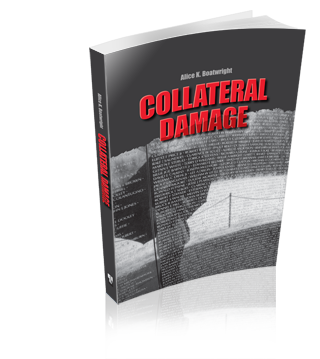 system.
There is plenty of violence and suffering, but it isn't the staff
versus the patients. There is no individualized force of evil comparable
to Big Nurse. Everyone is confused, and everyone is in pain. Toby, in
fact, gets out. He figures out what he wants and works towards it,
intermittently, in concert with his psychiatrist. The story's violence
feels earned, and Toby's descent is followed by a slow lifting up.
system.
There is plenty of violence and suffering, but it isn't the staff
versus the patients. There is no individualized force of evil comparable
to Big Nurse. Everyone is confused, and everyone is in pain. Toby, in
fact, gets out. He figures out what he wants and works towards it,
intermittently, in concert with his psychiatrist. The story's violence
feels earned, and Toby's descent is followed by a slow lifting up. essentially
goes crazy from hunger. He is too proud and eccentric to make the
best of his chances, and sometimes you can't tell if he's behaving the
way he does--strange antic teasing of strangers (one of these strangers
actually turns into an almost-love affair), missing appointments,
impetuously giving away money that he desperately needs for food-- out
of eccentricity or the effects of hunger.
essentially
goes crazy from hunger. He is too proud and eccentric to make the
best of his chances, and sometimes you can't tell if he's behaving the
way he does--strange antic teasing of strangers (one of these strangers
actually turns into an almost-love affair), missing appointments,
impetuously giving away money that he desperately needs for food-- out
of eccentricity or the effects of hunger. 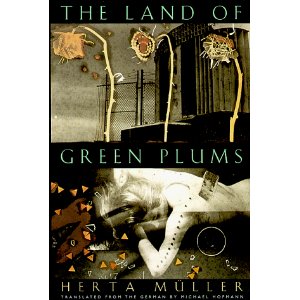 novel
is stunning, tight, vivid and awful. Seven young people, more or less
friends struggle for spiritual survival under the Romanian dictatorship
of Nicolae Ceaușescu. One of the women is an informer, but also a
loving friend. Some of them kill themselves, but there are also deaths
by murder and cancer. There are crude interrogations and dangerous
efforts to escape. The narrator's father is a former SS man who warns
her that green plums will poison her, but the ever-present official
guards of the régime stuff their faces with the plums all the time.
It's a novel that kept me off balance with its combination of flat
assertions and indirection. It is a beautifully detailed world of
personal pain and social psychosis told in extreme close-up.
novel
is stunning, tight, vivid and awful. Seven young people, more or less
friends struggle for spiritual survival under the Romanian dictatorship
of Nicolae Ceaușescu. One of the women is an informer, but also a
loving friend. Some of them kill themselves, but there are also deaths
by murder and cancer. There are crude interrogations and dangerous
efforts to escape. The narrator's father is a former SS man who warns
her that green plums will poison her, but the ever-present official
guards of the régime stuff their faces with the plums all the time.
It's a novel that kept me off balance with its combination of flat
assertions and indirection. It is a beautifully detailed world of
personal pain and social psychosis told in extreme close-up.  manages
to do something amazing. Here it was the stripped down story telling,
the tight focus on six people (so tight that there are speaking parts
for only maybe three or four others). The plot is the dispostion of the
little girl Maisie whose parents have divorced—and what amounts to her
moral corruption. Don't misunderstand, this is not about sexual
exploitation or Bad Seeds: it's about a little girl who wants to be
loved and becomes far too knowing and sophisticated far too early in
life. It has some concrete things: food and scenery and a handful of
objects, but mostly it is made of endless dialogue and narratiion of
Maisie's developing perceptions.. He never attempts to capture her
little girl voice, and he never even touches on her sense of her own
body– but somehow, remarkably, he tells a gripping story and captures
what the child goes through and how she grows. Only Henry James. It
isn't a very long book, and I read it on the Kindle for free or next to
free, and it's probably worth trying if you have been thinking about
testing the Jamesian waters.
manages
to do something amazing. Here it was the stripped down story telling,
the tight focus on six people (so tight that there are speaking parts
for only maybe three or four others). The plot is the dispostion of the
little girl Maisie whose parents have divorced—and what amounts to her
moral corruption. Don't misunderstand, this is not about sexual
exploitation or Bad Seeds: it's about a little girl who wants to be
loved and becomes far too knowing and sophisticated far too early in
life. It has some concrete things: food and scenery and a handful of
objects, but mostly it is made of endless dialogue and narratiion of
Maisie's developing perceptions.. He never attempts to capture her
little girl voice, and he never even touches on her sense of her own
body– but somehow, remarkably, he tells a gripping story and captures
what the child goes through and how she grows. Only Henry James. It
isn't a very long book, and I read it on the Kindle for free or next to
free, and it's probably worth trying if you have been thinking about
testing the Jamesian waters.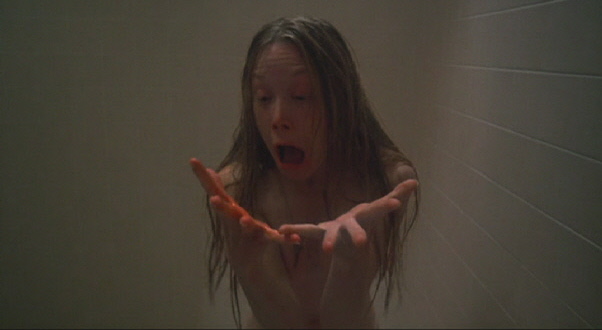 news
feeds, scientific studies, court transcripts, etc.? It has the energy
and at least potential depth you expect from King (I'm the big expert
on King now, having read two of his books), but also his lack patience
for polishing. His description tends to be ample but not refined; he
piles up a lot of detail without narrowing it down to the best. He says
that though this was his first published novel, it was not the first
written. It has rough places, and some of the fake scientific writings
are embarrassingly bad, but the story telling, the circling in on
events, is excellent. You know what's coming– that is, you know this
one will die and this one will live, but not how those things will
happen. The lack of dependence on straight shock is a real strength of
what I've read so far in his books. With novels, especially today, you
have to offer something besides shock, which movies can provide so much
better: the smashing glass, the gush of blood, the scream scream
scream). King did well with his high school girl characters, too.
Carrie really is sympathetic, and you never doubt that you would have
had the same break down in her circumstances. The forces of evil here
are completely human: the only thing you have to accept is telekinesis--
not so much, really. Well worth the suspension of disbelief.
news
feeds, scientific studies, court transcripts, etc.? It has the energy
and at least potential depth you expect from King (I'm the big expert
on King now, having read two of his books), but also his lack patience
for polishing. His description tends to be ample but not refined; he
piles up a lot of detail without narrowing it down to the best. He says
that though this was his first published novel, it was not the first
written. It has rough places, and some of the fake scientific writings
are embarrassingly bad, but the story telling, the circling in on
events, is excellent. You know what's coming– that is, you know this
one will die and this one will live, but not how those things will
happen. The lack of dependence on straight shock is a real strength of
what I've read so far in his books. With novels, especially today, you
have to offer something besides shock, which movies can provide so much
better: the smashing glass, the gush of blood, the scream scream
scream). King did well with his high school girl characters, too.
Carrie really is sympathetic, and you never doubt that you would have
had the same break down in her circumstances. The forces of evil here
are completely human: the only thing you have to accept is telekinesis--
not so much, really. Well worth the suspension of disbelief.