Monday, June 21, 2010

Meredith Sue Willis's

Books for Readers #132

June 19, 2010

MSW Home
For a free e-mail subscription to this newsletter, click here .
Note: If you want to link to something in
this newsletter, use the permanent link here .

Don’t Miss the New Issue of The Hamilton Stone Review #21

Poetry by Carol Berg, Iain Britton, Jessie Carty, Ken Champion,
W. Frank, Alice Friman, Peter Greico, Anne Haines,
Reamy Jansen, A.F. Moritz, Linda Ravenswood,
Kevin Stein; Nonfiction by Faye Rapoport DesPres,
Linda M. Hasselstrom, Sue Ring deRosset, and Marianne Rogoff.

Armstrong Trollope Oates

Featured This Issue:
Good Stuff Online-- including articles by readers!
Barbara Smith's latest
Good news-- New Books


I’ve been away to California for my son’s wedding, which was a huge and moving occasion for all the usual reasons, and I’m also still doing a lot of student papers, so my reading recently has been spotty. As usual, though, friends, colleagues, and readers of this newsletter have sent lots of suggestions. Here is a scattering of my latest recommendations.

And I have been reading. I finished Karen Armstrong’s A HISTORY OF GOD: THE 4000-YEAR QUEST OF JUDAISM, CHRISTIANITY, AND ISLAM. Armstrong led me to more appreciation of Eastern Orthodox Christianity and of the old rational tradition in Islam. Armstrong, herself a former nun and self-described freelance theist (clever phrase, but exactly what does it mean?), was best for me when she was writing about areas I know least about– which is a tremendously large number. She is very good, for example, on the early Islamic Faylasufs, who were highly influenced by Greek philosophers, the word itself coming from Greek for philosopher. Her strongest appreciation seems to be for the mystical and mythological branches of all the religions. In this work, she doesn’t pay much attention to social justice, and her most positive models, possibly because they have tended to do the least damage, are those who emphasize mystery, joy, and the frank use of the imagination in religion. Thus her most positive models tend to be groups like the early Sufis and Jewish Throne believers– people who use metaphor and vision to approach the ineffable.

She does not find most of Christianity especially positive, and she particularly seems to dislike Martin Luther and the other dark spirited Protestants. Of course she’s hard on the dogmatic Roman Catholics and all the fundamentalists of all varieties as well. Lots of information, and I'm left especially interested in the idea that some believers actually value imagination as part of their practice.

I am also continuing my run through Trollope’s Palliser novels with a re-read of the EUSTACE DIAMONDS (for my previous take on the book, see http://www.meredithsuewillis.com/bfrarchive81-85.html#82). Even though the Palliser series is pretty loosely connected, this one makes more sense read in order, especially the parts with Lady Glencora and the Duke of Omnium, not to mention Mrs. Max Goesler. These had seemed like very loose ends the first time I read the book, but now I see that they hold the series together.

This story is about the badly brought-up Lizzie Eustace whose values, ethics, and morals are generally execrable. Trollope simply calls her bad, and uses that word, over and over. One wonders if his judgment is to cover himself for his preference for her over the other female lead, Lucy Morris, who is snoringly good. By the end, though, he has thoroughly punished Lizzie, and most of her charm is gone. Also interesting is the extremely weak anti-hero Frank Greystock, who comes through for Lucy Morris at the very last minute.

One pleasure in reading Trollope is that he cares about more of the world than love affairs or even the movement of money and respectability. The legal ramifications of the appearances, disappearances and possession of the diamonds is high on his list here, as was Parliamentary political maneuvering in PHINEAS FINN. The anti-Semitism, on the other hand, is blatant, ugly, totally socially acceptable in Trollope’s circles, and hard to read today. The thief who is punished by law is a greasy Jewish pawn broker, and Lizzie’s punishment is to end up marrying an unpleasant preacher, also rather greasy, who is hinted to be a convert from Judaism.

In defense of Trollope, or perhaps as a defense of my pleasure in reading him, I don't think most of us really challenge the mores of our time as much as we might think we do. Even the magnificent George Eliot gives good looks to her heroines and does not allow any of them the kind of unsanctioned marriage that was central to her life.

Short Notes:

I also read THE FALLS by Joyce Carol Oates, and she is so wonderfully ambitious and endlessly readable– along the lines of Trollope, actually. I get irritated with her too, but stylistically rather than ideologically. My complaint is that she sometimes wanders in her story looking (as it appears to me) for what comes next, leaving all the scaffolding of her story-search there for the reader to see. In this novel, for example, the Dirk Burnaby section falls in that category for me. Much of the information is reprised later, and might have been better told by his children on their father search, which comprises much of the second half of the novel. What Oates would have lost, of course, would have been her direct re-telling of an only slightly fictionalized version of the Love Canal material, most taken, she says, from the memoirs of Lois Gibbs.

I think her Marilyn Monroe novel BLONDE is one of the best novels of this century so far– it was published in 2000, so I guess it depends on which century you consider that year. And all of her work, whether she goes on too long or shows too much of her process, she is always in the end worthwhile. And perhaps she is right to want to toss in some pretty undigested Love Canal story for readers who may otherwise forget about it or never learn about it?

Finally, I read the highly praised and generally moving poems of Frances Richey, THE WARRIOR: A MOTHER’S STORY OF A SON AT WAR. It is billed as being an every woman’s story, but of course there is no every woman, and Richey’s life and her relationship with her son who so determinedly moves away from Upper West Side Manhattan liberalism and antiwar politics, is highly particular.

Send me what you’re reading!

Meredith Sue Willis

MORE READING: JEFF SOKOLOW ON A BOOK ABOUT THE NEW FASCISM

People on the left tend to view modern Islamic radicalism as a response to contemporary U.S. foreign policy (which they oppose), especially U.S. support for Israel (whose policies, and sometimes whose very existence, they abhor). Thus leftists believe that the “root cause” of acts of terrorism such as the 9/11 attacks or homicide bombings is to be sought in the policies of the American or Israeli governments. This view has become something of a dogma on the left. To suggest otherwise is to be viewed as a handmaiden of the right.

Now comes a monograph by a German writer, Matthais Küntzel, a former activist in the Green Party and a self-described “author with roots in the political left,” that demolishes this belief as an exercise in self-deception. Küntzel’s thesis in JIHAD AND JEW-HATRED: ISLAMISM, NAZISM AND THE ROOTS OF 9/11 (New York, NY: Telos Press Publishing, 2007) is (to quote the foreword by the historian Jeffrey Herf) that “during and after World War II, the center of global anti-Semitism shifted from Nazi Germany to the Arab world, above all to the radical Islamist currents in and around the Muslim Brotherhood in Egypt.” Radical Islamism is a fascist movement that combines an obscurantist rejection of modernism, women’s equality, and Enlightenment thinking with a poisonous brew of Jew hatred and rejection of western notions of democracy and individual liberties. Radical Islamist groups like Al Qaida and Hamas seek the enforced application of Islamic sharia law, the extermination or reduction to dhimmi status of the Jews, the subjugation of non-Muslims, and the elimination of secularists and feminists in the Muslim countries who oppose this fascist program. And it is this virulent fascist movement that some self-deluded sectors of the left see as a constituent part of the “anti-globalization” or anti-capitalist movement!

Küntzel traces the ideological and direct personal connections between the leaders of the Muslim Brotherhood and the Nazi party, as well as those of the leader of the Palestinian nationalist movement, the grand mufti of Jerusalem, who spent the war years as Hitler’s guest in Berlin making radio broadcasts to rally the Arab nation to the cause of fascism. In every major respect, from its rejection of decadent western liberal democracy to its depiction of the Jews as a demonic force, the source of all evil, responsible both for the evils of capitalism and those of communism, to its dissemination of “Mein Kampf” and “The Protocols of the Elders of Zion,” radical Islamists shared a worldview with the Nazis that metastasized in the Arab political body after the defeat of the Nazis themselves in Europe.

For exposing this “inconvenient truth,” Küntzel has been pilloried by his erstwhile comrades as a traitor to the cause. The real treason, one might argue, is that of the hard left, which for the second time – the first being in 1939 when it supported Stalin’s cynical deal with Hitler to divide Poland, thus launching the second world war – people calling themselves leftists and anti-fascists have become apologists for a movement that is itself both fascist and anti-Semitic.

Marx said that history was dialectic, and the dialectic says that things eventually turn into their opposites. The metamorphosis of sectors of the antifascist left into apologists for a species of fascism (one that would happily exterminate them as well) is surely one of those historical ironies that Marx would have appreciated.

An interview with the author appears here: http://www.israel-palestina.info/modules.php?name=News&file=article&sid=796 and the author's website contains many articles, for example: http://www.matthiaskuentzel.de/contents/the-roots-of-delusion.

MORE READING: BARBARA SMITH’S LATEST NOVEL

Barbara Smith’s THROUGH THE GLASS is a novel that centers on a time of crisis for Patricia Yokum Tazewell, a stained glass artist who is the heart of a tiny West Virginia community of new homes and diverse families. Patricia is a surrogate grandmother; mother of less-than-ideal children; and a woman with many men in her life, including the husband she loved passionately who died four years before this story begins. During a handful of spring days, she deals with her past, and her past mistakes, faces up to some unpleasant wannabe-gangster teens, the possible reappearance of an estranged brother, her daughter’s emotional deterioration, and a shocking death. It was a lot of fun to get to know Patricia– fun because she’s sixty two and desirable to several men, because she drinks and gets into physical altercations to protect her bipolar daughter and her property. Fun because her spiritual life is pretty equally divided between her dead husband and God. Pat faces everything that life throws at her with energy if not necessarily aplomb. The loose ends are not tied up neatly, but you finish the novel rooting for her and deeply pleased to have been invited into her rich and complex life.

MORE READING: SHELLEY ETTINGER ON GHASSAN KANAFANI

I just finished reading PALESTINE'S CHILDREN by Ghassan Kanafani, the writer, journalist and leading figure in the Popular Front for the Liberation of Palestine who was assassinated by the Mossad in 1972. The book consists of a number of short stories and the longer story or novella "Returning to Haifa." While all the stories are deep, true and affecting, this last piece is devastatingly powerful and with its power points the way, I think, to at least part of the answer to these questions I've been asking.

The story tells of a middle-aged couple, Said and Saffiya, who go to Haifa in the days after the 1967 war when, for the first time since April 1948, the Israeli state permits its former inhabitants to enter the city. Said and Saffiya were among those who were driven out -- from their home and from their city, literally driven into the sea -- and while they have survived as refugees they have never stopped yearning for their home and the impossible loss they suffered when they were ousted from it and never till now allowed to go back. For their loss went beyond walls and possessions or even sentiment, tradition, memory. Their 6-month-old baby was left alone in their home that day in 1948, and they never knew what became of him.

Now they find out. A Jewish couple, survivors of the Nazi holocaust, were given Said and Saffiya's house in Haifa -- and with it, their infant son Khaldun. While the woman at first had qualms about the whole sordid business and tried to talk her husband into leaving "Israel" and going to Italy, ultimately they stayed. They raised the child as their own, renaming him Dov. By the time his real parents come back he is a young man, and a member of the Israeli army. Presented with the reality of his heritage but filled with the ideology of Zionism with which he has been inculcated, he rejects, even insults, his Palestinian parents. They leave, brokenhearted but with a renewed understanding of what was done to them and their people and a renewed, clear-eyed commitment to the armed struggle to reclaim their homeland....

As I read this book on the train and in the park over the last few days, [I] wondered what any Jewish New Yorker might think when they saw the cover with its title PALESTINE'S CHILDREN. For those who hew to the gospel of Zionism, the very word Palestine is inflammatory, implying as it does that, yes, there is a nation that, yes, holds claim to that land. But the happy fact is that the lock-step allegiance to Israel and its foundation the racist ideology of Zionism is no longer absolute among U.S. Jews. The suffering of the Palestinian people and the widespread worldwide support for their cause have, over these last 20 years or so, broken the chokehold Zionism once had. Still, it remains dominant here. (Read the full discussion on Shelley’s blog at http://readwritered.blogspot.com/2010/05/what-literature-can-do-case-of.html ).

RESPONSES FROM READERS

Sandra Vrana writes: “Thank you for doing the Books For Readers project....From your site I learn about books I otherwise would not hear of. I will, for instance, find AVAILABLE LIGHT by Reamy Jansen because you have piqued my writer's interest in his handling of tough memoir subjects. And then, too, I sometimes get to take a memory walk (with a new perspective added) into books that are old friends. I also enjoyed reading Phyllis Moore's review of HEARTS OF GOLD and THE HELP. I always learn something about West Virginia literature and literary history when Phyllis writes (or talks). I would not know of J. McHenry Moore, for example, or his catchy and appropriate notion of a ‘black message’ in a ‘white envelope.’ Her reviews are always fun, fast-moving, and detailed. And Phyllis, of course, remains one of the best friends West Virginia writers can have.”


GOOD NEWS -- NEW BOOKS

Madeline Tiger’s new book THE ATHEIST’S PRAYER is just out: http://www.dosmadres.com/dos-madres-books/the-atheist%E2%80%99s-prayer-by-madeline-tiger/ . Alicia Ostriker says, “To read Madeline Tiger’s poetry is like flowing with the river of life itself… Life, love and death are her subjects— not the abstractions but the details, and she gets the details right,” and Gerald Stern says, “I much admire Madeline Tiger’s poetry of observation, her keen memory and her holding of things dear… I also admire her poems of pure imagination, dreamy and scary… …she faces… heartbreaking experiences with the bravery of good music so that there is no fake comfort….”
P.J. Laska’s new book of poetry is NIGHT & DAY. Jeff Biggers says, “Given the complexity of his occasionally dark, unabashedly political, philosophical and underground writings, he [can be described] as an Appalachian Fyodor Dostoyevsky.”

DON’T FORGET THE IRREPLACEABLE DUSTBOOKS!

Dustbooks calls itself the #1 source for Small Press Information-- and I agree!

CLASSIC BOOK COVERS AT ABE.COM

ABE books keeps coming up with interesting collections of old and rarish books. The latest is a group of classic book covers. See http://www.abebooks.com/books/RareBooks/book-design-collectible-famous/iconic-book-covers.shtml?cm_mmc=nl-_-nl-_-h00-ibcvrsH-_-01cta

POETRY MAGAZINE AVAILABLE FOR NEW OWNER

Editor-in-Chief/Publisher/Owner of award-winning international non-profit poetry magazine seeks individual or group or college to buy and take over all responsibilities including editorial. Possibility of some reading assistance from current associate editor, etc. for smooth transition. Interested parties contact owner ASAP at: poetrytown@earthlink.net .

FIRE SALE– JUNE ONLY!!

This month only: E. Lee North is prices on "EYES THAT HAUNT" and "SNOWFLAKES ON THE DON” and other books. Write him at ELN BOOKS, 55 Woodland Dr., Brightwaters, NY 11718

WEST VIRGINIA UNIVERSITY PRESS HAS A NEW LINE OF REPRINTS

West Virginia University Press has launched “Regenerations: African American Literature and Culture,” a new series devoted to reprinting editions of important African American texts that have fallen out of print or have failed to receive due attention. First up is a new edition of the 1896 novel “Hearts of Gold” by J. McHenry Jones (1859-1909) (See Phyllis Moore’s review in #131). For more information on the series, the book or to arrange a local appearance and presentation by the co-editor, please contact Abby Freeland, marketing manager at the WVU Press, at (304) 293-8400 ext. 33508 or abby.freeland@mail.wvu.edu.

IF YOU’RE IN THE MONTCLAIR, NEW JERSEY AREA...

...take a look at the wide-ranging and highly professional offerings of The Write Group. Most take place at the Montclair Library. If you want to be on their mailing list, get in touch with Carl Selinger at selinger99@aol.com . All events are free, and range from a Thursday morning: Critiques for Novelists Workshop to Thursday night: “Free-For-All (FFA) Writing Workshops”, Poetry Workshops, support groups, a “Memoir and Muffins” group– and much, much more.

GOOD STUFF ONLINE

Travel article by Joanne Wetzel! http://www.bootsnall.com/articles/10-05/how-to-make-a-french-doctor-blush.html
Theresa Basile has a piece on her mother, Evelyn Codd in the current SMITH: http://www.smithmag.net/mylifesofar/story.php?did=111368
Writing Lesson of the Month Network is at: http://writinglesson.ning.com/?xg_source=msg_mes_network
Winslow Eliot runs a website called WriteSpa, which aspires to be a writing oasis, a place where writers can meet and rest. She offers exercises, experiences, and encouragement to nourish and revitalize peoples' relationship with writing. Take a look at http://winsloweliot.com/books-and-articles .
The June issue of INTERNET BOOK REVIEW is up at http://internetreviewofbooks.com/
Barbara Crooker has new poems online here .
Neva Bryan has a new online newsletter for writers.
Glenn Taylor at publishing perspectives: http://publishingperspectives.com/?p =15688 .

ABOUT AMAZON.COM

The largest unionized bookstore in America is Powells Books. An alternative way to reach their site and support the union is via http://www.powellsunion.com. Prices are the same but 10% of your purchase will go to support the union benefit fund.

For a discussion about Amazon and organized labor and small presses, see the comments of Jonathan Greene and others in Issues #97 and #98 .

WHERE TO FIND BOOKS MENTIONED IN THIS NEWSLETTER

If a book discussed in this newsletter has no source mentioned, don’t forget your public library and your local independent bookstore. To buy books online, I often go first to Bookfinder or Alibris. A lot of people whose political instincts I respect prefer the unionized bricks-and-mortar bookstore Powells that sells online at http://powellsbooks.com. More good sources for used and out-of-print books are Advanced Book Exchange at http://www.abebooks.com and All Book Stores at http://www.allbookstores.com/ . Both Bookfinder and All Book Stores both have a special feature that tells you the book price WITH shipping and handling, so you can compare what you’re really going to have to pay.
For more comparison shopping, you might want to take a look at CampusBooks.com , another free comparison shopping website for textbooks that says they search over two dozen bookstores to find the lowest prices in textbooks and more.
Other ways to get books: I have used and liked the paid lending library Booksfree.com and Paperback Book Swap at http://www.paperbackswap.com/index.php , a low cost (postage only) way to get rid of books and get new ones.

RESPONSES TO THIS NEWSLETTER

Please send responses and suggestions directly to Meredith Sue Willis at MeredithSueWillis@gmail.com. Unless you instruct otherwise, your responses may be edited for length and published in this newsletter.
BOOKS FOR READERS is a free, independent newsletter written and produced by Meredith
Sue Willis. To subscribe, send a blank email to Readerbooks-subscribe@topica.com. To unsubscribe, send a blank email to Readerbooks-unsubscribe@topica.com. Copyright 2010, Meredith Sue Willis

A note to my listserv of people who were involved in the anti-war/anti-racism events at Columbia University in 1968:

I've been working for nearly fifteen years in my very small suburban New Jersey community to create stable and continuing racial integration. I want to say how difficult it has been, even in generally liberal community, first to create housing demand in all neighborhoods for all races and seceond to de-track our schools and thus combat the racial segregation that has developed between the levels and the related academic achievement gap. When I think how much work it has taken, and how unfinished this little business in two tiny towns-- bedroom communities for NYC-- I can only be thankful for the federal judges with brains, with the glimmerings of health care, with an actual (or at least apparent) concession from Bibi Netanyahu.

I find Obama's politics 'way to the right of mine; my blood still rises to the old battle cries; and I have no freaking idea if anything this administration has done is going to change the world. But I do know that standing on the sidelines howling will do less

I also have a deep and abiding faith that somehow those who are out organizing demonstrations in favor of immigrants, and those who are person-ing the pro-Peace tables at street fairs and the Obama administration as well-- and me in my town with our little minuscule moves toward true integration-- are actually all on the same side.

Meredith Sue Willis

Tuesday, June 01, 2010

First photos of the wedding! Thank you, Mary Sciaino! Andy and I are barely functioning after the red-eye from L.A., and Joel and Sarah on the way to Italy for their honeymoon.


Joel, Granny Lou, and Sarah


Walking Joel Down the Aisle


Joel and Sarah, married and so happy.....

Saturday, May 15, 2010

May 15

Well this is fun! Andy's new issue of PC Magazine came with an article about great stuff on the web, and I tried two photo editing sites, both free. Citrify.com is super simple but as far as I can see, you can't even crop-- but it does let you fix your photos quickly, and the people who run it seem nice young starteruppers. I liked better Photoshop.com which requires a sign in name, email address etc. (but still free), and some learning curve, probably things you can't do on their (Adobe's) latest, but very usable, and I can see I'll be able to do what I want to do quickly. I may be able to do without my incredibly clunky old Photoshop 4 that probably won't run on whatever operating system I get next.

Anyhow, Photoshop.com saved full size (too big!), thumbnail or "websize" as below. Writing text was super easy, once I figured out that you made it smaller by resizing the box.

Is this the Cloud??


You Can't Blog About That!

Phone conversation with son out in Berkeley CA today: he was all excited about having been invited to a friends-and-family preview of an upcoming Pixar movie. "You can't blog about it, Mom," he said. "We aren't allowed to publicize it. You can say I went but not anything about it." Okay, he went, he was excited, I'm not passing on anything about it. I don't think it would have occurred to me to blog it if he hadn't mentioned it!

Sunday, May 02, 2010

Books for Readers #131

Meredith Sue Willis's

Books for Readers #131

May 2, 2010

MSW Home
For a free e-mail subscription, click here .
Note: If you want to link to something in
this newsletter, use the permanent link here .

Featured This Issue:
Phyllis Moore on J. McHenry Jones's Hearts of Gold and Kathryn Stockett's The Help

Reamy Jansen's Available Light
Award-Winning Poetry Magazine for Sale

Closing Soon: ONLINE SUMMER SOLSTICE MASTER CLASS takes place on June 21, 2010; June 28, 2010; July 5, 2010; and July 12, 2010. This is a class for writers who are already working on or trying to restart a project of prose narrative like a novel, a memoir, or stories. It is filling up fast, so if you want more information, please see the website at http://www.meredithsuewillis.com/mswclasses.html.

This issue has a guest editor, Phyllis Moore, who writes about two novels on race in America– one a new popular novel, and one that most readers have probably never heard of....

HEARTS OF GOLD AND THE HELP
BY PHYLLIS MOORE

Note from PM: I am indebted to scholar John Sekora, former professor of English at North Carolina Central University, Durham, North Carolina, for his words “black message” in a “white envelope” as a means of describing “as told to” slave stories edited and published by a white person. It is so apt. Because of his example, I consider a “black message” in a “black envelope” one written, edited and published by a black writer.


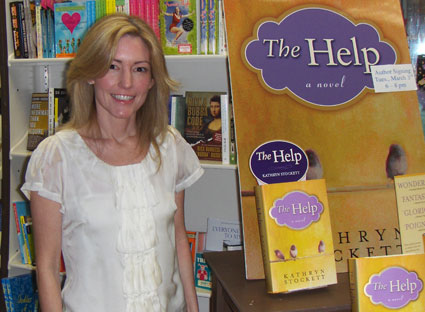
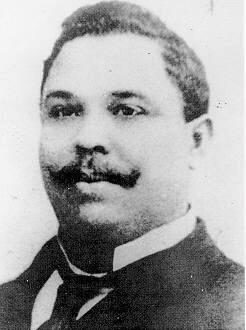
Recently I read two very different pieces of fiction back-to-back, THE HELP (2009) by journalist and author Kathryn Stockett and HEARTS OF GOLD by noted West Virginian scholar, J. McHenry Jones (reprinted in 2010 by West Virginia University Press).

Jones’ work, self-published in 1896 in Wheeling, West Virginia, is what might be deemed a “black message” in a “black envelope.” He was an Afro-American (his term) writing about black life in the North and South during the post-Reconstruction era. This was a daring undertaking for the (then) young principal of a school located below the Mason-Dixon Line. He took a risk when he pointed out, so to speak, the emperor had no clothes and then suggested how to dress him.

Jones, an erudite scholar and savvy, politically-inclined educator, created his cast of characters from the black middle-class, a departure from the slave narratives and biographies common in the day. His characters came in many hues, but all were intelligent, prospering, professional, educated, cultured, Afro-Americans. Fond of quoting Shakespeare and the Bible, they spoke with perfect grammar and diction and had elaborate vocabularies. He was a master of vaulted language and had a point to make.

His characters want to remain in America (no Africa for them) and live the lives of free people. The times are precarious. They recognize the weakening of civil rights laws, unpunished lynchings, proliferation of Jim Crow laws involving voting and transportation, false imprisonment of blacks, slavery-like conditions in the penal coal mine system, sexual harassment, and believe action must be taken. Through education, the church, lodge memberships, and friendships, they learn to use the power of the press to effect changes in the system as well as in public opinion.

What does HEARTS OF GOLD have in common with THE HELP, written by a young Southern white woman more than 100 years later?

THE HELP is set in the 1960s, one of the most brutal decades in our nation’s racial history. It tells the story of black female domestic workers as told to a white writer. It could qualify as a “black message” in a “white envelope.” It was a risky undertaking for a white woman living well below the Mason-Dixon Line. Her cast of characters is not from the middle-class. They are not pursuing professional careers. They are middle-aged domestic workers with the separate-and-not-equal education the South offered. Not protected by laws, they must ride in the back of the bus, drink from separate fountains, use separate toilets and are blocked from registering to vote. Basically, they have no civil rights. Their language is not vaulted; they don’t speak standard English or have perfect diction. By and large, they are decent, honest, hard working, religious, caring people, living the lives Jones’ characters feared would happen if Reconstruction did not live up to its promise.

Jones’ novel is his one published work of fiction and it does show promise. The same is true for Stockett’s. As I read, what struck me was how little changed in the interval between the eras and how glad I am to have both books to remind me.


***

My husband and I are snowbirds. We escape West Virginia’s winters by hanging-out in Gulf Shores, Alabama. When we pull into town, the first three places we stop are the mail box rental, the Winn-Dixie Supermarket, and the user-friendly Thomas B. Norton Public Library. Alabama’s libraries offer all kinds of interesting programs. I especially like the monthly book discussion groups. This year, THE HELP, a novel by Mississippi native and Alabama University graduate (Roll Tide!) Kathryn Stockett was the novel for March.

Unfortunately for me, all copies were checked out and the waiting list was 30 some persons long. It was the same at every other Baldwin County library. Even more frustrating, local book stores didn’t have a copy either. Clerks said it sold as fast as it came in. They added it was a “must read.” As evidenced by internet comments, it is a controversial novel. Set in Mississippi, it is the story of relationships between young privileged white women and their older and wiser black domestic workers, the help.

The novel is set in the shameful bloody 1960s, a brutal time in the history of this nation. I can still picture the disturbing images: the murder of Medgar Evers, Martin Luther King in jail in Birmingham and later leading a march on Washington before being assassinated in Tennessee. For me it was a decade of grief and disbelief: young American freedom riders murdered for trying to assist black Americans to register to vote, blacks unable to enroll in state operated universities, black Americans sitting stoically at Woolworth’s lunch counters while white Americans harassed them. I still shutter at the tragedy of three little girls losing their lives in the bombing of a black church.

Stockett, a baby when most of the events took place, used her imagination to create a novel around an untold peripheral story, the relationship of white boss-women and their black domestic workers. The novel opens in 1960, about the time its protagonist, a recent “Ole Miss” graduate, Eugenia “Skeeter” Phelan, returns to her parents’ cotton farm (read plantation) in Jackson, Mississippi. With no real need to work, she lands a very part-time position on the local newspaper. Her plan is to build her resume, move to New York, and write a novel. She has hope; an acerbic New York editor is willing to read some of her work if it is a subject Skeeter is seriously bothered by or passionate about.

Twenty-two-year-old Skeeter is not passionate about anything. She’s rather a dud as a “Southern Belle”– too tall, hair too curly, too studious, too outspoken, not subservient to men, not a clothes-horse. She’s also guilty of speaking to the help (she actually knows the names of her friends’ maids). She is quietly researching Jim Crow laws in various states.

She drifts back into a group of former “Ole Miss” sorority sisters, the ones who chose a wedding ring over a diploma. Like them, she joins the Junior League and the Daughters of the American Revolution (DAR). When not playing bridge or tennis, the clique spends time around the Country Club pool. Of course, Skeeter’s married friends bring along “the help” (read— intelligent black women paid less than minimum wage, women riding in the back of the bus and living from pay check to pay check) as babysitters.

Skeeter’s friends don’t seem to notice the murder of civil-rights activist Medgar Evers, shot in his own yard just a few miles up the road. They are too busy raising money for the poor starving children in Africa (PSCA) and other worthy-to-them projects, such as lobbying for a bill stipulating all newly constructed Mississippi houses include a separate bathroom for the help.

Skeeter begins to question life as she knows it: if the help is too diseased to use the family’s toilet, why are they allowed to toilet train the children and nurse them when they are ill? Why does the help prepare and serve lunch for the bridge club and contribute elaborate desserts for fund-raisers if they are so unclean? Why do they cook for the family and feed the children if they are so germ-laden? How does the help feel about using dishes and silverware set aside for just their use? Why do her friends act as if the maids are deaf to rude remarks?

Skeeter recalls her childhood maid, Constantine, and wonders what stories Constantine could tell about working for Skeeter’s mother. Intrigued, she approaches a friend’s bright maid, Aibileen, and asks to interview her, secretly of course. Skeeter promises to disguise the town as Niceville, not Jackson, and change all the names of the employer as well as Aibileen’s name. Out of fear, Aibileen says no, but when local and national civil rights incidents become more frequent, she changes her mind.

Being able to tell her own story proves cathartic to Aibileen, an avid reader, journal keeper, and would-be-author. She convinces her feisty friend Minny, the most frequently fired maid and the best cook in the state of Mississippi, to be interviewed. Before long, Aibileen and Minny find eleven more women, mostly from their church, who are willing to risk it all by telling their stories.

Over time, the three original collaborators complete the interviews, type and edit them, and mail them to the New York publisher. The publisher likes their unique approach to this hot timely topic and agrees to publish the interviews as a book written by Anonymous.

The understandably nervous collaborators don't expect the book to create much attention. Imagine their reaction when stores can’t keep copies in stock. When a local television personality questions if the maids and the employers in the book just might be from Jackson, every Junior League member rushes out to buy a copy, as does every maid.

Before long, the town’s citizens are irate. If these interviews were done in Jackson, who conducted them? And where? Whose maid said what? Local readers begin a guessing game to match local League members to the goings-on in specific chapters. The most shocking and titillating chapter is about a feisty maid getting even with a nasty untruthful lady-boss. Just who is this lady-boss? Who is the maid?

Stockett obvious took risks in writing this novel. It’s doubtful she will be invited to speak for a luncheon of the Jackson Junior League anytime soon. She also took a risk with language; some readers take issue with the fact her black characters don’t use standard English. That is true, their speech is Ebonics-like. But once readers get a feel for what Stockett is attempting, it might just work for them. It did for me.

Some readers call the language demeaning or irritating, some say it is insulting. To me, the black language is reasonable for middle-aged women raised in an impoverished ghetto-like section of a city in the Deep South. Most of the maids are said to be 40 to 60ish which means they were born between 1900-1920 and went to school around the time of the Great Depression. They had limited educational opportunities and were denied access to libraries.

Stockett is also criticized for imagining what black women felt during this horrific time. Isn’t that what fiction writers do, imagine? She did grow up in the South and I respect her for giving this era her imaginative reflections.

The book has flaws; it is a first novel. Unlike Lake Wobegon, where all the folks, at least the children, are above average, the novel is populated by a lot of nasty folks: social-climbing white women; women who can’t stand their own mothers or their own children; shallow men who drink too much and have questionable values.

The book is also a spectacular success. Dealing with a turbulent time and serious subject matter, Stockett makes events, some tragic beyond belief, more palatable by wrapping them in the events of daily life: babies are born, people go to church, couples fall in and out of love. Her humor helps. She manages to include some laugh-out-loud wacky situations, such as a decrepit naked exhibitionist’s visit to one of the boss-lady’s wooded yards.

Thanks to Stockett, the rights and wrongs of the era are more visible to a new generation in the guise of fiction. The novel is scheduled to become a Dreamworks film and more information is available at http://www.kathrynstockett.com.

Note: for a different viewpoint, look here.

SHORT RECOMMENDATIONS FROM MSW

Let me begin by recommending a small press memoir collection, Reamy Jansen’s Available Light: Recollections and Reflections of a Son. There are a lot of wonderful details of material culture of the nineteen fifties and early sixties here, and a memorable house that is the center of the family’s lives. The story is full of incident and suffering. But what is most striking about the book is that it manages to treat with delicacy material that would be, in another writer's hands, potentially melodramatic: an alcoholic mother, a distant father, the death of both of them, a threat to the eyesight to the narrator. I don’t mean that Jansen makes light of what is serious, but rather that he handles his stories in the way we are told to handle tender dough– gently, quickly, expertly: with a light touch. Jansen manages, for example, to present his mother’s frantic anti-Semitism in a perfect mix of light and dark, shocking and familiar, near and far, painfully sharp and almost lilting. How does he do that? I think there is an element of grace here-- both grace in its particular Christian usage of freely given and also in our everyday use of the word to mean a kind of effortless charm and beauty. Jansen’s language is graceful, and he offers forgiveness to the deeply flawed people in his past.

I also read and admired At Swim,Two Boys by Jamie O'Neill, a lovely book that makes me want to start talking Irish.The history of the 1916 Easter Rising is the background, but the real heart of the novel is the boys’ passion for each other, sexual of course, but also simply for the fullness of life through their love. One of the great triumphs of the book, in an entirely different vein, is the character of Jim’s Dad, Mr. Mack, who is a fool but also a man with a great heart. The novel builds toward a demonstration of the shocking arbitrariness of war. So much is so well done here: the delight and euphoria of patriotism, Doyler Doyle's working class cleverness and confidence. A book deserving of its reputation.

Another book that made me feel I was understanding a foreign language was the highly popular The Yiddish Policeman’s Union by Michael Chabon. I am really fond of novels that do alternative history well, as this one does. Chabon tries out a scenario where the Jews got invited, sort of, to come to Alaska just before World War II. In this version of history, a Yiddish culture develops in Alaska while the Zionists lose the 1948 war in Palestine. In fact, Roosevelt's real life Secretary of the Interior Harold Ickes did consider in 1938 offering Alaska as a haven for Jewish refugees from Germany and elsewhere.

After the novel's clever set-up, and once the reader gets used to the beautiful language that translates and (probably) makes up Yiddish syntax and slang (guns are called sholems), it is a Raymond Chandler-esque murder mystery. I lost the plot from time to time, but didn’t care much, as I was mostly in for the good humoredly depressed and drunk and lonely main character Landsman, his huge half native American cousin, and many more. I had the feeling that Chabon didn’t really decide who done it till the very end, but again, I could care less: it is a great ride.


POETRY MAGAZINE AVAILABLE FOR NEW OWNER

Editor-in-Chief/Publisher/Owner of award-winning international non-profit poetry magazine seeks individual or group or college to buy and take over all responsibilities including editorial. Possibility of some reading assistance from current associate editor, etc. for smooth transition. Interested parties contact owner ASAP at: poetrytown@earthlink.net .

READING LISTS ON HEALTH CARE LITERATURE

My friend and colleague Suzanne McConnell has been teaching literature and discussion courses for medical professionals, and her reading lists are terrific: Take a look here: http://www.suzannemcconnell.com/images/vanj2010.pdf and here: http://www.suzannemcconnell.com/images/umdnjsyllabus.pdf.

GOOD STUFF ONLINE

ABE.com books keeps coming up with fun lists: this time it’s Father and son writers:
Barbara Crooker reports a poem from her new book (see her new book below), "Ode to Chocolate," is on the Writer's Almanac for Saturday, April 24th. You can listen here .
Burt Kimmelman has a poem from his new collection AS IF FREE (Talisman House, 2009) that was featuredon The Writer’s Almanac on April 20th. Garrison Keillor read “Taking Dinner to My Mother.”

WriterSites has a lot of good info for writers: http://writersites.blogspot.com/

BEST OF THE WEB

Dzanc Books has published BEST OF THE WEB 2010 guest-edited by Kathy Fish with series editor Matt Bell. This is the newest edition of Dzanc's yearly anthology series compiling the best fiction, poetry, and non-fiction published in the previous year's online literary journals.

BOOK NEWS, CONTESTS, AND MORE

The Children's Book Council has nominated Peter Brown for Illustrator of the Year for his book, THE CURIOUS GARDEN. Congratulations, Peter!
A new picture book HISTORIC PHOTOS OF WEST VIRGINIA by Gerald D. Swick is now available. The volume shows West Virginia's cultural heritage by using lesser known historical photographs in a fresh way. For more information, see http://www.turnerpublishing.com/detail.aspx?ID=1933 .
C&R Press announces the publication of Barbara Crooker's new poetry book, MORE!
Whether writing about her son with autism, her daughter's traumatic brain injury, her mother's slow decline, or paintings by Matisse and Kahlo, Crooker grounds her work in the everyday moment. Divided into four sections with each exploring a different aspect of the word "more," these are poems of grace and gratitude that show "all of us dazzling in the brilliant slanting light." More information at http://www.wix.com/crpress/crpress .
Kal Wagenheim’s 1973 biography of Roberto Clemente will be re-issued in Summer/Fall 2010 by Markus Wiener Publishers of Princeton.

HEART AND CRAFT: A MEMOIR WORKSHOP FOR WOMEN, taught by author/journalist Anndee Hochman, will take place in La Barra de Potosi, Mexico. November 13-19, 2010. For beginning and experienced writers. Early-bird price is $1000 ($500 deposit due by July 1) and includes tuition, accommodations in the magical Casa del Encanto, six days' breakfast and dinner and all taxes/tips. E-mail aehoch@aol.com for details and application.

Open City's 2010 RRofihe Trophy Short Story Contest is now open. Limit: 5,000 words, winner receives: $500, trophy, and publication in Open City magazine. Judge: See the complete guidelines at http://www.opencity.org/rrofihe.html .

Monday, April 12, 2010

Books for Readers #130

Meredith Sue Willis's

Books for Readers #130

April 7, 2010

MSW Home
For a free e-mail subscription, click here.

Note: If you want to link to something in this newsletter,
you should use the permanent link here
rather than this page, which changes each issue.

Featured This Issue:
Jeffrey Sokolow's Reviews

Suzanne McConnell's Reviews
Carrie Tucker's Reviews

New Book by Lynda Schor
New Book by Ed Myers

I’m offering an ONLINE SUMMER SOLSTICE MASTER CLASS on June 21, 2010; June 28, 2010; July 5, 2010; and July 12, 2010. This is a class for writers who are already working on or trying to restart a project of prose narrative like a novel, a memoir, or stories. It is filling up fast, so if you want more information, fees, and how to apply, please see the website at http://www.meredithsuewillis.com/mswclasses.html.


Here are some short reviews by me, followed by recommendations from others. As usual, my spring is full of student fiction to read, public schools to visit, and – this year especially!– lots of family and garden and local political action. Thus I find myself depending even more than usual on recommendations from people. Recently, several books I’ve read have come via contributors to this newsletter, especially an old comrade, Jeffrey Sokolow (see his notes below), and from Shelley Ettinger (see her blog).

Shelley suggested FIRE ON THE MOUNTAIN by Terry Bisson, from the sub-genre of science fiction called alternative history. In this novel, John Brown’s plan for a nation of escaped slaves in the Appalachian mountains actually happens. Having just been through a couple of books about Brown and also the underground railroad, and also just passing the 150th anniversary of Brown’s raid on Harper’s Ferry, I was delighted with the concept. Bisson essentially creates his world just as Brown would have wanted it: Lincoln is a failure because his desire to hold the union together at all costs fell apart; the slaves not only win their freedom, but an entire nation, where everyone is called a “N’African.” My favorite parts are sections in the past. Bisson does very nicely with the fictional letters of nineteenth century people, good imitations/illusions of the style, and good stories– much better, I think, fact, than his more or less contemporary alternative world with the widowed pregnant black anthropologist and her teenage daughter. The Mars landing going on at the same time the characters are learning details of the past feels a little thin to me, the way well-meaning science fiction often does– but the civil war era letters and memoirs are beautifully wrought, and well worth reading.

Moving from alternative history to all-too-real history, I read at Jeffrey Sokolow’s suggestion THE CHANGING FACE OF ANTI-SEMITISM: FROM ANCIENT TIMES TO THE PRESENT DAY by Walter Laqueur. This is one of those brilliant short books from Oxford University Press, not officially one of their “Short Introductions,” but it has that same quality of a general lecture from someone of magisterial learning. Especially useful to me was the separation of anti-Semitism into categories: the garden variety xenophobia of ancient times and continuing (we hate everyone who isn’t us!) versus the religious anti-Semitism that followed the invention of Christianity (the Jews killed Jesus!) to the racialist anti-Semitism of the Nazis and others (Jews are a different, lower race!). It’s a brief, readable, and generally excellent introduction to the topic. My only objection, and I think this is a factor of its very compactness, was a sense of claustrophobia: everything is either about who hated the Jews, how they hated the Jews, or why they hated the Jews. For example, Laqueur only mentions black Americans in the context of black anti-Semitism, without even a nod to the ravages of slavery and racialism versus people of color. I also felt that when he laid into what he calls “left-wing extremism,” he tended to blend some figures who went over from left wing terrorism into right-wing terrorism (mostly Europeans) with people on the left in general. Also, while he explicitly does not equate criticism of Israel with anti-Semitism– he definitely stops short of that– he still drifts in that direction occasionally, or so it felt to me. It is, however, a really solid survey of a sad subject, and in the end you can’t ask it to be something it’s not.

Some good new fiction: Lynda Schor’s SEDUCTION is just out with lots of riffs on history and famous writers and others, and the love lives (mostly kinky) of Hitler, Pee Wee Herman, Ronald Reagan, Henry Miller, Grover Cleveland, and more. One story I especially like, “Footnotes,” written in short numbered segments, is about Anaïs Nin and ideas of writing about your life. She asks the amusing but also serious question: is it a real memoir if you have sex to enliven the writing, and does this make art of living or is it that you are living to make art? One very funny story has everyone having sex with Warren Beatty and discussing it. There are some domestic wrangles– family life with step fathers and new lovers, a soccer mom (actually, a swim team mother) who fantasizes (we hope) disasters in the real world as well as a disastrously public attraction to a boy with whom she swims and has sex in the locker room. Schor’s sexy stuff is both extremely vivid and always in service of an exploration of what is real and what is true– and whether those are ever the same thing. She frequently begins with something factual from the news or books, then goes off in a conventionally fictional expansion or elaboration of the facts, and finally– usually sooner rather than later– you realize we have gone way out there to the margins of the known universe. When these stories are at their best, and it is more often than not, you are thrilled to take the trip.

A new young adult novel that is, in contrast, frankly, deeply realistic and straight from memory, is Ed Myers’s FAR FROM GRINGOLAND. Myers is a world class story teller, and I got caught up and read for a whole evening, rapidly. The publisher is marketing this book as a novel, but it is clearly memoir or close to it. Still, I was glad for the classification as y.a. because it gave me faith that things would have a reasonably happy outcome, and I really, really cared about the seventeen year old boy narrator and the Mexican family he lives with for a summer. I don’t think I’ve ever read before about the tension between a person with some money and people with almost no money– people who are actually in daily contact and like each other. He handles this very well from the point of view of the young person just discovering the conflicts.

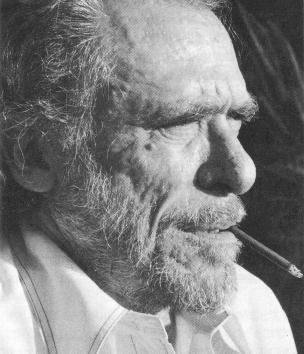
And finally, a couple of older books: From the twentieth century comes Charles Bukowski’s POST OFFICE, my first book by that California working-class Bohemian transgressor. What I really like is the bald-faced conviction verging on simplicity of his world view. So much of life and art is (truly) subtle and complex or even fuzzy, but this guy (at least when he’s sober) has clarity. The language is clear, what happens is clear. The book was recommended by a young woman in one of my classes who said she admires his work because he shows you can love life even when it’s crummy.

And from the nineteenth century– I reread Turgenev’s Fathers and Sons, (was this Shelley’s recommendation too?). This was like a new book to me. Turgenev didn’t approve of throwing out all the babies of Russian culture with the bathwater of modern science, but his story is the personal tragedy of an indulged but brilliant and attractive young boor who discovers that he is subject to emotions he has rejected as passé and unscientific. So whatever bourgeois ideology motivated Turgenev, it falls away. It’s not that art is better than saving lives or feeding the hungry, but that there’s no competition. The making of beautiful things, the telling of stories– these are as natural to human beings as songs to birds staking out their nesting territories.

—Meredith Sue Willis

BOOK EVALUATIONS BY OTHERS:

Carrie Tucker recommends two books. “The first is TELEVISION, by Jean-Philippe Toussaint. If you're not familiar with him, he's a Belgian novelist with a typical quirky Belgian/French style, combining philosophy and humor. I believe almost all his novels have been translated from French to English. TELEVISION is the story of a French academic living in Berlin, attempting to write his book on the artist Titian. He decides to give up watching television, as he feels it's interfering with his writing, and TELEVISION becomes a discourse on the interference of, well, television in our daily lives. It sounds dry, but it's very funny and engaging, I promise! TELEVISION is also a great...almost reassuring, perhaps....reflection on the difficulty of writing and all the things that distract us from it.

“The other book I'd like to recommend is THE TENANT by Roland Topor. Topor was a French illustrator, writer, and filmmaker - as a matter of fact, THE TENANT (published in 1964) is the novel that the Polanski film was adapted from. If you haven't read the book or seen the film, THE TENANT tells a rather creepy story of a young man who moves into a dead woman's apartment, and all the strange occurrences that he subsequently experiences. It deals with identity and how one perceives the concept of "self" - and again, that may sound rather dry, but Topor's writing is anything but.”

Suzanne McConnell says of KEEP YOUR HEAD DOWN by Doug Anderson, “Gritty, eloquent, smart, and inspiring. Anderson's memoir is like fiction at its soul-searching, page-turning, best. I can't put this memoir down. It will speak to anyone who's interested in the trajectory from self-bewilderment to actualization. It will especially speak to vets, baby-boomers, alcoholics, anyone in the arts. The section on Vietnam competes with the best literature about it: puts you there, makes you understand the fear, self-preserving mind-set, and disorientation. Anderson captures the sixties and seventies through his own odyssey. A terrific mix of the interior and exterior, his journey is hard won. It makes me want to keep on keeping on. A poet and actor, Anderson applies those talents as a writer. His ear for the right word, his concision and sense of dramatic timing are superb.”

And Jeffrey Sokolow writes about several different Odysseuses: “Ever since I first read it in high school, the ODYSSEY has been my favorite book, and periodically I reread the wonderful translations by Richmond Lattimore, Edward Fitzgerald, and Robert Fagles. I find recurrent pleasure in reading of the wily Odysseus, his travails in crossing the wine dark sea, and his many adventures. In recent years, I’ve taken to listening to the Fagles translation as recorded by Ian McKellen. What could be better than listening to the epic poem narrated by Gandalf himself? It doesn't get better.

“Although my kids loved me telling them stories from the Odyssey before they could read it, they did not share my enthusiasm when they read it in high school, as they found it alarmingly sexist that Odysseus got to sleep around with nymphs and sorceresses while Penelope had to remain pure. In vain did I point out that one cannot decline an invitation to bed an immortal and that ultimately the steadfast Odysseus rejects eternal life with an immortal beauty (and also the prospect of marriage to a nubile mortal) to return to his middle-aged matronly wife. Maybe they will see the romance in that when they are older.

“When I saw the rave reviews of the new book by Zachary Mason, THE LOST BOOKS OF THE ODYSSEY (Farrar, Strauss, and Giroux, 2010), I was eager to read it. While waiting for my local library to get a copy, I reread Margaret Atwood’s THE PENELOPIAD: THE MYTH OF PENELOPE AND ODYSSEUS (Canongate, 2005). Atwood's book is a clever feminist reimagining of the Homeric epic from the point of view of Odysseus’ wife, Penelope (or, to be more precise, from that of her spirit speaking to us from the afterlife). Instead of being the back story, Penelope’s life history occupies the central place while different versions of Odysseus’ adventures – did he force the sorceress Circe to restore his crew to human shape or was he really hanging out in a fancy whorehouse sponging off the madam? did he put out the eye of a monstrous cyclops or was he in a fight with a one-eyed barkeep over an unpaid bill? – flit in and out as backdrop to Penelope's life back in Ithaca. Atwood’s most daring act of literary revisionism is to imagine that the dozen maids who slept with the avaricious suitors and insulted their mistress were acting on Penelope’s instructions and that their deaths were thus totally undeserved. The spirits of the maids act throughout as a kind of Greek chorus whose satiric songs break up the narrative. THE PENELOPIAD is a clever, amusing, absorbing read.

“I wish I could say as much for Mason's book, but I confess that postmodernism is utterly lost on me. The clever conceit of THE LOST BOOKS OF THE ODYSSEY is that it comprises alternate versions of the story that circulated before the classic text as we have it was fixed. Thus Odysseus returns in one chapter to find Penelope married, in another to find her dead, and in still another to find her with multiple lovers whom she then kills. Odysseus sets out to recruit Achilles for the Trojan war, finds that he has died of a snake bite, and constructs a golem warrior following the procedure later used by Rabbi Judah Lowe of Prague. And so on and so forth. The writing is vivid, and some of the stories are memorable, but the overall effect is less than the sum of the parts. I'm probably a hopeless philistine but I was disappointed. Time to reread the original. You can't improve on perfection.

“Speaking of perfection, listen to Loreena McKennitt singing "Penelope's Song." O the joy.”


GOOD STUFF ONLINE


Shelley Ettinger on writing fiction with political impact: http://readwritered.blogspot.com/2010/04/back-to-question-at-hand.html
Tricia Idrobo’s blog The Power of Story http://triciafressolaidrobo.blogspot.com/
Elmore Leonard’s funny rules of writing, plus those of Margaret Atwood and others:
Rules of Writing .
Barbara Crooker poems at http://www.gravitypullsyouin.com/ and http://www.wordgathering.com/issue13/poetry/crooker.html

Amit Sehgal has a new site called COMPARE BOOK PRICES at http://www.bookase.comhttp://www.bookase.com . He says it’s a free service, allowing you to easily compare prices of any book among major online bookstores worldwide, and find a price which is 30% - 80% off the market list price.

NEWS, EVENTS, AND UPCOMING

Neva Bryan’s new book SAWMILL BOYS: POETRY & SHORT FICTION is just out from Brighid Editions. SAWMILL BOYS is a collection of 26 poems and two short stories that offers an earthy and sensuous glimpse of Appalachia: the place and its people. It honors the region’s landscape, explores its history, and reveals its culture. Learn more at www.nevabryan.com.
Mary Jane Hayes novel for children EMMA'S HOUSE OF SOUND is available. Learn more at http://www.emmashouseofsound.com.

A guest post on Dory Adams’ blog IN THIS LIGHT by Misko Kranjec’s guest post, “Lens and Pen as Mirrors, " Lens and Pen as Mirrors” was a semifinalist for the 3 Quarks Daily prize. Contest info and the ful list of semifinalists at 3quarksdaily.com.

Madeline Tiger’s latest collection of poetry THE ATHEIST’S PRAYER is coming out from Dos Madres Press in April. Madeline says, “The more I worked on assembling this collection, the more I realized how poems are prayers. These poems speak through visions and memories, through teaching experiences, folk tales, Biblical stories, and my responses to visual arts. Many of the poems are experimental in form and style; but the process is spiritual: the poems move toward what I can hold, and they teach me what to trust. It’s no coincidence that the title poem is a rush of language, a passionate declaration —of disbelief, and of belief.” Poet and critic Eric Hoffman called the title poem “stunning, emotionally shattering,” and he wrote “I could hear echoes of Ginsberg.” Tiger’s poetry has been praised by Alicia Ostriker, Gerald Stern, and many more. For information on ordering, see http://www.dosmadres.com

A reading of Dr. Rosary Hartel O'Neill's BLACKJACK: the Thief of Possession.
For more information, contact THE NATIONAL ARTS CLUB, 15 Gramercy Park South,
New York, NY 10003, (212) 475-3424 . National Arts Club
Reception to follow.
JOHN AMEN ON TOUR: 04/10/2010: Reading and in Kansas City, MO --For additional info, visit http://www.writersplace.org ; 04/11/2010: Reading in Asheville, NC – For additional info, call 828.254.6734.; 04/25/2010: Reading in Pittsboro, NC– For additional info, contact Sara Claytor: sclaytor@nc.rr.com .

Friday, February 26, 2010

Books for Readers # 129

Meredith Sue Willis's

Books for Readers #129

February 26, 2010

MSW Home
For a free email subscription to Books for Readers,
send a blank email to Readerbooks-subscribe@topica.com

Previous Issue: Article by Jeffrey Sokolow on the 50th anniversary
of the Greensboro lunch counter sit-ins and the beginning of the Civil Rights Movement

Featured This Issue: New and Recommended Small Press and Indie Books


Note: If you want to link to something in this newsletter, you should use the permanent link here rather than this page, which changes each issue.

I have a string of interesting but mostly unrelated books that I’ve been reading, many from suggestions in this newsletter. This first one is a re-read. My initial encounter with José Saramago’s BALTASAR AND BLIMUNDA was several years back. I was impressed, but as time passed, I would find myself thinking of it, and I’d exclaim mentally: Oh! I own that book! I can read it again any time I want! So I finally did. It’s quite beautiful, and has to qualify as one of my favorites, which does not mean that I was entranced at every instant and never skipped anything, It has magical realism and a very real early eighteenth century Lisbon and surrounding areas. There are small parts for historical figures, notably historical figures like the composer Scarlatti and an inventor-priest. There is a wonderful set piece on the Inquisition. At the heart of it all is the passionate, monogamous love between Baltasar and Blimunda, and their loyalty to the priest and his quixotic creation, the great imaginary flying machine. One typical Saramago touch is that Blimunda has a mysterious talent for being able to see inside people– quite literally, to their organs. She sees diseased organs, usually, and her special power is of absolutely no use to anyone. Woven among these elements are the self-recounted stories of dozens of working people who tell their lives, who run home to have sex with their wives, get crushed under carts carrying enormous blocks of stone. The stones are for a basilica being constructed because the king made a vow. The royals are slow-witted and pitiable, but their whims sow general destruction. The donkeys and oxen are charming; the friars are randy. Standing against all the suffering is the romance of the impoverished, illiterate lovers, one the child of someone caught up in the Inquisition, one without a left hand because of his service as a solider. I’m already starting to think from time to time, O, I can go back there anytime I choose and read in that world again.

Then I read William Gay’s PROVINCES OF NIGHT, which also has a certain amount of magical realism or perhaps tall tale, but I liked best the more mundane parts: the way the main character young Fleming Bloodworth walks down a hill or gets out of a car and just takes in the world around him: trees, hills, fireflies, cold air, smoky air, damp hot air– whatever. It’s farther south than the Appalachians where I grew up, but it smells like home. I especially loved the dialogue of the old men who sit around weaving stories and memories. The very end has, to my taste, a breakdown of the natural flow– a self-conscious assumption of the mantle of Southern Gothic style. Some of the violent stuff seemed just right– the fighting, the good old boy practical jokes that veer off into torture, and even Fleming burning down his house (the TVA is taking it over anyhow for a dam). I even believe Fleming’s father’s murderous rages, but the very end has a few too many portentous coincidences. But most of the novel is topnotch– like a comic character named Albright who starts out as humorous relief but takes on more depth and interest by the page. In other words, that which is character-driven in this novel, however bizarre, strikes me as superb.

A recommendation from this newsletter, nonfiction, was BOUND FOR CANAAN (see issue #126 ) by Fergus M. Bordewich. This is a history of the Underground Railroad from its informal beginnings through increasingly elaborate arrangements for getting people out of slavery. Most interesting, though not surprising, was the agency of the enslaved people themselves. The typical image in white people’s eyes is of kindly white Quakers helping poor terrified slaves, with maybe the exception of Harriet Tubman. Tubman, but in this book we learn about a fascinating variety of other enslaved and free actors of color:some are leaders, some lend a hand, some are heroes, some quarrelsome. I learned names like Josiah Henson and William Still and Mary Ann Shadd. I also learned about some working class whites like Jonathan Walker who got his hand branded SS for slave stealer, and about the many African-Americans both free and slave who went to Canada, where slavery was outlawed (slavery abolished in Britain and domains in 1833).

There’s a stimulating paragraph in the epilogue to the book about what amounts to the conflict between law and political movements that challenge the assumptions of the laws. Bordewich writes “While the Underground Railroad and the larger abolitionist movement clearly made a profound contribution to progressive politics by attacking racial discrimination and asserting for the first time that each individual had a personal responsibility for others’ human rights, it is less obvious that it was also the seedbed of religious activism in American politics. Most members of the underground uncompromisingly regarded their work as answering only a law higher and more sacred than those enacted by mere men. In this, they were hardly different from modern activists who today cite the same ‘higher law’ to justify their attacks against abortion clinics....The story of the Underground Railroad thus sheds light on, if it fails the answer, uneasy questions about what happens when revealed religion collides with a secular society that shares neither its politics nor its reading of the Scriptures.”(pp. 438-439)

I wish I had read this inspirational book after instead of before the extraordinary but depressing NAMING NAMES by Victor S. Navasky. NAMING NAMES is a book I’ve known about for a long time, a history of the Communist-hunting congressional HUAC hearings in Hollywood in the early nineteen fifties. It is essentially about the multiple ways people can cave in to political pressure, betray each other, and then argue he-said-she-said for their rest of their lives. Of course I’m glad I read it, because I knew so little about those days when anti-communism became the thing it ostensibly was fighting against:--thought control, spying, brow-beating people into ideological conformity. The emphasis in NAMING NAMES is on Hollywood, where many, many idealistic young people had joined the Communist Party in the 1930's for its unwavering support of civil rights and workers’ rights. During the second world war, the U.S. itself propagandized in favor of Uncle Joe Stalin– and it was only after the war, and with the beginning of the cold war (and of course the inklings of the Stalinist horrors in the U.S.S.R.) that things began to get really ugly.

This book mentions the big spy trials (the Rosenbergs, Alger Hiss) mostly in passing: the focus here is not on people who did (or did not do) anything illegal, but rather people who were accused of membership in a legal organization– the CPUSA. There was enormous pressure to admit their membership before members of Congress and then to tell who all they knew who had been members (the “naming names”). Then, for those who wouldn’t talk (the “Hollywood Ten” and others) there were jail terms for contempt of congress, and for them and many, many others, an informal but devastating blacklist– no work in Hollywood for Reds. Most important things I learned here: How all of the HUAC stuff was not about anything illegal. That the naming of names was about getting people to come up with names that the FBI already knew. That the naming was a kind of ritual, meant to force people to choose groveling and betrayal of friends to get on the right side and, then, maybe, be able to work.

One of the odd things was that I never could remember who were the good guys and who the bad– when I was a kid hearing about this, it was the reds of course who were bad, and then, when I became a lefty myself, it should have been the informers who were bad, but I never could get them straight, and this book makes it clear that some of the “heros” weren’t particularly nice, and some of the “stoolies” were tortured and pathetic.

Finally, I did some reading just for fun: MOTHERLESS BROOKLYN by Jonathan Lethem is a mystery starring a man with Tourette’s Syndrome. Lethem’s world of semi-gangster white boys from Court Street in Brooklyn is well-created world and highly entertaining. THE WHITE TIGER by Aravind Adiga, like THE RELUCTANT FUNDAMENTALIST (see #126) is a monologue novel in which a powerful voice demands to have us listen to his story. This character analyzes servant/master relations and some caste things in India, and the relationship between entrepreneurship, freedom, anger, and much more. Would be an excellent book group book for discussion.

And finally– I set myself one of my little professional tasks to see what The Public is buying these days. TWILIGHT, the teen vampire novel (and series) by Stephenie Myers, is a super best seller with an engaging first portion, then a trailing off. Some of the plot stuff (the vampire baseball game, for example, to which the good vampire family takes the non-vampire narrator and then the bad vampires smell her and start chasing her) seems clunky. The vampires self-segregating at their own table in the high school lunch room works well. The narrator’s boyfriend Edward is wonderfully perfect as he suffers controlling his urge to suck her blood– here’s this incredibly attractive and powerful male figure who cares enough to control his instincts/urges. That, along with the bright, practical protagonist makes this work, at least for one book's worth.


—Meredith Sue Willis


NEW AND RECOMMENDED FROM SMALL PRESSES AND INDIES

Marlen Suyapa Bodden’s new book THE WEDDING GIFT is the story of complex relationships among enslaved people and the people who hold them in bondage during the decade before the Civil War. The novel is told in the alternating view points of Sarah Campbell, a light skinned young slave woman who learns reluctantly where her mother goes at night as well as how to read and write, and Theodora Allen, the white lady of the plantation who discovers that her husband is both the father of her own daughter and of Sarah. The novel has a powerful momentum that drives it forward: How badly will Mr. Allen treat the women in his life? How much evil will he perpetuate on his slaves? Who is the black father of a certain young white woman’s child? Who will live and who will die? Will Sarah be able to use her intelligence and skills at last to make a run? The final quarter of the novel alone has enough plot material for another two books. In spite of horrors and suffering, this is a novel in which the human spirit rises up triumphant.
THE CALABOOSE EPISTLES by R.T. Smith is a varied collection of stories, mostly set in the Southern mountains. The stories have been previously published in excellent journals like TriQuarterly and Prairie Schooner and Story South and Southern Humanities Review. Some, like “The Pig is Committed” and “Against a Sea of Troubles,” are vintage Southern gothic combining humor, violence, tall tale, and exquisite romps of language. The writing is always brilliant, exuberant with word explosions that combine a modernist experimentalism with Appalachian richness of vocabulary and dialect: “Mussed and wizened but rat-agile.” he writes in “Rampskin,” a retelling of the fairy tale Rumpelstiltskin. The title story is a humorous tour de force in letters a woman is writing to a manipulative incarcerated man. There is another, more serious story about corresponding with a prisoner called “Correspondences,” in which a college professor corresponds with a convicted felon, and I especially liked the felon’s subtle fictions and persuasive writings. Several of the stories in the second half like “Red Jar” and “Ruminants explore relationships between a man and his significant (female) other, often having him follow some dead end path for a while before realizing he needs to return to the woman and the relationship.
Juanita Torrence-Thompson’s latest collection of poems is called breath-life includes a rich variety of poems including “Her Sweet Ear Flowered,” representing her exploration and compression, and “Aida,” a dramatic monologue about singing with Placido Domingo. I especially liked “My Soul,” where she writes in the first stanza: “My soul, a rhapsody/plays melodies at each stanza/each insatiable syllable.” She experiments with many forms, offers many delights. Check out a longer review at http://rattle.com/blog/2010/01/breath-life-by-juanita-torrence-thompson/.
Barbara Smith’s THROUGH THE GLASS centers on a time of crisis for Patricia Yokum Tazewell, a stained glass artist who is the heart of a tiny West Virginia community of new homes and diverse families. Patricia is a surrogate grandmother; mother of less-than-ideal children; and a woman with many men in her life, including the husband she loved passionately who died four years before this story begins. During the handful of spring days of the novel, she deals with her past, and her past mistakes, faces up to some unpleasant wannabe-gangster teens, the possible reappearance of an estranged brother, her daughter’s emotional deterioration, and a shocking death. It was a lot of fun to get to know Patricia– fun because she’s sixty two and desirable to several men, because she drinks and gets into physical altercations to protect her bipolar daughter and her property. Fun because her spiritual life is pretty equally divided between her dead husband and God. Pat faces everything that life throws at her with energy if not necessarily aplomb. The loose ends are not tied up neatly, but you finish the novel rooting for her and deeply pleased to have been invited into her rich and complex life.
And finally, from West Virginia University Press, Lee Maynard’s THE PALE LIGHT OF SUNSET. For a full length review, take a look at what Phyllis Moore wrote in APPALACHIAN HERITAGE Maynard writes better than anyone I know about how a boy is infused with the rules of American manhood. Maynard calls his new book a fictional memoir– a kind of heightened and imagined life that Maynard describes in the subtitle as “Scattershots and Hallucinations in an Imagined Life.” Organized chronologically from 1936 to 2005, it is a series of beautifully written short narratives. They begin with the story teller as a free-ranging boy in the mountains; he is then transplanted for a time to the mean streets of Baltimore, Maryland; then he is back in Crum, West Virginia– the scene and title of his extraordinary first novel. Many of the pieces here are about the boy and then man pitted against nature– sometimes inadvertently as in the horrific incident with the hornets (yes, it’s as bad as you can imagine), and then, as the narrator gets older, he sets the physical challenges himself. He braves trial by snow, desert, ocean water, and storm– and these are the bracing, honest struggles. The really ugly stuff (excluding those hornets) comes with his run-ins with various human low-lifes. I especially liked the story of the narrator against the quintessentially corrupt boss Frank Rizzo, owner of a swimming pool and dance hall called Dreamland. Here the youthful narrator is exploited in many kinds of hard work with extremely long hours– including night duty driving from West Virginia, a dry state, to Kentucky, where you can buy liquor. The narrator does everything asked of him, including escaping the police and swimming the river with his shipment of alcohol. Then he defies the boss he has just risked so much for and takes off once again. The persona Maynard creates, the experiences he offers us, make for a truly gripping book that you find yourself halfway through when you only meant to read a few pages.

READER RESPONSE TO ISSUE NUMBER 128

Dreama Frisk writes in response to Pamela Erens on FATHERS AND SONS: “I am reading FATHER AND SONS now. Erens is so right about Turgenev's clarity. My copy of the book has an intro by John T. Winterich who writes that Turgenev was influenced to write FATHERS AND SONS in 1860 after he met a country doctor in a railroad car who spoke of treating anthrax. In their conversation he came to understand that the doctor was a man of the people who had pulled himself up by his bookstraps. ‘Turgenev could recall no counterpart of his type in Russian fiction.’ By the way, I was led to FATHERS AND SONS after reading that Hemingway had commented on its importance to literature and on Turgenev's place as a writer.

GOOD STUFF ONLINE

Hamilton Stone Review #20 at http://www.hamiltonstone.org/hsr.html
Ed Davis’s new blog: http://www.authoreddavis.blogspot.com . Entries include: "Anatomy of a Reading: What I learned from a recent innovative literary event at Tipp City Public Library" and "August 13, 2009: More on Writers’ Workshops. Valuable or destructive? Should workshops “fix” poems and stories?"
An excellent interview with novelist Jane Lazarre at http://tommanoff.com/articles/4606/an-interview-with-jane-lazarre-2 is about her writing, about her father, a Communist and member of the Abraham Lincoln brigade, and about her African-American family.
Marc Harshman, poet and children’s book author at http://www.lauratreacybentley.com/apps/blog/entries/show/2733899-seven-marc-harshman
Also, see Laura Treacy Bentley’s webstie at http://www.lauratreacybentley.com/
Bob Feldman recommends a video of a talk with Q & A by Stefan Bradley that was broadcast on CSPAN. Bradley, as you recall, is the author of HARLEM VERSUS COLUMBIA UNIVERSITY. The URL is http://www.c-spanarchives.org/program/291160-1
Don’t miss Shelley Ettinger’s article in Workers World about the late Howard Zinn at http://www.workers.org/2010/us/howard_zinn_0211/
There’s a neat hour of music and discussion with Hilton Obenzinger from a Stanford University radio program. The music includes Haitian protest songs, lots from Barbara Dane, Al Jolson singing “Brother Can You Spare a Dime?” the Carter Family with “Keep on the Sunny Side,” Woody Guthrie, Josephine Baker, Michael Jackson, Paul Robeson! and much, much more. See: http://www.radio4all.net/index.php/program/39881

FROM PHYLLIS MOORE

“[The winter 2010 issue of APPALACHIAN HERITAGE] contains, as always, interesting articles, poems, and stories. Sandy Vrana has a terrific poem in the issue, and I (voluntary disclosure) have a review of Lee Maynard's latest novel.“Having just visited Hemingway's Key West home, I've been revisiting his work and ran across a statement he made about his ‘aesthetic theory and it fits well with a short story in A. H., ‘The Beauties of This Earth’ by Mark Powell. The first version of in our time (characterized by the lowercase letters in the title) was published by William Bird’s Three Mountain Press in 1924 and illustrated Hemingway’s new theories on literature. It contained only the vignettes that would later appear as interchapters in the American version published by Boni & Liveright in 1925. This small 32 page book, of which only 170 copies were printed, contained the essence of Hemingway’s aesthetic theory which stated that omitting the right thing from a story could actually strengthen it.

“My Hemingway search found this interesting tidbit about Hemingway's injury in WW I. http://www.lostgeneration.com/ww1.htm: ‘The explosion knocked Hemingway unconscious, killed an Italian soldier and blew the legs off another. What happened next has been debated for some time.' In a letter to Hemingway's father, Ted Brumback, one of Ernest's fellow ambulance drivers, wrote that despite over 200 pieces of shrapnel being lodged in Hemingway's legs he still managed to carry another wounded soldier back to the first aid station; along the way he was hit in the legs by several machine gun bullets. Whether he carried the wounded soldier or not, doesn't diminish Hemingway's sacrifice. He was awarded the Italian Silver Medal for Valor with the official Italian citation reading: Gravely wounded by numerous pieces of shrapnel from an enemy shell, with an admirable spirit of brotherhood, before taking care of himself, he rendered generous assistance to the Italian soldiers more seriously wounded by the same explosion and did not allow himself to be carried elsewhere until after they had been evacuated. Hemingway described his injuries to a friend of his: ‘There was one of those big noises you sometimes hear at the front. I died then. I felt my soul or something coming right out of my body, like you'd pull a silk handkerchief out of a pocket by one corner. It flew all around and then came back and went in again and I wasn't dead any more.'"

NEWS

Rick Rofihe of ANDERBO has announced the winner of the 2009 Anderbo Poetry Prize Is Nancy K. Pearson of Cape Cod, Massachusetts for her poem, “Prairies" (http://www.anderbo.com/anderbo1/anderprize2009.html). The judge was William Logan.
Halvard Johnson’s new poetry collection THE PERFECTION OF MOZART’S THIRD EYE AND OTHER SONNETS is available in an online edition at http://www.scribd.com/people/documents/14481250-chalk-editions
Shelley Ettinger has a story in a new collection called LIBERATION LIT, a massive collection of political literature. The link to the book’s website is Lit: http://liblit.org/ . To view it on Amazon, go here. Shelley writes a good block about the book at http://readwritered.blogspot.com/2010/02/liberation-lit.html
Daniela Gioseffi’s new book is WILD NIGHTS, WILD NIGHTS, a book about Emily Dickinson and “Master.” See information at Plainview Press.
THIS PLEASANT LAND: A BLUE RIDGE HISTORY by Max S. Thomas has just been published. The first half of the book is a 250-year chronological history of the middle Blue Ridge where Thomas lived for 92 years. The second half of the book is a collection of the author’s earlier writings on a variety of topics such as early music, the language of the area, early roads, the mountain economy, country stores, old-time tools, fences, foraging, early marriages, women and their lives, photography, weather, geology, critters and maladies that caused problems, passing on, old-time medicine, and communicable diseases. To learn more, go to http://www.HarvestwoodPress.com, email info@HarvestwoodPress.com, or phone (540) 745-3173.

ABOUT AMAZON.COM

The largest unionized bookstore in America is Powells Books. An alternative way to reach their site and support the union is via http://www.powellsunion.com. Prices are the same but 10% of your purchase will go to support the union benefit fund. For a discussion about Amazon and organized labor and small presses, see the comments of Jonathan Greene and others in Issues #98 and #97 .

WHERE TO FIND BOOKS MENTIONED IN THIS NEWSLETTER

If a book discussed in this newsletter has no source mentioned, don’t forget your public library and your local independent bookstore. To buy books online, I often go first to Bookfinder or Alibris. A lot of people whose political instincts I respect prefer the unionized bricks-and-mortar bookstore Powells that sells online at http://powellsbooks.com. More good sources for used and out-of-print books are Advanced Book Exchange at http://www.abebooks.com and All Book Stores at http://www.allbookstores.com/ . Both Bookfinder and All Book Stores both have a special feature that tells you the book price WITH shipping and handling, so you can compare what you’re really going to have to pay.
For more comparison shopping, you might want to take a look at CampusBooks.com , another free comparison shopping website for textbooks that says they search over two dozen bookstores to find the lowest prices in textbooks and more.
A couple of other ways to get books: I have used and like the paid lending library Booksfree.com. Also, check out Paperback Book Swap at http://www.paperbackswap.com/index.php , a low cost (postage only) way to get rid of books and get new ones! Also, check out Paperback Book Swap at http://www.paperbackswap.com/index.php , a low cost (postage only) way to get rid of books and get new ones!