Sunday, August 26, 2007
Vacation poem

My throat's as long as a great white pine:
Waves of goldenrod and Joe Pye weed
Take the long view, stand always firm


More vacation blogs....
August 25
Still at the lake...
Last night was damp and warm and I woke repeatedly sweating. This morning was damp and warm and while I wasn't sweating, I felt yucky and logy. The first five nights were cold, and I slept very well, Andy’s body in the small bed cozy and warm. But this is what I remember bad about summer nights up here– unpleasant, buggy, sticky.
The big excitement yesterday was that Greg came for an overnight! We put together a big dinner– corn from the Whooooah place down the road from Taft farms, takeout ribs from the new Shaky Jake’s, pasta with the remaining tomatoes, cupcakes and a mesclun salad from Taft farms, bakery bread of course. I loved the ribs. I get so hungry for red meat, and never even know it. I don’t know if those ribs, Jamaican style, are especially good, but I was especially hungry for them.
So today Ellen came, and Greg left, and we all spent some time in the lake, and then Andy and I went to see Rough Crossing at Shakespeare & Co. by Tom Stoppard, with Jonathan Croy, Jason Asprey, Elizabeth Aspenlieder, and Malcolm Ingram, hung around a while and saw the actors coming out, Andy talked to Croy, told him about Joel still remembering his Bottom (“I die! I die!”– which Joel at the age of 4 ran around acting out for months), Tina Packer strolling around. We stayed for the second half of Scapin. It’s such a wonderful wholeness, feeling like we know the company, comparing this Dream with Nigel Gore as Bottom to that one with Jonathan Croy, wondering why Jonathan Epstein has moved over to the Berkshire Theatre Festival, discussing with Ann what has been gained and lost with the move from the Mount (out of doors and hard to hear but child friendly and will there ever be kids like Joel and Nathan and Leah and Jennie who got to play around and enjoy what they could of Shakespeare at the Mount?). An important part of our time up here: we skip Tanglewood and go to as many of the Shakespeare shows as we can.
More of my comments of Shakespeare & Company 's productions here and here.
I'm really missing access (easy access) to the Internet-- I've begun mentally rehearsing settlng in at home, running a wash, etc. But mostly my Internet activities.
August 23
David and Ann and Nathan left yesterday, and today, Thursday, Andy and I went to Williamstown to the redoubtable Clark Museum where we saw The Unknown Monet: Pastels and Drawings. It was very interesting to read on the walls about his determination to be known as an open air Impressionist, painting out of doors, all color and light, but in fact turns out to have been a careful draftsman, maybe not as involved in his lines and hatching as, say, Rembrandt, but very serious about it. And his pastels apparently important in his development, the connection between color and line. There were several small pastels of horizontal landscapes that he made in his early twenties that were just spectacular, barely representational, showing sunset over water and three of the same same clump of trees to the right with field and sky central and left under different atmospheric conditions: just spectacular.
Also at the Clark, their new bequest of Constables, Turners, and Gainsboroughs-- who all turn out to be forerunners of the impressionists, Constable in particular with lovely splashes of color and sky. Saw one School of Rembrandt, beautiful face and hand, deep in shadows.
We hung out then in Williamstown a while, saw a student walking backwards in flip flops giving a tour to eager potential students and parents. I wasn't hungry (big breakfast at Uncommon Grounds) but Andy ate an Indian buffet lunch while I went down to a coffee shop called Tunnel City and got a cappuccino and a scone and used the wifi. Then we drove back down Route 8 via the touchingly turn of the twentieth century mill towns North Adams, Adams, and Cheshire. We got back, he biked, I nordic-walked and swam, and he's out taking a twilight turn on the lake with his motorboat to pick up a big chunk of floating styrofoam while I type this on the screened eating porch. It is all green this evening, the first day that hasn't been chilly, pleasant temperature, gray sky, green across the lake, green lake. Deep relaxation.
Wednesday, August 22, 2007
Grading Cleopatra
It seems that the Geller Weinbergers and the Willis Weinbergers went to entirely different performances of Antony and Cleopatra last night at Shakespeare & Company last night. David gave it a C minus (see his blog) and really didn’t like Tina Packer as Cleopatra; Nathan was disappointed, especially by the slo mo dance battles, which I found moving. Nathan gave it a C. Ann gave it a B minus and Andy refused to grade, but said it liked it. I agreed it was talky and static, (and for that reason it seemed appropriate that the battles were dance battles in slow motion), and I think it truly is in large part Shakespeare’s fault. I also agreed I suppose that Tina was too old, especially in the beginning when she’s kittenish, and then she becomes just teasing and with rather the style of an aging diva, but finally she convinced me, both of the performance it would be to be a queen, but also of how the character embraces being a legend, and stands up to become what she has been made and made herself. The love affair seems almost beside the point- and the history is, of course, assumed. What I took from this is that it is about being more than a normal sexual petty ambitious demanding or even brave person. It’s about being Great, or trying to be. Both Cleopatra and Antony (not to mention Octavius) are pretty unlikable. Somehow the play seems to me to be about creating your own immortality.
The most interesting question to me is why the five of us reacted so strongly differently: now David and Ann and Nathan had just been to see Midsummer Night’s Dream with a lot of the same players taking different parts, and they adored Dream, and I have to wonder that the fact Andy and I saw it weeks ago and weren’t really remembering the various actors from that– the mechanical who played Thisbe, for example, was brave warlike young Pompey here.
Antony and Cleopatra , much studied and not so much played, is a tough play, though. I was uplifted by Cleopatra’s rise out of spoiled (in many senses) sex kitten to bravely dying.
Tuesday, August 21, 2007
August 20
I’m on the porch again, everyone is in town, still cool, and grayer today. Dial-up internet access is poor at best, but I got messages from Joel and Chrissie and gave up on some others. I took the canoe out and since the wind was going what we call th "wrong" way, I canoed against the wind to beyond To-ho-ne Shores and coming back took a nice long drift with the wind and almost back saw a terrific great blue heron just standing in front of an empty house, moving just like Taxicab only a hundred times taller with the long neck and long beak, but the same silence in the face of danger, the intense stare. Beautiful animal.
August 19
At the lake, on the porch, the parakeet through the glass in the living room on my left, Andy on the beach in the sun, cool but not windy, glassy lake. David is out for a run, Ann and Nathan asleep or reading upstairs. Crows slip by on the other side of the point, silently aware of us as they go about their business. I’m pretty happy this morning, reading Ed's fantasy manuscript, although so far it has blessedly little magic/fantasy. Last night David made vegetarian Chinese with various things including my chard, Nathan and Ann celebrating shabbos. We had happy hour with some good wine and a discussion about drinking among teens and college students.
Now I've done my nordic walking and been out canoeing. Everything slows down for me, the pleasure of thinking over what I might do next. Drifting in the canoe, sun on my bare legs and forearms.
Monday, August 13, 2007
Tomatoes and Private Ryan

Tomato Season...the smoothness...the smell!
Andy and I finally watchedSaving Private Ryan. This is primarily interesting because we got the DVD from Netflix about eleven months ago and has been sitting around the house all this time. So we have a long history with the movie, starting with Andy bidding on an enormous framed poster of it, with autographs, and, when no one else bid, getting the darn thing, which hangs portentously in the stairwell.
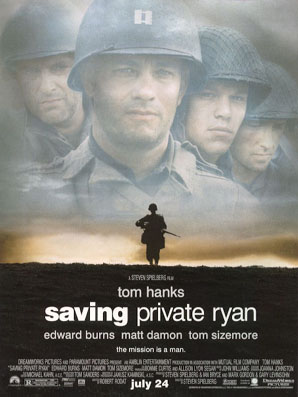
We knew we wanted to see it, but couldn’t get ourselves to sit down for a three hour war movie. People kept saying it’s the best war movie ever, that the opening sequence on Omaha Beach is a masterpiece, and if you can get through that the rest is easy, etc. etc.
You certainly see why it got the Oscar, and you certainly admire the acting. Tom Hanks is a real American master, and Spielberg too: the emphasis is on the American, though because in the end, it really is maybe the best ever but still a war movie like the ones I used to watch with Daddy in black and white late at night on t.v. This one was more realistic in any number of ways– the core group included a Jew and a hillbilly but no black soldier. It had lots of blood and gore and the suddenness of death, but at its heart it is (is Spielberg's work always?) that all-American combination of shocking violence and sentimentality.
There is one truly cheesy part too: the German that the intellectuals, Hanks and The Kid, let go (rather than allowing the working class G.I.’s to just shoot him like a normal redblooded American would want to do) shows up at the final sequence kills the people who said if they let him go he’d just go on to fight some more plus plenty of others. Then the weepy wimpy Kid kills him, but is still left with the full horror of how his “weakness” has destroyed his friends.
I’m not saying you should be kind to people who are trying to shoot you– if you’re in a shooting war, you have to shoot, and if your nearest and dearest are in imminent danger and you have the means of offing the attackers, who wouldn't do it?
But the fact that this German is brought back neatly at the end as a monster is what I consider prime Hollywood cheese. Andy said he didn’t think it was the same German (he liked the movie better than I did), but we went back and looked, and it was.
Spielberg, I'd guess, identifies with the intellectual Kid who doesn’t fight very well and ends up with much guilt.
Well, it was entertaining (which is also what makes it Hollywood) and fantastically realistic (more Hollywood) and the Omaha Beach sequence had me holding onto the arms of my chair to keep me from running away. All Hail Hollywood.
Wednesday, August 08, 2007
Boat Dream
The keys on the computer are sticky this morning. We had thunderstorms in the wee hours, sickly sun now, the fan on me, heat misery ahoy.
But I had a satisfying dream, not quite a free flying dream, but a nice one: a lot of people around, big trestle tables with food, some people at a labor demonstration, bright light.
And suddenly I was driving a tall motor boat, ocean-going style, around a lake. Rationally, it was the wrong location for this big boat, but it was easy to steer even in shallow water, and when I misjudged a turn and ended up on a grassy slope, I just sort of hopped out and pushed it back into the water as if pumping a scooter.
There was no motor sound, just voices of pleasant crowds of people. I was up so high in the bright air.
Tuesday, August 07, 2007
Early August...

Bridge over Troublesome Creek, Hindman Settlement School, Hindman, Kentucky: Beloved of Appalachian Writers, web spinning
spiders, and many others
August 7, 2007
I had an easy trip on Sunday, listening to the Coal music and to some lectures on literature and the law. Now I've got a lot to catch up on before we go away. I cleaned dead leaves and dust off the porches yesterday, but had a Coalition meeting and didn't do anything in the garden but pick cukes and tomatoes and basil and beans. I cooked the beans my mother's way-- well, not quite. I put a little butter in the bottom of the pan and sauteed them for a minute, then added hot water to cover and cooked for a while. They were good. Andy got corn at a farmer's market, and I made a salad of cukes in yogurt and garlic sauce. Also grilled turkey cutlets on the George Foreman. Anyhow, except for the heat, it's always good to be back in your own space.
Joel has signed a lease on an apartment in San Francisco. He was so happy and said, "Now I can sleep in on week-ends and I don't have to go apartment hunting!" It's in a former Catholic hospital: actually, his apartment is in the convent section!
August 6, 2007
Today in 1945: The nuclear weapon "Little Boy" was dropped on the city of Hiroshima, followed on August 9, 1945 by the detonation of the "Fat Man" nuclear bomb over Nagasaki. They are the only instances todate of the use of nuclear weapons in warfare, in this case, against a large civilian populations.
Monday, August 06, 2007
Appalachian Writers Conference
August 3, 2007
I'm in West Virginia after one of the magical Appalachian Writers workshops at the Hindman Settlement School. I realized when I stopped at a rest top on I-64, somewhere between Huntington and Charleston, that I was expecting the people smoking and buying drinks from the vending machines to nod and smile. I felt deprived of the warmth and welcome and general caring that underlie the serious work in poetry and prose that goes on there everything year.
Wednesday, July 25, 2007
Live Forever Now
Well, I'm heading for West Virginia tomorrow followed by the Appalachian Writers Workshop in Hindman, Kentucky. I'm teaching nonfiction, which I discovered I have more credentials in that I realized. I'm also working on a couple of Appalachian set stories, and my first villanelle maybe ever! Sort of a fun form, especially with the computer so it's easy to make small changes in the repeating lines.
This perfect crystal day with every perfect leaf
Cries, “I am here, I’ve always been–
Live forever now, no fear no grief.”
Sometimes the dim moist days continue in a sheaf
Until, replacing greasy orange and murky green–
This perfect crystal day with every perfect leaf!
But then I stop and think, It is so brief–
To which the brillant day says, so serene:
“Live forever now no fear no grief.”
The world-denying preacher’s firm belief
Dismisses my pagan day and her grand sheen,
My perfect crystal day with every perfect leaf.
Well, someone has to be a lying thief:
Preacher or the seductive day he must demean:
“Live forever, now no fear no grief.”
When we dwell on End of Days, there’s no relief
We’ll never own this white and green
This perfect crystal day with every perfect leaf.
Live forever now, no fear no grief.
Thursday, July 19, 2007
What We Don't Know
I'm working mostly at home today, and found this beginning-of-an essay:
It is largely blank, or at best some misleading pages, the story of the years ahead of which Novels, movies, and certainly the advertisers and other students of commercial So when we continue on (the human female I'm told is unique in living many decades beyond her fertility) what is driving us? Partly the habits we learned early on, but also the wonderful generalizing ability; the drive (am I fooling myself here?) to do more for those future generations, one's own descendents, one's own species, perhaps one's own biosphere. This is my old tune, long may be sing it: learn to make your natural survivalist selfishness include greater and greater circles of beings.
See my brother-in-law's blog entry on getting older: http://www.hyperorg.com/blogger/mtarchive/older_than_lennon.html
|
Saturday, July 14, 2007
New Connections Via the Internet
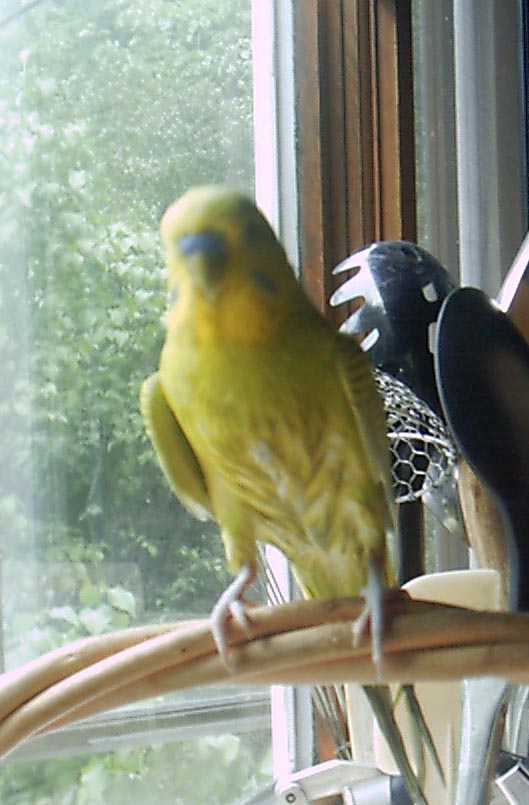
Hot weather--wet parakeet
Joel and Sarah spent a night with my sister and by all accounts (Joel on cell phone as Sarah drove north, Chrissie by email) it was a happy visit. Joel especially liked the plums that grow in the backyard in San Luis Obispo. They didn't get into Hearst Castle-- too late for reservations-- so maybe if and when Andy and I go out to visit we'll do that with them and see Chrissie and Goro and Alex too.
This is Saturday morning, and Andy is off to run the two town bike ride. I’m trying to get the desk in order, and particularly papers “graded.
I’m increasingly getting from people with personal requests, usually for free critiquing. My writing exercises are now first up if you Google for "writing exercises." I'm proud and astounded, but on the other hand, so far this has translated into no money and various requests for help. This interests me a lot. It is partly an entitled people (I have a lot of trouble with that word: half the time it has to be shaken loose from my head– I get “privileged” but not the one I want, “entitled.”) It’s also partly, of course, how easy and low-risk and email is, but also the intimcacy that the internet fosters. The person doign the writing exercises feels close to me, as if I were an aunt or the lady down the street.
So many things are made easier by email and the internet– getting speakers for Ethical Culture is smoothed out by email, many kinds of quick thank yous and responses, and the instant gratification of photos and sharing an article you read. The down side, pretty obvious, is how easy it is to toss off an angry or ill-considered response to something, to forward a clever comedy routine or ugly political attack to hundreds of people (the virus effect).
I’ve resumed relationships in a meaningful way through email with certain people, but then there are all the strangers asking for free responses, free critiquing, free friendships. It is going to be really interesting to see what shakes out in politics and publishing. Those are the arenas I see most in flux: people writing letters and calling each other on the phone is something we’re familiar with, although maybe I' m underestimating the importance of this part-- I don’t use MySpace (although an article in the Author’s Guild publication suggests maybe I should– some genre authors are really using it in a lucrative way). Maybe I’m missing the friendship web side of this.
One odd thing: I avoided having a color CRT and internet access on my computer for a long time for fear I would lose the magic of my computer as a place for writing alone.
I was right: it is suddenly a place where I teach, shop, interact from people, get political pleas, do all kinds of business. And it is indeed a problem to be so connected and less deeply private to follow my own internal tunnels and shady byways. And yet–and yet– I also feel those voices welcoming me, that I am part of something very real, all around.
Wednesday, July 11, 2007
Heat, Riots, Literature
The heavy heavy heat is modified today by an overcast sky, which makes my office less of an oven, so I'm here today, having spent much of yesterday downstairs with my NYU papers. NYU is tonight, and I've also got a well-subscribed online class underway, followed by Hindman, so altogether it is not a relaxing, let-your-mind wander summer. I'm making a little money, working pretty hard also for the Coalition and the Social Action Committee at Ethical.
Yesterday I also cut grass and biked (slowly), but the extreme heat, up to 95 degrees Fahrenheit or so, doesn't seem to bother me when I'm active, just when I'm sitting at the computer.
There's a really interesting series in the Star-Ledger about the Newark Riots/Rebellion/Insurrection of 1967, just 40 years ago at which point I was finishing up my year in Norfolk as a VISTA volunteer.
I'm reading Orhan Pamuk's Snow, and it is an admirable book, but I'm getting a sense of it's going on too long. Or is it me with my lack of patience for books (see the article in todays New York Times about how Harry Potter fever has not translated into children reading other books). The whole changeover from books as the major form of entertainment is tough going for those of us with marginal careers in literature. On the one hand, if the publishers were making the right connections to small reading publics, we'd probably be doing as well as we were ten or twenty years ago, or forty, but they're not--they're still after the block busters. I'm going to do an issue of my newsletter on this.
Sunday, July 08, 2007
Midsummer Again
At Lake Buel
It looks like a hot day, a scorcher maybe, coming at us today. The others have gone to town or perhaps biking, not sure, but it’s me and the parakeet this morning. Andy and I went to Shakespeare & Co.’s latest Midsummer’s Night Dream, rather unhearalded and with a no name cast, except for their new star guy Nigel Gore who did Claudius in their Hamlet last year. They all seemed good enough but somehow uninspired (how could they keep doing this play, especially without the magic of the white pine woods behind Edith Wharton’s house? With how many times they’ve done this) but there was something strange anyhow, even in the first half, I was aware that I was hearing the lines. I’ve been getting better and better at hearing Shakespeare, but last night, it all kind of opened for me, as if an undistinguished but competent production had somehow cracked the code for me and opened the language.
I’ve been seeing more and more Shakespeare and I listened to the cd’s too, with a lot of focus on lines of course, but last night I heard it, Andy did too, said he heard the rhymes. And the second half, after having half a coffee and some trail mix, I began to like the production too. The Helena and Hermia were excellent and their boys athletic and silly, Nigel Gore was an inspired Bottom, the coarse and randy Puck had a good time and so did we. Anyhow, it was a happy experience, nose bleed seats and all.
Calm lake, and I have the homesick feeling, wanting to get back to work. Sometime yesterday it hit me that the solution to my problem of too much to do is simply to suck it up: I'm teaching for the next two days, and doing Coalition stuff. Period. Won’t write, because I’m working. Be glad I don’t have to get up early in a panic and work. At least these will be at home. In the heat. But if I have to, I’ll work in the bedroom with a.c.
Thursday, July 05, 2007
Food Court WiFi
Ah the wonders of technology! Andy and I are sitting at a table in a food court at the Prime Outlets in Lee, Massachusetts with a diet pepsi and free wifi. We had brunch at Norm and Nancy's in Otis, rather more of an adventure that we expected because as we drove the mile and a half from the paved highway we came across a dead tree fallen over the road, suspended on telephone wires! We called them by cell, climbed over the tree and started walking, and I simultaneously got a phone call from the Coalition and we began to be chased by two large black labs-- well, I exaggerate. They were actually just friendly barkers. THen Norm picked us up and we had delicious Challah french toast, enjoyed their house in the woods, and now we're here, buying walking shoes and doing email!
Tuesday, July 03, 2007
Keeping in Touch...
Well, with the wonders of cell phones, Joel has been in touch through West Virginia and Tennessee (they stayed in Memphis and went to Graceland this morning-- even liked the banana flavored Reese's cups ). Tonight they plan to stay in Oklahoma someplace, then make a run through Texas to Flagstaff and go to the Grand Canyon and Sedona. It sounds like a great trip, and eveyrone is cheerful. The crying seems to be over for the moment, and I do have to say that cell phones are helping. Andy and I are heading north tomorrow for the lake, taking the parakeet. That should be interesting.
Saturday, June 30, 2007
Into the Sunset
June 30. 2007
Tomorrow's the day-- Joel and Sarah drive off into the sunset, road trip to California, Grand Canyon, Sedona, Los Angeles, San Luis Obispo, San Francisco. I've already cried once. Why is this so much harder than him going to college or camp? Because it's all the way over there.
Friday, June 29, 2007
Newsletter # 96
Newsletter #96
June 29, 2007
Let me begin with two happy items of personal news: My article “How To Get a Novel Started” has just come out in the July issue of THE WRITER (Volume 120, Number 7). THE WRITER has been around a long time, and if you read a couple of their issues, you can quickly pick up a sense of the general vocabulary related to writing. They also pay their contributors, no small thing in this present publishing atmosphere. My second news is that my most recent children’s novel, BILLIE OF FISH HOUSE LANE, has been chosen as the Two Towns One Children’s Book Read in Maplewood and South Orange, New Jersey.
I’ve been thinking a lot lately about how so many people write, and why they keep writing, usually with no promise of financial recompense. One of my theories is that we are talking back to the books that have moved us. In my own case, I think sometimes I write because I developed the habit when I was about seven and have always had enough personal satisfaction from it to keep going, however badly fame, glory, and financial gain were progressing. Please email me with your thoughts on the subject.
This Newsletter takes a look at writing and reading in our schools. First, I have some notes from fifth grade teacher Matthew Young about the redoubtable Lucy Calkins and her method of teaching writing, used in many classrooms around the country. Matthew talks about why it works for him. Calkins, Matthew explains, has broken down the steps of writing to make it less of a mystery and more of a teachable subject, so even if you like to think in terms of inspiration and the Muse, it is still of interest, in my humble opinion, how we can in a practical way, make strong writers of our students.
Next comes a transcript of an email discussion started by Phyllis Moore and enriched by several of her regular correspondents on the so-called “issue” fiction for young adults: how rough does reading for young people get these days? Finally, this issue ends with recommendations for your reading and announcements.
–Meredith Sue Willis
MATTHEW YOUNG ON THE WRITING PROCESS
Matthew Young, a 5th Grade Teacher in Ossining, New York, used to teach 4th grade at P.S. 75 in New York City, the school where Phillip Lopate led a team of us back in the nineteen-seventies in working with kids on writing and making movies and even comix. Matthew praises Calkins for making writing and the teaching of writing work better for thousands of teachers and children.
“One give-away that Calkin’s writing process is going on [in a classroom],” says Matthew, “is the presence of Writer’s Notebooks. Also, charts or other prominent displays helping students keep track of where they are in the process, e.g., drafting, conferring, revising, publishing, etc. Then look for chart paper hanging from clotheslines with shared writing pieces or other examples of writing strategies written in the teacher’s hand, plainly visible for all to see. Look for ‘Mentor Texts.’ Writing centers and places for students to confer with each other are not uncommon. Students may be actively engaged in conferences with the teacher and with each other. Some may be writing in ‘writing nooks,’ places in the classroom that are not their desks. Further, teachers who do this are generally very happy to talk about it and will volunteer the information when asked (and sometimes when not asked).
“At conferences I’ve heard from Lucy and from her colleagues that the Process, ,which is in a continual state of revision, derives from careful consultation with professional writers about how they do what they do. The ‘writer’s notebook’ is a very useful tool for gathering and developing ideas for writing (fiction, non-fiction, drama, or poetry). Naturally, many professional writers do not use an actual notebook, but most do have a way of recording and keeping track of ideas as they occur (e.g., a laptop computer, or scraps of paper in pockets that then go into a file at the end of the week). But for kids, an actual notebook is very useful and manageable. Furthermore, most professional writers likely do not keep a chart in their home offices with a clothespin to indicate which stage of the process they are in—obviously, mature writers are constantly in flux between drafting, revising, conferring, in no particular order and often simultaneously. One goal of the Writing Process is to help children understand this. But most children will not do this naturally, and need explicit instruction on how it is done.
“Another goal of the Process is to cultivate an understanding and appreciation of structure. For example, non-narrative writing can also be described as ‘idea-based’ writing; that is, a non-narrative piece (article, essay) is organized by idea: controlling ideas and subordinate ideas. Narrative writing (memoir, fiction) is controlled by time (a story moves through time, and there is a focus on “traditional European story structure”). Students read and write literature through those lenses.
“The most powerful teaching technique I have used from Calkins and her colleagues happens during revision. You write your piece, and then take a particular writing strategy for consideration. Some writing strategies include dialogue, sensory details, setting details, metaphoric language, flashback, flash-forward, foreshadowing, and so on (you have to admire the rigor). So, let’s say for the sake of argument I want my students to learn how to use setting details in their writing. Mini-lessons and mentor-text studies will ensue during which we study setting details. We read for them, we conduct guided reading groups on them, we notice them in our read-alouds. Meanwhile, in Writing Workshop, as you re-read your piece, you look for opportunities to insert setting details. You mark up your draft with them (professionals do this, no?). Then, for your next draft, you work them in. Then do the same with another strategy.
“As we get older we are able to hold and work with many strategies in our heads at once. With early- and middle-childhood students, we teach strategies discretely, adding tools to their tool boxes. This methodology has been successful for my students because...
...it’s highly engaging;
...it’s rigorous;
...it’s manageable for the children;
...it builds their independence (‘Teach the writer, not the writing;’ ‘give a man a fish...’)
...it’s at heart a flexible framework that can accommodate a visiting artist, and his or her vision of writing, quite well.”
PHYLLIS MOORE STARTS A DISCUSSION ABOUT YOUNG ADULT ISSUE NOVELS
Phyllis writes: “For several years I've been a judge for Letters About Literature, a West Virginia Library Commission contest for WV students. The students read any book/s they choose and write letters to authors about how a work impacted their life. Up till last year, I'd often read the books: LORD OF THE FLIES, OF MICE AND MEN, HEART OF DARKNESS, MISSING MAY, THE DEVILS ARITHMETIC, etc.
“Now the titles are less familiar to me but the letters are just as compelling. Intrigued by the letters, after the contest ends, I spend some time reading the ‘new to me’ books. The topics are so 2007: high school kids planning when to lose their virginity and to whom, rapes occurring in school and at other places, sexual abuse by parents and others, anorexia, cutting, drug and alcohol abuse, fractured families, bullying, poverty, teens ‘coming out,’ gay sex, AIDS, ‘pharming,’ etc. One of the letters this year was to Gail Giles, the author of SHATTERING GLASS. In the novel a senior named Simon Glass is beaten to death by classmates in a room at the high school.”
Carol Del Col responded : “The list of topics...is chilling. Signs of the times, indeed, but just exactly what kind of signs is not clear to me. I really have no answers, only questions. Are these books reflecting the  reality of 21st-century American adolescents? Or are they exploiting the headlines to provide the kind of sensationalism teens often crave? Do they contribute to a growing desensitization of our young people to violence? Or do they teach our young people compassion for those who suffer or are different? Are the books the result of a tendency to eschew escapism in literature? Or are they instead a form of escapism, a way to take teens out of what they perceive as their boring, sane lives in which nothing headline-producing ever happens?
“I'd like to think the books are exploitative rather than a reflection of reality; it is simply too dreadful to think that American adolescents are inhabiting--or even perceive themselves as inhabiting--such a reality. But here's another interesting question to consider: the classic literature traditionally read by high school students includes ROMEO AND JULIET (teen suicide), JULIUS CAESAR and MACBETH (betrayal, murder, violence), HEART OF DARKNESS (primal evil), OLIVER TWIST (cruelty to and exploitation of children), etc., etc. I believe there is a difference between these themes and the topics of the adolescent literature you describe, but can we articulate this difference? As I said, questions, no answers. But I must tell you I long for the days of Nancy Drew and Trixie Belden! Innocence lost, indeed.”
To which Phyllis replied: “Yes, the books of the past cover some of the same topics. A SEPARATE PEACE and the death of a young boy, BRIDGE TO TERABITHIA and the death of a young girl, GOODBYE, CHICKEN LITTLE and a drunken uncle. Somehow it seem today's Y. A. books are more in-depth-nasty. Having taught in a high school, I know kids face all these nasty situations and sexual issues. I do think they speak to the issues that are of concern to them and I do think the present generation's life is more difficult than mine was.”
Phyllis went on to say: “In 1994, I did a voluntary program of my own invention, dubbed ‘Read to Win,’ in a local technical school serving high school students from three WV counties. Two of the counties are quite rural. For the contest, the students chose something to read from a specified genre each week. They wrote comments about what they read and turned their work in for a chance to select prizes such as a fishing pool and reel, makeup kits, basketball, game, calculator, etc. The weekly winners were photographed and featured in a news article in the local paper. The program ran for six weeks and over 600 reports were turned in By and large the kids chose to read ‘issues’ fiction. The most popular topics were pregnancy while in high school, drunken relatives, sexual situations, grandparents in nursing homes, and divorced families. For the contest, I had books and magazines available by Appalachian authors with a heavy emphasis on WV authors but students could choose any books or topics. The favorite novel was GOOD-BYE CHICKEN LITTLE by Betsy Byars. It has an Elkins-like setting and features a low income family. The father was killed in the mines, the mother didn't know how to drive, a favorite alcoholic Uncle accepts a dangerous dare (to walk on an icy river) and ends up dead, and a grandparent is placed in a nursing home. In poetry the students really liked the poems about low-income kids or abused kids. A favorite poem featured a girl having a baby on the school bus.”
Other comments: June Berkley wrote, “This is disconcerting, to say the least. ....The trend is sad. I can recall when Judy Bloom (with whom I participated in a censorship film, by the way, in Atlanta under ALA sponsorship ….) had such a shocking effect by even approaching a sexual theme on the more obvious level, nothing explicit or sordid, just real….What have we come to! “
Brenda Seabrook said, “I think this trend in YA lit started with Robert Cormier's last book & has continued. There is probably still room for books that don't go into all those problems but the genre became more elastic to encompass the reality of life.”
And Carol De Col added, “Yes, I think the current trend in adolescent literature did begin in the 1970's, and Cormier may well have been one who led the way. I had heard of his books--they came out about the time I was taking some post-graduate work in curriculum and instruction. There was controversy even then about the teenage ‘problem’ novel. Cormier's work probably looks pretty tame today.”
AND SOME RECOMMENDATIONS FOR YOUR (ADULT!) READING PLEASURE
Ardian Gill wrote to say: “I just finished two depressing and brilliant books: Cormac McCarthy's THE ROAD, and JM Coetzee's THE LIFE OF MICHAEL K. Both deal with a journey in a difficult place, McCarthy in an imagined landscape of a devastated, ash covered planet, a man and his son trying to survive and to reach a place where they can live, though they have no information that such exists. The purpose is in the journey itself. The language is spare and poetic, often the poetry of repetition Similarly, MICHAEL K deals with a wanderer in apartheid South Africa, also trying to find a safe haven in a hostile environment. And, too, both have a parent/child relationship, at the heart of it in McCarthy's case, though the protector and protected roles are reversed. Coetzee's language is lean and also poetic, and he introduces a first person narrator in the middle of the book, returning to third person for the final act. Both books end sadly with yet a note of hope.”
Eva Kollisch said, “I read something that everybody else has probably read
years ago, BEL CANTO, by Ann Patchett, a lovely, musical, subtly radical book. I also read something, having been put to shame by my grandson, which everybody else probably read when they were in high school--TO KILL A MOCKINGBIRD.– a fine, courageous, sweet story.”
GOOD NEWS!! GOOD BOOKS!!
Kevin Stewart’s new book, THE WAY THINGS ALWAYS HAPPEN HERE is just out from WVU PRESS:
READ IT ONLINE!
THE PEDESTAL # 40 is now online (http://www.thepedestalmagazine.com/) .
More of Carole Rosenthal’s memoir in the current issue of THE PERSIMMON TREE!
Wednesday, June 27, 2007
Smudged Weather
Well, we'rre having the real thing with the weather. Up here in my office, even with the fan directly on me, it is pretty hot and sticky, miserable may be the operative word here.
I had a note from Chiaki Achiwa to say they are back in Japan and have an apartment now. She says it is extremely humid in Tokyo. I wrote back about how we had about days of beautiful sunny crystalline weather, but now everything looks 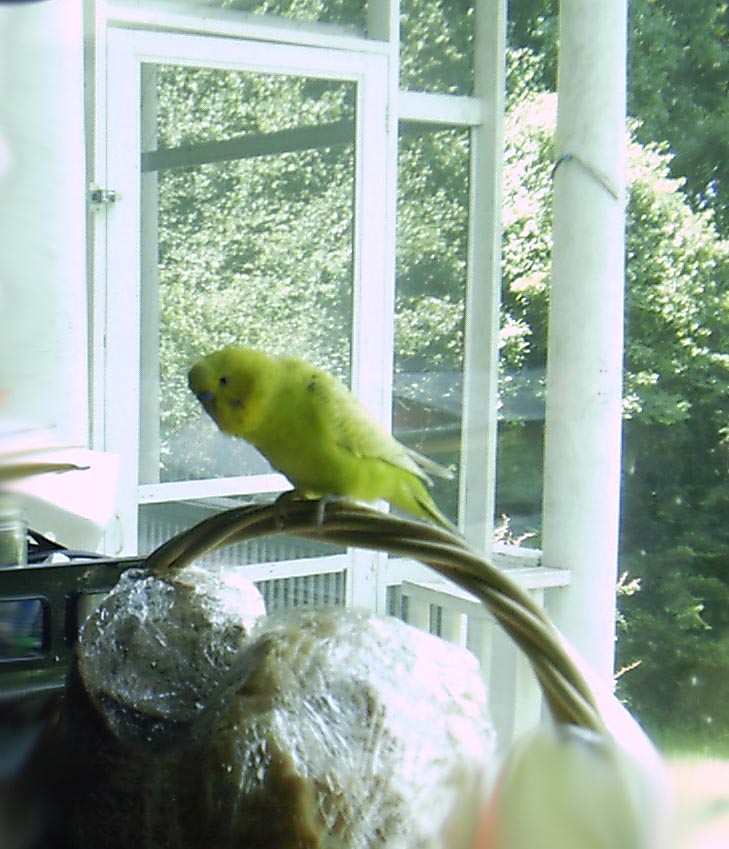 smudged and ominous. Or is the ominous only how I feel about the coming discomfort. Well, we apparently have some more of the nice weather coming next week– it’s a typical sequence here in the great Northeast, miserably greasy greenish yellow days followed by the ones that are as brilliant as jewels, usually with some thunder storms to mark the changeover.
I think it’s the way weather should be! And don’t understand why people want to live in stupid old perfect California anyhow.
This would be about how I feel about Joel moving out there. He’s going to be working for Sun Microsystems for a year and then going to Berkeley for a Ph.D. At least that’s the plan. And I’m having a rough week while he packs and meets with movers and then on Sunday, he and Sarah start their road trip across the U.S. of A. I'm feeling pretty smudgey myself about this.
Friday, June 22, 2007
Writing process, My Mother in the Hammock
THE WRITING PROCESS
Matthew Young, a 5th Grade Teacher in Ossining, New York wrote about Lucy Calkins’ popular Writing Process on the Teachers & Writers Listserv. Matthew, (who used to teach 4th grade at P.S. 75 in New York City, the school where Phillip Lopate led a team of us young artists to work with kids writing and making movies and even comix), praises the Process , is a system of teaching writing to school kids. I used to have mixed feelings about her work, which systematizes (and is sometimes overly rigid about) things that many writers prefer to have left mysterious. But of course what Calkins does is make writing and the teaching of writing work better for thousands of teachers and children. Also, as I’ve gotten older, I’ve become less impressed with the Romance of Art and more impressed with things that actually work. Anyhow, Matthew explains the Calkins’ Process and how it looks in a classroom in a way that it seems to me suggests some ideas both for teachers and for writers, especially those who go into classrooms:
Matthew says: “One give-away that Calkin’s writing process writing process is going on [in a classroom] is the presence of Writer’s Notebooks. Also, charts or other prominent displays helping students keep track of where they are in the process, e.g., drafting, conferring, revising, publishing, etc. Then look for chart paper hanging from clotheslines with shared writing pieces or other examples of writing strategies written in the teacher’s hand, plainly visible for all to see. Look for ‘Mentor Texts.’ Writing centers and places for students to confer with each other are not uncommon. Students may be actively engaged in conferences with the teacher and with each other. Some may be writing in ‘writing nooks,’ places in the classroom that are not their desks. Further, teachers who do this are generally very happy to talk about it and will volunteer the information when asked (and sometimes when not asked).
“At conferences I’ve heard from Lucy and from her colleagues that the Process (which is in a continual state of revision) derives from careful consultation with professional writers about how they do what they do. The ‘writer’s notebook’ is a very useful tool for gathering and developing ideas for writing (fiction, non-fiction, drama, or poetry). Naturally, many professional writers do not use an actual notebook, but most do have a way of recording and keeping track of ideas as they occur (e.g., a laptop computer, or scraps of paper in pockets that then go into a file at the end of the week). But for kids, an actual notebook is very useful and manageable. Furthermore, most professional writers likely do not keep a chart in their home offices with a clothespin to indicate which stage of the process they are in—obviously, mature writers are constantly in flux between drafting, revising, conferring, in no particular order and often simultaneously. One goal of the Writing Process is to help children understand this. But most children will not do this naturally, and need explicit instruction on how it is done.
“Another goal of the Process is to cultivate an understanding and appreciation of structure. For example, non-narrative writing can also be described as ‘idea-based’ writing; that is, a non-narrative piece (article, essay) is organized by idea: controlling ideas and subordinate ideas. Narrative writing (memoir, fiction) is controlled by time (a story moves through time, and there is a focus on “traditional European story structure”). Students read and write literature through those lenses.
“The most powerful teaching technique I have used from Calkins and her colleagues happens during revision. You write your piece, and then take a particular writing strategy for consideration. Some writing strategies include dialogue, sensory details, setting details, metaphoric language, flashback, flash-forward, foreshadowing, and so on (you have to admire the rigor). So, let’s say for the sake of argument I want my students to learn how to use setting details in their writing. Mini-lessons and mentor-text studies will ensue during which we study setting details. We read for them, we conduct guided reading groups on them, we notice them in our read-alouds. Meanwhile, in Writing Workshop, as you re-read your piece, you look for opportunities to insert setting details. You mark up your draft with them (professionals do this, no?). Then, for your next draft, you work them in. Then do the same with another strategy.
“As we get older we are able to hold and work with many strategies in our heads at once. With early- and middle-childhood students, we teach strategies discretely, adding tools to their tool boxes. This methodology has been successful for my students because...
...it’s highly engaging;
...it’s rigorous;
...it’s manageable for the children;
...it builds their independence (‘Teach the writer, not the writing;’ ‘give a man a fish...’)
...it’s at heart a flexible framework that can accommodate a visiting artist, and his or her vision of writing, quite well.”
I don’t know the Calkins’ terminology all that well, but assume “mentor texts” are books and articles for the kids to read. I especially like the distinction between the kinds of writing organized by idea (an essay) and those organized by time (narrative). Obviously a good feature article probably includes some narratives, and the best novels are full of ideas and may even be organized around an idea rather than a story, but for teaching purposes and thinking purposes, these are nice distinctions
June 20
My novel for kids, Billie of Fish House Lane, has just been announced as the South Orange Maplewood Two Towns One Book for Children Selection. This is a great pleasure to me, as I always think fondly of my experience in writing Billie.
June 17
Week-end at the lake. My mom, Andy's sister Ellen, me, Andy, Joel, and Sarah. A big grill, water skiing, rowboat, sun on water, thunderstorm and rainbow. Hammock. Relaxes everything.
June 14
It has been nonstop busy these weeks: my dinner, Joel’s graduation and all the friends there, Joel to California, Joel back from California (and pick up from a delayed plane at 2 a.m.). Then Joel to Norway to present his paper at the computer science conference and Joel back from Norway, groggy from time changes and having been in a place with no night. Then, immediately, my mother arrives from West Virginia, ALSO in a delayed plane, at 1:00 a.m. or thereabouts. And I’m still teaching, to earn a little money, both online and at NYU and with pr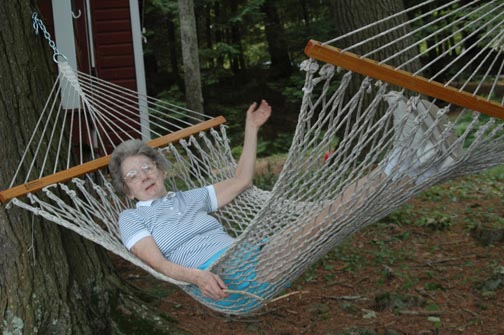 ivate manuscripts. Tonight is the last writers’ peer group. It’s been cool and gray, so at least we’re not all staying awake and sweating. A good time, rich with people doing things people do– for the moment everyone alive and in fair health. Why aren’t we just calm and thankful instead of excited and greedy for more?
Tuesday, June 12, 2007
Books for Readers Ju#95 ne 10
Books for Readers
Newsletter # 95
June 10, 2007

I’ve just finished an excellent best selling nonfiction book, COLLAPSE by Jared Diamond. The last third was a little harder to get through– maybe it was that I prefer the collapse of ancient societies to learning about present day declining fisheries, bleached coral reefs, poisoned streams, and clear-cut rainforests. But the message was like a blast of antihistamine for a stuffed nose: the collapse of societies has happened before, due to many factors almost always including destruction of resources, and we’re facing possible collapse now on a world-wide scale unless we change our ways. This is not new news in 2007, but Diamond’s clearly reasoned delineation is excellent.
It somehow reassures me that human beings have been causing environmental change, both neutral and catastrophic, for tens of thousands of years. It isn’t that the earth was pristine or people kind to the soil and air and plant life up until fifty years ago. The Norse Greenlanders, for example, despoiled their little corner of the world in the 1300's in a multitude of ways, and failed to learn lessons that might have saved them from another group of immigrants, the Inuit. The Easter Islanders, immediately after the high point of their statue building and complex religious cults, cut down the last of their trees, and their population dropped to almost nothing with an extremely low standard of living. Diamond also discusses the fall of the Mayans and the Anasazi in the Southwestern U.S. Often what he records is how political hubris (especially the ambitions of the warrior classes trumping the interests of farmers) has often been destructive.
There are, however, lessons to learn and models for changing our ways. There have been positive reversals of destruction that came both from grassroots efforts and from above. In Tokugawa Japan, the shogun saved the forests by decree; in the New Guinea highlands, the people 1200 years ago saw their land deforested, and, individually and in small groups, collected plants, experimented, and reforested. China is an environmental mess, but a sign of possible hope is how the government did stop population growth. Individualistic Montanans are beginning to see they need government regulation to save their land and their life style. Excellent book.
And, for something completely different– I read my first Harry Potter! For my birthday, my son Joel gave me HARRY POTTER AND THE SORCERER’S STONE (which had a title with much more sense of history in the UK: HARRY POTTER AND THE PHILOSOPHER’S STONE). HARRY was, as Joel said, an incredibly easy, fast, and fun read. One of the things that strikes me about wildly popular books and movies and games is that they usually have a lot of delightful surface innovation and spectacle but a dependable, conventional heart. And, of course they have skillful storytelling. The plot here includes the ever-dependable oppressed childhood followed by spunky new kid at school, complete with mean girls, or in this case, mean wizards. There are supportive friends and a nemesis plus mentors and guides for the hero’s quest. All of this is totally obvious, which is to take nothing away from it, because it all works together and is clever without being jokey. Also, as my son pointed out, Rowling is great on names: Draco Malfoy indeed! A monstrous guard dog called Fluffy.
Finally, I want to mention a memoir that has been getting good reviews in the New York media, THICK AS THIEVES. It is by a former student of mine, Steve Geng, and I was delighted to have a walk-on in the final pages. Steve writes about a difficult life and serious illness in a way that is raw and sharp. He has lived on the edge, hustling, stealing, selling and doing a lot of drugs. The special hook of the story is that while he was living a hustler’s life in New York City, his much-admired older sister was in the same city writing for THE NEW YORKER magazine. Their relationship is sustaining but difficult, and the story of his reconciliation with his retired-military father is touching. The real strength of the book, though, is how directly and energetically, but without romanticizing, he shares the highs and lows of his life. Part of his honesty is a grand joie de vivre even after all he’s been through: and he does not deny the pleasure of jazz, sex, drugs– all of his experiences. He manages to show a life that he is not proud of, but that was lived with gusto. Had he not contracted AIDS, had he not hurt people, inevitably lost the bounce-back of youth, you wonder if he might not have continued boosting and shooting up for the rest of his life. The description of his big fall after eight or nine years of sobriety is excellent and believable. As one reviewer remarked, Geng knows that under the same circumstances he would likely have done it all again. I wonder of the rest of us are ever so honest.
– Meredith Sue Willis
A RESPONSE TO ALICE ROBINSON-GILMAN’S “NOTES ON BOOKS AND READING”
“The place of reading in my life,” says Shelley Ettinger, “ ... you have no idea .... it's a sickness, really, because it's not just the constant reading but the obsessive, panicky compulsion to have enough books on my to-read shelf. I'm like someone who grew up poor hoarding canned food – but I grew up in a house full of books and readers so I don't have the excuse of early deprivation. One evening last week as I was falling asleep I realized that I'd been to every single one of the libraries (four) and bookstores (five) that I frequent in the past two days. Some more than once. Oy.”
RECOMMENDATIONS
Ingrid Hughes writes: “Myra Shapiro's memoir, FOUR SUBLETS: BECOMING A POET IN NEW YORK, is about a woman who moves to New York in middle age from her home in Chattanooga to study poetry and make a life as a poet for herself in the city she's longed for, and about how her marriage makes this transition with her. It's a good depiction of contemporary attitudes– the celebration of individual growth, the delight in its nuances. The best single scene was the death of her sister-in-law.”
Margarethe Laurenzi’s book group discussed THE KEEP by Jennifer Egan. She says, “THE KEEP is really good. It is great fodder for writers, because it weaves a tale between the story being told about a castle and some cousins, a writer (who is writing the castle/cousins story) from jail, and his teacher, who goes to the jail to give 'writing classes' to selected prisoners. There are quite a few twists and turns in the story, which ultimately weaves together, and we had a great time discussing it.”
And, another from Margarethe’s group: “My book group is batting 1000 this year in picks: WATER FOR ELEPHANTS, by Sara Gruen, tells the story of a young man, Jacob, who leaves college in crisis in the early 1930s and joins the circus. The book tells the story of his 3 month stint with the Benzini Brothers Most Spectacular Show on Earth, and weaves back and forth between that time of his life and his present day circumstance as a 93-year-old man in a nursing home, recalling the story. It's beautifully done. It has all the vivid, coarse, seamy side of traveling circus life, along with some well-formed characters who reaffirm that even alongside evil there is humanity and decency. I read it in two nights. Couldn't put it down, and while I am not usually a fan of the tacking back and forth between two stories (and time frames and casts of characters), I thought that Gruen used this writer's technique successfully and even nimbly.”
Phyllis Moore writes to say, “I'm reading the memoir WARM SPRINGS: TRACES OF A CHILDHOOD AT FDR'S POLIO HAVEN by Susan Richards Shreve. It is painfully honest, no pun intended. Her childhood memories start at about 1 ½ years of age. Pearl Buck had infancy memories. So do I. (That is the only similarity between Buck and me.) Both [my husband] Jim and I have early childhood recollections too. Do some people have a special ability to recall childhood or infancy? I think scientific studies rules out much memory recall from before the age of three. But science isn't my cup of tea. What do you think? George Ella Lyon's DON'T YOU REMEMBER? is just out. My copy hasn't arrived yet but it will go to the top of my ‘to read’ stack when it does.”
Norman Julian, in one of his always worthwhile columns in the Morgantown, West Virginia DOMINION-POST recommends STUMBLING ON HAPPINESS, by Harvard psychologist Daniel Gilbert.
PAGE 99
Well, here’s a new way to judge a book. Take a look at this interesting experiment of using an idea from Ford Maddox Ford about judging a book by its page 99.
NEED PUBLICITY??
Leora Skolkin-Smith says, “I wanted to tell you...about Carolyn Howard-Johnson. Carolyn has written a treasure of a book called THE FRUGAL PROMOTER. Carolyn is also quite miraculous when it comes to advising literary writers how to survive this climate which too often is more based on promotion than quality, and I highly recommend checking out her web site, book, and advice column. The link to her blog is www.sharingwithwriters.blogspot.com , and she has a web page called How To Do It Frugally. Just wanted to write and tell you, in hopes of helping other authors who were as in the dark about publicity, etc as I was (and still am). Right now, publicists are charging is thousands of dollars and Carolyn is a teacher at UCLA who focuses on how to understand and thereby manage one's own publicity, sparing the innocent.”
GOOD NEWS!! GOOD BOOKS!!
LEADS by Rochelle Ratner is now out. “The germs of this book began in 1977,” says Ratner, “when I visited friends in London. As a child, I’d been told I had a speech impediment, but I vehemently refused voice lessons. Then, in a London pub, talking with a friend from the Lancashire/Yorkshire border, it was almost as if I fitted in at last. Without realizing it, I’d probably inherited aspects of my grandmother’s accent. And I’d never missed her as much as I did at that moment. That was when I began planning a trip to Leeds, where my grandmother was born and spent her childhood. I knew I had to write about it, and began a series of poems as the journey took shape. Once there, I copied from books and records I’d found in the Leeds library. I began writing down what people said. What I hadn’t expected was that, as I later tried to shape the materials, I would find other peoples’ words more powerful than my own. Poem? Journal? Memoir? Found text? Think of Olson’s Maximus or Paul Metcalf’s writings." See www.rochelleratner.com .
The audio version of Richard Currey’s LOST HIGHWAY from Mountain Whispers aired on XM on Memorial Day. http://richardcurrey.com/events.html. MountainWhispers Audio will go out to, well, more than a few listeners on that day. And those listeners will be everywhere on the planet. It should subsequently air two more times after Memorial Day, although XM is still working out how they want to do it, but probably in daily "chapters" over a week, or possibly 2-3 nights back-to-back. So check XM.
Red Hen Press will be publishing a collection of 21 short stories by Greg Sanders in spring 2008. Keep an eye on his web site www.gregorysanders.com and his MySpace page http://www.myspace.com/greg_nyc.
Hanging Loose Press has been publishing for more than thirty years. Look at their web site at http://www.hangingloosepress.com . 2007- 2008 catalog includes books by Joan Larkin, Charles North, Hettie Jones, Paul Violi, Terence Winch, Sherman Alexie, Bill Zavatsky, Steve Schrader and many more.
Paola Corso’s GIOVANNA’S 86 CIRCLES was a finalist in the John Gardner Fiction Book Award cntest. Learn more at http://www.wisc.edu/wisconsinpress/books/2932.htm .
Chris Grabenstein’s award winning murder mystery series continues with WHACK A MOLE. An innocent discovery on the beach in Sea Haven leads to a string of gruesome clues and one chilling conclusion: a long dormant serial killer is poised to strike again! LIBRARY JOURNAL said "Whack A Mole is as engaging and enjoyable as the debut Tilt-a-Whirl. Certainly more fun when read as part of a series, this title nevertheless stands on its own as a well-written mystery, complete with humor, humanity, a fast-moving plot, and memorable characters. Highly recommended."
Ellen Bass’s new book, THE HUMAN LINE, has just been published by Copper Canyon Press. It's available at your local bookstore or online. Look at some sample poems at http://www.ellenbass.com .
MORE NEWS
Thad Rutkowski has a lot of new work coming out: "Learning Curve," story, in Dislocate, No. 3, Spring 2007 (University of Minnesota, Minneapolis) (http://www.dislocate.org ) ; "Beautiful Youth," spoken word, on Family Affairs CD (recorded at Eureka Joe cafe, 1995), now with audio samples at: http://cdbaby.com/cd/familyaffairs; "The Speech of Cretans," prose poem, Barbaric Yawp, Vol. 11, No. 1, March 2007 (BoneWorld Publishing, 3700 County Route 24, Russell, NY 13684). For more, see his website at http://www.thaddeusrutkowski.com .
RESOURCES FOR WRITERS
Margarethe Laurenzi recommends what looks like a stellar site for writers, Erika Dreifus’s THE PRACTICING WRITER at http://www.practicing-writer.com/ For more sites for writers, see my resources page at http://www.meredithsuewillis.com/resources.html#links.
READ IT ONLINE!
There is a small but wonderful selection from Carole Rosenthal’s new memoir, CLOSE FINISHES on the HUFFINGTON POST.
Also on THE HUFFINGTON POST is a lovely poem by Suzanne McConnell .
Download for free a copy of Halvard Johnson's TANGO BOUQUET (and other books) at Anny Ballardini's Poets' Corner: http://www.fieralingue.it/modules.php?name=Content
Barbara Crooker’s latest poems online are at
http://www.mezzocammin.com/iambic.php?vol=2007&iss=1&cat=poetry&page=crooker
Cat Pleska has a good piece about visiting Loretta Lynn’s homeplace on her blog: http://www.rednecromancer.typepad.com/mouth_of_the_holler/
MOORE AND ANDERSON AT ELDERHOSTEL
Belinda Anderson and Phyllis Moore are part of a West Virginia Book Festival presentation through Elderhostel this fall!
SUBMIT
Ep;phany– Call for Manuscripts for the Print Issue Fall 2007! Fiction – Poetry – Non-Fiction – Photographs Complete information http://www.epiphanyzine.com .
Big City Lit is once again accepting submissions again– see http://www.nycbigcitylit.com/ .
The Appalachian Writers Guild (AWG) is a non-profit organization of writers, established for the purpose of advancing the creation and dissemination of literature and history relating to the Appalachian region. AWG is currently preparing a themed anthology of Appalachian literature and welcomes submissions from authors at this time. AWG is seeking short fiction, poetry, biography, novellas, and creative non-fiction, including memoirs, opinion pieces and historical sketches. Submissions should be made by Email: poetry to AWGeditor3@gmail.com and all others to AWGeditor2@gmail.com in standard Word (.doc or .rft) format. The first AWG anthology was released in 2007 and is available at regional bookstores. Deadline is Sept. 30, 2007.
Teachers & Writers Collaborative (T&W) will award the 2007 Bechtel Prize in recognition of an exemplary article or essay related to Creative writing education, Literary studies, and/or the profession of writing. The winning essay will appear in Teachers & Writers magazine and on the T&W Web site, and the author will receive a $3,500 honorarium. Entries selected as finalists for the Bechtel Prize may also be published in Teachers & Writers. The authors of finalist essays selected for publication in the magazine receive a small honorarium. Please review the submission guidelines and read previous winners of the Bechtel Prize at www.twc.org/bechtel_prize-archive.htm . Deadline for receipt of entries for 2007 Bechtel Prize submissions is 5:00 PM (Eastern), Friday, June 29, 2007. Submissions will not be accepted after the deadline. If you have any questions after you review the guidelines, please write to editors@twc.org or call 212-691-6590.
Subscribe to:
Posts (Atom)