Monday, September 19, 2011

Books for Readers #145

Meredith Sue Willis's

Books for Readers # 145

September 18, 2011

(Click cover image for information from the publisher) Re-visions: Stories from Stories is a collection of spin-offs from myth, fiction, and the Bible. From a new look at Adam and Eve and why they left the Garden to a grown-up Topsy from Uncle Tom's Cabin to the confessions of Saint Augustine's concubine- each story offers a gloss on the original as well as insights into how we can live today.
This Issue:
Phyllis Moore on Jaimy Gordon
Recommendations from Reamy Jansen

Darnell Arnoult's Sufficient Grace

Bob Bender's Reading List
Mark Defoe's new collection: sample poem

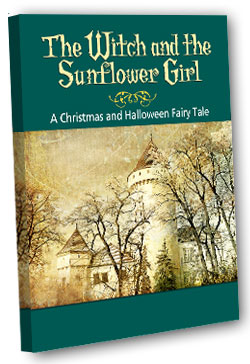
The Witch and the Sunflower Girl

News and Announcements

Free e-mail subscription to this newsletter.
To create a link to this newsletter, use the permanent link .


I've read a fair amount this summer, but my big announcement is that I finally finished probably the only book I ever laid aside because it was making me sick to my stomach. And, no, it was not gore or violence. The book was the putative American classic, THE EDUCATION OF HENRY ADAMS by Henry Adams. When I tried to read it ten years ago, every time I picked it up– a small print paper back, as I remember, maybe a Penguin classic, with a long introduction– I felt like I was reading in the back seat of a swerving car. I hated this book. I was also humiliated that I, who pride myself on catholic taste in literature, had failed to get what everyone sees in Henry Adams.

It isn't a difficult book the way, say, Virginia Woolf's most seriously modernist books are (I'm thinking of THE WAVES and JACOB'S ROOM). It wasn't the content, I didn't think: I had once at thirteen skipped part of a Leon Uris novel because I knew I wasn't supposed to read what happened after he unzipped her skirt. And I did have trouble finishing NAKED LUNCH. This was something else.

Not wanting to invest too much in the book in case it all happened again, I downloaded a .99 cent version for the Kindle, and I'm happy to report that I kept down my lunch. On the other hand, I still don't like the book. Knowing some of Henry Adams' biography made me more open, or at least more interested. His wife committed suicide in mid life, which he never mentions in this version of his life story, and he was a noted socializer, and a great friend to many people. He also was burdened with the weight of expectations for a young man from a family in which the grandfather and great-grandfather had both been presidents of the United States.

He was, at bottom, a very smart, very neurotic, very limited member of the ruling class of the United States. Of course we are all limited by our class and our ethnic group and our time and place, but some of us manage to peer at least a little outside: Tolstoy could do it; Emily Dickinson could do it. So could all the great writers. Henry Adams, at least in this nonfiction book, seems totally unable to see outside his narrow little track.

The conceit of the book is that Adams' whole life has been a failure, specifically a failed education. The strained humorous tone when he writes about his youth sets my teeth on edge, and his view of the American Civil War (he was private secretary to his father, the ambassador to England) seems coolly distant at best and at worst nearly frivolous. Again, I need to offer a caveat: many people don't read it this way at all, and Adams himself deplores being so far from the center of the great event of his generation.

His voice gains authenticity as he closes in on his chronological age as he is writing, which is in his mid-sixties. The final quarter of the book– except for his crackpot theories of history– creates an atmosphere of genuine amazement and humility in the face of the material culture of the new century– and also a tone of increasing sadness. The book ends with the death of one of his best friends, Teddy Roosevelt's secretary of State, John Hay, who had also been Abraham Lincoln's private secretary.

I still don't know why I have reacted so strongly to this book. There is, of course, my own twenty-first century assumptions and expectations– of more personal revelation, for example. Also, I have had a lifelong preference (I admit it!) for narrative, which Adams essentially eschews. But I really am appalled by his assumptions: he assumes his readers have Latin, and that they went to Harvard. He assumes that they criticize Harvard, too, of course, and he assumes his readers are amused by immigrant Poles and Irish and Jews as the second element in various unflattering similes. He assumes that complimenting women's grace and kindness allows him to say anything he wants about them.

I also just reread UNCLE TOM'S CABIN, and it gave me an interesting comparison. Why is it that Harriet Beecher Stowe who was as thoroughly of her time and place as Adams, and probably a less talented writer, could occasionally hit the mark– leap out beyond her own prejudices? She has that ability to take the imaginative leap, not always, but occasionally, that makes a connection across time and race and class. Of course she's telling a story, and THE EDUCATION is nonfiction.

So I'm going to give Henry Adams another chance. I've downloaded free Gutenberg Project e-books of his two novels, DEMOCRACY and ESTHER.

Meredith Sue Willis

MSW ON DARNELL ARNOULT'S SUFFICIENT GRACE

I want to recommend SUFFICIENT GRACE by Darnell Arnoult, a novel of imaginative, sophisticated writing in the form of a classical comedy– that is, with happy endings all around, the way Shakespeare's late comedies like THE TEMPEST are comedies in spite of some pretty rough going along the way.

So SUFFICIENT GRACE is a committedly upbeat novel, maybe even Christian humanist. It has a wonderful set up: a housewife paints pictures of Jesus all over the walls of her house, and walks out on her life. There is no mistaking that she is mentally unbalanced, but her breakdown is presented in a fascinatingly balanced way: yes, she's crazy, but no, she's not all that much more unhappy than anyone else. Part of the project of the books seems to be to imagine a creative and graceful, but not sentimental, mental breakdown.

The novel insists, explicitly, on closing all the circuits it opens up. This doesn't mean anything old fashioned like marriage rings, but rather some near-miraculous coincidences such as the itinerant woman preacher who arrives in town just in time to reconcile with her daughter and perform her marriage ceremony. The closing of the circuits also means satisfying outcomes for most of the characters– lovers for those who want them, artistic hobbies that turn into high art or ways to make a living. The husband who cooks because his wife has left him becomes a superb cook with a likely book contract. It's twenty-first century wish fulfillment: that we could really support ourselves doing what we love best, in community, across racial lines, with family dysfunction healed.

SUGGESTIONS FOR YOUR READING PLEASURE FROM REAMY JANSEN:

Reamy Jansen recommends Geraldine Brooks' CALEB'S CROSSING: "I think it's a wonderful novel of self fashioning by the acute and feelingful Bethia, who is the narrator. Like Aurora Leigh, Bathe is the matter of her book."

He goes on to say, "I've also been on something of a Elizabeth Gaskell jag: 'Lois the Witch,' longish short story and RUTH--terrific with some interesting narrative tricks, as is true of what I'm reading now, Charlotte Brontë's SHIRLEY (a character that doesn't appear until after page 200). One of the most striking things that I've been encountering is the emphasis on 'mind' by these women writers, including Elizabeth Barrett's Aurora Leigh. It seems a theme/motif basted into all these texts. The other little signifier is the mention of 'curls,' which suggest spirit and independence. One of my obsessive lists (of course, with all my annotations, it's takes me as long to write in the margins and set up keys on the inside cover as it took Brontë to write 400 words).

"I think how much this book, [SHIRLEY], would have seemed a great bore to a callow English major, although, one year later, I found myself utterly taken up by Dickens's last complete novel, and one of his greatest, OUR MUTUAL FRIEND, as a senior, when in my Nineteenth Century European History course one of the final paper topics was 'The Novel as Mirror in the Roadway,' a quaint notion nowadays. Nevertheless, the novel absorbed me in a way I had not previously felt (much of this still holds true for most nineteenth century fiction that I regularly harvest).
"I read CRANFORD, as it was a gift from my favorite professor, William E(arlking) Michael, who told me the book was 'charming.' And charming it is, sort of, although a considerably deeper darkness and sense of threat is veined through the little book.

Now, however, I'm caught up in Brontë's SHIRLEY, part of which is major payback to her critics (including frequent asides to 'Reader,' which often comes across as slightly mocking).

"Anyway, here's dialogue on marriage from Ch XII, 'Shirley and Caroline: '...to tell you a secret, if I were convinced that they [men] are necessarily and universally different from us---fickle, soon petrifying, unsympathiziing--I would never marry. I should not like to find out that what I loved did not love me, that it was weary of me, and that whatever effort I might make to please would hereafter be worse than useless, since it was inevitably in its nature to change and become indifferent. That discovery once made, what should I long for? To go away--to remove from a presence where my society gave no pleasure.'

"Powerful stuff--and there's more. Plus, you've got to love the neutered pronoun, (this from the excellent Penguin Classic--excellent notes and a good intro).

"There's good stuff, by the way in Brontë's friend's, Elizabeth Gaskell, THE LIFE OF CHARLOTTE BRONTË and there's also 'The Miracle of Shirley' in Winifred Guerin's CHARLOTTE BRONTË, THE EVOLUTION OF GENIUS.

"Much of my reading in the theme of 'minds' by a variety of women novelists has been further enlightened by Deidre David's INTELLECTUAL WOMEN AND VICTORIAN PATRIARCHY, 1987. Much of this may have been superceded, but this is a nice place to start, and it has a lively introduction by the author, who was mistakenly addressed as 'David Deirdre.' Here endeth the lesson."

PHYLLIS MOORE ON JAIMY GORDON: The Strangeness Draws Me In

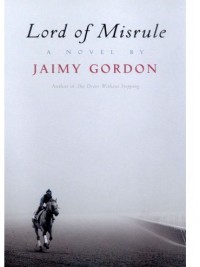
The 2010 National Book Award fiction winner, Lord of Misrule by Jaimy Gordon, a West Virginia resident in the late 1960s, takes place in a world many of us are unfamiliar with, an insulated world with a language and culture of its own: claiming races at a track in West Virginia.

Prior to the opening of the novel, Gordon gives readers a leg up by including a technical description of the rules for "claiming" a horse. From this point on a dictionary and "google" proved useful as Gordon incorporates Yiddish, French, and German phrases into a mix of folklore, religion, mythological creatures, conjuring, racing rules, theories, and jargon. And did I mention the novel comes complete with sex, drugs, violence, mental illness, and organized crime, not to mention a cast of interesting characters, both animal and human?

Maggie, the protagonist, is a young intelligent college graduate destined to give her affluent Jewish parents gray hairs. She is a risk taker, fascinated by drugs and violence and willing to try anything once, provided it isn't lethal. She is enthralled by a charismatic but volatile fellow college graduate who is "just not right in the soul, really." Maggie's career as a writer is on hold to help him develop his string of horses and be part of his schemes to win big and get out fast.

Like horses in a race, the story starts off slowly, picks up speed in the stretch, falters slightly, and then ends in a rush of excitement. There is an interesting mix of characters of different faiths, sexual preferences, and colors. Their stories unfold, sometimes in their own voices.

Prior to the National Book Award, Gordon was one of the famous authors readers hadn't read or heard about. A professor, scholar, and a fiction writer of note, she had a small faithful readership and a totally dedicated publisher.
Now readers will find interviews of Gordon, study guides for Lord of Misrule, and a superfluity of reviews of this work on the internet. That is all to the good. Lord of Misrule is a work to study and respect as well as to enjoy.

As the protagonist Maggie says of her charismatic but mentally ill lover Tommy, "The strangeness draws me in." Gordon's skills as a writer drew me into this strange and innovative story.

BOB BENDER'S SUMMER 2011 READING LIST

• Roger Horowitz, "Negro and White, Unite and Fight": A Social History of Industrial Unionism in Meatpacking, 1930-90.
• Joseph Conrad, Heart of Darkness. Edited by Robert Kimbrough
• Jonathan Kaufman, Broken: The Turbulent Times Between Blacks and Jews in America
• Roger Keeran, The Communist Party and the Auto Workers' Unions
• Julie Grasso, Recipe for a Family
• Stieg Larsson, The Girl with the Dragon Tattoo
• The Girl who Played with Fire
• The Girl who Kicked the Hornet's Nest
• Khaled Hosseini, The Kite Runner
• Sue Grafton, M is for Malice
• Joyce Carol Oates, Wonderland
• South End Press, Between Labor and Capital , the Professional Managerial Class (Barbara and John Ehrenreich + others)
• Adam Hochschild, King Leopold's Ghost, a story of Greed, Terror and Heroism in Colonial Africa
• Ralph David Abernathy, And the Walls Came Tumbling Down
• Manning Marable, Malcolm X, A Life of Reinvention
• Leslie Marmon Silko, Almanac of the Dead
• Stanley Aronowitz, From the Ashes of the Old: American Labor and America's Future
• Jesse Redmon Faucet, Plum Bun
• Harry Fisher, Legacy
• Herman Melville, Billy Budd and Other Stories
• Michael Patrick MacDonld, All Souls, A Family Story from Southie
• Arthur Miller, Timebends (autobiography)
• Michael Ondaatje, In the Skin of a Lion

READERS WRITE

Dolly Withrow talks a little about some magazines: "Readers can sample excerpts and get other tidbits by accessing The Sun Magazine online. It is ad-free, which means the publisher often asks for donations. I think this is true of most 'little' magazines. Now & Then: The Appalachian Magazine can also be accessed online, but there are no sample essays; however, there is contact information for anyone wishing to submit something. Creative Nonfiction magazine (that's how I Googled it) is also available. One can read samples, get writing guidelines, and access lots of other information online. The publisher also has contests and each magazine, like Now & Then has a theme. If you or anyone on your list has an opinion about Appalachian Heritage, I'd be most interested.....[they don't]..have themes."

FREE CRITIQUING

HarperCollins supports an online community of writers who upload work for others to critique. Things that get a a lot of attention from other users is sent to the "Editor's Desk," where it is given a close look by the actual publishing company: Take a look at http://www.authonomy.com.

READ ONLINE

Recommended by Amy Wright: Michael Martone's short short nonfiction piece on the recent weather disasters in Alabama: http://www.creativenonfiction.org/brevity/brev36/martone36.html
Take a look at Valerie Nieman reading a poem about a stapler:
http://www.pbs.org/newshour/art/blog/2011/09/weekly-poem-duration.html
Laura Treacy Bentley interviews Marc Harshman WEST VIRGINIA LIVING:
http://www.wvliving.com/Fall-2011/Conversations-with-Marc-Harshman/
Barbara Crooker has new poems online– "The Bossy Letter R," "Live or Evil, Rats or Star," "The Paper Clip," and "The Last Painting" all appear in the new issue of The Innisfree Poetry Journal at http://authormark.com/artman2/publish/Innisfree_13_28BARBARA_CROOKER2.shtml
Norman Julian recommends this interesting interview with Scott Turow about his career and writing in general: http://www.post-gazette.com/pg/11248/1171973-129.stm
There's an enthusiastic review of the new collected works of my inimitable friend Carol Emswhiller, the avant garde and science fiction writer.
And finally, Salon has a nicely snarky piece on the worst novels that use 9-11 in some fashion:

ANNOUNCEMENTS, NEWS, CONTESTS, WORKSHOPS, READINGS ETC.

A personal essay on witnessing the final space launch by Melanie Vickers appeared on July 28, 2011 at http://www.dailymail.com/Opinion/Commentary/201107271141

Erik Corr's e-book THE WITCH AND THE SUNFLOWER GIRL is now available:
The subtitle is "A Halloween and Christmas Fairy Tale about Karma and Free Will," and the story only costs .99 cents! Also see Erik's Youtube about an open source novel he's writing: http://www.youtube.com/user/erikTT1


Mark DeFoe's tenth chapbook of poems In the Tourist Cave is coming out this fall. Pre-publication orders are now being taken by Finishing Line Press of Georgetown, KY. Order online at finishinglinepress.com and click on "new releases:"http://www.finishinglinepress.com/NewReleasesandForthcomingTitles.htm
Click on the "New Releases and Forthcoming titles" link.
Here's a sample poem from the collection: :

EVENING SHOWER: FRANK'S PORCH
Rest your bones, friend. See how the drenched
walks gleam, the spilling gutters flash and shine.
Take a load off—beer's in the frig. Look there—
every grass blade and leaf is rinsed, spangled.
Drink to these simple times, to life untangled.
Grab this rocker. Hear how the downspouts gush
softer now. The clouds ripple pearl and gray.
Across the lots, light strides its copper way,
while one departing shower shakes the pines.
We spin our voices past this last wet rush,
spieling yarns and god-awful jokes, how we wenched
away our youth, how if we ran the world today
it would be a damn sight saner. The women chime
their mocking laughter low. You men, they say.
We grin and nod. The beer's made us heady—
That and the rich scent of new-watered earth.
Oh, dead Indians topple—slow and steady.
Fireflies begin to spark above of the cooling lawn.
Our talk grows gentle. Here in the cool hush
our voices amble, mingle, murmur on.

Cat Pleska has a piece about the terrors of planes at Airplane Reading: essays about airplanes. Check out her "Rock and Roll" at http://airplanereading.org/ .
New from Halvard Johnson: Sonnets from the Basque & Other Poems.
Peter Brown's newest book for children is out: YOU WILL BE MY FRIEND in which Lucille Beatrice Bear wants to make a new friend. Lucy accidentally ruins the giraffe's breakfast, and the skunk doesn't want her help, and she's too big for the frog's pond. It looks hopeless. And then, when she least expects it, a funny thing happens...you'll never guess what it is....
Watch for Valerie Nieman reading from Blood Clay (see Books for Readhers #140 ) at a venue near you!
SEPT. 23 - Bring Your Own Lunch and Author Chat at Flyleaf Books in Chapel Hill
SEPT. 24 - "Peeking Behind the Mask" - poetry at Weatherspoon Gallery, Greensboro
OCT. 6 - Ex Libris Book Club
OCT. 13 - Fairmont State University, Fairmont, WV
OCT. 14 - West Virginia University
OCT. 15 - Mary H. Weir Public Library, Weirton, WV, Public Library
OCT. 17 - Alderson-Broaddus College, Philippi, WV
OCT. 18 - Taylor Books, Charleston, WV
OCT. 22 - Building Connections: Group Poetry for Residents in Assisted Living/Nursing Care, Queens University of Charlotte
OCT. 29-30 -Workshop and salon with Marjorie Hudson at Writershouse, Charlottesville, Va.
OCT. 30 - SWAG at the Shenandoah Arts Center in Waynesboro, Va.
NOV. 16 - The Burwell School, Hillsborough NC
FEB. 24 - Wonderland Book Club, Raleigh
FEB. 25 - Book'em, Lumberton
APRIL 10 - Carteret Writers Club
MAY 18-19 - Blue Ridge Bookfest in Flat Rock, NC
JUANITA TORRENCE-THOMPSON, Editor-in-Chief/Publisher/Owner of Internationally acclaimed MOBIUS, THE POETRY MAGAZINE seeks a GROUP of poets and/or editors or COLLEGE, organization or business individual/s to purchase and publish her 29-year old non-profit print magazine starting 2011. www.mobiuspoetry.com Serious buyers ONLY
Eemail: mobiusmag@earthlink.net or poetrytown@earthlink.net.
Colleen Anderson announces a feature article about the Aurora Project, from the most recent issue of West Virginia Living Magazine: http://www.wvliving.com/Fall-2011/The-Aurora-Project/ The Aurora Project Fall Writers' Retreat is scheduled for October 20-23 this year. No classes or workshops, just time on your own, fabulous food, and good company in the evenings. This year, Anita Skeen is the special guest, and she'll give a reading on Saturday evening, October 22. For more information, see the webstie at http://www.auroraproject.org/.
ABOUT AMAZON.COM

The largest unionized bookstore in America has a webstore at Powells Books. Some people prefer shopping online there to shopping at Amazon.com. An alternative way to reach Powell's site and support the union is via http://www.powellsunion.com. Prices are the same but 10% of your purchase will go to support the union benefit fund. For a discussion about Amazon and organized labor and small presses, see the comments of Jonathan Greene and others in Issues #97 and #98 .

WHERE TO FIND BOOKS MENTIONED IN THIS NEWSLETTER

If a book discussed in this newsletter has no source mentioned, don’t forget your public library and your local independent bookstore.
To buy books online, I often go first to Bookfinder or Alibris. Bookfinder has a feature that tells you the book price WITH shipping and handling, so you can compare what you’re really going to have to pay.
A lot of people whose political instincts I respect prefer the unionized bricks-and-mortar bookstore Powells (see "About Amazon.com" above) that sells online at http://powellsbooks.com. More good sources for used and out-of-print books are Bookfinder at http://www.bookfinder.com/ and All Book Stores at http://www.allbookstores.com/ .
Take a look also at Paperback Book Swap , a low cost (postage only) way to get rid of your old books and get new ones by trading with other readers.

If you are using an electronic reader like Kindle, Nook, or Kobo, get free books at the Gutenberg Project-- most classics, and other things as well.

RESPONSES TO THIS NEWSLETTER

Please send responses and suggestions directly to Meredith Sue Willis at MeredithSueWillis@gmail.com. Unless you instruct otherwise, your responses may be edited for length and published in this newsletter.

BACK ISSUES click here.

LICENSE

Creative Commons License Books for Readers Newsletter by Meredith Sue Willis is licensed under a Creative Commons Attribution-NoDerivs 3.0 Unported License. Permissions beyond the scope of this license may be available at http://www.meredithsuewillis.com. To subscribe and unsubscribe, use the form below.
MSW Home


For a free e-mail subscription, please fill in your e-mail address here:
E-mail address:
Subscribe Unsubscribe

BACK ISSUES:

#145 Henry Adams, Darnell Arnoult, Jaimy Gordon, Charlotte Brontë
#144 Carter Seaton, NancyKay Shapiro, Lady Murasaki Shikibu
#143 Little America; Guns,Germs, and Steel; The Trial
#142 Blog Fiction, Leah by Seymour Epstein, Wolf Hall, etc.
#141 Dreama Frisk on Hilary Spurling's Pearl Buck in China; Anita Desai; Cormac McCarthy
#140 Valerie Nieman's Blood Clay, Dolly Withrow
#139 My Kindle, The Prime Minister, Blood Meridian
#138 Special on Publicity by Carter Seaton
#137 Michael Harris's The Chieu Hoi Saloon;The Professor and the Madman; Game of Thrones; James Alexander Thom's Follow The River
#136 James Boyle's The Creative Commons; Paola Corso, Joanne Greenberg, Monique Raphel High, Amos Oz
#135 Reviews by Carole Rosenthal, Jeffrey Sokolow, and Wanchee Wang.
#134 Daniel Deronda, books with material on black and white relations in West Virginia
#133 Susan Carpenter, Irene Nemirovsky, Jonathan Safran Foer, Kanafani, Joe Sacco
#132 Karen Armstrong's A History of God; JCO's The Falls; The Eustace Diamonds again.
#131 The Help; J. McHenry Jones, Reamy Jansen, Jamie O'Neill, Michael Chabon.
#130
Lynda Schor, Ed Myers, Charles Bukowski, Terry Bisson, The Changing Face of Anti-Semitism
#129 Baltasar and Blimunda; the Underground Railroad; Navasky's Naming Names, new and recommended small press and indie books.
#128 Jeffrey Sokolow on Histories and memoirs of the Civil Rights Movement
#127 Olive Kitteridge; Urban fiction; Shelley Ettinger on Joyce Carol Oates
#126 Jack Hussey's Ghosts of Walden, The Leopard , Roger's Version, The Reluctanct Fundamentalist
#125 Lee Maynard's The Pale Light of Sunset; Books on John Brown suggested by Jeffrey Sokolow
#124 Cloudsplitter, Founding Brothers, Obenzinger on Bradley's Harlem Vs. Columbia University
#123 MSW's summer reading round-up; Olive Schreiner; more The Book Thief; more on the state of editing
#122 Left-wing cowboy poetry; Jewish partisans during WW2; responses to "Hire a Book Doctor?"
#121 Jane Lazarre's latest; Irving Howe's Leon Trotsky; Gringolandia; "Hire a Book Doctor?"
#120 Dreama Frisk on The Book Thief; Mark Rudd; Thulani Davis's summer reading list
#119 Two Histories of the Jews; small press books for Summer
#118 Kasuo Ichiguro, Jeanette Winterson, The Carter Family!
#117 Cat Pleska on Ann Pancake; Phyllis Moore on Jayne Anne Phillips; and Dolly Withrow on publicity
#116 Ann Pancake, American Psycho, Marc Harshman on George Mackay Brown
#115 Adam Bede, Nietzsche, Johnny Sundstrom
#114 Judith Moffett, high fantasy, Jared Diamond, Lily Tuck
#113 Espionage--nonfiction and fiction: Orson Scott Card and homophobia
#112 Marc Kaminsky, Nel Noddings, Orson Scott Card, Ed Myers
#111 James Michener, Mary Lee Settle, Ardian Gill, BIll Higginson, Jeremy Osner, Carol Brodtick
#110 Nahid Rachlin, Marion Cuba on self-publishing; Thulani Davis, The Road, memoirs
#109 Books about the late nineteen-sixties: Busy Dying; Flying Close to the Sun; Looking Good; Trespassers
#108 The Animal Within; The Ground Under My Feet; King of Swords
#107 The Absentee; Gorky Park; Little Scarlet; Howl; Health Proxy
#106 Castle Rackrent; Harry Potter and the Deathly Hallows; More on Drown; Blindness & more
#105 Everything is Miscellaneous, The Untouchable, Kettle Bottom by Diane Gilliam Fisher
#104 Responses to Shelley on Junot Diaz and more; More best books of 2007
#103 Guest Editor: Shelley Ettinger and her best books of 2007
#102 Saramago's BLINDNESS; more on NEVER LET ME GO; George Lies on Joe Gatski
#101 My Brilliant Career, The Scarlet Letter, John Banville, Never Let Me Go
#100 The Poisonwood Bible, Pamela Erens, More Harry P.
#99 Jonathan Greene on Amazon.com; Molly Gilman on Dogs of Babel
#98 Guest editor Pat Arnow; more on the Amazon.com debate
#97 Using Thomas Hardy; Why I Write; more
#96 Lucy Calkins, issue fiction for young adults
#95 Collapse, Harry Potter, Steve Geng
#94 Alice Robinson-Gilman, Maynard on Momaday
#93 Kristin Lavransdatter, House Made of Dawn, Leaving Atlanta
#92 Death of Ivan Ilych; Memoirs
#91 Richard Powers discussion
#90 William Zinsser, Memoir, Shakespeare
#89 William Styron, Ellen Willis, Dune, Germinal, and much more
#88 Sandra Cisneros's Caramelo
#87 Wings of the Dove, Forever After (9/11 Teachers)
#86 Leora Skolkin-Smith, American Pastoral, and more
#85 Wobblies, Winterson, West Virginia Encyclopedia
#84 Karen Armstrong, Geraldine Brooks, Peter Taylor
#83 3-Cornered World, Da Vinci Code
#82 The Eustace Diamonds, Strapless, Empire Falls
#81 Philip Roth's The Plot Against America , Paola Corso
#80 Joanne Greenberg, Ed Davis, more Murdoch; Special Discussion on Memoir--Frey and J.T. Leroy
#79 Adam Sexton, Iris Murdoch, Hemingway
#78 The Hills at Home; Tess of the D'Urbervilles; Jean Stafford
#77 On children's books--guest editor Carol Brodtrick
#76 Mary Lee Settle, Mary McCarthy
#75 The Makioka Sisters
#74 In Our Hearts We Were Giants
#73 Joyce Dyer
#72 Bill Robinson WWII story
#71 Eva Kollisch on G.W. Sebald
#70 On Reading
#69 Nella Larsen, Romola
#68 P.D. James
#67 The Medici
#66 Curious Incident,Temple Grandin
#65
Ingrid Hughes on Memoir
#64
Boyle, Worlds of Fiction
#63 The Namesame
#62 Honorary Consul; The Idiot
#61 Lauren's Line
#60 Prince of Providence
#59 The Mutual Friend, Red Water
#58 AkÉ,
Season of Delight
#57 Screaming with Cannibals

#56 Benita Eisler's Byron
#55 Addie, Hottentot Venus, Ake
#54 Scott Oglesby, Jane Rule
#53 Nafisi,Chesnutt, LeGuin
#52 Keith Maillard, Lee Maynard
#51 Gregory Michie, Carter Seaton
#50 Atonement, Victoria Woodhull biography
#49
Caucasia
#48
Richard Price, Phillip Pullman
#47 Mid- East Islamic World Reader
#46 Invitation to a Beheading
#45 The Princess of Cleves
#44 Shelley Ettinger: A Few Not-so-Great Books
#43 Woolf, The Terrorist Next Door
#42 John Sanford
#41 Isabelle Allende
#40 Ed Myers on John Williams
#39 Faulkner
#38 Steven Bloom No New Jokes
#37 James Webb's Fields of Fire
#36 Middlemarch
#35 Conrad, Furbee, Silas House
#34 Emshwiller
#33 Pullman, Daughter of the Elm
#32 More Lesbian lit; Nostromo
#31 Lesbian fiction
#30 Carol Shields, Colson Whitehead
#29 More William Styron
#28 William Styron
#27 Daniel Gioseffi
#26 Phyllis Moore
#25
On Libraries....
#24 Tales of the City
#23
Nonfiction, poetry, and fiction
#22 More on Why This Newsletter
#21 Salinger, Sarah Waters, Next of Kin
#20 Jane Lazarre
#19 Artemisia Gentileschi
#18 Ozick, Coetzee, Joanna Torrey
#17 Arthur Kinoy
#16 Mrs. Gaskell and lots of other suggestions
#15 George Dennison, Pat Barker, George Eliot
#14 Small Presses
#13 Gap Creek, Crum
#12 Reading after 9-11
#11 Political Novels
#10 Summer Reading ideas
#9 Shelley Ettinger picks
#8 Harriette Arnow's Hunter's Horn
#7 About this newsletter
#6 Maria Edgeworth
#5 Tales of Good and Evil; Moon Tiger
#4 Homer Hickam and The Chosen
#3 J.T. LeRoy and Tale of Genji
#2 Chick Lit
#1 About this newsletter

Friday, September 16, 2011

Tomato Crop-- and New Book!!


Tomatoes, September 15, 2011


New Book of Short Stories by MSW
From Hamilton Stone Editions

Re-visions: Stories from Stories is a collection of spin-offs from myth, fiction, and the Bible. From a new look at Adam and Eve and why they left the Garden to a grown-up Topsy from Uncle Tom's Cabin to the confessions of Saint Augustine's concubine- each story offers a gloss on the original as well as insights into how we can live today.

"The stories were so vivid and natural that after a while I forgot of them as based on actual classic myths and felt them alive in my modern world, real as any other stories. My favorite was the one about Lazarus (for the wonderful imagery about fire and moths and desire) --but so many engaged and moved me."
-- Leora Skolkin-Smith


ISBN 978-0-9801786-6-1 $14.95
To read a sample story, click here.
To order Re-Visions by mail, click here .
To order from Barnes & Noble, click here.
To order fromAmazon.com, click here

Wednesday, September 07, 2011

Higher Ground is Now Available as a Kindle Book!


I just checked, and yes! Higher Ground is now available on Kindle! The other Hamilton Stone books are under review, and I have to finish putting up Trespassers, so this is a new day for real. Since I broke down and decided to stop waiting for Smashwords.com, who, terrific as they’ve been, haven’t completed their deal with Amazon. It is a tedious kind of work, preparing books for transfer to electronic reading, but I often do it late at night when my reading attention sags. Repetition is reassuring.
It is a wonderful feeling to know that at this moment one of my novels, as well as books by other Hamilton Stone Writers, is available via all the common electronic media.

Thursday, August 04, 2011

A Museum Day

I’ve been in NYC today, one of my museum days, and the museum was more crowded than I've ever seen it-- vast lines on fifth avenue. I asked if members had to stand on line, and the guard said Yes, or go to the lower entrance. Duh. So I went in that way, but there was a big line for tickets there too, so I went to membership desk and asked if members had to stand on line, and the women said they weren't letting people in, too many (which wasn't true, ) and gave me a button anyhow
So I went in.
Most of them are lined up for the McQueen show, which I already saw and wouldn't stand in line for. I spend a while looking at sarcophagi in the Roman galleries, and then drifted into Americas and found this small show of Andes tunics-- 500 - @ 1450 CE. Essentially big squares of cloth with a head hole, but beautiful weaving, patterns, "camelid" hair (llamas and vicunas etc.) some of native cotton. Colors rich from dry conditions between mountains and coast. One pale cotton one with pelicans woven into the pattern, and two nice tie dyes, one of which was a real knock out, that made me feel I was seeing something absolutely new. Specially woven squares and step shapes then sewed together, colors blue and yellow and red, with the tie die pale spots and dark center, but what was so moving was that one side was regular blocks, beautiful and regular, and the other half in a step pattern, some colors, but as if the regularity had been broken up with lightning or earthquakes-- all the same and yet all different. And the back of the tunic, the same, but opposite sides. Some basic philosophical statement here.
Also saw a nice exhibit in Modern of living artists' work with or around masks. Two clever artists from Benin (jerrijug face masks); Lynda Benglis (what do I know about her?) and some beautiful glass constructions that I wouldn't have tagged as masks, but okay, and then Willie Cole-- a mask called Shine made of black shoes, mostly patent leather, this hilarious splendid grimacing threatening face with square heeled shoe ears and pointed toe squinty eyes and rugged roiled cheeks-- oh I loved this thing.
Also his others, like the tall African wooden head dresses with lots of space-- he meade his of a pink girl's bicycle frame.
Finally, a nice Franz Hals exhibit, and I bought the bulletin and the audioguide and am trying to learn something.
Bought a kraut and mustard hot dog and walked to the West side via the golden green summer park, down B'way to the subway, to Penn Station and home.

Books for Readers # 144

Meredith Sue Willis's

Books for Readers # 144

August 3, 2011


MSW is doing a Two Day Q & A at Laura Bentley's "Open Mic" blog
the-- the Subject is Jump Start Your Novel.
News and Announcements
For a free e-mail subscription to this newsletter, click here.
To create a link to this newsletter, use the permanent link .

I feel in some unsettled way that reading is not as central to my life as it once was. I know that for many years I have found some of the satisfaction that used only to come from reading in other parts of my life– friends, family, my low key social activism. I suppose this is a good thing, and it isn't that I want to return to being a child whose real life is in books

But another part of it has to do with being discriminating. When I was young, I read everything with equal attention and hunger. It could be well-written, poorly written, adventure, nonfiction, fantasy– I didn't care. I have more specific things I want now. I recoil from the badly written and the inauthentic. I spend so much time on student work that when I am reading strictly for myself, I am extremely choosy. Almost daily now I read poetry because of the attention to the language. When I read novels or narrative nonfiction, I want to take a trip. I have less and less patience for prose that shows off or tricks me or can't figure out how to end– and then has an explosion or a rape, like bored kids writing "And then they all died."

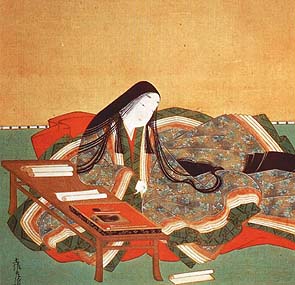
Here are a couple of books that, for various reasons, satisfied my needs, sometime with a trip to another world, sometimes with honest self-exposure. First, I read an abridged TALE OF GENJI by Murasaki Shikibu, translated by Royall Tyler. I don't know what it is with me and Genji, but I own two full length translations (see a very early one of these newsletters ). I was sitting on my screened back porch one rainy summer Sunday and something about the mistiness just made me want Genji on my Kindle, so I could go into that strange foreign world whenever I chose. I meant to dip in, but got caught by the undercurrent, and away I went.

The Royall Tyler translation is very clear, and he does an especially good job with the frequent poems. On my first reading of Genji, I totally didn't get the poems, which were apparently an essential part of eleventh century Japanese court life and especially of court-ship in the court. Characters express their strongest emotions in their poems, and simultaneously show off and even compete with their artistry. There are a lot of sadly wet sleeves, usually in the form of dew covered flowers. When Genji is in exile by the sea, there are poems about the lonely salt water ocean waves.

I think my fascination with this ancient classic (written by a court lady circa 1000 Common Era) is that I feel with these people, and at the same time am amazed that I am feeling– every moment of their lives is governed by such different rules from mine. For example, fathers and mothers are constantly trying to give away their well-brought up and accomplished daughters to the emperor or other high status men as concubines. There is a political goal, of course– with a daughter in high places, perhaps even as Empress Mother, then the family's power is greatly enhanced.. That isn't so different from, say, Medieval Western king and queenship, although the Heian court is more upfront with training the girls to attract the emperor.

But then there is the subplot of how lovely sweet smelling high minded Genji essentially kidnaps a beautiful little girl and raises her to his own specifications and falls in love with her, and she with him. Meanwhile he has many other affairs, although in Genji's defense, he seems capable of loving and attending to all of them. He rarely abandons women. And there's the atmosphere: the secret fragrance in the night that tells you who is visiting your bedchamber, the curtains and blinds, handwriting that causes people to fall in love. This is a real trip into alternative reality (see below for an alternate reality book I didn't like).

The other two books I want to mention are of this present decade, also by women, and also with sexuality front and center. And both writers focus their books on homosexual men. Carter Seaton's AMO, AMAS, AMAT: AN UNCONVENTIONAL LOVE STORY is also about Mary Cate, a thirty-something Southern Baptist country club woman with all kinds of casual, unchallenged prejudices– especially against homosexuals. She enjoys her life, but feels cheated by the lack of romantic love that she believes is essential to true happiness. She meets tennis pro Nick Hamilton, falls for him hard and fast, especially because he is so different from men in her past. They marry, and immediately, things begin to fall apart– most disastrously when she discovers Nick's sexual orientation in the most humiliating way possible.

Mary Cate starts a new life by moving from her narrow if affluent home town to Atlanta where she rehabs a house in a neighborhood that proves to be a favorite place for gays and Lesbians. Slowly, as Mary Cate realizes that more and more of her good friends are gay, she becomes a deeper, more interesting human being. She gives up the fantasy that she can't live without a man, and she makes a family of the friends around her. She helps a man with AIDS through some of the rough times at the end of his life, and even reconnects with Nick. This is a story with a happy ending– but the happiness is not at all what the Mary Cate of the beginning would have imagined.

The other two books I want to mention are of this present decade, also by women, and also with sexuality front and center. And both writers focus their books on homosexual men. Carter Seaton's AMO, AMAS, AMAT: AN UNCONVENTIONAL LOVE STORY is also about Mary Cate, a thirty-something Southern Baptist country club woman with all kinds of casual, unchallenged prejudices– especially against homosexuals. She enjoys her life, but feels cheated by the lack of romantic love that she believes is essential to true happiness. She meets tennis pro Nick Hamilton, falls for him hard and fast, especially because he is so different from men in her past. They marry, and immediately, things begin to fall apart– most disastrously when she discovers Nick's sexual orientation in the most humiliating way possible.
Mary Cate starts a new life by moving from her narrow if affluent home town to Atlanta where she rehabs a house in a neighborhood that proves to be a favorite place for gays and Lesbians. Slowly, as Mary Cate realizes that more and more of her good friends are gay, she becomes a deeper, more interesting human being. She gives up the fantasy that she can't live without a man, and she makes a family of the friends around her. She helps a man with AIDS through some of the rough times at the end of his life, and even reconnects with Nick. This is a story with a happy ending– but the happiness is not at all what the Mary Cate of the beginning would have imagined.

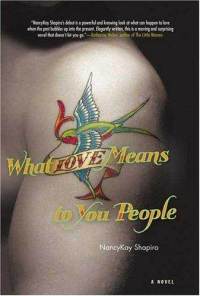
Carter Seaton's book is full of gay and Lesbian characters, and some of the scenes are from their points of view, but the sex acts are not often dramatized. NancyKay Shapiro's novel WHAT LOVE MEANS TO YOU PEOPLE, on the other hand, begins with a tour de force of very physical, very graphic, and downright hot scenes of gay sex. She makes a music of sex in the first third of this novel, as two unlikely men fall in love. Jim is a rich New Yorker, older, and bereft after a great loss, and Sean is young, poor, edgy, a talented artist, just in from the Midwest. Their love story is almost equally a paean to New York City. Many scenes take place in cafés and restaurants, and in grungy and magnificent apartments and houses. There is an enthusiastic richness of physical detail– food, wine, buildings, streets, and bodies, of course. It is a wonderfully, enhanced, reality with all sensations heightened.
And part of what is really amazing about this book is that the happy ending doesn't last– and that, I suppose, is part of the reality of it. The second half of the novel brings in Sean's sister and Sean's background, and the story gets rougher as it moves from the riches of new love to the stark horrors of the siblings', but especially Sean's, past. Plot comes to the fore, and a kind of ugliness in the backwoods of the Midwest that makes New York City seem like heaven on earth.

And the very final part takes these two disparate sections and finds a way to bring them into– if not exactly harmony, then a believable balance.

Take a look at these novels– they deserve readers.

Meredith Sue Willis

MORE SUGGESTIONS

Christine Willis suggests Montana, 1948: "Reminiscent of To Kill a Mockingbird, as it is told from a child's perspective with the benefit of the perspectives and guidance of an adult writer. The reader is exposed to the maltreatment of American Indians during the era but in a rather matter of fact way that does not elicit pity: it is simply the way things were. The story is in large part, however, built upon the different ways in which people do deal with prejudice against the American Indians, both the whites and the Indians. It is a short book that reads quickly because of high interest, straight forward language, and Watson's interesting turn of phrase."
Phyllis Moore liked this memoir: Beauty Before Comfort.

A COUPLE MORE FROM MSW


BUDDHISM: A VERY SHORT INTRODUCTION by Damien Keown is one of the handy little Oxford introductions to just about everything. I particularly like them for getting a few things straight about religions. Here, for example, I THINK I finally got the Mahayana tradition separated from Theraveda tradition. I like so much of what underlies Buddhism: that life is full of suffering– or at least dissatisfaction– so relax and deal with it via meditation, community, and compassion.
This next book is one I loved the idea of but managed to finish only by skimming. This was the science fiction writer Kim Stanley Robinson's 760 page alternative history of the world, THE YEARS OF RICE AND SALT. I kept saying to myself, if I'm going to read long historical narrations of wars in the Himalayas and elsewhere, why not read the real thing? It was just too much narration and explaining between the good parts. It reminded me of the endless small world play some children do– enriching and fascinating to them, but not to the rest of us. Or the Brontë siblings entertaining themselves for years with their interlocking romantic tales of Gondal and Angria.. A blogger said of Robinson that he alternately adores and hates his books, and that this one he has read several times because he can't decide if he adores it or hates it. A real glutton for punishment.
Finally, one more hammock-at-the-lake Elmore Leonard: THE HOT KID. This one has for its hero a brash but effective young federal marshall of a racially mixed background. It's set in Oklahoma in the days of Pretty Boy Floyd and Bonnie and Clyde and John Dillinger. It has the usual long strings of colorful dialog and doesn't get nasty until the spoiled bad boy son of a local rich guy starts plugging people just because they're in his way. This is the closest I've come to Leonard's western stories.

READ ONLINE

Recommended by Amy Wright: Michael Martone's short short nonfiction piece on the recent weather disasters in Alabama: http://www.creativenonfiction.org/brevity/brev36/martone36.html
Barbara Crooker's older poem on strawberries was featured at:
http://www.yourdailypoem.com/listpoem.jsp?poem_id=774 , and a new one "1950" appears in in Qarrtsiluni's issue on "imprisonment": http://qarrtsiluni.com/2011/07/22/1950/
A personal essay on witnessing the final space launch by Melanie Vickers appeared on July 28, 2011 at http://www.dailymail.com/Opinion/Commentary/201107271141

ANNOUNCEMENTS, CONTESTS, READINGS, ETC.

JUANITA TORRENCE-THOMPSON, Editor-in-Chief/Publisher/Owner of Internationally acclaimed MOBIUS, THE POETRY MAGAZINE seeks a GROUP of poets and/or editors or COLLEGE, organization or business individual/s to purchase and publish her 29-year old non-profit print magazine starting 2011. www.mobiuspoetry.com Serious buyers ONLY email: mobiusmag@earthlink.net or poetrytown@earthlink.net. Contributors included: RITA DOVE, NIKKI GIOVANNI, SONIA SANCHEZ, MARGE PIERCY, ROBERT BLY, DIANE WAKOSKI, YUSEF KOMUNYAKAA. CORNELIUS EADY, NAOMI SHIHAB NYE, DANIELA GIOSEFFI, COLETTE INEZ, HAL SIROWITZ, STEPHEN STEPANCHEV, LOUIS REYES RIVERA, A.D. WINANS, SAMUEL MENASHE, DUANE NIATUM, MAURICE KENNY, JOSEPH BRUCHAC, LYN LIFSHIN, SIMON PERCHIK, LAURA BOSS, TAMMY NUZZO MORGAN, GEORGE WALLACE, MAXWELL WHEAT, JR., DANIEL THOMAS MORAN, THADDEUS RUTKOWSKI, EDWARD BUTSCHER, SUSAN TERRIS, ROCHELLE RATNER, THADDEUS RUTKOWSKI, ED GALING, SANDY McINTOSH, TAMMY NUZZO MORGAN, JULIO MARZAN, ESTHER LEIPER, ROXANNE HOFFMAN, ELLARAINE LOCKIE, GEORGIA BANKS MARTIN, SUSAN TERRIS, LINDA LERNER, etc. Her other website is: www.poetrytown.com
Dolly Withrow has a column from the DAILY MAIL ( http://www.dailymail.com) "A Soap-Opera Approach to Grammar" that is being picked up by Routledge Publishers to be excerpted in an upcoming book!

George Brosi recommends Patricia Harman's ARMS WIDE OPEN: A MIDWIFE'S JOURNEY. He says: "What a perfect title for an author who is so open to life and to people of all backgrounds....This book is a fascinating and heart-warming read that demonstrates people can grow and still be true to their basic values."
Mark DeFoe's tenth chapbook of poems coming out this fall. Pre-publication orders are now being taken by Finishing Line Press of Georgetown, KY. Order online at finishinglinepress.com and click on "new releases." The collection is titled In the Tourist Cave.
Barry Wildorf's historical novel, THE FLIGHT OF THE SORCERESS is now in print. This is a novel set in the 5th Century A.D. as it follows the desperate struggle of Hypatia, the last librarian of Alexandria and renowned mathematician, and Glenys, a Celtic healer, as they resist the misogyny of the newly-empowered Roman Catholic Church during the declining days of the Roman Empire. To purchase an autographed copy, go to http://flightofthesorceress.blogspot.com/ or get it directly from the publisher at Wild Child Publishing http://www.wildchildpublishing.com
Paul Maguire's novel PROFESSOR ATLAS AND THE SUMMONING DRAGON for 3rd - 8th graders is now available at:
http://www.amazon.com/Professor-Atlas-Summoning-Dagger-Maguire/dp/1457505096/ref=sr_1_1?ie=UTF8&qid=1312217858&sr=8-1
Pamela Duncan recommends a new book by Erica Abrams Locklear, who teaches at UNC-Asheville. It's called Negotiating a Perilous Empowerment: Appalachian Women's Literacies. Learn more at http://www.ohioswallow.com/book/Negotiating+a+Perilous+Empowerment
PROJECTOR, THE JOURNAL OF CREATIVE RESPONSE TO FILM, IS COMPILING ITS THIRD ISSUE. Deadline: August 31, 2011 Please submit stories, poems, and analytical inventions about movies to projectormagazine@yahoo.com . To see samples, go to http://www.projectormagazine.com
CALL FOR SUBMISSIONS: NYC: TALL TALES FROM THE CITY-- Deadline: September 21 They say, "We are publishing a Book of New York City Fiction. Looking for 1000-2500 word stories. You may submit by September 21. Check out the facebook event page for guidelines:
https://www.facebook.com/event.php?eid=138408566235129"

Sunday, July 31, 2011

Here's a depressing little summer sonnet from poem-a-day at Poets.org


Midsummer
by William Cullen Bryant


A power is on the earth and in the air,
From which the vital spirit shrinks afraid,
And shelters him in nooks of deepest shade,
From the hot steam and from the fiery glare.
Look forth upon the earth—her thousand plants
Are smitten; even the dark sun-loving maize
Faints in the field beneath the torrid blaze;
The herd beside the shaded fountain pants;
For life is driven from all the landscape brown;
The bird hath sought his tree, the snake his den,
The trout floats dead in the hot stream, and men
Drop by the sunstroke in the populous town:
As if the Day of Fire had dawned, and sent
Its deadly breath into the firmament.

Tuesday, July 12, 2011

One More Tale of Genji…


… by Murasaki Shikibu, translated by Royall Tyler, this time. I have the full Waley translation and the Seidensticker. I used to turn up my nose at abridged versions, but I got in the mood again– a damp gray summer early evening on the back screened porch, and I just wanted to dip, and to taste Genji on the Kindle. The translation is good, with the poems laid out in a very readable way. So many sleeves made sopping wet– I mean dew covered, and during Genji’s exile, soaked by waves of salt water. Such a different ethos, all the fathers and mothers trying to give their well-brought up accomplished daughters to the emperor or other high status men as concubines. Then with political machinations, raising the daughter’s status to possible Empress Mother and the power of the family as well. And then there’s how Genji essentially kidnaps the little girl and eventually has sex with her and continues to keep her and make her his ideal woman, even while continuing his other affairs, although never failing in attention to the many women he loves and does not abandon them. As always, a fascinating excursion into an alternative reality. Dim, all those curtains and blinds, sex enhanced by handwriting.

And yes, it works on the Kindle, the grayness of the screen matches the weather, the spray of mountain waterfalls, the night time creeping in bedrooms, the dawn when you send your love note. And as to the lower classes–the people who clean the latrines and actually dye the fabrics and cook the meals and empty the chamberpots– they apparently do not exist at all.

Wednesday, June 29, 2011

Perils of Amazon Reader Revews

I’ve just been through an interesting experience. I never paid a lot of attention to the reader reviews on Amazon.com till last week when an absolutely scathing review was posted about Marco’s Monster. Now this is a book that has been in print for more than fifteen years, with two publishers, and I often make school visits and talk to kids about it and use it as a way to start them writing. But this person said it was badly written, seemed unlike real children in the world, and she didn’t believe parents would let their children run the streets the way those kids do– anyhow, suddenly Marco has the lowest possible Amazon rating. I was about to send out an email blast to everyone I know asking for help, but had the sense to talk it over first with a writer friend who recommended sending the blast, but only to those who had some reason to know the books, which made a lot of sense. So I did, and I’ve been touched by the response– some family, like my sister and my niece and nephew, who were really good, plus a number of adult friends who wrote short complimentary statements, and above all raised the Amazon rating. What’s scary is that a book with good reviews from Library Journal, Hornbook, etc. etc. could suddenly be sitting there with a bad rating. The democratic possibilities of this digital world are considerable– but, as I guess we all know by now, so are the dangers. To see what people say about Marco,click here.

Tags: , , , ,

Thursday, June 23, 2011

MSW's Books for Readers # 143

Meredith Sue Willis's

Books for Readers # 143

June 23, 2011


News and Announcements

For a free e-mail subscription to this newsletter, click here.
To create a link to this newsletter, use the permanent link .
Jane Austen Fan Fiction

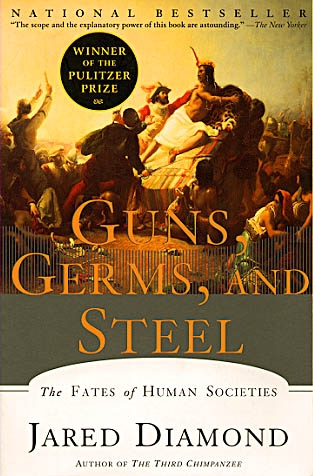
I have three books to recommend for your summer reading: a brand new collection of short stories; a twentieth century classic; and Jared Diamond's stunning 1996 study of why the West won– that would be the West as in the culture that developed in the great Euro-Asian landmass. The book is GUNS, GERMS, AND STEEL, which answers the question posed to Diamond by a New Guinean friend who didn't understand why Europeans had come out on top in his world rather than vice versa. And Diamond , who deeply believes that people like his New Guinean friend are at least and maybe more intelligent than the average European, made this magisterial survey. There is no single answer, of course, but rather a coming together of many elements in the cultures with the technological advances that gave them the ability to engulf other people's lands, resources, languages, and gene pools.

One essential element turns out to be the availability of plants and animals that can be domesticated for food and other uses. Diamond distinguishes between animals that can be tamed, like my parakeet, and animals that can be domesticated and used for food, transportation, etc. Animals turn out to be not only essential tools of war and agriculture, but also vectors for the great epidemics that spread over the Asia-Europe land mass, killing off millions, but also leading to some immunity in the survivors-- and eventually to unconscious (at least at first) germ warfare against more isolated people like those of the Americas.

Diamond also discusses what he calls the axis of communication. The axis of Eurasia is east west, which meant that many crops and animals would be in same general latitude for eventual expansion. He compares this to the Americas with a north-sound axis and barriers of climate, latitude, and topography that meant the Aztecs and the Incas barely knew of each other, and that maize was probably domesticated more than once. Africa had the great barrier of the Sahara between north and south plus certain terrible diseases of the subsaharan rain forests that stopped horses and cattle from moving south

Diamond's knowledge and his relentless enthusiasm for sharing it are a real delight. It's a book with big, expansive ideas that make you feel, at least for a moment, that you're got some perspective on history and geography.

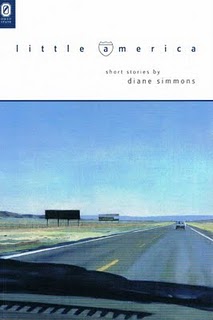
Next, I want to recommend LITTLE AMERICA by Diane Simmons. This is a 2011 short story collection of shapely, separate stories that are made stronger by being grouped together. First, truth in advertising: I blurbed this book, but in rereading it as a whole, I find it even better than my first look. It is a book of stories about Americans on the move, mostly on the road. These are people who run away or drift away, going on the road, leaving their lovers and families. It begins with a family of grifters and ends with some shrewdly dishonest drifters– who may or may not be going into more danger than they're escaping. The longest story, "Letters," is about the ideal of romantic love as a destructive force, especially for women in the 1950's.

There is plenty of humor and horror, lots of feisty characters and lost characters and American landscape. So the parts are excellent, but the collection really succeeds in its grand design. I am a deep admirer of shape– I feel that shaping our world is one of the major reasons we read and write fiction. Simmons creates the shape of her book with repetition and unexpected turns, especially with her excellent endings.

One story, "Suitcase," set mostly in Guatemala, has been called a modern "Heart of Darkness," which is nicely apt, except that Simmons' story is both more compact and more shocking– and more realistic– than Conrad's classic. You feel something bad coming, but you don't see the actual end. A story at the other extreme of weather has two young people going homesteading in the Yukon, and this one too has a satisfying surprise at the end. Simmons is wonderful at what you might call earned surprises. Endings tend to be a problem for contemporary writers, and maybe especially writers of short stories, but Simmons breaks new ground. The stories in LITTLE AMERICA don't end with gunshots or rape, but with genuine enlightenments: sometimes nasty, sometimes amusing, but almost always the thing you didn't expect, but which feels absolutely right. I'm not going to reveal any endings here, except to say that each story has a payoff, and the collection as a whole pulls you in and doesn't let you go.

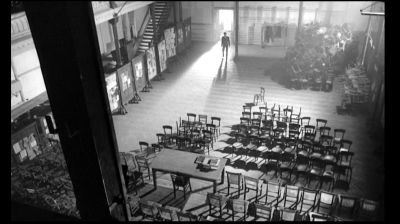
Finally, I reread Franz Kafka's THE TRIAL (free for Kindle!). This is one of those books that blew me away thirty-five years ago, and I sometimes think of it or maybe the feeling it gave me (would that be "kafkaesque"?). But re-reading brought an entirely different experience from what I remembered. It is an unfinished book, with scholarly and biographical debate about what belongs in, the order of chapters, and, of course, if Kafka really meant it when he asked to have his work destroyed after his death.

One of the things I didn't remember is that it is a novel that is crowded with characters and funny and absurd passages, and also sex, as well as being famously off-kilter and disturbing. How odd, though, that my memory of the book was of loneliness, especially the execution at the end. In fact, though. the places of Josef K.'s life are crowded with people: his office, the rooming house where he lives, the various squalid apartment blocks where he findscourtrooms and officials' offices in a warren of working class flats. The novel starts with police (or something like police) pushing into K.'s bedroom as he's getting up, and ends with two fat executioners and someone watching perhaps sympathetically from a window. And my memory of the end was of a final scene (possibly from the movie?) in which a door opens and light falls on man on pallet, and he says Is it time? But the novel is weirder, and sillier, and more moving.

I ran across an article by John Banville about his rereading of the novel, (from the UK's Guardian as http://www.guardian.co.uk/books/2011/jan/15/john-banville-kafka-trial-rereading) . Banville suggests that the book used for its structure an event in Kafka's on-again off-again engagement when his fiancee brought him to a meeting with a friend and herself where she put him through a kind of trial over their relationship. Marriage, Banville thinks, was to Kafka a kind of capital sentence. If this sounds overly psychological or even diminishing to his accomplishment in the novel, I would say that great artists demonstrate their greatness not by the loftiness of their subjects but by how they take whatevermaterials are at hand and make a great thing out of them. Art moves even quotidian things to another level, makes a leap that allows us all to participate in something that may have begun as local or individual.

This brings me to a question: when you re-read the works that you met as a young person, do you find them very different: In what way? Do they hold up? Are they entirely different?

Meredith Sue Willis

READERS RESPOND

Ardian Gill said of THE GOOD SOLDIER (discussed in Issue # 142), "I was surprised at your take on Ford (Heuffer)'s THE GOOD SOLDIER with its famous 'Saddest Story' (original title) opening line. I'm an old fan of Ford's, not least because his main character in the quartet (PARADE'S END), Tietjens, is an actuary. I'm going to forward Jane Smiley's review in the Guardian. BTW, Ford alleges that he taught Conrad English." [The excellent review/appreciation by Jane Smiley is at:
http://www.guardian.co.uk/books/2006/may/27/featuresreviews.guardianreview27 ]
Debbie Carter writes, "THE GOOD SOLDIER is one of my favorite novels. I want to read it again soon for the way he captures longing for a beloved and how they will do anything, anything to be with that person, even if they suspect they're being lied to and don't want to know."
Debbie also recommends, just for fun, "an online questionnaire.... called "Which Vintage Classics Character Are You?" It's posted on Facebook by Random House Australia." Here's the link (you have to "like" them to get to take it)
http://www.facebook.com/randomhouseaustralia?sk=app_4949752878
Laura Bentley sends a link to this 1958 television interview of Pearl S. Buck by Mike Wallace: http://www.hrc.utexas.edu/multimedia/video/2008/wallace/buck_pearl.html . It really takes you back to another time and place– Wallace is determined to pigeonhole Buck, and she is very ladylike, but very determined to be who she is!

Jonathan Greene recommends the movie version of NORTH AND SOUND, available on Netflix.

RECOMMENDATION OF A WRITER'S CONFERENCE

Suzanne Rahn writes about a writer's conference she attended in San Francisco. She says, " I enjoyed this conference very much. I stayed at the Fort Mason Hostel which was a 5 minute walk to the conference and 20 min walk to Fisherman's Wharf. I would recommend the hostel as an extremely affordable place to stay. There is even a small café in the building where you can overlook Alcatraz Island sipping a cup of chai tea. Very nice area.
http://fwwriters.algonkianconferences.com/

She goes on to say, "Michael Neff's credentials are listed on the website and his style is that of a literary "Simon Cowell" but not so heartless. His workshop is designed to help a writer improve, but he also won't sugar coat his opinion. His goal is to further a good story or help rescue a terrible story. I met several agents and publishers during the week and established a cordial friendship with Michael and the owners of the Larsen/Paloma agency. I would highly recommend this conference to any writer who wants to take a serious step towards firming up and pitching his or her novel."

VALERIE NIEMAN ON TOUR WITH HER NOVEL BLOOD CLAY (see issue #140)

JULY 10 - Meet the Author at Rosemary House, Pittsboro, NC
JULY 16 - Literary Bookpost, Salisbury, NC
JULY 30 - North Carolina Writers Conference in Asheville, NC
JULY 31 - Reading at Malaprop's, Asheville
AUG. 27 - Fiction workshop in Yadkinville, NC
SEPT. 10 - BookMarks in Winston-Salem, NC
SEPT. 30-OCT. 3 - Virginia tour TBA
OCT. 6 - Ex Libris Book Club
OCT. 13 - Fairmont State University, Fairmont, WV
OCT. 14 - West Virginia University
OCT. 15 - Weirton, WV, Public Library
OCT. 17 - Alderson-Broaddus College, Philippi, WV

FAN FICTION– A NEW GENRE??

A whole new world of writing is taking place online with Fan Fiction, in which fans write stories associated loosely or tightly with their favorite author, classic, or genre. Mindy Kesterman, along with her freshly-minted Princeton graduate daughter, provided this overview of Jane Austen fan fiction sites:
dwiggie.com
meryton.com/aha
austenunderground.com

Mindy writes: "You can post a chapter for commentary by other fans, or there are parts of the sites where you can ask for editing or a beta reader. A work in progress can be posted at say the rate of a chapter or two a week and fans return to read the serialized novel." There is also an is an index of all Austen fan fiction is available at jaffindex.com – but for this one, you have to have a membership in one of the Austen fan fiction sites.


READ ONLINE

An interview with writer and BELLEVUE LITERARY REVIEW Fiction Editor Suzanne McConnell is posted at http://www.thereviewreview.net/interviews . The interview focuses on the magazine and her own writing.
Leora Skolkin-Smith has an interesting piece on Grace Paley. She tries to correct Paley's position in the literary-spiritual-political arena– very thoughtful and worth considering, especially how Skolkin-Smith presents Milan Kundera and Grace Paley as the East and West voices of the Cold War era, striving in different but complementary ways to preserve the souls of people in the second half of the twentieth century. The piece is at
http://quarterlyconversation.com/the-legacy-of-grace-paley
Juanita Torrence-Thompson's half-hour radio show, with music, produced by Poets West called "QUEENS MEETS ASIA," can be heard online now. Click on the home page of www.poetswest.com and scroll down to Radio Programs. The programs are large mono.mp3 files and you need hi speed internet to listen. Juanita's program is #194.
Phyllis Wilson Moore has a review of Harvey Pekak's work at
http://blogs.wvgazette.com/wvbookfestival/2011/05/19/the-pungent-humor-of-harvey-pekar/

SAVE YOUR UNCORRECTED PROOFS!

Save your uncorrected proofs! Abebooks.com is selling them for thousands of dollars! Or at least, SOME uncorrected proofs:
http://www.abebooks.com/books/RareBooks/galley-advance-early-publisher/uncorrected-proofs.shtml?cm_mmc=nl-_-nl-_-110618-h00-uncorreCA-_-01cta


ANNOUNCEMENTS, CONTESTS, READINGS, ETC.

Carter Seaton's second novel, amo, AMAS, AMAT…AN UNCONVENTIONAL LOVE STORY is now available for Kindle readers, with other e-reader formats and a trade paperback print version coming soon. The novel, set in 1983, centers on Mary Cate Randolph who falls for tennis pro Nick Hamilton. He's charming and intelligent, but not sexually aggressive. Mary Cate, a naïve homophobic, is shocked to learn after they marry that Nick is a closeted homosexual. What follows is not what you'd expect.
Gerald Swick, who writes about the history of West Virginia, has an article in the new edition of Wonderful West Virginia magazine (http://www.wonderfulwv.com/) on the battle of Philippi. He says that he also "wrote a sidebar on the two cannons used at the battle. For decades they have been believed to be in Wellington, Kansas. Last autumn I went there, photographed them, and began a search to see if these were, indeed, the guns used at 'the first land battle of the Civil War.' The sidebar summarizes what I found."
THE WRITER'S ALMANAC featured one of of Jonathan Greene's poems on May 19, 2011. This is the third poem they have selected from his latest collection DISTILLATIONS AND SIPHONINGS.

Barbara Crooker has new poems up at the following sites:
http://www.stringpoet.com/2011/05/barbara-crooker/ ("Today" and "A Woman Is Her Mother")(There's music to go with this, too.) and http://www.decompmagazine.com/roominnewyork1932.htm ("Room in New York")(There's an audio clip of me reading the poem.)

Mary Lucille Deberry's collection BERTHA BUTCHER'S COAT was one of the winners of Writers' Digest's competiion for self-published books of poetry. Other winners included first place Charles James for LIFE LINES , Drew Dellinger's LOVE LETTER TO THE MILKY WAY, and Jerry Brown Schwartz's SO INSPIRED: PRELUDES & POEMS,
ANDERBO SEEKS NOVELIST (by September 21st, 2011) for its 2nd Bi-annual No-Fee Novel Contest The Mercer Street Books Fiction Prize. Anderbo.com wishes to post up to the first 36 manuscript pages of an unpublished novel on its website by December 21st, 2011 for at least the following six months. We will look at the FIRST 36 PAGES (up to 9,000 words) of your e-manuscript submitted to editors@anderbo.com and decide within 60 days of its arrival if we want to see more. You must submit your manuscript entry within the body of the e-mail—no attachments. There is no reading fee, and and all literary rights will remain with the author. This contest is not open to anyone previously published on anderbo.com at any time. There will be an honorarium of $500 paid by the sponsor of this contest, Mercer Street Books & Records, to the winning author upon publication on Anderbo. For more, go to anderbo.com
NEW JERSEY SPECIAL! Michael C. Gabriele's THE GOLDEN AGE OF BICYCLE RACING IN NEW JERSEY has just been published. Check it out at The History Press https://www.historypress.net/ along with lots of other history books.

MSW NEWS:

  • A podcast of an interview of MSW by Eric Frizius at http://podcast.wvwriters.org/2011_06_01_archive.html
  • Short short story called "Rescue" in Sleet Magazine.com here
  • Short story called "Decorations" in the in hard copy Spring 2011 issue of Slab
  • A radio review of Out of the Mountains by Roberta Schultz aired on an NPR affiliate in Cincinnati (WVXU 91.7 FM) on May 15, 2011. The program is available here.

ABOUT AMAZON.COM

The largest unionized bookstore in America has a webstore at Powells Books. An alternative way to reach their site and support the union is via http://www.powellsunion.com. Prices are the same but 10% of your purchase will go to support the union benefit fund. For a discussion about Amazon and organized labor and small presses, see the comments of Jonathan Greene and others in Issues #97 and #98 .

WHERE TO FIND BOOKS MENTIONED IN THIS NEWSLETTER

If a book discussed in this newsletter has no source mentioned, don’t forget your public library and your local independent bookstore.
To buy books online, I often go first to Bookfinder or Alibris. Bookfinder has a feature that tells you the book price WITH shipping and handling, so you can compare what you’re really going to have to pay.
A lot of people whose political instincts I respect prefer the unionized bricks-and-mortar bookstore Powells (see "About Amazon.com" above) that sells online at http://powellsbooks.com. More good sources for used and out-of-print books are Bookfinder at http://www.bookfinder.com/ and All Book Stores at http://www.allbookstores.com/ .
Take a look also at Paperback Book Swap , a low cost (postage only) way to get rid of your old books and get new ones by trading with other readers.

If you are using an electronic reader like Kindle, Nook, or Kobo, get free books at the Gutenberg Project.

RESPONSES TO THIS NEWSLETTER

Please send responses and suggestions directly to Meredith Sue Willis at MeredithSueWillis@gmail.com. Unless you instruct otherwise, your responses may be edited for length and published in this newsletter.

Wednesday, June 22, 2011

My New Pet


Andy took a photo of the vulture on the dormer yesterday: it doesn't look as big as it really it. They are ENORMOUS. I run into them occasionally on the street.

Monday, May 23, 2011

Books for Readers #142

Meredith Sue Willis's

Books for Readers # 142

May 15, 2011


I want to begin this issue with praise for an old novel in a new edition from Montemayor Press: LEAH by Seymour Epstein. First published in 1964, Epstein uses his point of view woman character, Leah, as a point for creating a rich portrait of a particular time and place. I perhaps most loved the details about young-to-middle aged New Yorkers eating in Automats, going to Broadway and off-Broadway shows, New York bars, subways, elevateds. It is the New York I saw the first time I visited, as a young teenager. It was a place when you could rent a decent apartment on an office manager's salary and eat most of your meals out. A place where craftspeople like Leah's wonderfully portrayed father Max, a furrier, were also intellectuals. This is a particularly Jewish postwar New York City, and while many of its touches on the experiences of gay people and black people feel hesitant now, the book as a whole is not dated, but rather a window into a particular past.

In this context, Leah's desire for a life in love, and her dilemma over having had a series of lovers, is sad, but it is also precisely the trap set for gentlewomen at least since the beginning of the nineteenth century– that not only their typical role but their calling is to find true love, then be fulfilled in house keeping, husband supporting, and motherhood. That Leah herself knows she's in a trap is played out delicately. It is only after she gets a little respect for her stolid mother (who, miraculously, turns out to have some talents of her own!)– and gets a little perspective on her adored father – that she is able to take on a love commitment.

The book has the dark gold color of an incandescent lamp: women wear furs, men wear hats, artists are considered heroes, women see themselves as receivers of confidence and neediness. In the end, Epstein chooses the mode of classical comedy– both Leah and her father compromise their principles (or else perhaps finally mature) and take mates.

Leah was old fashioned in all the right satisfying ways, and by contrast, I also read a thoroughly modern young adult novel called THE END: FIVE QUEER KIDS SAVE THE WORLD by Nora Olsen. This is one I wish had been a series– it's got these five terrific heros with semi-super powers, mostly gay or bisexual girls, and the only boy is 5,000 years old. They are good characters, overseen by some slapstick gods and goddesses who are causing very serious problems for human beings– like a killing insanity that makes people rip each other apart for no reason. The magic/super powers part is set up very carefully and focuses less on the poof of magic and more on how the kids learn mastery of it. The final quarter speeds up and takes on the sharp, simplified outlines of cartoons, but this is, in spite of people being dismembered and possibly dying of rabies, a good humored and uplifting novel.

Meanwhile, back at the Kindle, I've been enjoying myself immensely as well. First, I discovered a clearing house for the free borrowing of Kindle books. The problem with Kindle (one problem) is that once you buy a book, it's yours, but you can only lend it to a friend by lending the Kindle itself and thus your entire collection of e-books. Amazon is now, like Barnes & Noble, allowing some very limited borrowing. The new bottleneck is that the conventional (DUMB) publishers are not allowing borrowing. There are some opportunities, however, to borrow some popular books– once. That is, you are borrowing from an individual, who is only allowed to lend once. To learn more, take a look at the clearing house side at http://www.booklending.com/.

I lucked out the first time I tried it, and was able to borrow WOLF HALL by Hilary Mantel. This was an extremely well-researched and thoughtful historical fiction– my only complaint is that I kept waiting for Thomas Cromwell's execution at the end, but as the distance to the end got smaller and smaller, I finally realized we were going to stop with Thomas More's execution instead– and the rest of Cromwell's life will be coming in a sequel.

Mantel's Thomas Cromwell is a working class man who rises very high and tries to move towards increased equality while being fully loyal to the king. The story is oddly plotless– it feels rather like a dark picaresque, which would be, I suppose because of its close hewing to the historical facts. For a long time I didn't think she really had Cromwell, that it would have been better to have created his character from the outside, maybe from his son's view or the point of view of one of his wards (I particularly liked his nephew Richard, his sister's child, who took the name Cromwell and was an ancestor of Oliver Cromwell). But in the end, Mantel won me over with her odd point of view, a close third person that rarely names Cromwell. It as if we had a view into his world, with blinders (or is that the dark tunnel effect I feel when I read on the Kindle?), seeing through his eyes but often not knowing what he is planning or thinking. People enter, there's a scene, there's not necessarily any particular drama, they're gone, we're elsewhere. Again, this comes from hewing to the facts, but it requires a little revision of your narrative expectations, of what to expect from a scene.
For the 2009 Christopher Benfey review in the November NEW YORK TIMES (he agrees with me about the quality of picaresque) see http://www.nytimes.com/2009/11/01/books/review/Benfey-t.html

Two more on the Kindle: THE ELEPHANT'S JOURNEY by José Saramago. This is also historical in its essential outlines– that the king of Portugal sends his elephant to Vienna as a gift, but the tone and story are quintessential Saramago– the best characters workers and soldiers and elephant handlers, and the animal itself: big personality and very wise, but fully an elephant, never a human being. Everything is told richly and simply – Solomon/Suleiman the elephant, his mahout, the Portuguese soldiers and their commanding officer, the crossing of the Alps, the Austrian soldiers and the archduke– the apotheosis of an elder writing in the fullness of his strength.

And– Kindle owners! A huge bargain: you can get an omnibus edition of 12 Saramago novels for less than $20! With an introduction by Ursula LeGuin! Saramago Collection .

I also reread Mrs. Gaskell's NORTH AND SOUTH, and oh what a delight, perfect for the forward linearity of the e-reader. Mrs. Gaskell's work is very deliberate and clear and straightforward– no need for flipping back and forth. One of my favorite things about her is that she addresses things most of the Old Victorians never touch, or at least don't humanize. The hard thing about her is certain limitations of imagination, in this novel an ideological commitment to the superiority of the educated liberal Christian and the danger of people in combinations such as unions. You have to lay that aside– but once you do, Mrs. G. manages to make her main character Margaret Hale strong, suffering, a little wild, yet a complete lady– and above all a woman with a complex moral conscience.

I also like NORTH AND SOUTH's Mr. Rochester effect, which is that the powerful, passionate man clearly meant to be Margaret's mate, must be brought down from his arrogant high horse before the match can be made. Gaskell doesn't blind her Mr. Thornton as her friend Charlotte Brontë did to her Mr. Rochester, but Gaskell does put him in dire financial straits, and then (take that, Mr. Captain of Industry!) she allows Margaret to inherit just enough wealth to help him. Only then can they meet as equals in marriage.

There's one wonderfully melodramatic but vivid scene when Margaret challenges Thornton to go face the crowd of angry strikers in person, and then, when the crowd gets nasty, she goes herself and stands between him and them. In fact, in her desire to protect him, she throws her arms around his neck. Thornton's reaction (this part feels so right) is actually physical pleasure and a conviction that the young woman obviously is in love with him if she would embrace him in public. He then fantasizes about her touch for weeks– it's pretty hot stuff for the nineteenth century and a novelist who is a pastor's wife.

Somewhat less satisfying, but not bad, is her portrait of a "good" union man, Nicholas Higgins, who teaches Thornton a few things, but also has to learn a few. Thornton, who is in fact a former worker who really did accumulate his own capital, sits down with Higgins, and they come up with some ways of working together. It rejects the all-worker union, but at least gives the privilege to a kind of mutuality.

One note about an element of all Mrs. Gaskell's work that 21st century readers may mistake for melodrama is how characters drop like flies– they die of consumption, of apoplexy, of heart disease and some unnamed female complaint, probably a cancer– but to Gaskell's mind, death of people in their fifties and sixties is perfectly normal, as is consumption taking a girl of nineteen or twenty. Think, in fact, of the Brontë siblings: two dead of Tuberculosis before 30, the brother of alcoholism (probably) even earlier, and Charlotte while pregnant at the age of 38.

And my final Kindle report: THE GOOD SOLDIER by Ford Madox Ford. (You see the pattern– the free books are pre-second world war). This was actually a re-read, but my previous read feels like infinite years ago, and I don't think I got it at all. Or maybe I read it at the wrong time.

It is a beautifully revealed novel about really miserable people. It unpeels like the proverbial onion, starting out conventional to the point of boring, then picking up steam and complications as one character after another proves to be betraying, cruel, even vulgar, The narrator is a totally hopeless idiot who may be forty at the end and possibly still a virgin, whose purpose in life seems to be caretaker for women he thinks he loves– there are suicides, gambling debts, adultery and fornication, insanity, a wife who tries to manage her husband's mistresses, a husband who is repelled by his wife, a wife who refuses to have sex with her husband at all but has lovers under his nose.

Oh, and the serial adulterer is probably the only noble character in the novel. The book is in many ways over the top, but I couldn't stop reading. An astringently nasty novel.

-- Meredith Sue Willis

A SPECIAL REPORT FROM NEIL ARTHUR JAMES ON BLOG FICTION

I've been fiction blogging in some form since 2003. I've been writing Dandy Darkly for three years. Blog fiction is a creative writing form incorporating the use of popular blogging websites, such as Typepad and Blogspot, to present original, self-published works of fiction to a primarily online readership.

Although it represents a fringe corner of the blogosphere and is sometimes regarded as a fad among critical and academic circles, I think blog fiction is a growing medium that will eventually find literary recognition. The medium itself allows for a wide variety of creative formats. Online diaries, a serialized depiction of fictional characters or a collection of short stories are all represented by fiction blogs.

The online format also grants a multitude of options for a writer to go beyond merely typed words on a web page. These include the ability to hyperlink events in the text to real time news stories and other websites, which may be real or fake themselves. Search functions and categorization give readers quick access to characters and themes so they can catch up on details they may have missed.

Online social media such as Facebook and Twitter can be used to progress story lines outside the blog itself while also bringing in readership. Reader interaction can be encouraged through the use of comment boxes and web page sharing. Photos and illustrations can easily be uploaded. Embedded sounds effects or music can create an aural backdrop for visitors to listen to as they read. YouTube is available to present live action segments, be it public readings by the author, visual segments for reference by a reader or a fully staged, live-action scene culled and performed from the story itself.

It is the discretion of the writer how far these other sources of information remove their work from the traditional notion of fiction at its purest, that being solely words on a page. But with so many options at your fingertips, I feel blog fiction can keep true to that ideal while offering so many other avenues for the writer to express himself or herself. Blog fiction is in the process of finding its own shape.

Any literary project morphs and reveals itself the more you write, but this fact feels especially true of a fiction blog, particularly as new technology and social media trends go in and out of vogue. My fiction blog, Dandy Darkly, has shifted from what began as highly serialized, short stories to a longer format with many recurring characters and far reaching plot lines. The challenge has been in presenting short works that stand alone in both quality of writing and clarity of story while keeping true to a larger narrative arc and hinting at things to come. At times if feels like I'm improvising a novel in published chunks.

Another challenge is finding an audience. Hawking my blog is an exhausting task. Attention spans are short on the web. With an inundation of websites to browse, readership can be sparse for a fiction blog. Hence many of the "bells and whistles" listed above. Ideally a writer wants the strength of the words alone to draw in and keep readers, but on the web that simply isn't always the case. I have a fiction blog because I love the evolving format and I'm passionate about what I'm writing and performing. Ultimately I'm as along for the ride as my characters are. I recommend every writer play with the format. It's been a rewarding journey and I'm eager to see what will happen as technology evolves and more writers turn to fiction blogging to express themselves.
– Neil Arthur James

For the full issue, with announcements and reader responses, go to http://www.meredithsuewillis.com/bfrarchive141-145.html#issue142

Saturday, May 21, 2011

The Last Day...


... is beautiful after days and days of rain. I'm under the weather, but heading out soon for Saturday night events-- cut grass, planted some squash I forgot, more cilantro, got an article proposal off, and I'm feeling like it's a vacation day. Not that I'm doing nothing, but that I'm on the back porch (just cleaned yesterday!) hearing birds of various stripes chatting, sun and clouds, grass marvellously green-- the back needs cutting too. I am so glad to be out here, to be here, which is the best mood for whatever comes next.

Saturday, April 09, 2011

Haiku Season

Palest green scumble,
Tan fluff and small maroon buds--
It's haiku season!


I have been composing haiku as I do my exercise with my Nordic walking sticks. Haiku works nicely because they are short (and I have to memorize what comes to me when I'm walking). Also, the syllable counting seems to go nicely with physical movement-- and, along with the 7-7-5 syllable format, the other standard requirements for haiku are nature (I'm out-of-doors) and a little surprise. So I recommend taking a walk, counting out a haiku for yourself and memorizing it to bring back to the pencil and paper or keyboard. Here are a couple of mine (no laughing--I'm primarily a novelist):


Realm of green below,
Yellow, purple, pink between–
Over head, it's red!