January 28
I just finished reading The Gift by Lewis Hyde, another Berkman fellow like Andy's brother David Weinberger. I'm just now beginning to get the importance of this institution, which we knew was an honor to David (author of Everything is Miscellaneous as well as co-author of The Cluetrain Manifesto and more). But this book, one of your real public intellectual books like a book length article from The New York Review of Books is really helpful in figuring out about art and the market. Hyde writes in a new epilogue for the twenty-fifth anniversary of the book: “.....to begin by restating two of THE GIFT’s motivating assumptions....The first is simply that there are categories of human enterprise that are not well organized or supported by market forces. Family life, religious life, public service, pure science, and of course much artistic practice: none of these operates very well when framed simply in terms of exchange value. The second assumption follows: any community that values these things will find non market ways to organized them. It will develop gift-exchange institutions dedicated to their support.“
I guess I wanted reading it to be more fun than it was, but I read so often now when I'm tired, too much work of my own and also t. v. with the quick cut action and interactive internet.. But having said this, the book makes a really important distinction between what we do for money and what we don’t. It begins with folk tales and narratives about hunter gatherer and other societies with strong emphasis on gift exchange and the circulation of valuable things rather than private ownership, and goes on to long essays on Walt Whitman and one on Ezra Pound (who had lots of cockamamie economic schemes plus the brutally ugly anti semitism). Allen Ginsberg figures importantly (especially his late visit to Pound in Italy)


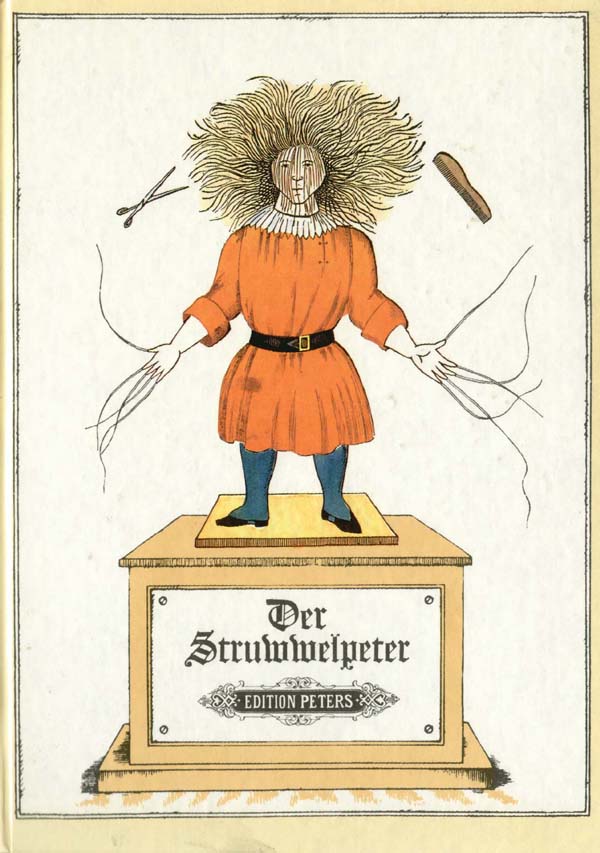
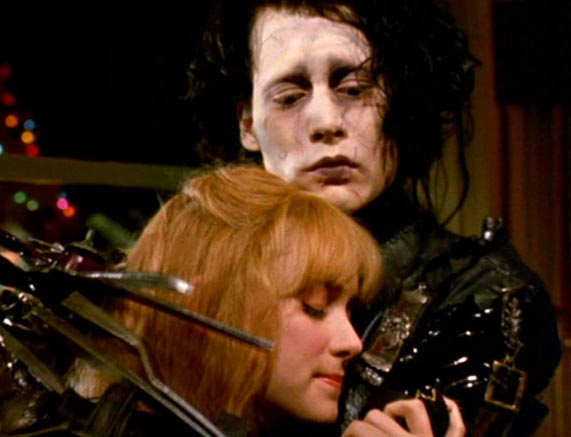 to South Orange to the movies and the one we wanted to see was sold out, so we came home, talked to Joel on the phone, and watched Edward Scissorshands from 1990. Very charming, touching, all that. Edward and his naivety and snip snip evergreen art and hair cutting and dog grooming is the real normal, and the appalling tropical fruit colored ticky tacky suburban community is the freak show. Those houses and those people were exactly what I had a horror of finding if we moved to the suburbs-- identical houses, bored housewives, false good cheer. Johnny Depp is an absolute heart throb in this, an artist, a lover, a suffering outsider who tries to do good. His character is punk in style, the hair, the leather and studs, but the stance and general look is the same as Slovenly Peter of the old Der Struwwelpeter (1845) cautionary tales for kids. A related (?) images in the book is of a horrible man with enormous scissors cutting off a boy's fingers-- anyhow, these have got to have played into the imagery, in my mind, if not in Tim Burton's.